

Most British homes lose up to 35 percent of their heat through poorly insulated walls and roofs, driving energy bills higher each winter. With the Home Energy Model regulations on the horizon, taking proactive steps matters more than ever for landlords and homeowners across the United Kingdom. This guide walks you through practical, expert-backed strategies to assess your property’s weak spots and make targeted improvements for better comfort, savings, and future compliance.
Table of Contents
- Step 1: Prepare Tools And Collect Property Data
- Step 2: Inspect Building Envelope For Energy Leaks
- Step 3: Identify Insulation And Draught Issues
- Step 4: Measure Energy Consumption Patterns
- Step 5: Evaluate Improvements Using Recommended Solutions
Quick Summary
| Key Insight | Explanation |
|---|---|
| 1. Assemble essential measurement tools | Gather tools like laser distance measurers and safety gear to ensure accurate data collection. |
| 2. Systematically inspect building envelope | Thoroughly check walls, windows, and roofs to identify potential energy leak points. |
| 3. Identify insulation and draught issues | Assess insulation thickness and conduct draught tests to reveal heat loss areas. |
| 4. Track energy consumption patterns | Record monthly energy meter readings to monitor usage trends and identify inefficiencies. |
| 5. Evaluate potential energy efficiency improvements | Compare retrofit solutions based on cost, savings, and impact to prioritise upgrades. |
Step 1: Prepare tools and collect property data
To conduct an effective home energy loss assessment for a UK property, you’ll need to gather specific measurement tools and documentation. Proper preparation ensures accurate data collection and analysis. Professional Domestic Energy Assessors recommend assembling a comprehensive toolkit designed for precise property inspections.
Your essential equipment should include a laser distance measurer, extendable measuring tape, digital camera, clipboard, technical notepad, and safety gear like a hard hat and high visibility vest. Key documentation includes property floor plans, architectural drawings, and existing energy performance certificates. Focus on collecting precise measurements of building dimensions, including wall heights, room sizes, window dimensions, and roof spaces. Record specific details about construction materials, insulation types, window glazing, and heating system specifications.
While measuring, systematically document each room and structural element. Pay special attention to areas prone to heat loss such as loft spaces, wall cavities, window frames, and doorways. The Standard Assessment Procedure provides a structured framework for recording these critical details.
Property Inspection Tip: Always double-check your measurements and take multiple photographs to ensure comprehensive documentation for your energy assessment.
Step 2: Inspect building envelope for energy leaks
Carrying out a comprehensive inspection of your property’s building envelope is critical for identifying potential energy loss points. Professional energy assessors recommend a systematic approach to examining building envelope components that ensures no heat loss pathway remains undetected.
Begin your inspection by carefully examining external walls, focusing on areas where different building materials meet or where structural penetrations occur. Check window and door frames for gaps, examining the quality of seals and weatherstripping. Pay close attention to wall cavities, looking for signs of inadequate or degraded insulation. Inspect roof spaces and attic areas for potential heat escape routes, measuring insulation depth and checking for any visible gaps or compression in existing material.
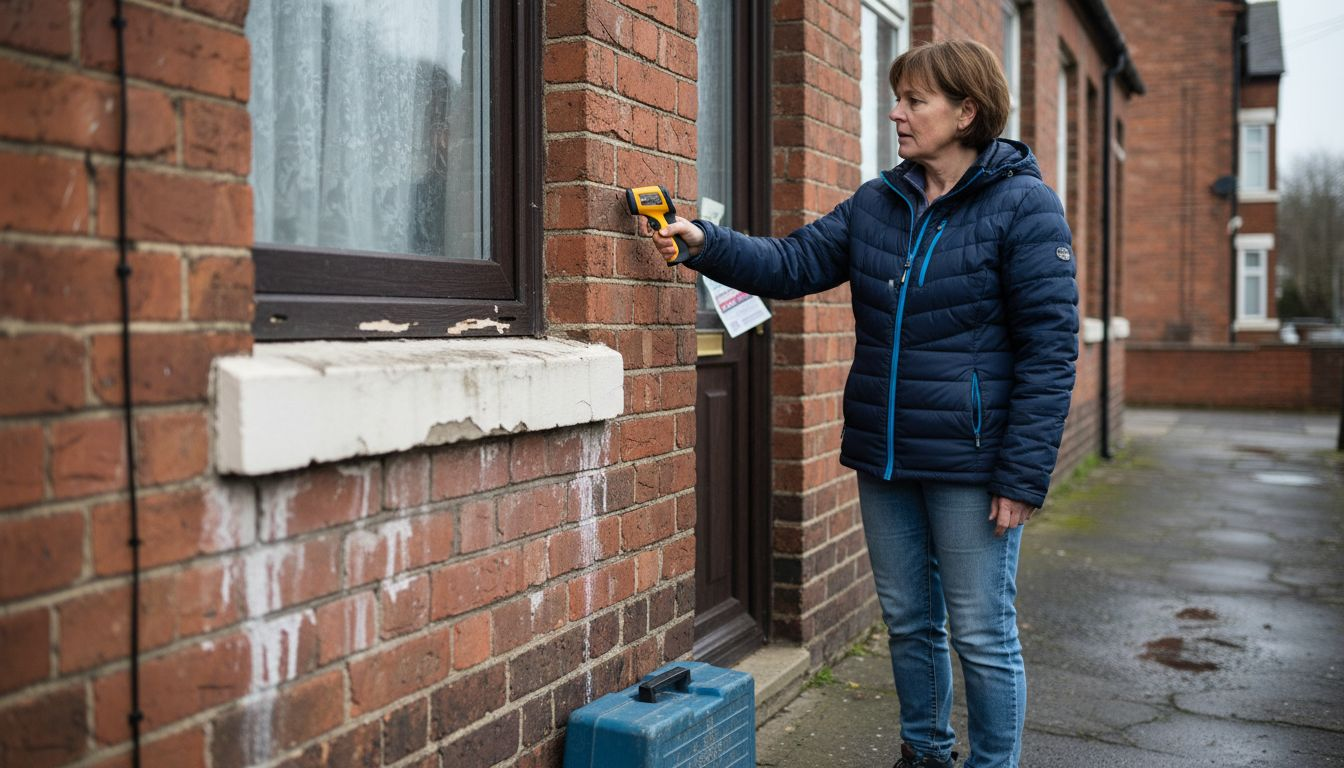
During your assessment, document each potential energy leak with detailed notes and photographs. Look for signs of draughts around window frames, electrical outlets, and other wall penetrations. Assess the condition of external cladding, checking for cracks or damage that might compromise thermal performance. Remember that even small gaps can significantly impact overall home energy efficiency.
Inspection Tip: Use a thermal imaging camera or infrared thermometer to reveal hidden heat loss areas that are not visible to the naked eye.
Here is a summary of common building envelope areas and their typical energy loss signs:
| Area Inspected | Common Issue Detected | Potential Impact |
|---|---|---|
| External walls | Missing insulation | Higher heating costs |
| Window frames | Draughts or air gaps | Increased cold spots indoors |
| Wall cavities | Insulation degradation | Reduced thermal performance |
| Roof spaces | Thin insulation layer | Substantial heat escape |
| Doorways | Worn weatherstripping | Noticeable energy leakage |
Step 3: Identify insulation and draught issues
Understanding and identifying insulation and draught problems is crucial for improving your property’s energy efficiency. National energy efficiency data reveals that targeted insulation interventions can significantly reduce household energy consumption.
Start by examining key areas prone to heat loss such as loft spaces, wall cavities, floors, and pipework. Check insulation thickness and condition in these zones, looking for signs of compression, moisture damage, or uneven coverage. Around windows and doors, conduct a detailed draught detection test by holding a thin piece of tissue paper near seals and observing movement. Pay special attention to electrical outlets, skirting boards, and any structural penetrations where small gaps can create significant heat escape routes.
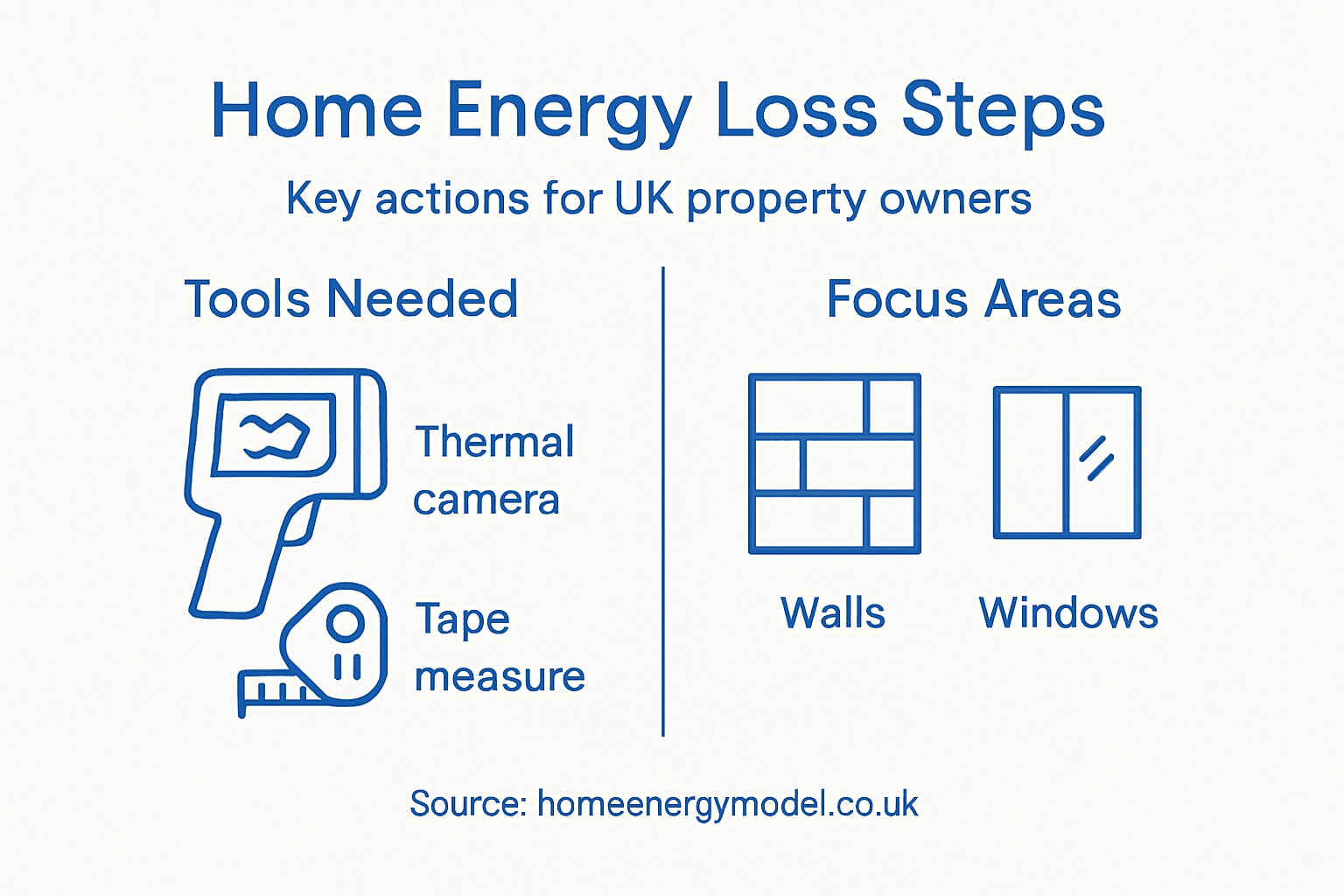
During your assessment, systematically document each potential insulation or draught issue. Look for visible signs like condensation, mould growth, or uneven room temperatures that might indicate underlying thermal performance problems. Understanding these details will help you prioritise potential improvements and create a targeted strategy for enhancing your property’s energy efficiency.
Practical Insight: Consider purchasing a thermal imaging camera to reveal hidden heat loss areas that are invisible to the naked eye.
Step 4: Measure energy consumption patterns
Accurately tracking your property’s energy consumption is fundamental to understanding and reducing overall energy loss. Domestic energy consumption methodologies provide sophisticated frameworks for analysing household energy usage across different property types.
Begin by gathering comprehensive meter readings for both gas and electricity over a minimum 12 month period. Record these readings monthly, noting the exact date and meter numbers. Compare seasonal variations to understand how your energy consumption changes throughout the year. Pay particular attention to heating and hot water usage during winter months, and identify any unusual spikes in consumption that might indicate inefficient systems or unexpected energy waste.
Utilise smart metre technology or energy monitoring devices to track real time consumption patterns. These tools can help you break down energy usage by different appliances and systems within your property, providing granular insights into where and when energy is being consumed most intensively. Cross reference your consumption data with external temperature records to understand the relationship between heating requirements and outdoor conditions.
Practical Insight: Create a spreadsheet to log monthly metre readings and track your progress in reducing energy consumption over time.
Step 5: Evaluate improvements using recommended solutions
Transforming your property’s energy performance requires a strategic approach to assessing potential upgrades. Standard Assessment Procedure recommendations provide comprehensive frameworks for quantifying energy efficiency improvements and their potential impact.
Compare potential retrofit solutions by analysing their projected energy savings, installation costs, and long term carbon reduction potential. Consider creating a detailed spreadsheet that ranks potential improvements based on factors such as return on investment, ease of implementation, and expected performance gains. Prioritise interventions that offer the most significant energy reduction with the most reasonable financial outlay.
Evaluate each recommended solution through a multifaceted lens. Examine not just the immediate financial implications, but also the potential increases in property value, comfort levels, and environmental impact. Consider consulting with a professional energy assessor who can provide tailored recommendations specific to your property’s unique characteristics and existing infrastructure.
The following table compares typical retrofit solutions by their benefits:
| Retrofit Solution | Energy Savings Potential | Installation Disruption |
|---|---|---|
| Loft insulation | High | Minimal |
| Cavity wall fill | Moderate | Brief |
| Double glazing | Significant | Some structural work |
| Draught proofing | Noticeable | Minimal |
Practical Insight: Request multiple quotes from certified installers and compare their proposed solutions to ensure you receive comprehensive and competitive recommendations.
Take Control of Your Home Energy Efficiency Today
Assessing home energy loss thoroughly can feel overwhelming when faced with complex measurements and multiple potential problem areas like insulation gaps, draughts, and inefficient heating patterns. This article highlighted the importance of precise inspection techniques and understanding how to interpret energy consumption patterns to identify where your UK property loses heat and costs most. These challenges demand a reliable and future-ready approach to property energy evaluation that aligns with upcoming regulations.
That is where homeenergymodel.co.uk becomes an invaluable resource. It offers clear insights into the soon-to-be-implemented Home Energy Model which will replace SAP from 2025, ensuring your assessments meet the new Future Homes Standard. By exploring expert advice on energy performance certificates, efficiency calculations, and practical recommendations, you can confidently prioritise the most effective retrofit solutions to reduce your energy bills and carbon footprint. Don’t wait for regulations to impact your property value or comfort; visit homeenergymodel.co.uk now to access essential guidance and prepare your home or building for a sustainable, energy-efficient future.
Frequently Asked Questions
What tools do I need to assess home energy loss for a UK property?
To effectively assess home energy loss, you will need tools like a laser distance measurer, extendable measuring tape, digital camera, clipboard, and safety gear such as a hard hat and high visibility vest. Gather all your measuring tools and documentation, including property floor plans and existing energy performance certificates, before starting your assessment.
How can I identify potential energy leaks in my home?
Begin by inspecting the building envelope, focusing on external walls, window frames, and roof spaces for gaps and inadequate insulation. Document any signs of draughts or damage, and consider using a thermal imaging camera to uncover hidden heat loss areas.
What should I look for when checking insulation and draught issues?
When examining insulation, check for its thickness and condition in areas like loft spaces and wall cavities. Look for signs of moisture damage or uneven coverage, and test for draughts by observing movement in a thin piece of tissue paper near seals around windows and doors.
How do I measure and analyse energy consumption patterns in my property?
Accurately track your energy consumption by gathering monthly meter readings for at least twelve months, noting any seasonal variations. Create a spreadsheet to log your readings and identify any unusual spikes that may indicate inefficiencies, focusing on heating and hot water usage during colder months.
What steps should I take to evaluate potential energy improvement solutions?
Assess retrofit options by comparing their estimated energy savings, costs, and potential impact on carbon reduction. Create a detailed spreadsheet ranking these improvements based on factors such as return on investment and ease of implementation to prioritise the most effective interventions.
How can I improve my property’s energy efficiency effectively?
Start by identifying the most significant energy loss areas as you complete your assessment. Implement interventions that offer the greatest potential for energy reduction and comfort enhancement, such as loft insulation or draught proofing, as these can improve your home’s efficiency by approximately 20% or more.