

Most british rental properties could see higher operating costs as new UK energy efficiency rules take effect. With compliance deadlines approaching, staying ahead protects both your investment returns and tenant satisfaction. This guide reveals how systematic energy monitoring empowers british landlords and property investors to identify inefficiencies, improve EPC ratings, and meet government standards with confidence.
Table of Contents
- Step 1: Assess Current Energy Usage And Identify Key Areas
- Step 2: Select And Install Appropriate Energy Monitoring Tools
- Step 3: Integrate Monitoring Systems With Property Management
- Step 4: Track Real-Time Data To Uncover Usage Patterns
- Step 5: Review Results And Optimise For Government Compliance
Quick Summary
| Important Insight | Explanation |
|---|---|
| 1. Assess Energy Usage Patterns | Track energy usage through bills and audits to establish a baseline for efficiency improvements. |
| 2. Choose Effective Monitoring Tools | Invest in advanced energy monitoring systems that integrate with existing infrastructure for accurate tracking. |
| 3. Integrate Monitoring into Management | Create a digital dashboard to analyse energy data for actionable insights and efficient property management. |
| 4. Analyse Real-time Data | Use real-time tracking to identify usage patterns and inefficiencies to improve energy management. |
| 5. Focus on Compliance Standards | Regularly review energy performance against UK regulations and implement upgrades to meet compliance. |
Step 1: Assess current energy usage and identify key areas
Assessing your property’s energy usage requires strategic analysis and methodical tracking to understand consumption patterns. This step will help you create a comprehensive baseline for future energy efficiency improvements.
Begin by collecting detailed energy consumption data from utility bills, meters, and energy audit documentation. Document electricity, heating, and water usage across different areas of your property. Pay special attention to major energy consuming systems like heating, cooling, lighting, and appliances. Create a spreadsheet recording monthly consumption, comparing seasonal variations and identifying potential anomalies.
Utilise submetering technologies to gain granular insights into specific zones or systems within your property. Detailed consumption tracking enables precise understanding of where energy is being used most intensively, allowing targeted efficiency interventions. Look for unexpected spikes in energy consumption and investigate potential causes such as equipment inefficiencies, insulation problems, or outdated systems.
Pro tip: Invest in a digital energy monitoring system that provides real time consumption data, enabling more proactive energy management and immediate identification of unusual consumption patterns.
Step 2: Select and install appropriate energy monitoring tools
Choosing the right energy monitoring tools is crucial for accurately tracking and managing your property’s energy consumption. This step focuses on selecting technologies that provide comprehensive insights into your energy usage patterns.
Start by researching advanced monitoring systems that offer detailed tracking capabilities. Real-time energy data solutions enable property owners to gain granular visibility into electricity, heating, gas, and water consumption across different zones. Look for monitoring tools that integrate seamlessly with your existing infrastructure and provide user friendly interfaces for data interpretation.
Consider both hardware and software components when selecting your energy monitoring system. Smart metres, wireless sensors, and cloud-based analytics platforms can provide comprehensive coverage. Prioritise systems that offer detailed breakdowns by energy type, time of day, and specific property zones. Ensure compatibility with UK energy standards and consider future scalability as your property management needs evolve.
Pro tip: Invest in a monitoring system with mobile app integration, allowing you to track energy consumption remotely and receive instant alerts about unusual usage patterns or potential inefficiencies.
Here is a quick comparison of popular energy monitoring tools and their main benefits:
| Monitoring Tool Type | Key Benefit | Typical Use Case |
|---|---|---|
| Smart metres | Accurate, automated data | Regular electricity tracking |
| Wireless sensors | Flexible installation | Monitoring hard-to-reach areas |
| Cloud analytics platforms | Accessible, detailed reports | Multi-property management |
| Mobile app integrations | Remote real-time insights | Instant consumption alerts |
Step 3: Integrate monitoring systems with property management
Successfully integrating energy monitoring systems into your property management strategy requires careful planning and systematic implementation. This step focuses on creating a seamless connection between your monitoring technologies and overall property management approach.
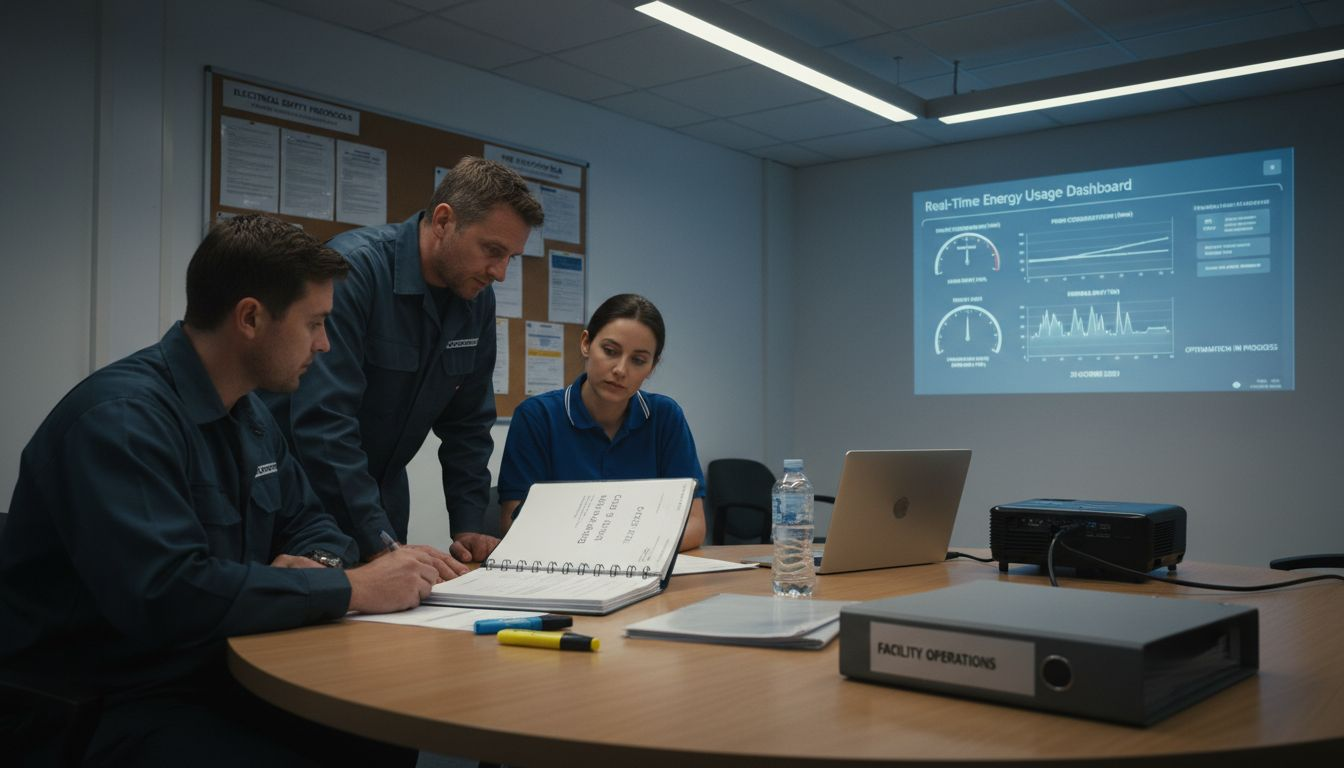
Advanced data integration platforms enable property managers to transform raw energy consumption data into actionable insights. Begin by establishing a centralised digital dashboard that consolidates information from different monitoring devices and sensors. Ensure your chosen platform can aggregate data from various sources including electricity metres, heating systems, water consumption points, and individual zone measurements. This comprehensive approach allows for detailed performance tracking and identifies potential efficiency improvements across your entire property portfolio.
Develop a structured workflow for regular data review and analysis. Schedule weekly or monthly deep dives into your energy consumption reports, comparing current performance against historical baselines and identifying trends. Create specific protocols for responding to unusual consumption patterns, setting clear thresholds for investigation and potential intervention. Train your property management team to understand and interpret the monitoring system data, ensuring everyone can recognise and respond to critical energy performance indicators.
Pro tip: Implement automated alert systems that notify key personnel about significant energy consumption anomalies, enabling rapid response and preventing potential wastage before it becomes a substantial issue.
Step 4: Track real-time data to uncover usage patterns
Understanding and interpreting real-time energy consumption data is crucial for effective property management and efficiency improvements. This step will help you develop strategies to analyse and respond to your property’s dynamic energy usage patterns.
Instantaneous energy consumption tracking provides unprecedented insights into your property’s energy dynamics. Implement a comprehensive monitoring approach that breaks down consumption across different systems and zones. Focus on identifying peak usage times, unexpected energy spikes, and potential inefficiencies. Utilise graphical dashboards that present data in easily digestible formats, allowing you to quickly recognise patterns and anomalies in your energy consumption.
Develop a systematic approach to data interpretation by establishing baseline consumption metrics for different times of day, week, and season. Create comparative analyses that highlight variations in energy usage, enabling you to pinpoint areas of potential improvement. Pay special attention to baseline energy consumption during periods of low activity, as these can reveal hidden inefficiencies in heating, cooling, or standby power systems. Consider implementing automated reporting mechanisms that generate weekly or monthly summaries, helping you track long term trends and measure the effectiveness of any energy efficiency interventions.
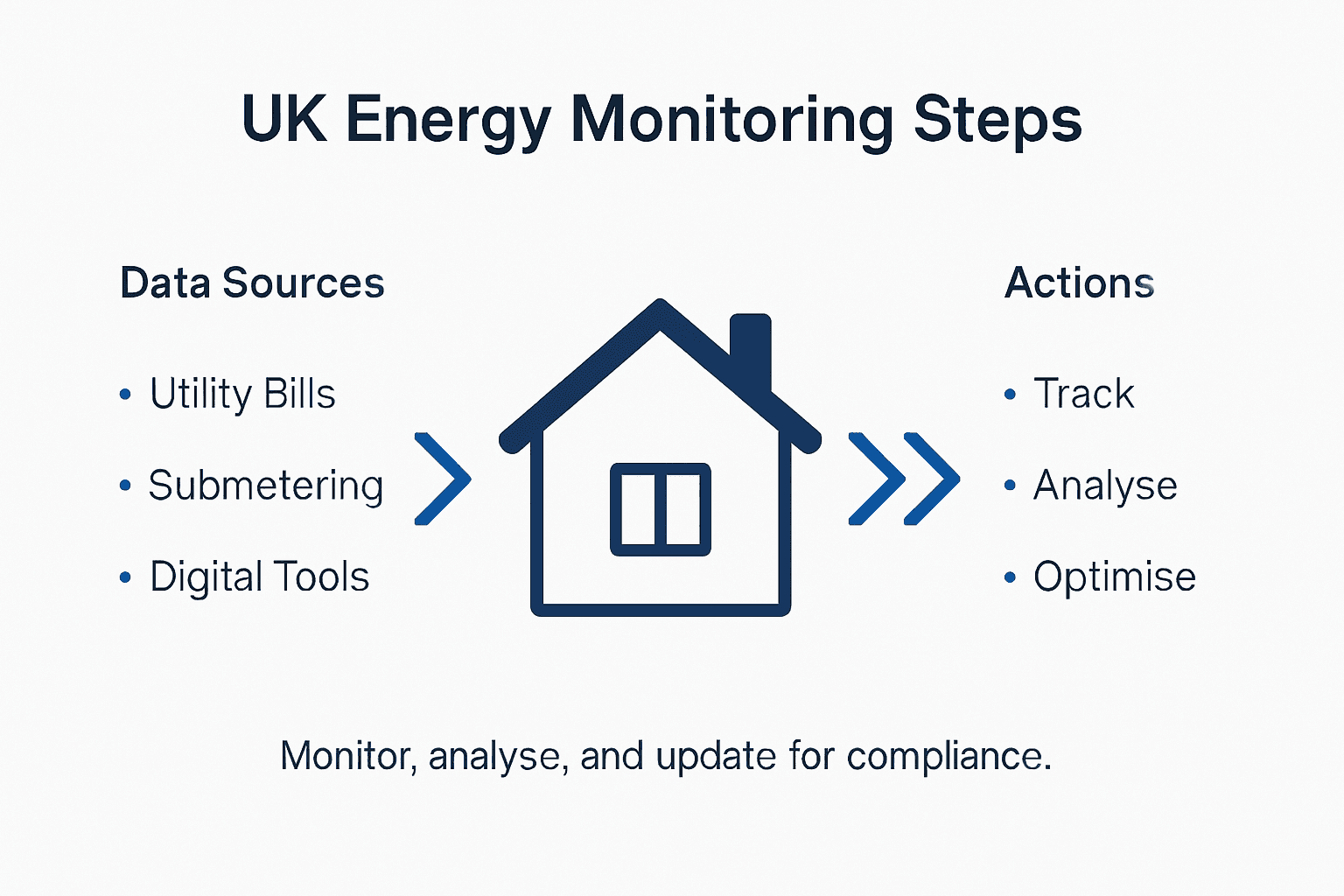
Pro tip: Configure your monitoring system to generate comparative reports that show year on year energy consumption, helping you understand seasonal variations and track your property’s overall energy performance trajectory.
Step 5: Review results and optimise for government compliance
Reviewing your energy monitoring results is a critical step in ensuring your property meets the latest UK energy efficiency standards. This process involves systematically analysing your collected data and developing targeted strategies for improvement.
Landlord compliance guidance provides clear frameworks for meeting Minimum Energy Efficiency Standards (MEES). Begin by comparing your property’s current Energy Performance Certificate (EPC) rating against the latest regulatory requirements. Identify specific areas where your property falls short, focusing on key performance metrics such as heating efficiency, insulation quality, and overall energy consumption. Prioritise improvements that will have the most significant impact on your EPC rating and align with government energy efficiency standards.
Develop a structured approach to implementing energy efficiency upgrades. Create a comprehensive improvement plan that addresses the most critical deficiencies identified in your energy monitoring results. Consider engaging professional energy assessment services that can provide tailored recommendations for your specific property. Systematically document all improvements, ensuring you maintain detailed records that demonstrate your commitment to meeting government compliance standards. Pay close attention to emerging regulations and future energy performance expectations, positioning your property to meet increasingly stringent efficiency requirements.
Pro tip: Create a dedicated digital folder to store all energy performance documentation, making it easy to track your property’s compliance journey and quickly respond to any regulatory inquiries.
The following table summarises key UK government compliance areas to consider during your energy review:
| Compliance Area | Description | Example Improvement |
|---|---|---|
| EPC Rating | Energy Performance Certification level | Upgrade insulation |
| Heating Efficiency | System output versus energy used | Install modern boiler |
| Insulation Quality | Effectiveness of heat retention | Add loft or wall insulation |
| Water Consumption Standards | Adherence to usage guidelines | Fit low-flow fixtures |
Take Control of Energy Monitoring and Stay Ahead of UK Compliance
Monitoring energy usage effectively is vital for UK property owners facing the challenge of meeting rigorous government efficiency standards. This article highlights key pain points such as tracking real-time consumption, integrating monitoring systems, and preparing for upcoming regulations like the Home Energy Model replacing SAP in 2025. These steps are crucial to not only understand but actively improve your property’s energy performance and maintain compliance with Minimum Energy Efficiency Standards.
Discover how homeenergymodel.co.uk can empower you throughout this journey. The site offers expertly tailored guidance on the Home Energy Model and its impact on Energy Performance Certificates (EPCs), helping you gain clarity on complex concepts like heating efficiency, insulation quality, and water consumption standards. With practical advice and resources designed for landlords, investors, and homeowners, you can confidently implement energy efficiency upgrades and optimise your property’s energy data integration.
Don’t wait until new regulations take effect. Act now to safeguard your investment and enhance your property’s sustainability. Explore homeenergymodel.co.uk to access detailed insights and get ahead on your compliance strategy. Begin mastering energy monitoring and secure your property’s future today.
Frequently Asked Questions
How can I assess my property’s current energy usage for compliance?
To assess your property’s current energy usage, collect detailed data from utility bills, meters, and energy audits. Document monthly consumption across different areas and major systems to establish a baseline for compliance.
What energy monitoring tools should I select for effective usage tracking?
Choose advanced energy monitoring tools that integrate well with your existing systems and provide real-time data. Look for options that offer detailed tracking of electricity, heating, gas, and water consumption.
How do I integrate energy monitoring systems into my property management strategy?
Integrate energy monitoring systems by establishing a centralised digital dashboard that consolidates data from all monitoring devices. Develop a structured approach for regular data review and response protocols to ensure your property management team can act on identified anomalies.
What are the key usage patterns to look for in real-time energy data?
Focus on identifying peak usage times, unexpected spikes, and periods of low activity. These insights can reveal inefficiencies, allowing you to make targeted improvements that could reduce energy consumption significantly.
How can I ensure compliance with UK energy efficiency regulations?
Regularly review your energy monitoring results against the latest regulatory standards, such as the Minimum Energy Efficiency Standards (MEES). Develop a structured improvement plan prioritising key areas that need upgrades to meet compliance requirements.
What documentation do I need to keep for energy compliance?
Maintain detailed records of all energy performance documentation, including reports on energy consumption and improvements made. This will help you track your compliance journey and respond quickly to any regulatory inquiries.