

Few topics impact the lives of british homeowners and landlords as much as changing housing energy rules. As the United Kingdom drives toward net-zero goals, new standards promise to reshape how properties are built, renovated, and maintained. With new homes in England now required to produce about 30 percent less carbon dioxide than before, understanding these regulations has become essential for anyone involved in british property. This guide breaks down the latest requirements and what the coming changes mean for every property owner.
Table of Contents
- Defining UK Housing Energy Standards Today
- HEM Vs SAP: Evolving Assessment Methods
- Future Homes Standard And Regulatory Drivers
- EPC Requirements For Landlords And Homeowners
- Financial And Compliance Implications In 2025
Key Takeaways
| Point | Details |
|---|---|
| Current Standards | UK housing energy standards are primarily governed by Part L of the Building Regulations, demanding a reduction of CO₂ emissions by 30% as of December 2021. |
| Future Homes Standard | Set for implementation in 2025, this standard aims for a 75-80% reduction in residential carbon emissions, requiring zero carbon readiness in new homes. |
| Transition to HEM | The Home Energy Model (HEM) is set to replace the Standard Assessment Procedure (SAP), offering more accurate assessments of energy efficiency. |
| EPC Requirements | Upcoming changes will enforce stricter Energy Performance Certificate standards, necessitating significant energy efficiency improvements for landlords. |
Defining UK Housing Energy Standards Today
The United Kingdom’s housing energy standards represent a complex framework of regulations designed to reduce carbon emissions and improve residential energy efficiency. These standards have evolved significantly, driven by ambitious national climate goals and an urgent need to transform the built environment. UK Building Regulations Energy: Complete Guide provides crucial insights into this progressive approach.
Current housing energy standards are primarily governed by Part L of the Building Regulations, which sets minimum performance requirements for new constructions and major renovations. The regulations mandate specific technical standards relating to thermal insulation, heating systems, lighting efficiency, and overall carbon dioxide emissions. As of December 2021, new homes in England are required to produce approximately 30% less CO₂ emissions compared to previous standards, marking a significant step towards national decarbonisation objectives.
Looking forward, the Future Homes Standard set to be implemented in 2025 represents a transformative milestone. This standard aims to reduce residential carbon emissions by 75-80% compared to current benchmarks, effectively reshaping how new homes are designed and constructed. The changes will impact multiple aspects of housing development, including enhanced building fabric performance, more efficient heating systems, and stricter requirements for renewable energy integration.
Professional Recommendation: Research local building regulations thoroughly and consult certified energy assessors before undertaking any residential construction or significant renovation project to ensure compliance with the latest UK housing energy standards.
Pro Tip: Always obtain an up-to-date Energy Performance Certificate when purchasing or renting a property to understand its current energy efficiency rating and potential improvements.
HEM vs SAP: Evolving Assessment Methods
The landscape of energy assessment in the United Kingdom is undergoing a significant transformation with the introduction of the Home Energy Model (HEM), which aims to replace the long-standing Standard Assessment Procedure (SAP). Improving the energy performance of privately rented homes represents a critical driver behind this methodological shift, signalling a more comprehensive approach to evaluating residential energy efficiency.
Traditionally, the Standard Assessment Procedure (SAP) has been the primary method for calculating the energy performance of residential properties in the UK. However, the upcoming HEM promises a more nuanced and precise assessment framework. The primary differences lie in the methodology’s depth of analysis, with HEM offering a more granular approach to understanding energy consumption, thermal performance, and potential carbon emissions. This evolution reflects the UK’s commitment to more accurate and actionable energy performance measurements.

The transition to HEM is not merely a technical upgrade but a strategic move to support broader environmental goals. By providing more detailed insights into residential energy efficiency, the new model will enable homeowners, developers, and policymakers to make more informed decisions about energy conservation, retrofit strategies, and carbon reduction. The introduction of RdSAP 10 in June 2025 further underscores the commitment to enhancing the accuracy and reliability of Energy Performance Certificates (EPCs).
Professional Recommendation: Property owners and professionals should stay informed about the upcoming HEM methodology and begin preparing for the transition by understanding its key differences from the existing SAP approach.
Pro Tip: Consider consulting with a certified energy assessor to understand how the new Home Energy Model might impact your property’s energy performance rating and potential improvement strategies.
Future Homes Standard And Regulatory Drivers
The Future Homes Standard represents a pivotal moment in the United Kingdom’s ambitious climate strategy, signalling a transformative approach to residential construction and energy efficiency. New homes will be required to produce nearly a third less carbon by 2025, marking a significant step towards the nation’s net-zero carbon emissions targets. This regulatory framework is not merely a technical adjustment but a comprehensive reimagining of how residential properties are designed, constructed, and powered.
At the core of the Future Homes Standard are stringent requirements that mandate new homes to be ‘zero carbon ready’, which essentially means dramatically reducing carbon emissions and preparing properties for a future powered by low-carbon heating technologies. The standard compels builders and developers to integrate advanced energy-efficient technologies, such as high-performance insulation, solar panels, and heat pumps, ensuring that new residential constructions contribute minimally to carbon emissions. These regulatory drivers are underpinned by a clear governmental commitment to combat climate change through structural and systemic changes in the built environment.
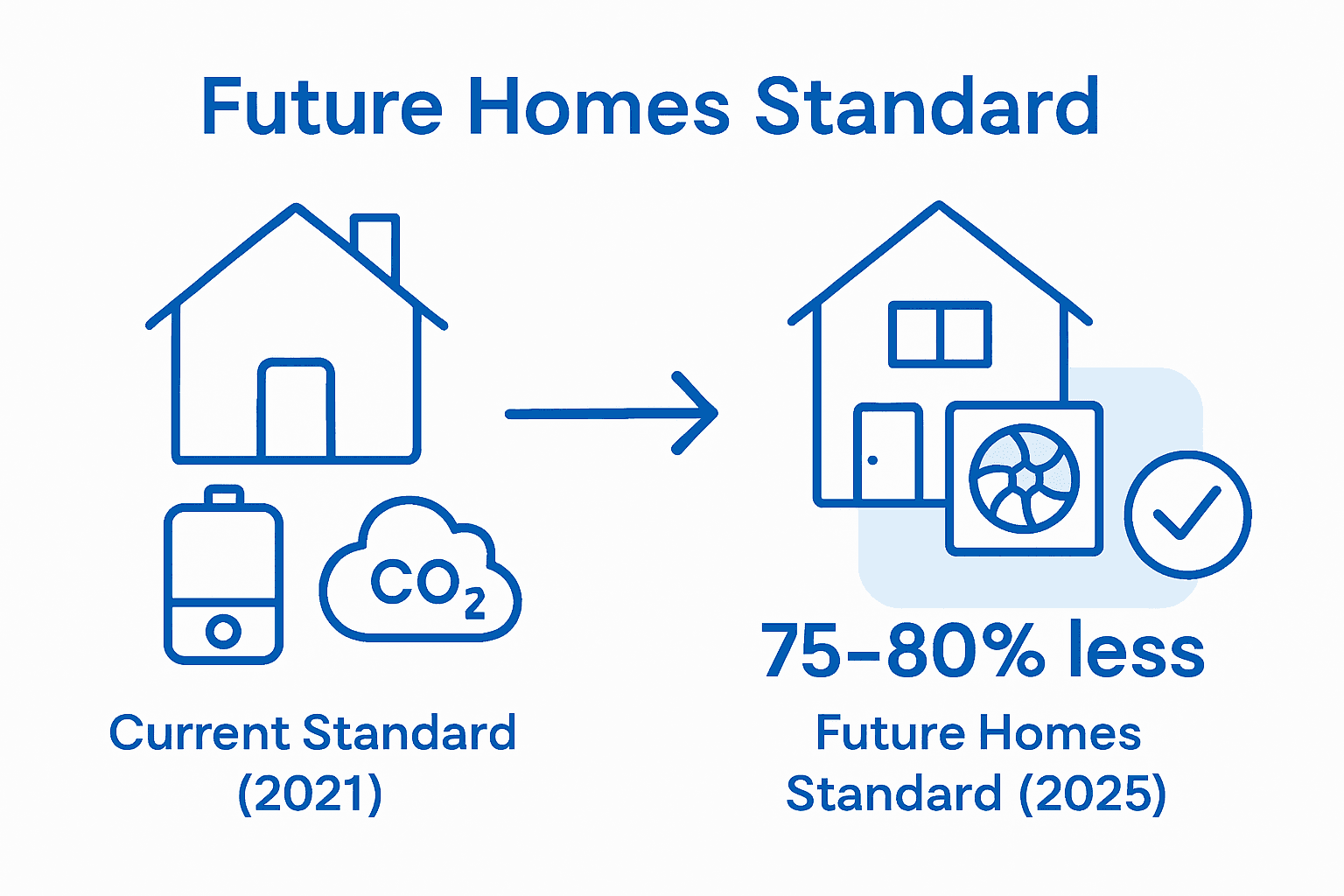
The implications of the Future Homes Standard extend far beyond immediate construction practices. By enforcing zero carbon readiness by 2025, the UK government is effectively reshaping the entire ecosystem of residential property development. Architects, engineers, developers, and energy consultants must now collaborate to design homes that not only meet but exceed current energy efficiency benchmarks. This approach represents a holistic strategy that combines technological innovation, regulatory pressure, and environmental consciousness to create a more sustainable housing landscape.
Here is a comparison of the main changes introduced by the Future Homes Standard from 2025:
| Aspect | Current Standard (2021) | Future Homes Standard (2025) |
|---|---|---|
| Target CO₂ reduction | 30% less than 2013 regulations | 75–80% less than prior standards |
| Focus areas | Insulation, heating, lighting | Whole-house performance, renewables |
| Heating requirements | Gas boilers permitted | Low-carbon heating only |
| Renewable integration | Recommended | Strongly encouraged/required |
Professional Recommendation: Property developers and construction professionals should proactively invest in training and technological capabilities to ensure compliance with the Future Homes Standard well in advance of the 2025 implementation.
Pro Tip: Consider conducting an early energy performance assessment of your planned developments to identify potential improvements and align with the upcoming zero-carbon requirements.
EPC Requirements For Landlords And Homeowners
Energy Performance Certificates (EPCs) have become a critical compliance mechanism for property owners in the United Kingdom, with evolving requirements for privately rented homes set to transform the residential property landscape. These certificates provide a standardised assessment of a property’s energy efficiency, rating buildings on a scale from A (most efficient) to G (least efficient), and offering potential recommendations for improvement.
Landlords face increasingly stringent obligations under the Minimum Energy Efficiency Standards (MEES), which currently prohibit renting properties with an EPC rating below E. The upcoming changes in 2025 will likely introduce more rigorous standards, potentially requiring landlords to invest in substantial energy efficiency upgrades to maintain their rental properties’ compliance. These requirements are not simply bureaucratic exercises but represent a meaningful approach to reducing carbon emissions and improving overall building performance across the United Kingdom’s housing stock.
The RdSAP 10 update in June 2025 marks a significant milestone in EPC assessments, promising more accurate and comprehensive energy performance evaluations. Homeowners and landlords will need to adapt to these new methodologies, which will likely provide more detailed insights into energy consumption, potential retrofit opportunities, and long-term sustainability strategies. The changes underscore a broader governmental commitment to driving energy efficiency and supporting the transition towards net-zero carbon emissions.
The table below summarises key impacts of the upcoming energy assessment transition for property owners:
| Change | Effect on Owners | Recommended Action |
|---|---|---|
| Switch to HEM | More detailed energy insights | Learn new model requirements |
| RdSAP 10 introduction | Stricter EPC evaluations | Seek early EPC re-assessment |
| Higher EPC threshold | More upgrades mandated | Plan for retrofitting in advance |
Professional Recommendation: Property owners should proactively review their current EPC ratings and begin planning potential energy efficiency improvements to stay ahead of regulatory changes.
Pro Tip: Schedule an early EPC assessment to understand your property’s current energy performance and identify cost-effective upgrade opportunities before the 2025 methodology changes.
Financial And Compliance Implications In 2025
The landscape of property ownership and development is set to undergo a significant financial transformation in 2025, with regulatory changes introducing substantial economic challenges and opportunities. Potential fines reaching £1.66 billion for non-compliant properties underscore the critical financial stakes for homeowners and landlords who fail to meet emerging energy efficiency standards. These penalties represent more than punitive measures; they signal a fundamental shift towards incentivising sustainable property management and retrofitting.
The Future Homes Standard will mandate significant investments in property infrastructure, particularly in heating technologies. Low-carbon heating system installations will require substantial upfront investments, with air source heat pumps ranging between £9,000 to £15,000. These costs are not merely expenses but strategic investments that will enhance property value, reduce long-term energy consumption, and align with increasingly stringent environmental regulations. Property developers, landlords, and homeowners must now view energy efficiency upgrades as essential capital expenditures rather than optional improvements.
Compliance strategies will demand a multifaceted approach, combining financial planning, technological adaptation, and proactive property management. The 2025 regulatory landscape will require property stakeholders to develop comprehensive roadmaps that balance immediate financial constraints with long-term sustainability objectives. This will involve detailed assessments of existing property portfolios, targeted retrofitting investments, and potentially restructuring property development and management practices to meet emerging standards.
Professional Recommendation: Develop a comprehensive financial strategy that anticipates and budgets for energy efficiency upgrades, treating them as critical investments in property resilience and market competitiveness.
Pro Tip: Conduct a thorough energy performance audit now to identify cost-effective upgrades and spread implementation expenses across multiple financial periods, minimising sudden economic strain.
Prepare Now for 2025 UK Housing Energy Standard Changes
The upcoming shift to the Home Energy Model (HEM) and the Future Homes Standard present significant challenges for homeowners, landlords and property developers in the United Kingdom. If you are concerned about navigating these evolving energy performance requirements, avoiding expensive fines, or ensuring your property is future-ready this resource is essential. The article highlights the complexity of new regulations such as stricter EPC ratings and mandatory low-carbon heating systems, which demand informed decision-making and timely action.
Unlock practical guidance and expert insights at homeenergymodel.co.uk where you can learn how the new HEM methodology will transform energy assessments and how to comply with the Future Homes Standard. Act today to stay ahead of the June 2025 transition with comprehensive resources on energy performance certificates, retrofit strategies, and compliance tips. Visit Home Energy Model now and start planning your pathway to energy efficiency that safeguards both your property value and environmental responsibility.
Frequently Asked Questions
What are the main changes to UK housing energy standards expected in 2025?
The Future Homes Standard will require new homes to produce 75-80% less CO₂ emissions compared to current benchmarks, emphasising low-carbon heating and the integration of renewable energy technologies.
How will the introduction of the Home Energy Model (HEM) affect energy assessments?
HEM will replace the Standard Assessment Procedure (SAP), providing a more detailed and accurate framework for evaluating residential energy efficiency, focusing on granular energy consumption and thermal performance data.
What are Energy Performance Certificates (EPCs) and how will they change in 2025?
EPCs assess a property’s energy efficiency on a scale from A to G. The introduction of RdSAP 10 in June 2025 will result in stricter assessments and potentially higher requirements for landlords to improve their properties’ energy ratings.
What financial implications can property owners expect from the 2025 energy standards?
Homeowners and landlords may face significant costs for compliance, including potential fines for non-compliance. Investments may be necessary for upgrading energy systems and improving overall property efficiency to meet the new standards.