

Over half of British households could save hundreds on annual energy bills by making targeted efficiency upgrades. With energy prices continuing to strain budgets, understanding where your property uses the most power is more important than ever. This guide demystifies the steps British property owners need to gather accurate data, uncover hidden inefficiencies, and maximize savings with smart upgrades and vigilant tracking.
Table of Contents
- Etape 1: Gather Accurate Energy Usage Data
- Etape 2: Determine Baseline Consumption Patterns
- Etape 3: Identify Efficiency Improvements And Upgrades
- Etape 4: Estimate Expected Savings From Interventions
- Etape 5: Verify And Track Actual Savings Achieved
Quick Summary
| Key Point | Explanation |
|---|---|
| 1. Gather Accurate Energy Data | Collect at least 12 months of detailed meter readings to identify consumption patterns and establish a comprehensive baseline. |
| 2. Identify Baseline Consumption Patterns | Analyse historical energy usage across different times to identify consistent patterns and peak usage periods for better efficiency. |
| 3. Assess for Efficiency Improvements | Evaluate property systems to identify key areas for energy-efficient upgrades that offer the highest return on investment. |
| 4. Estimate Potential Savings | Create a spreadsheet comparing current usage with projected savings from interventions to understand financial and environmental impacts. |
| 5. Track and Verify Actual Savings | Implement a monitoring system to compare pre- and post-intervention usage to validate the effectiveness of energy efficiency measures. |
Etape 1: Gather accurate energy usage data
Gathering precise energy usage data is crucial for calculating potential savings in UK properties. By understanding your current consumption patterns, you can develop targeted strategies to improve energy efficiency and reduce costs.
Start by collecting detailed electricity and gas meter readings from your property. Modern smart meters offer comprehensive energy tracking that provide real-time insights into your consumption habits. These digital devices automatically record and transmit usage data, eliminating manual reading errors and giving you a comprehensive view of your energy expenditure.
To ensure accuracy, collect at least 12 months of historical energy consumption data. This approach allows you to capture seasonal variations and establish a comprehensive baseline for your property. Access these records through your energy supplier’s online portal, annual bills, or directly from your smart meter display. Pay special attention to peak usage times, daily consumption patterns, and total annual energy expenditure.
Warning: Always cross reference multiple sources to verify the data’s integrity. Inconsistent or incomplete records can lead to inaccurate energy savings calculations.
Etape 2: Determine baseline consumption patterns
Identifying your property’s baseline energy consumption patterns provides a critical foundation for understanding potential savings and efficiency improvements. This step involves analysing your historical energy use to establish a comprehensive view of your property’s typical energy demands.
Nesta’s detailed research into electricity consumption patterns reveals that households have unique energy use profiles. Begin by categorising your consumption across different times of day, week, and season. Look for consistent patterns such as peak morning and evening energy usage, weekend versus weekday variations, and seasonal heating or cooling demands.
To effectively map these patterns, create a spreadsheet tracking hourly and daily energy consumption. The Better Buildings Partnership recommends establishing comprehensive energy consumption profiles that highlight high usage areas and potential efficiency opportunities. Pay particular attention to baseline loads electrical appliances consume even when seemingly inactive and identify any unexpected spikes in energy use that might indicate inefficient systems or equipment.
Pro tip: Graph your energy data visually to make consumption trends more apparent. Colour coded charts can quickly reveal insights that raw numbers might obscure.
Etape 3: Identify efficiency improvements and upgrades
Identifying potential energy efficiency improvements is a strategic process that can significantly reduce your property’s energy consumption and associated costs. This step involves carefully evaluating your current systems, infrastructure, and energy usage patterns to pinpoint opportunities for meaningful upgrades.
Start by conducting a comprehensive assessment of your property’s key energy consuming systems. Energy efficient home upgrades offer targeted strategies for properties across different age groups and construction types. Focus on critical areas such as insulation, heating systems, windows, and electrical appliances. Prioritise upgrades with the highest potential return on investment, such as improving loft insulation, installing double or triple glazing, upgrading to a more efficient boiler, and replacing old electrical appliances with modern energy star rated models.
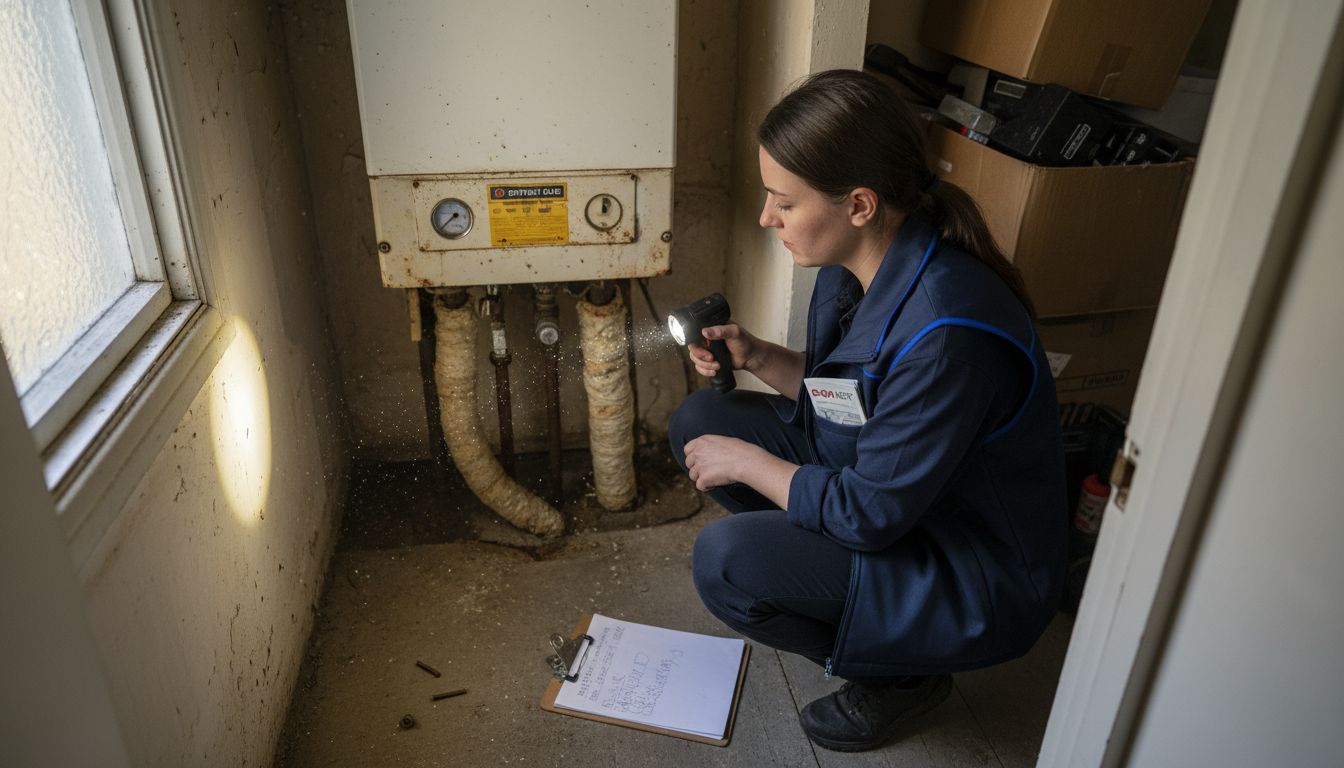
Consider obtaining a professional energy performance assessment to receive detailed recommendations tailored to your specific property. These assessments can reveal hidden inefficiencies and provide precise recommendations for improvements. Create a prioritised list of potential upgrades, considering both immediate modifications and long term investment strategies that align with your budget and energy saving goals.
Warning: Not all upgrades deliver equal value. Carefully analyse the cost versus potential energy savings before implementing any significant improvements.
Etape 4: Estimate expected savings from interventions
Estimating potential energy savings requires a systematic approach that combines historical consumption data with projected efficiency improvements. This crucial step helps property owners understand the financial and environmental impact of their planned energy upgrades.
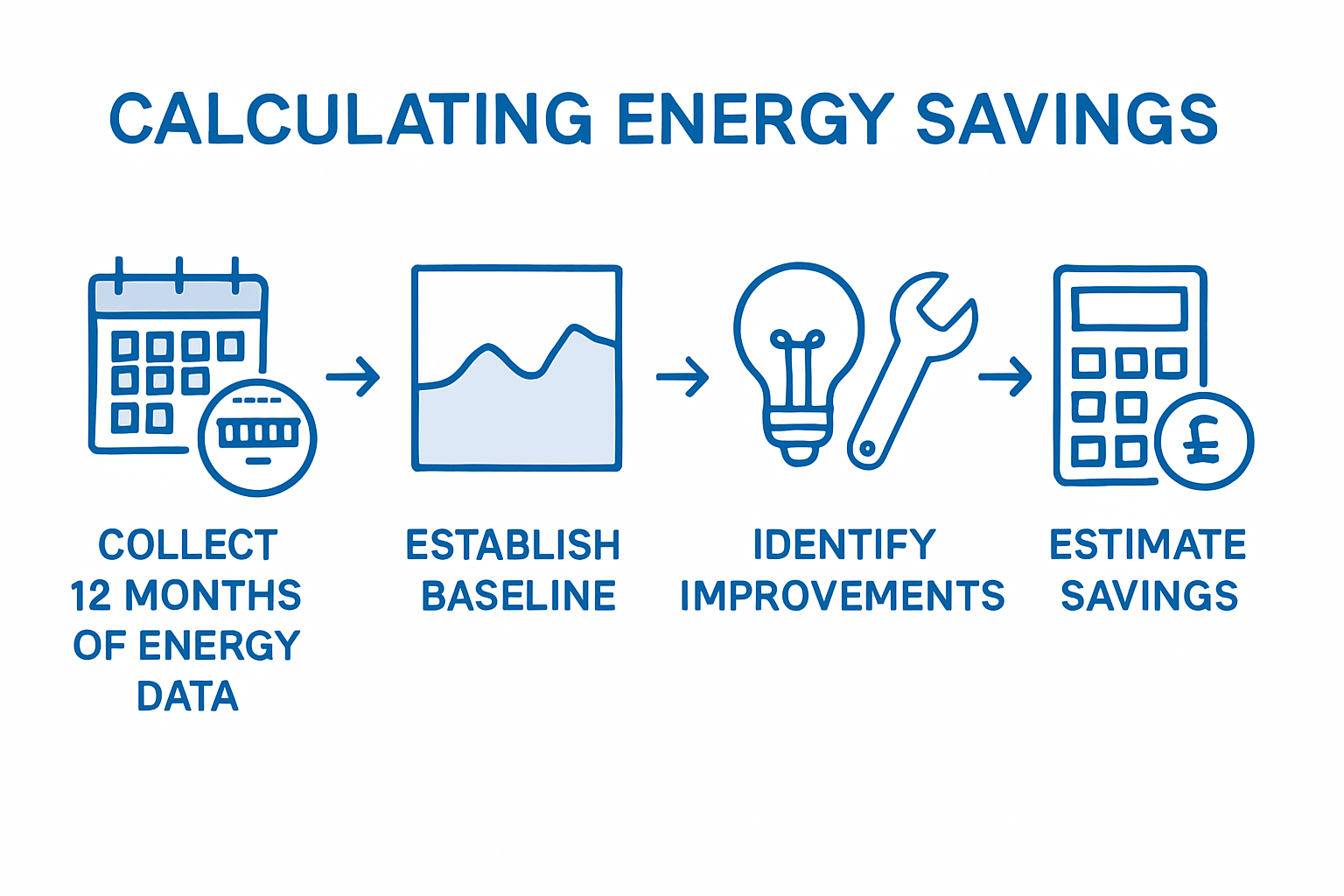
Experian’s Meter Insights provides precise data methodologies for establishing accurate baseline measurements and calculating potential savings. Begin by comparing your current energy consumption against projected performance after implementing specific interventions. Use standardised calculation methods that consider factors such as property size, insulation levels, heating system efficiency, and local climate conditions.
Develop a comprehensive spreadsheet that tracks each proposed upgrade and its estimated annual energy savings. Calculate potential cost reductions by multiplying expected energy unit savings by current electricity and gas rates. Include both direct financial savings and potential carbon emission reductions to provide a holistic view of your intervention’s impact.
Pro tip: Always include a conservative estimate in your calculations to account for potential variations in actual performance. Real world efficiency improvements can differ from theoretical projections due to individual property characteristics and usage patterns.
Etape 5: Verify and track actual savings achieved
Verifying and tracking energy savings is a critical process that transforms theoretical projections into tangible financial and environmental benefits. This final step ensures that your implemented energy efficiency interventions deliver the expected performance and return on investment.
Establish a robust monitoring system by comparing your pre intervention baseline consumption with post upgrade energy usage. Cost versus benefit analysis of energy upgrades becomes crucial in understanding the real world impact of your improvements. Create a detailed spreadsheet that tracks monthly energy consumption, comparing current usage against historical data and initial projections. Pay particular attention to seasonal variations and adjust your calculations accordingly to obtain a comprehensive understanding of your property’s energy performance.
Utilise smart metre technology and digital tracking tools to automate your monitoring process. Record precise energy consumption figures, calculate cumulative savings, and generate visual representations of your progress. This approach allows you to identify any discrepancies between expected and actual performance, enabling timely adjustments to maximise your energy efficiency strategy.
Warning: Continuous monitoring is key. Do not assume that initial improvements will maintain consistent performance without regular review and potential recalibration of your energy systems.
Unlock Real Energy Savings With Expert Guidance and the Home Energy Model
Calculating energy savings for UK properties can be overwhelming when faced with complex consumption data and efficiency upgrades. This article highlights the critical steps to gather accurate energy data, establish baseline consumption, and estimate savings from interventions — all essential for informed decision making and maximising the value of property upgrades. If you want to stay ahead of changing regulations like the Future Homes Standard and make smarter investments, understanding how the new Home Energy Model works is key.
Discover how homeenergymodel.co.uk serves as your essential resource for mastering this upcoming government methodology that will replace SAP in 2025. Access detailed insights on energy performance calculations, gain expert advice on energy efficiency improvements, and learn what the HEM means for Energy Performance Certificates and property owners. Take control of your energy savings journey today by exploring focused guides and tools designed to help landlords, investors and homeowners meet evolving UK standards with confidence. Start transforming your property’s energy profile now by visiting Home Energy Model insights and equip yourself with the knowledge to verify and track actual savings successfully.
Frequently Asked Questions
How can I gather accurate energy usage data for my property?
Gather accurate energy usage data by collecting detailed readings from your electricity and gas meters. Use modern smart meters to track your consumption in real-time and collect at least 12 months of historical data to spot seasonal trends.
What should I consider when determining my property’s baseline energy consumption?
To determine baseline energy consumption, analyse your historical usage patterns by categorising data by time of day, week, and season. Create a spreadsheet to track hourly and daily consumption, focusing on identifying peak usage times and any unexpected spikes.
How do I identify potential energy efficiency improvements?
Identify energy efficiency improvements by assessing your property’s main energy-consuming systems. Consider upgrades like enhancing insulation, replacing old appliances, or installing energy-efficient windows, and prioritise those with the highest potential return on investment.
How can I estimate expected energy savings from planned interventions?
Estimate expected energy savings by comparing your historical consumption with projected changes after implementing efficiency upgrades. Develop a spreadsheet that calculates anticipated savings based on energy unit reductions and current rates to get a clear financial picture.
What steps should I take to verify and track my actual energy savings?
To verify and track actual energy savings, establish a monitoring system to compare pre-intervention baseline data with post-upgrade usage. Record monthly consumption, adjust calculations for seasonal variations, and regularly review the performance to ensure your energy efficiency measures are effective.