

TL;DR:
- A truly eco-friendly home minimizes environmental impact through high-performance design, sustainable materials, and renewable energy use. Focusing on the building envelope and insulation provides the greatest long-term benefits, reducing energy demand before adding technology. Green homes offer savings, better air quality, and increased resilience, making them a smart investment for long-term sustainability.
An eco-friendly home is a residential building designed and operated to minimise its environmental impact through sustainable materials, energy efficiency, and improved indoor air quality. Known in the industry as a “sustainable home” or “green home,” these properties go well beyond fitting solar panels. They address the full picture: how a building is constructed, what it is made from, how it performs over decades, and what it costs to run. For homeowners and prospective buyers in the UK, understanding what are eco friendly homes means understanding the difference between a property that costs less to run and one that actively reduces its carbon footprint.
What are the key features that make a home eco friendly?
A sustainable home performs well across four areas: energy, water, materials, and indoor environment. No single feature defines it. The combination determines whether a property genuinely qualifies as green.
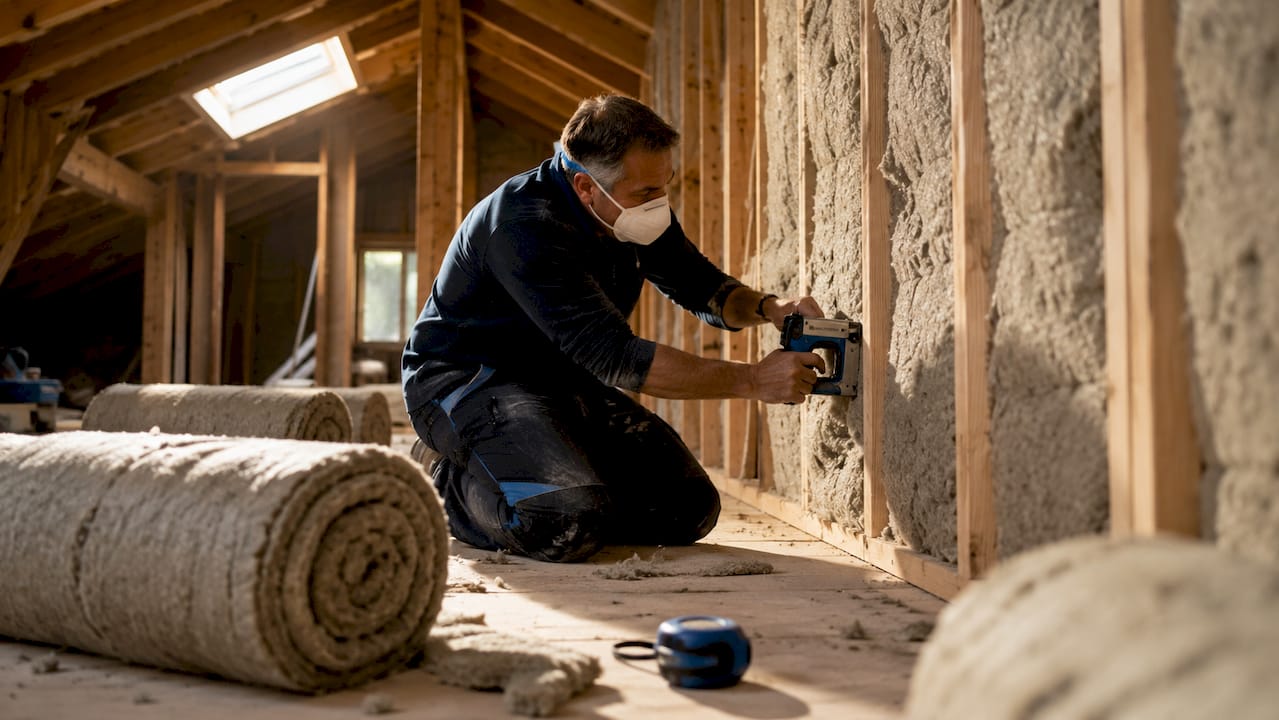
Energy efficiency is the foundation. A high-performance building envelope that minimises energy demand is the single most important feature of effective eco-friendly design. That means thick insulation, airtight construction, and mechanical ventilation with heat recovery (MVHR) to maintain fresh air without losing warmth.
Key features of a sustainable home include:
- Insulation and airtightness: Walls, roofs, and floors insulated to high standards, with draught-proofing at every junction and opening.
- Triple-glazed windows: Significantly reduce heat loss compared with standard double glazing.
- Renewable energy systems: Solar photovoltaic (PV) panels generate electricity on-site. Battery storage retains surplus power for evening use. The environmental impact of solar panels is well documented, with lifecycle carbon payback typically achieved within a few years.
- Water conservation: Low-flow taps, dual-flush toilets, and rainwater harvesting systems reduce mains water demand.
- Smart controls: Smart thermostats, automated lighting, and energy monitors help occupants reduce waste without changing their habits.
- Sustainable landscaping: Permeable paving, native planting, and green roofs reduce surface water runoff and support local biodiversity.
Pro Tip: Before adding any technology, address the building envelope first. Insulation and airtightness deliver the greatest return on investment and reduce the size of any renewable energy system needed.
Which eco friendly building materials are most effective?
Sustainable building materials fall into three primary categories: rapidly renewable, recycled or reclaimed, and natural or earthen. Each category serves different structural and aesthetic purposes, and the best eco-conscious builds draw from all three.
Rapidly renewable materials grow or regenerate within a short cycle. Bamboo is the clearest example: it reaches maturity in three to five years, compared with decades for structural timber. Hemp, used in hempcrete blocks, is another. Hempcrete is a mixture of hemp hurds and lime that provides excellent thermal mass and is carbon negative over its lifetime.
Recycled and reclaimed materials reduce the demand for new resource extraction. Reclaimed wood is denser and more durable than new-growth timber, and carries a character that is difficult to replicate. Recycled steel uses a fraction of the energy required to produce virgin steel, making it a strong choice for structural frames. Recycled glass and crushed aggregate from demolition waste also reduce landfill and embodied carbon.
Natural and earthen materials include straw bales, rammed earth, and cob. Straw bale construction delivers outstanding thermal insulation values and uses an agricultural by-product that would otherwise be burned or composted. Rammed earth walls provide thermal mass that stabilises internal temperatures across seasons.
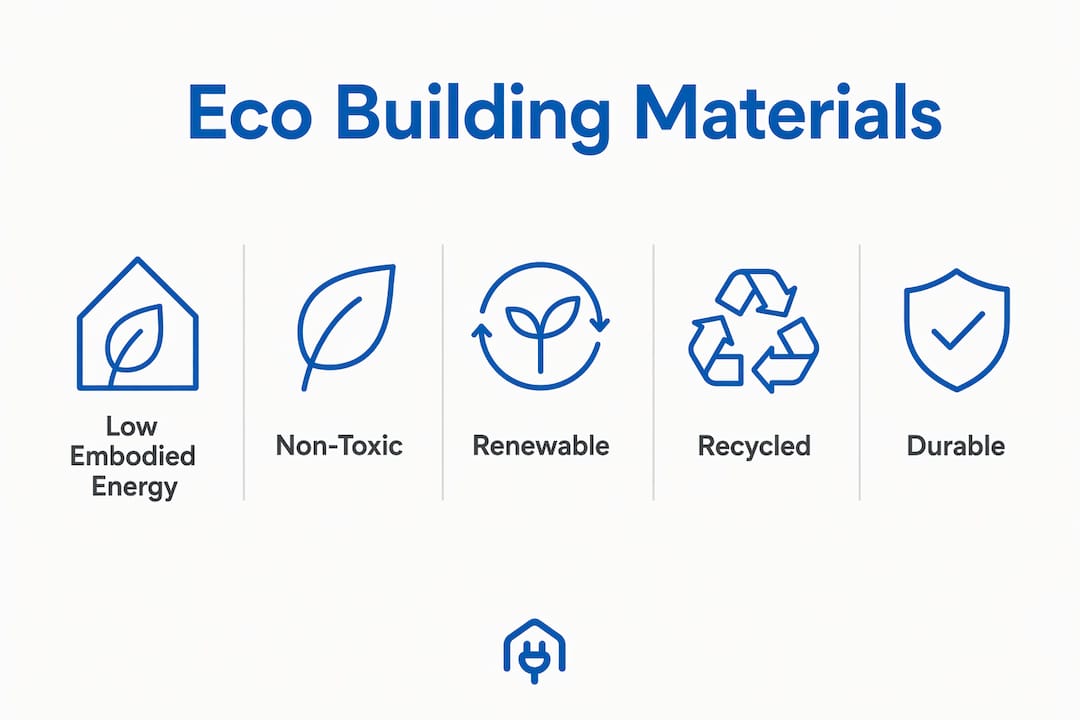
Sustainable materials share three core criteria: low embodied energy, non-toxic composition, and design for reuse or safe biodegradation. Life-cycle assessment (LCA) is the standard method for comparing materials across these criteria. An LCA measures environmental impact from raw material extraction through to end-of-life disposal, giving a full picture rather than just the upfront carbon cost.
| Material | Category | Key benefit |
|---|---|---|
| Bamboo | Rapidly renewable | Fast-growing, structurally strong |
| Reclaimed wood | Recycled/reclaimed | Dense, durable, low embodied carbon |
| Recycled steel | Recycled/reclaimed | High strength, low production energy |
| Hempcrete | Natural/earthen | Carbon negative, excellent insulation |
| Straw bale | Natural/earthen | Very high thermal insulation value |
Pro Tip: Always request a life-cycle assessment from suppliers when comparing materials. Upfront cost rarely reflects the full environmental or financial picture over a 30-year building lifespan.
What are the benefits of eco friendly homes for owners?
The benefits of eco friendly homes extend well beyond lower energy bills, though those savings are real and significant. Buildings that use energy and water efficiently protect occupants from volatile utility costs and power outages. That resilience has direct financial value, particularly as energy prices in the UK remain unpredictable.
The main advantages for homeowners and buyers include:
- Lower running costs: Efficient insulation and renewable energy generation reduce monthly utility bills. Avoiding gas-pipe installation eliminates both upfront connection costs and ongoing gas standing charges, a saving that compounds over decades.
- Higher property value: Energy-efficient upgrades increase resale value as buyers pay premiums for certified green homes. An Energy Performance Certificate (EPC) rating of A or B is increasingly a selling point in the UK market.
- Better indoor air quality: Sustainable homes improve occupant health by improving ventilation, reducing toxins, and controlling humidity. MVHR systems filter incoming air, reducing exposure to pollutants and allergens.
- Climate resilience: Green homes designed with climate resilience withstand extreme weather and power outages better than standard builds. Battery storage and passive design reduce dependence on grid electricity.
- Reduced carbon footprint: ENERGY STAR-certified buildings produce 35% fewer greenhouse gas emissions than typical buildings. That reduction matters for homeowners committed to net zero targets.
The health and resilience benefits are frequently underestimated. A home that maintains stable temperatures, filters its own air, and generates its own power is not just environmentally responsible. It is a more comfortable and secure place to live.
How can homeowners build or improve an eco friendly home?
Practical steps exist for both new builds and existing properties. The approach differs, but the priorities remain the same: reduce demand first, then supply it cleanly.
-
Optimise orientation and passive design. For new builds, decisions at the design and construction stage about envelope, orientation, and materials determine long-term sustainability and costs. South-facing glazing maximises solar gain in winter. Overhangs prevent overheating in summer. These choices cost nothing extra when made at the outset.
-
Upgrade the building envelope. For existing homes, insulating the loft, walls, and floor is the highest-priority retrofit. Sealing gaps around windows, doors, and service penetrations reduces heat loss without major disruption. Replacing single or poor-quality double glazing with triple glazing delivers measurable improvements in comfort and energy use. Homeenergymodel’s guide to energy-efficient home upgrades covers the most cost-effective sequence for UK properties.
-
Install renewable energy systems. Solar PV panels are now cost-competitive in the UK. Pair them with a battery storage system to maximise self-consumption. Air source heat pumps replace gas boilers efficiently, particularly in well-insulated homes where lower flow temperatures are sufficient.
-
Choose sustainable materials during construction or renovation. Specify reclaimed timber for flooring, recycled aggregate for groundworks, and low-VOC (volatile organic compound) paints and adhesives throughout. These choices reduce embodied carbon and improve indoor air quality simultaneously.
-
Avoid gas-pipe installation in new builds. Connecting to the gas network adds upfront cost and locks a property into fossil fuel dependency. All-electric homes with heat pumps and solar PV are now the lower-cost option over a 25-year horizon.
-
Plan and budget in phases. Not every improvement needs to happen at once. Prioritise the envelope, then heating, then renewables. A home energy assessment identifies which upgrades deliver the greatest impact for a specific property.
Pro Tip: Commission an energy assessment before spending on renewables. A poorly insulated home with solar panels will still be expensive to heat. Fix the fabric first.
Key takeaways
Eco-friendly homes deliver lasting financial, health, and environmental benefits when built around a high-performance envelope, sustainable materials, and clean energy systems.
| Point | Details |
|---|---|
| Envelope comes first | Insulation and airtightness reduce energy demand before any technology is added. |
| Materials matter long-term | Life-cycle assessment reveals the true environmental cost of building materials. |
| Financial benefits are real | Lower bills, no gas charges, and higher resale values make green homes financially sound. |
| Health gains are significant | Better ventilation and non-toxic materials improve occupant wellbeing measurably. |
| Design decisions are permanent | Orientation, layout, and material choices made at the outset determine decades of performance. |
Why the building envelope is the argument I keep making
Most homeowners I speak with assume that going green means adding things: solar panels, a heat pump, a smart thermostat. The technology is visible and feels like progress. What is harder to see, and far more consequential, is the quality of the building envelope.
A poorly insulated home with a heat pump is still an inefficient home. The heat pump works harder, costs more to run, and delivers less comfort than it should. The same system in a well-insulated, airtight property performs entirely differently. Homeowners often mistakenly believe green homes mean expensive technology additions, when the design fundamentals deliver the real gains.
The market is catching up. Buyers in 2026 are asking for EPC ratings before viewing properties. Lenders are beginning to price green mortgages differently. The financial case for investing in a genuinely sustainable home has never been clearer. But the window for making the right decisions cheaply is at the design stage. Once walls are built and systems are installed, retrofitting becomes expensive and disruptive.
My consistent advice: treat the building envelope as the investment, and treat the technology as the finishing layer. That sequence produces better outcomes every time.
— Danny
How Homeenergymodel supports greener property decisions
Understanding what makes a home eco friendly is the first step. Knowing how a specific property performs against UK energy standards is what drives real improvement. Homeenergymodel provides clear guidance on home energy model assessments and how they apply to UK residential properties. A professional energy assessment identifies exactly where a home loses heat, where it wastes water, and which upgrades will deliver the greatest return. For homeowners planning a retrofit or buyers evaluating a purchase, that information removes guesswork and supports confident investment in the features that genuinely matter.
FAQ
What makes a home eco friendly?
An eco-friendly home minimises environmental impact through high-performance insulation, sustainable materials, renewable energy systems, and water conservation features. The building envelope, covering walls, roof, floor, and windows, is the single most important factor.
Are eco friendly homes more expensive to build?
Upfront costs can be higher, but lower running costs and higher resale values typically offset the difference over time. Avoiding gas-pipe installation and choosing durable materials reduce both short-term and long-term expenditure.
What are the best eco friendly building materials?
Reclaimed wood, recycled steel, bamboo, hempcrete, and straw bale are among the most effective sustainable building materials. Each offers low embodied energy, durability, and either recyclability or safe biodegradation at end of life.
Do eco friendly homes have better EPC ratings?
Green homes built with high insulation standards, airtight construction, and renewable energy systems consistently achieve EPC ratings of A or B. A strong EPC rating reflects lower energy demand and reduced carbon emissions.
How do I start improving my home’s sustainability?
Commission a home energy assessment to identify the highest-priority improvements for your specific property. Loft insulation, draught-proofing, and wall insulation typically deliver the fastest returns before renewable energy systems are considered.