
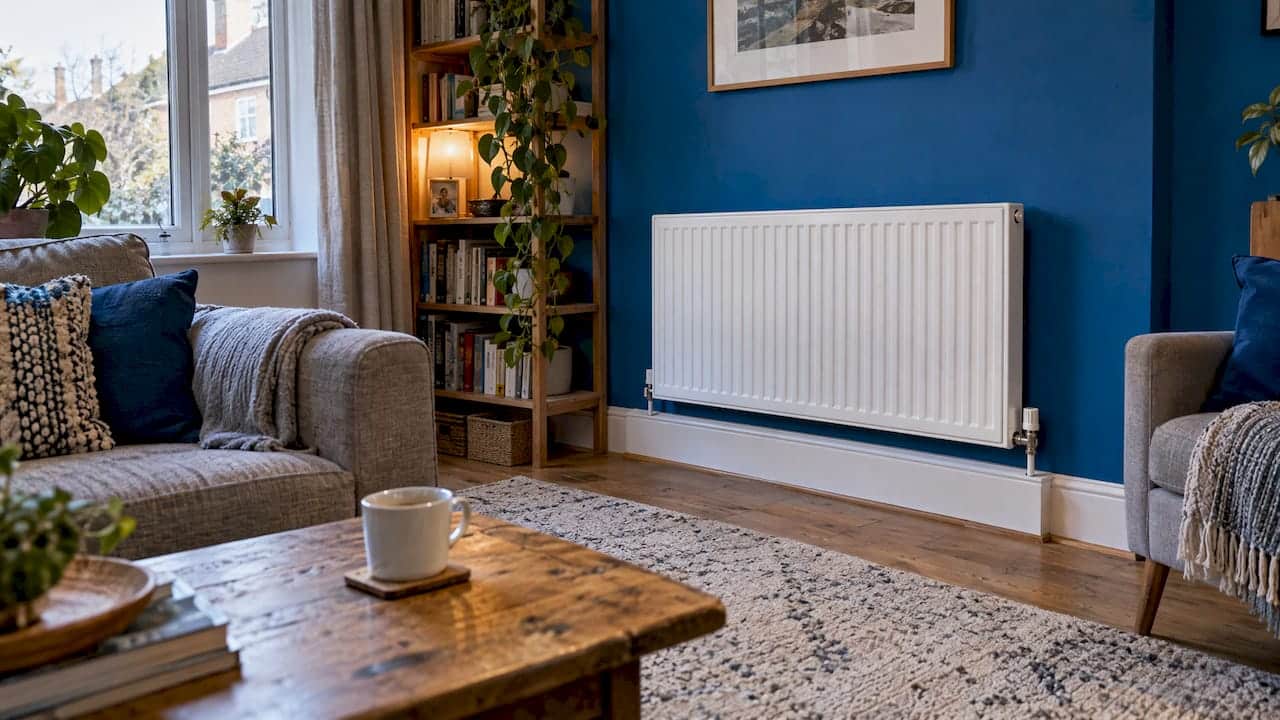
The most reliable way to heat a home for less is to lose less heat first, then control the heating you use. Draught-proofing, insulation, a sensibly set room thermostat, a working programmer and radiator valves deliver most of the saving before any new equipment is bought. This guide sets out each step in the order that makes sense for a UK property, with the evidence behind it.
TL;DR
- Set the room thermostat to the lowest comfortable level, usually between 18°C and 21°C, and lower it one degree at a time until comfort starts to slip.
- Heat the home to a schedule with a programmer or smart controls instead of leaving it on at a high setting all day.
- Stop heat escaping before upgrading anything: seal draughts, insulate the loft and cavity walls, and close the curtains at dusk.
- Use radiator valves and zoning so that unused rooms are not heated to the same level as living areas.
- Size any new boiler or heat pump from a room-by-room heat-loss calculation, not from the old appliance.
Table of Contents
- Start with the thermostat: the temperature that matters
- Heat to a schedule, not all day
- Use radiator valves and zones
- Stop the heat escaping first
- Look after the boiler and the system
- Sizing and choosing a heating system
- Heating tips at a glance
- Our perspective
- Get a clear view of where your home loses heat
- FAQ
- Sources
Start with the thermostat: the temperature that matters
Heating and hot water make up over half of a typical home’s energy use, and the Energy Saving Trust says that setting the thermostat to the lowest comfortable level, usually 18°C to 21°C, can cut energy use without costing comfort (Energy Saving Trust). A single room thermostat in the hallway or living room normally governs the whole house, so its setting decides how hard the boiler works.
Citizens Advice suggests a simple method: start at 21°C, then lower it by 1°C at intervals until the lowest comfortable setting is found (Citizens Advice). Give each setting a few days before judging it. Rooms take time to settle, and a change made in the evening says little about the next morning.
The saving per degree is meaningful. The Australian Government’s YourHome guidance says each additional degree of heating raises system energy use by roughly 5% to 10% (YourHome). The climate differs from the UK, but the principle applies to any heating system: a higher set point costs more.
A few practical points:
- Keep furniture, curtains and clothes drying racks away from the thermostat so that it reads the true room temperature.
- Do not turn the thermostat up to heat the room faster. It sets the target, not the speed.
- Wear a jumper indoors before raising the setting. It is the cheapest layer of insulation available.
More on thermostat use, and how controls relate to an EPC rating, is in the guide to using a thermostat to save energy.
Heat to a schedule, not all day
A common question is whether it is cheaper to leave heating on low all day or to heat only when needed. The evidence points towards scheduled heating, with a few exceptions.
A whole-house test by the University of Salford found that setting the heating back to 16°C instead of turning it off raised cost by 3%. Reducing operating times and temperatures with a programmable thermostat cut cost by 16%. The authors note that results depend on how occupants live (Salford University test). In other words, the saving comes from heating less, at times that match the household’s routine.
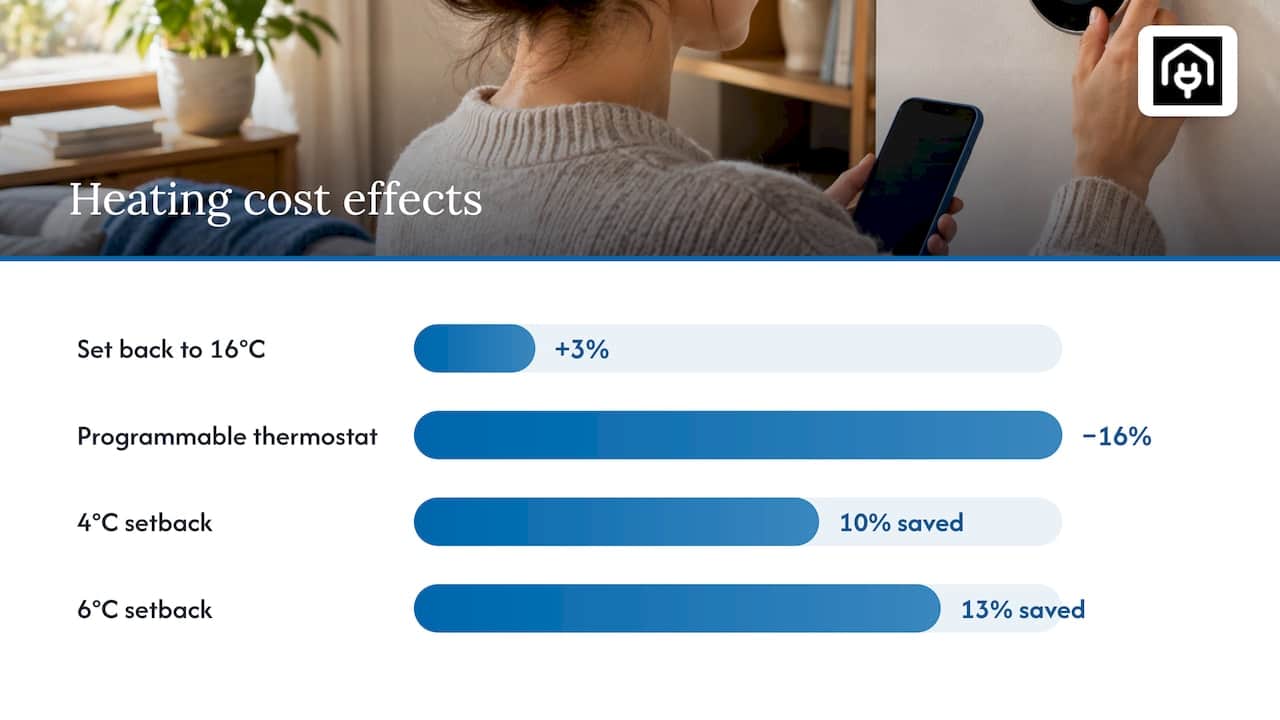
Other research gives a sense of scale. A Canadian government study measured seasonal furnace-gas savings of 10% from a 4°C setback over two seven-hour periods, and 13% from a 6°C setback (National Research Council Canada). The US Department of Energy gives a rule of thumb of about 1% off the heating bill per 1°F of setback over an eight-hour period (US Department of Energy).
A sensible daily pattern
- Set the heating to come on 30 to 60 minutes before getting up, so the home is warm when needed rather than from the middle of the night.
- Set it to switch off or drop back during the working day if the house is empty.
- Bring it back on shortly before returning home.
- Switch off or reduce it at bedtime, since bedding provides warmth.
Smart controls and programmable thermostats make this automatic. The Energy Saving Trust lists learning how to use the programmer as a core step, because many households run a programmer on factory settings or in manual override (Energy Saving Trust).
When setbacks need more care
Heating that responds slowly, such as underfloor heating, and many heat pumps do not suit large temperature swings. Colorado State University Extension notes that large setbacks may be unsuitable for slow-response radiant floors, heat pumps and two-stage or modulating furnaces, and that heat-pump backup heat can be expensive (Colorado State University Extension). With these systems, a lower steady set-back temperature is generally the better pattern than a long off period followed by a sharp recovery. The installer’s commissioning guidance for the specific system should be followed.
Use radiator valves and zones
A room thermostat only measures one place. Thermostatic radiator valves (TRVs) fill in the rest by limiting how much hot water enters each radiator. The Energy Saving Trust explains that TRVs sense room temperature and open or close the flow accordingly (Energy Saving Trust).
Some simple rules:
- Turn down radiators in spare rooms and rooms used rarely, but do not switch them off entirely in cold weather, to avoid damp and condensation.
- Keep the radiator in the room that holds the room thermostat fully open, otherwise the TRV can stop the boiler from ever seeing the target temperature.
- Keep internal doors closed so that heat stays where it is wanted.
- Do not cover radiators with towels or furniture. Reflective foil panels behind radiators on external walls can help a little.
The YourHome guidance states the principle plainly: heat only the rooms that need it, and use zones in central systems so that less-used areas can be turned off (YourHome). Where a property has separate heating circuits, such as upstairs and downstairs, each can have its own timing and temperature. A look at two-zone heating control shows how splitting the temperature circuits lets heat be distributed to match each part of the home.
Stop the heat escaping first
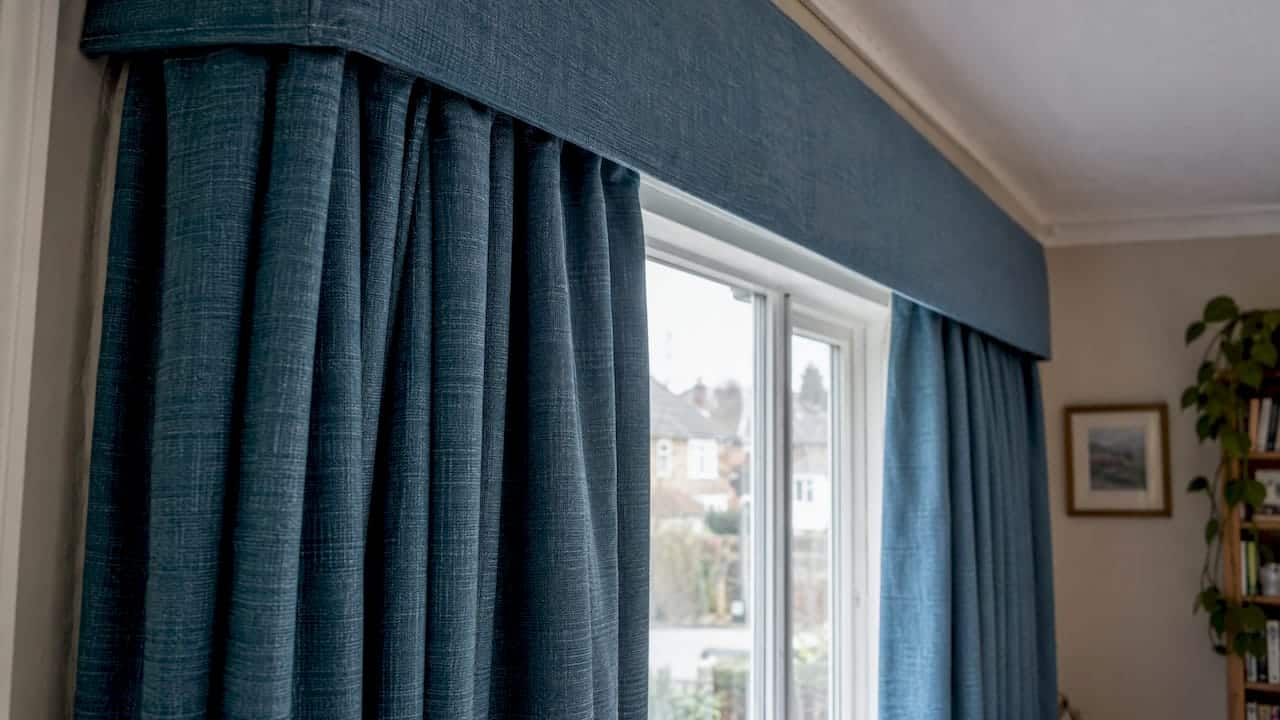
The cheapest heat is the heat that is not lost. Windows alone can account for up to 40% of a home’s heating-energy loss, according to energy.gov.au, which says sealing gaps and fitting close-fitting lined curtains or blinds and pelmets reduces losses, while double glazing can cut them by up to 30% (energy.gov.au).
Draughts
Draught-proofing is low-cost and quick. Check:
- Gaps around window and door frames, and letterboxes.
- Keyholes, loft hatches and the gaps beside skirting boards.
- Open chimneys and fireplaces that are not in use. A chimney balloon or a properly fitted cap can stop a constant flow of cold air.
- Pipework penetrations under sinks and behind the boiler.
The US Department of Energy recommends sealing major leaks around utility penetrations, chimneys, recessed lights and cupboards, and using blower-door testing to find significant leakage paths (US Department of Energy). Do not seal ventilation that is there for safety: extractor fans, trickle vents and air bricks serving a boiler or open fire must stay clear. Moisture and combustion air need a route, and CIBSE’s guidance on heating design stresses maintaining minimum ventilation rates alongside better airtightness (CIBSE DBSP factsheets).
Insulation
A UK study of 1,372 dwellings found that cavity-wall and loft insulation cut normalised space-heating fuel use by about 10% in centrally heated homes and 17% in homes without central heating (UCL study). The same study found that installing gas central heating alone did not significantly reduce measured fuel use once indoor temperature was accounted for. The lesson is that a warmer home is the usual result of new equipment, while a cheaper home comes from keeping the heat in and using controls well.
In ENERGY STAR’s modelling for typical US homes, air sealing and added insulation save an average 15% on heating and cooling costs, with savings varying by climate zone (ENERGY STAR). UK figures differ with house type and age, so a home survey is the way to put a number on a specific property.
Curtains and windows
- Draw lined curtains at dusk and open them on sunny days to collect free heat.
- Tuck curtains behind radiators only if they do not hang over them, as this pushes warm air into the room rather than behind the fabric.
- Consider secondary glazing or heavy-duty window film if replacing windows is not an option.
Look after the boiler and the system
A well-run system uses less fuel for the same warmth. Practical maintenance includes:
- Annual service. The Energy Saving Trust lists keeping the boiler serviced as part of using central heating economically (Energy Saving Trust). Use a Gas Safe registered engineer for gas appliances.
- Bleeding radiators. If the top of a radiator is cold while the bottom is hot, trapped air is likely. Releasing it restores output.
- Checking pressure. Low pressure on a sealed system can stop the boiler firing. The manufacturer’s guide explains how to top it up.
- Filters and ducts, where fitted. ENERGY STAR advises checking furnace filters monthly during heavy use and sealing ducts in unconditioned areas (ENERGY STAR). This applies mainly to ducted warm-air systems, which are rare in UK homes.
Colorado State University Extension reports that older furnaces and boilers can be as low as 56% efficient, while new units can approach 99% (Colorado State University Extension). When a boiler is near the end of its life, replacement is worth planning, but the building fabric should be addressed first, so that the new equipment is not oversized.
Sizing and choosing a heating system
When the time comes to replace a boiler or add a heat pump, size matters more than many owners expect. CIBSE advises room-by-room sizing in preference to rules of thumb, whole-house estimates or copying the existing appliance, because oversizing can reduce efficiency and raise running costs. It also recommends designing for a representative cold winter day instead of the rarest extreme (CIBSE DBSP factsheets).
The order that works best:
- Assess heat loss room by room, covering fabric and ventilation.
- Improve insulation and draught-proofing, and repair defects.
- Re-run the calculation with the improved fabric.
- Choose a system sized to the new, lower demand.
Natural Resources Canada makes the same point: upgrades to the building envelope may allow a smaller, high-efficiency heating system, and controls and distribution should be tuned too (Natural Resources Canada).
Heat pumps
Heat pumps move heat rather than generate it. Colorado State University Extension says a properly installed unit can deliver 1.5 to 3 times more heat energy than the electrical energy it consumes (Colorado State University Extension). YourHome ranks heat pumps as the most energy-efficient heating systems it lists (YourHome).
In England and Wales, the Boiler Upgrade Scheme offers upfront grants towards heat pump installation through MCS-certified installers. Grant values and eligibility change, so the current terms are on the Ofgem scheme page.
For a fuller comparison of options, see the guide to the most efficient way to heat your home.
Heating tips at a glance
| Action | Typical effort | What it targets |
|---|---|---|
| Lower thermostat by 1°C steps | Free | Set-point energy use |
| Set programmer to a schedule | Free to low | Hours of operation |
| TRVs and closed doors | Low | Heating unused rooms |
| Draught-proofing | Low | Air leakage |
| Lined curtains at dusk | Low | Window heat loss |
| Loft and cavity-wall insulation | Medium | Fabric heat loss |
| Boiler service | Low | System efficiency |
| Heat-loss-led system replacement | Higher | Right-sized equipment |
Start at the top of the table and work down. Each step makes the next one more effective.
Our perspective
Most heating advice starts with equipment. We start with the building. A home that loses less heat needs a smaller system, runs it for fewer hours and holds a steady temperature with less effort.
Property owners and landlords often ask which boiler or heat pump to fit. The more useful question is how much heat each room actually loses. That is why we publish guidance built around heat-loss thinking, EPC findings and the calculation methods that sit behind UK building regulations, including the Home Energy Model that is set to replace SAP.
An Energy Performance Certificate is a practical starting point. It lists recommended improvements for the property, so heating spend goes where it makes a measurable difference. For new builds and major refurbishments, SAP calculations and energy statements help show how a design performs before work begins.
We would rather see an owner insulate, control and size correctly than pay for more capacity than the home needs.
Danny
Get a clear view of where your home loses heat
An Energy Performance Certificate records a property’s current efficiency and suggests improvements, which makes it a useful checklist before spending on heating. Homeenergymodel.co.uk connects property owners and landlords with assessors through an online quote request for a domestic EPC. For new developments, the SAP calculation service covers the energy modelling that supports Building Regulations compliance. Prices are quoted per property, so a request form is the route to a figure.
Further reading on this site: winter energy tips for UK property owners, energy saving tips for UK homes and a practical guide to reducing home energy bills.
FAQ
What is the best temperature to set the thermostat to in winter?
The Energy Saving Trust gives 18°C to 21°C as the usual range for the lowest comfortable level. A practical method is to start at 21°C and drop by 1°C at intervals until the room feels only just comfortable, as Citizens Advice suggests. Households with older or less mobile occupants, or with babies, may need a warmer setting and should keep it.
Is it cheaper to leave the heating on low all day?
The evidence does not support a universal rule, but scheduled heating generally costs less. In the Salford whole-house test, a programmable thermostat that reduced operating times and temperatures cut cost by 16%, while holding a 16°C set-back instead of turning off raised it by 3%. Heat pumps and underfloor systems respond slowly, so they usually suit a smaller, steadier setback.
What is the most efficient way to heat a home?
Reduce heat loss first with insulation and draught-proofing, then control the heating with a programmer, room thermostat and TRVs. After that, a correctly sized system matters. Heat pumps are rated the most energy-efficient option by YourHome because they move heat instead of generating it, though the right choice depends on the property.
Should radiators be turned off in empty rooms?
Turn them down rather than fully off. Heating only the rooms in use is a sound principle, but a very cold, unheated room can develop condensation and damp. Keep the door closed and the TRV on a low setting.
Sources
- Energy Saving Trust: the most economical ways to use your central heating
- Citizens Advice: save money heating your home
- YourHome: heating and cooling
- Salford University tests on room thermostats (BEAMA)
- National Research Council Canada: effects of thermostat setting
- US Department of Energy: guide to home heating and cooling
- US Department of Energy: home energy checklist
- Colorado State University Extension: heating Colorado homes
- energy.gov.au: windows
- CIBSE: heating and heat pump factsheets
- UCL: changes in space heating energy consumption following refurbishment
- ENERGY STAR: methodology for estimated energy savings
- ENERGY STAR: save on heating costs
- Natural Resources Canada: keeping the heat in
- Ofgem: Boiler Upgrade Scheme
- Two-zone heating control