

TL;DR:
- Renewable energy comes from natural sources that naturally replenish, such as sunlight and wind. The UK primarily depends on wind, which accounts for 30% of its electricity, and solar, contributing about 5%. Investors should prioritize property fabric improvements before installing renewable technologies for optimal results and compliance.
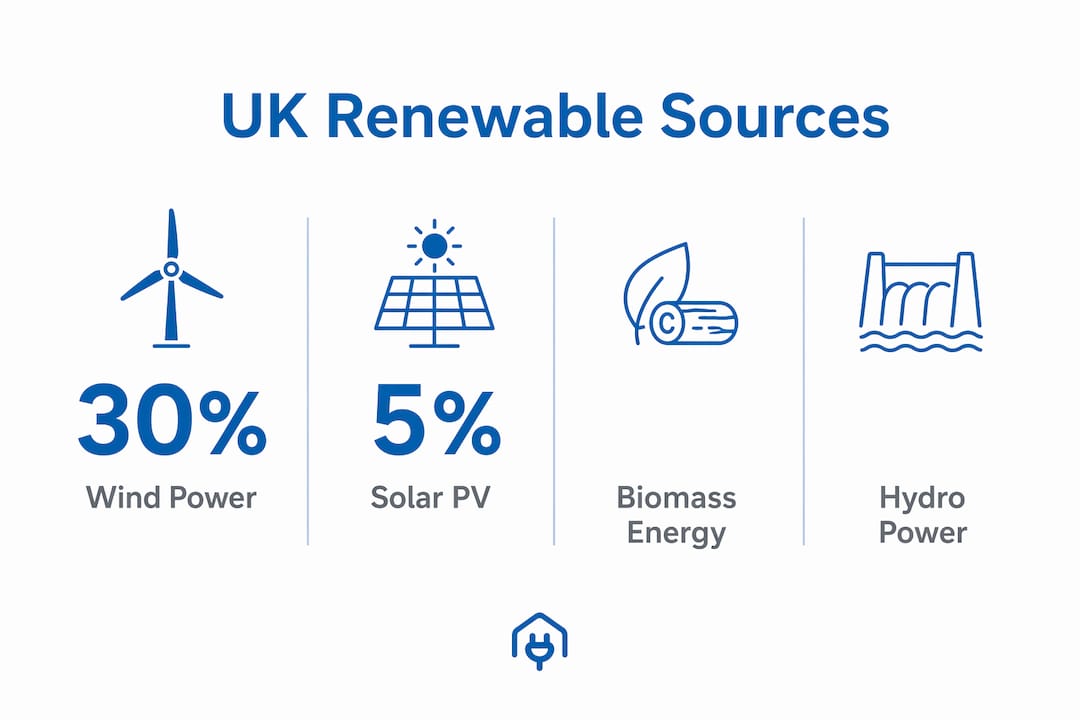
Renewable energy is defined as power generated from natural sources that replenish faster than they are consumed, including sunlight, wind, water, and geothermal heat. Wind energy leads UK generation at 30% of electricity produced in 2024, making the UK one of the world’s most wind-dependent grids. Solar contributes approximately 5% of UK electricity. For property owners, understanding this renewable energy explanation is the foundation for making informed decisions about installations, compliance, and long-term energy costs. The UK government’s Future Homes Standard and the incoming Home Energy Model (HEM) both place renewable integration at the centre of property performance assessment.
What are the main types of renewable energy used in the UK?
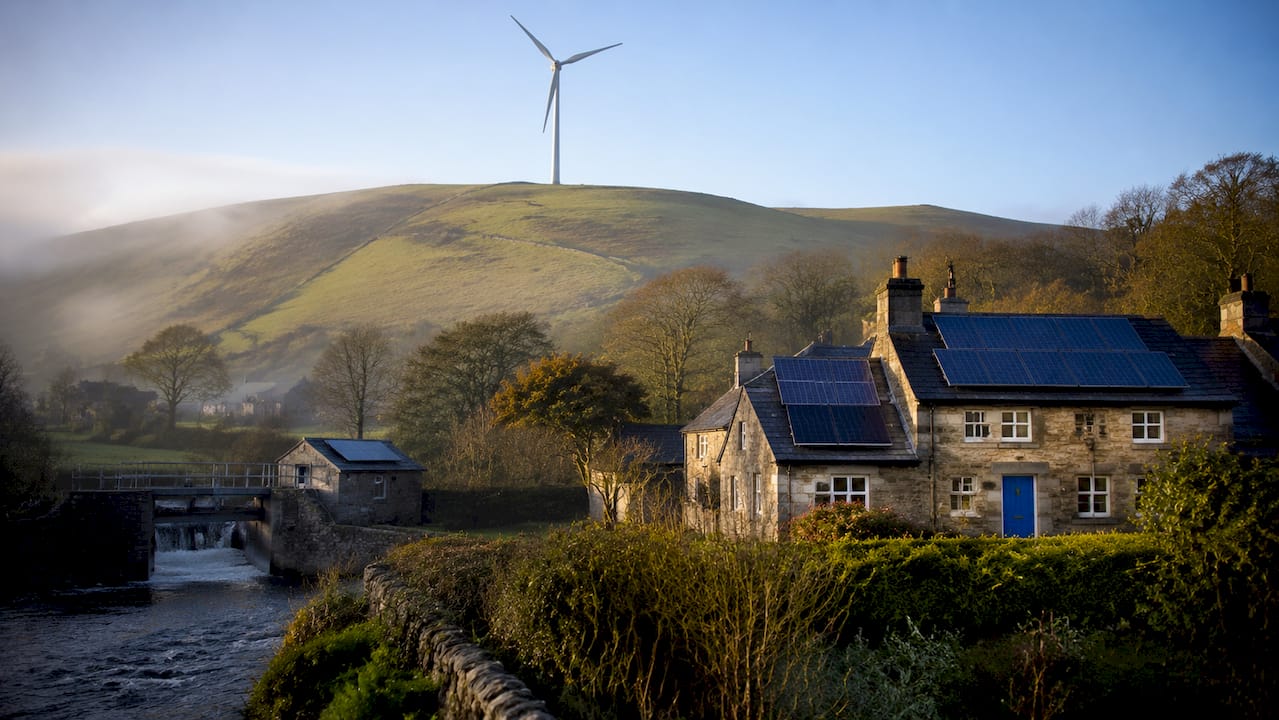
The UK draws on six primary renewable sources, each with distinct characteristics, costs, and practical applications for homes and businesses.
Wind energy is the UK’s largest renewable source, accounting for 30% of electricity generation. Offshore wind farms, such as those in the North Sea, produce power at scale without consuming land. Onshore wind is cheaper to build but faces planning restrictions in many areas of England.
Solar photovoltaic (PV) panels convert sunlight directly into electricity. Solar contributes around 5% of UK electricity today, but global solar capacity is expected to account for nearly 80% of the anticipated 4,600 GW increase in renewable power by 2030. That trajectory makes solar the fastest-growing technology in the sector. For UK homeowners, rooftop solar PV is the most accessible renewable installation, and Homeenergymodel’s guide on solar PV and energy ratings explains how panels affect your property’s EPC score.
Tidal and wave energy remain early-stage but significant. The UK government commits £20 million per year to tidal stream energy, which could meet approximately 10% of the UK’s annual electricity demand. Tidal power is predictable, unlike wind or solar, because tides follow fixed lunar cycles.
Hydroelectric power uses flowing or falling water to drive turbines. Large-scale hydro provides reliable base-load power, though most viable UK sites are already developed. Small-scale run-of-river systems suit rural properties with watercourses.
Biomass burns organic material, such as wood pellets or agricultural waste, to generate heat and electricity. Biomass is controllable, meaning output can be adjusted to meet demand, unlike weather-dependent sources.
Geothermal energy extracts heat stored in the earth. The UK has limited high-temperature geothermal resources, but ground source heat pumps use shallow geothermal principles to heat homes efficiently.
| Renewable type | Primary use | Controllable? | UK applicability |
|---|---|---|---|
| Wind | Electricity | No | High (offshore and onshore) |
| Solar PV | Electricity | No | High (rooftop installations) |
| Tidal | Electricity | Yes (predictable) | Growing (coastal areas) |
| Hydroelectric | Electricity | Yes | Moderate (rural sites) |
| Biomass | Heat and electricity | Yes | Moderate (rural and commercial) |
| Geothermal | Heat | Yes | Low to moderate |
How does renewable energy work and what are its environmental impacts?
Renewable energy generation converts a naturally occurring energy flow into usable electricity or heat. The conversion method differs by source, but the underlying principle is consistent: capture an ongoing natural process and extract useful power from it.
Solar PV panels use the photovoltaic effect. Photons from sunlight strike semiconductor cells, typically made from silicon, and displace electrons to create a direct current. An inverter converts this to alternating current for household use. Wind turbines work differently: moving air rotates blades connected to a generator shaft, producing electricity through electromagnetic induction.
Renewable sources split into two categories: variable and controllable. Solar and wind are variable, meaning output depends on weather conditions. Geothermal and hydroelectric are controllable, providing steady base-load power regardless of conditions. This distinction matters for grid planning and for property owners considering battery storage.
The environmental case for renewables is well established. Renewable sources produce fewer greenhouse gases and pollutants than fossil fuels, reducing both climate impact and local air quality problems. A solar panel generates the same electricity as a coal plant with a fraction of the lifetime carbon emissions.
Environmental trade-offs do exist. Large hydroelectric schemes can disrupt river ecosystems and affect fish migration. Some large-scale renewable projects carry environmental costs that require careful assessment before development approval. Biomass combustion produces particulate emissions if poorly managed. These trade-offs do not negate the case for renewables, but they do require project-level scrutiny.
Pro Tip: Before installing solar PV or a heat pump, commission an EPC assessment. The rating tells you where heat is being lost and which upgrades will deliver the greatest return on your renewable investment.
- Solar PV: zero emissions during operation, embodied carbon recovered within 1–4 years of generation
- Wind: minimal land use impact for offshore installations, some noise and visual concerns onshore
- Tidal: predictable and low-emission, but marine habitat impacts require monitoring
- Biomass: carbon-neutral only when sourced sustainably and burned efficiently
- Geothermal (heat pumps): low emissions but performance depends on electricity grid carbon intensity
What are the practical benefits of renewable energy for UK homes and businesses?
Renewable energy delivers financial, environmental, and regulatory benefits for UK property owners. The combination of falling technology costs, government incentives, and tightening compliance standards makes the case for adoption stronger each year.
Financial savings and incentives
Solar PV and heat pumps reduce dependence on grid electricity and gas, cutting monthly energy bills. The UK government supports adoption through the Boiler Upgrade Scheme, which offers grants for heat pump installations, and through Smart Export Guarantee payments that compensate homeowners for surplus solar electricity exported to the grid. These incentives reduce payback periods and improve the financial case for upfront investment.
Environmental and regulatory benefits
Renewable energy reduces greenhouse gas emissions and improves local air quality. For landlords and property investors, this matters beyond ethics. Energy Performance Certificates (EPCs) assess a property’s energy efficiency, and renewable installations directly improve EPC ratings. From 2025, the Home Energy Model replaces SAP as the government’s methodology for calculating EPC scores, placing greater weight on low-carbon heat sources and on-site generation. Properties with strong EPC ratings attract better tenants, command higher rents, and face fewer compliance risks.
Energy independence
Generating power on-site reduces exposure to wholesale energy price volatility. Battery storage systems paired with solar PV allow property owners to store surplus daytime generation and use it in the evening, further reducing grid dependence. Renewable energy enables a shift toward energy security that goes beyond simply replacing fossil fuels. It builds resilience against supply disruptions and price spikes.
- Install solar PV to generate electricity and improve your EPC rating
- Add battery storage to maximise self-consumption and reduce grid imports
- Replace a gas boiler with an air source or ground source heat pump
- Claim available government grants to reduce upfront costs
- Commission an updated EPC to reflect improvements and demonstrate compliance
Homeenergymodel’s guide on renewable energy for UK homes sets out the practical steps for each technology in detail.
What are the challenges of adopting renewable energy in UK properties?
Renewable energy adoption is not without obstacles. Property owners who understand these challenges upfront make better investment decisions and avoid costly mistakes.
Intermittency is the most cited barrier. Solar generates nothing at night and little on overcast days. Wind output varies hour by hour. Variable sources require storage or grid backup to maintain a reliable supply. Battery storage addresses this partially, but adds cost and requires space.
Upfront costs remain significant. A rooftop solar PV system for a typical UK home costs several thousand pounds before grants. Ground source heat pumps require ground loop installation, which adds further expense. Payback periods vary by property type, usage patterns, and energy prices, so a financial assessment before committing is prudent.
Property suitability affects every technology. South-facing roofs with minimal shading suit solar PV. Heat pumps perform best in well-insulated homes. Installing heat pumps in poorly insulated properties can increase electricity bills rather than reduce them. The fabric-first principle, improving insulation and draught-proofing before installing renewable technology, is the correct sequence.
Regulatory and planning requirements add complexity. Some solar installations and heat pumps fall under permitted development rights and require no planning permission. Others, particularly in conservation areas or listed buildings, need formal approval. Compliance with Part L of the Building Regulations and alignment with the incoming Future Homes Standard are also relevant for new builds and major renovations.
- Check your property’s insulation levels before specifying a heat pump
- Obtain an EPC to establish your baseline energy performance rating
- Verify permitted development rights before installation to avoid planning delays
- Explore the Boiler Upgrade Scheme and Smart Export Guarantee before finalising budgets
Pro Tip: Not all “green tariffs” from energy suppliers deliver genuine renewable power. Some green tariffs purchase certificates rather than sourcing electricity directly from renewable generators. True energy independence comes from on-site generation, not a tariff label.
Key takeaways
Renewable energy is power from naturally replenishing sources, and UK property owners who combine energy efficiency measures with on-site generation achieve the strongest financial and compliance outcomes.
| Point | Details |
|---|---|
| Wind leads UK generation | Wind accounts for 30% of UK electricity; solar contributes approximately 5%. |
| Variable vs controllable sources | Solar and wind output varies with weather; hydro and geothermal provide steady base-load power. |
| Fabric first, then renewables | Improve insulation before installing heat pumps to avoid higher electricity bills. |
| Green tariffs are not on-site generation | Purchasing renewable certificates differs from generating power on your property. |
| EPC ratings reflect renewable installations | Solar PV and heat pumps directly improve EPC scores under the Home Energy Model. |
Why I think most UK property owners are approaching this the wrong way
The conversation about renewable energy in the UK property sector focuses almost entirely on technology: which panels, which heat pump, which battery. That framing misses the more important question, which is whether the property is ready for the technology in the first place.
I have seen landlords install air source heat pumps in Victorian terraces with single-glazed windows and minimal loft insulation, then complain that their bills went up. The technology worked exactly as designed. The building was the problem. Renewables amplify a property’s existing energy performance. They do not compensate for poor fabric.
The second misconception I encounter regularly is the belief that switching to a green energy tariff constitutes renewable energy adoption. Green power marketing often involves purchasing certificates rather than direct renewable supply. A certificate does not change what flows through your meter. On-site generation does.
The third issue is timing. The Home Energy Model, which replaces SAP from 2025, changes how energy performance is calculated and scored. Property owners who understand this shift now, and who plan their renewable installations around the new methodology, will be ahead of compliance requirements rather than scrambling to meet them. Homeenergymodel’s resource on the Home Energy Model’s impact on UK properties is the clearest starting point I have found for understanding what the change means in practice.
Renewable energy is a sound investment for UK property owners. The returns are real. But the sequence matters: assess the building, improve the fabric, then install the technology.
— Danny
How Homeenergymodel supports UK property owners on energy performance
Homeenergymodel provides practical guidance for UK property owners navigating energy efficiency requirements and renewable energy adoption. The site covers the Home Energy Model methodology, EPC assessments, and the compliance implications of the Future Homes Standard. For property owners ready to act, the smart homes energy efficiency guide sets out how renewable technologies integrate with broader efficiency improvements to maximise both EPC ratings and cost savings. Homeenergymodel also publishes detailed resources on renewable heating options for UK homes, covering heat pumps, biomass, and solar thermal systems with clear guidance on suitability and compliance.
FAQ
What is the simplest renewable energy explanation?
Renewable energy is power generated from natural sources, such as sun, wind, and water, that replenish continuously. Unlike fossil fuels, these sources do not deplete with use.
Which types of renewable energy are most common in the UK?
Wind is the largest source, generating 30% of UK electricity, followed by solar, biomass, and hydroelectric power. Tidal energy is growing with government investment of £20 million per year.
How does renewable energy benefit UK homeowners financially?
Solar PV reduces electricity bills and earns Smart Export Guarantee payments for surplus generation. Heat pump grants through the Boiler Upgrade Scheme reduce upfront installation costs.
Does switching to a green energy tariff count as using renewable energy?
Not necessarily. Some green tariffs buy certificates rather than sourcing electricity directly from renewable generators. On-site generation through solar PV or wind delivers genuine energy independence.
Do renewable energy installations improve a property’s EPC rating?
Solar PV and heat pumps directly improve EPC scores. Under the Home Energy Model, which replaces SAP from 2025, low-carbon heat sources and on-site generation carry significant weight in the assessment methodology.