

Yes, you can change your electric supplier quickly and free of charge. Your new supplier handles the switch from start to finish, and under Ofgem rules it should complete within five working days. Before you start, compare annual costs across the market, agree the new contract, and diarise a meter reading for switch day.
TL;DR:
- Comparing total annual costs, including standing charges and unit rates, is crucial because low pence-per-kWh rates can be offset by high standing charges.
- Switching typically completes within five working days under Ofgem’s guarantee, with automatic compensation if delays or errors happen during the process.
- Prepayment meters with debt above the limit or non-smart meters may restrict tariff options and require debt repayment before switching can occur.
- Sharing a property or moving involves specific steps like coordinating move-in and move-out readings to avoid billing disputes or inheriting previous usage.
- Landlords should consider how tariff choices affect tenants and service charges, while recognizing that switching does not improve a property’s energy performance or EPC rating.
Table of Contents
- How do I change my electric supplier step by step?
- Checklist: what information do you need to switch?
- How long does switching take and what does it cost?
- Can you switch with a prepayment meter or outstanding debt?
- How does switching work when you move home?
- What if the switch goes wrong or gets delayed?
- Quick tips to avoid mistakes and save more
- What does tariff switching mean for landlords and EPCs?
- Homeenergymodel’s take on switching and property compliance
- How Homeenergymodel supports landlords beyond the switch
- Sources
How do I change my electric supplier step by step?
Switching electricity supplier follows the same pattern whether you have never switched before or you do it every year when a fixed deal ends. The process breaks into five stages, and none of them require you to speak to your current supplier.
1. Gather your current details. Pull up a recent bill and note your supplier’s name, your tariff, and your annual kilowatt-hour (kWh) usage. This is the raw material for any comparison.
2. Compare the whole market on annual cost. Resist the temptation to sort by the lowest pence-per-kWh figure. Which?’s guidance on choosing an energy supplier is clear that the true cost of a tariff is the unit rate plus the standing charge, added up over a full year of your actual usage. A tariff with a flashy unit rate can still cost more once the daily standing charge is factored in.
3. Agree the new contract. Once you have chosen a deal, you sign up directly with the new supplier. You do not need to contact your existing supplier at all; Citizens Advice confirms the new supplier handles the paperwork, including notifying your old one on your behalf. Domestic switches also come with a 14-day cooling-off period, so you can change your mind without penalty.
4. Let the switch run its course. After the cooling-off window (or sooner if you waive it to speed things up), the new supplier initiates the transfer. This typically involves:
- A switch date being set and confirmed by email or letter
- Your details being passed to the industry’s central switching systems
- Your old supplier being notified automatically, with no action needed from you
5. Finalise on switch day. Take a meter reading on the day the switch completes and submit it to your new supplier immediately. Keep hold of your application reference number in case you need to query anything later.
For a fuller breakdown of what each stage involves, Homeenergymodel’s guide on changing electricity providers walks through the paperwork in more detail.
Checklist: what information do you need to switch?
Have these details ready before you open any comparison tool. Missing one usually means restarting the process halfway through.
- Postcode — needed to check which suppliers and tariffs are available at your address
- MPAN (Meter Point Administration Number) — shown on your bill; some comparison sites ask for it to confirm your exact supply
- Current supplier and tariff name — copy this exactly from your latest bill
- Annual kWh usage — found on your bill’s summary or annual statement
- Meter type — standard, smart, or prepayment, since this affects which tariffs you can access
If you don’t have twelve months of billing history, most comparison tools will estimate your annual kWh from a single monthly bill and your property size, though the figure will be less precise than a full year’s data. Take an opening meter reading on the day your new tariff starts and a closing one when your old tariff ends; this pins down exactly what each supplier is billing you for.
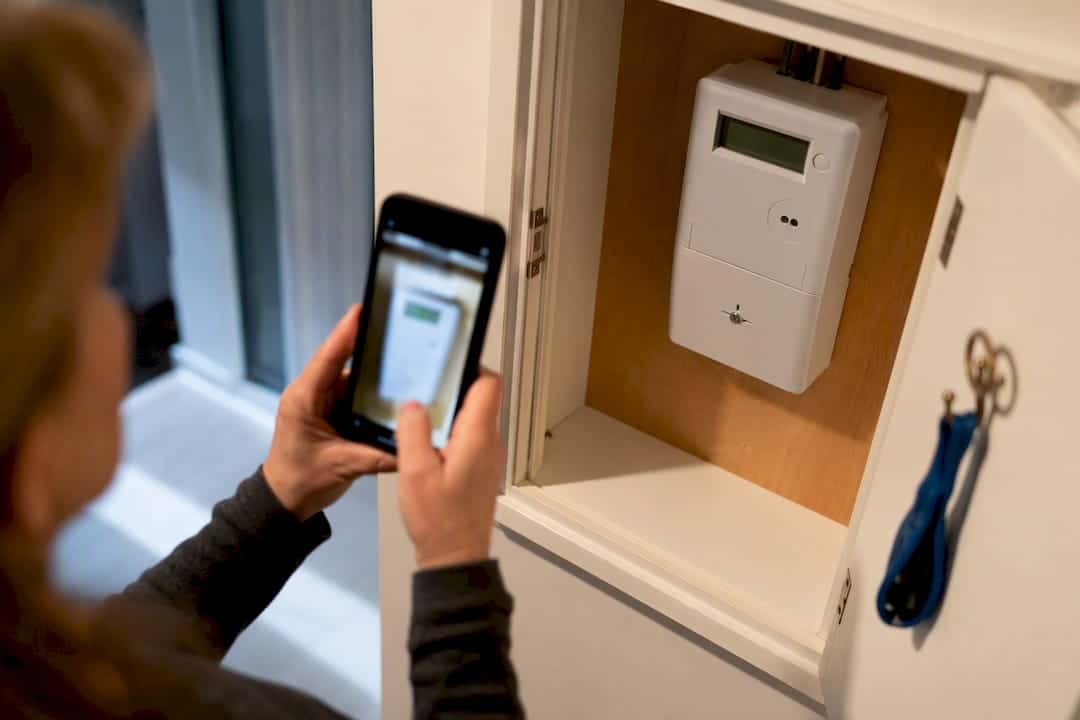
Pro Tip: Photograph your meter reading and the comparison quote screen on switch day. If a billing dispute arises months later, that timestamped evidence settles it in minutes rather than weeks.
How long does switching take and what does it cost?
Ofgem’s Faster Switching guarantee means a domestic electricity switch should complete within five working days of the switch being requested, once any cooling-off period has passed. If your supplier misses that window, Ofgem’s switching guidance confirms you may be entitled to automatic compensation without having to ask for it.
In numbers: Domestic switches typically complete within five working days, and Ofgem-backed compensation applies automatically if suppliers miss that target.
A few costs and rights to keep in mind:
- The 14-day cooling-off period applies to domestic contracts, giving you time to cancel penalty-free if you change your mind.
- Exit fees can apply if you leave a fixed-term deal early, though many tariffs waive them in the final 49 days of the contract. Weigh any fee against the savings on offer before switching.
- Annual cost, not headline rate, is what matters. Which? recommends comparing unit rate plus standing charge over a full year’s usage, because a low unit rate paired with a high standing charge can cost more overall for lower-usage households.
For a deeper look at timing and guarantees across the market, Homeenergymodel’s 2026 switching guide covers the detail supplier by supplier.
Can you switch with a prepayment meter or outstanding debt?
Prepayment customers can switch, though the rules differ slightly from credit meters. The Debt Assignment Protocol allows switching even with a limited amount of debt on the account, and smart prepayment meters generally open up more tariff choice than older, non-smart prepayment meters.
- Debt above the threshold blocks a switch until it’s paid down or a payment plan brings it within the allowed limit.
- Smart PAYG meters tend to unlock a wider range of competitive tariffs than traditional prepayment meters.
- The Priority Services Register (PSR) does not transfer automatically. If you rely on PSR support (for a disability, health condition, or being of pensionable age), you need to re-register with your new supplier as soon as the switch completes.
Contacting your current supplier to check your debt position before applying to switch avoids a rejected application later.
How does switching work when you move home?
Changing supplier at a new property follows a similar path, with a couple of extra steps. Set your switch start date to coincide with your move-in day, and take an opening meter reading immediately so your usage is measured from day one rather than estimated.
- Submit your final reading to the outgoing occupier’s supplier (or ask the landlord/agent for the last recorded reading) to avoid inheriting someone else’s usage on your first bill.
- Refunds on the old property’s account, if you’re the one moving out, typically arrive within a few weeks of the final bill being issued.
- Landlords letting multiple properties should check tenancy agreements for who is responsible for the supply contract, and confirm whether each unit has its own meter or shares one, since shared metering restricts which tariffs are viable.
What if the switch goes wrong or gets delayed?
Most switches complete without incident, but mistakes do happen. Here’s the order to work through if yours doesn’t:
- Check your application reference and contact your new supplier first. They initiated the switch and hold the most current status.
- If you were switched without giving permission (an erroneous transfer), escalate directly with the supplier and ask for the erroneous transfer payment; Ofgem’s rules entitle affected customers to compensation from whichever supplier caused the error.
- If the switch runs past five working days, ask the supplier for the automatic compensation you’re owed under the Faster Switching rules, and keep copies of confirmation emails and meter reading photos as evidence.
If the supplier doesn’t resolve things, both Ofgem and the Energy Ombudsman offer escalation routes for unresolved complaints.
Quick tips to avoid mistakes and save more
A handful of habits separate a smooth switch from a costly one:
- Compare annual cost, not the headline p/kWh figure, every time you switch.
- Submit meter readings on switch day and keep a screenshot as backup.
- Check how many days remain on any fixed deal before switching, so you don’t trigger an avoidable exit fee.
- If you drive an electric vehicle or use a lot of electricity overnight, look at time-of-use tariffs built around off-peak rates rather than a flat standard tariff.
Pro Tip: Set a calendar reminder 49 days before your fixed deal ends. Switching inside that window usually avoids exit fees altogether while still giving you time to compare properly.
What does tariff switching mean for landlords and EPCs?
A landlord’s tariff choice has knock-on effects beyond the bill itself. If tenants pay energy costs directly, the tariff you select shapes their monthly outgoings and any billing disputes that land on your desk. Where you pay for shared or communal supplies, tariff decisions become part of your service charge calculations too.
- Check tenancy agreements before switching to confirm who holds contractual responsibility for the electricity account.
- Update tenant communications whenever a switch happens, particularly if meter access or billing arrangements change.
- Consider requesting a Home Energy Model report before major efficiency works or before installing shared metering, since it clarifies how consumption is distributed across a property.
- For portfolios with several properties, Homeenergymodel’s landlord tariff guidance covers how metering setup affects which tariffs are even available to you.
Homeenergymodel’s take on switching and property compliance
Switching supplier is the easy part. What trips landlords up is treating tariff decisions and energy performance obligations as separate problems when they’re often linked, particularly on properties with shared meters or upcoming efficiency works. A cheaper tariff on a poorly performing property is a short-term fix, not a strategy.
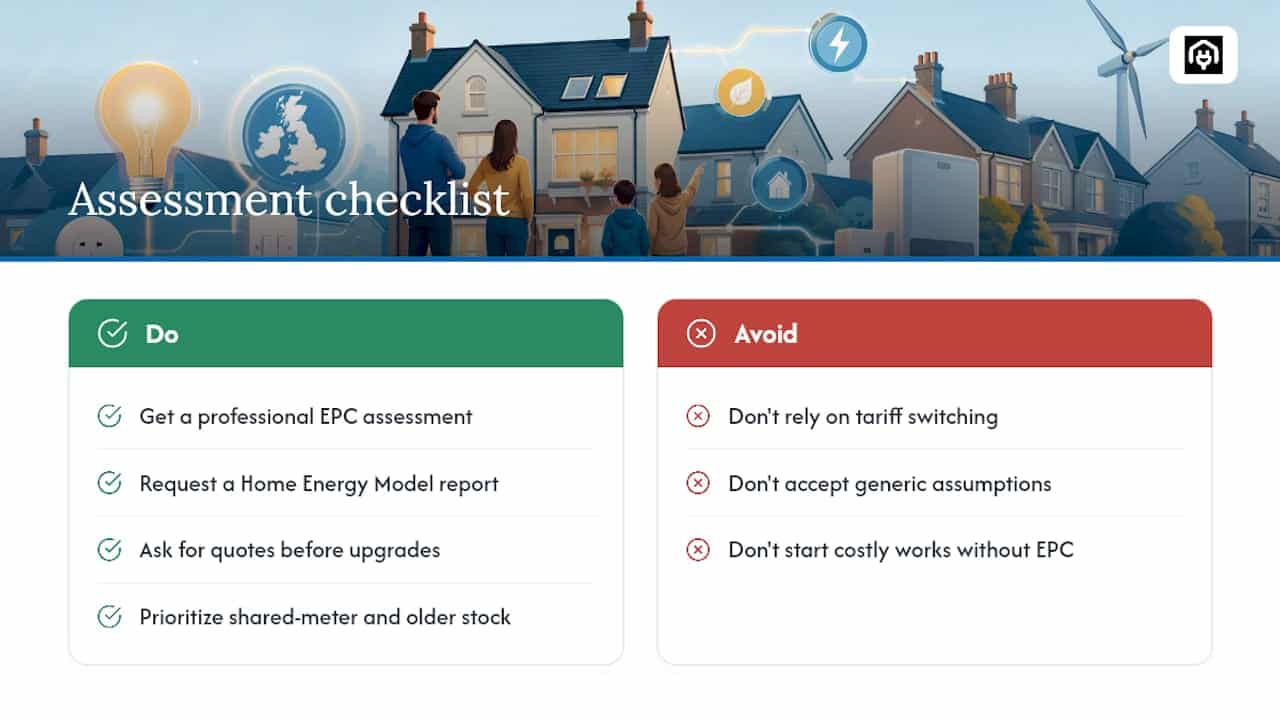
Anyone weighing up a switch alongside broader compliance questions should also look at Homeenergymodel’s landlord guidance and consider requesting a professional EPC assessment if efficiency upgrades are on the horizon.
— Danny
How Homeenergymodel supports landlords beyond the switch
Switching supplier solves your tariff, not your property’s underlying energy performance. If you’re a landlord weighing up efficiency upgrades, preparing for the Future Homes Standard, or simply need clarity on how a property’s EPC rating affects letting options, that’s where professional assessment earns its keep. Homeenergymodel connects property owners with qualified assessors who deliver EPC assessments and Home Energy Model reports built around your property’s actual fabric and usage, not generic assumptions. That matters most for shared-meter buildings and older housing stock, where tariff switching alone won’t fix a poor rating. If an upgrade or compliance deadline is on your radar, request a quote for an EPC assessment and get a clear picture before you commit to further work.
This article is general information, not a substitute for advice from a qualified financial advisor. Consult a qualified financial professional about your own circumstances before acting on anything here.
Sources
- Switch energy supplier – Ofgem
- Switch energy supplier or tariff – Citizens Advice
- Switching energy providers UK — August 2026 guide
- How to choose the best energy supplier – Which?