

TL;DR:
- Home solar energy benefits include significant financial savings, property value increases, and environmental improvements over the system’s lifetime. Owning solar panels offers a strong return on investment, with payback periods typically between 7 and 12 years, and boosts home value by up to 10%. Additionally, solar reduces carbon footprint and requires minimal maintenance, especially when paired with battery storage for energy independence.
Home solar energy benefits are defined as the measurable financial savings, property value gains, and environmental improvements that residential photovoltaic (PV) systems deliver over their operational lifetime. For UK homeowners, these advantages have become increasingly concrete: electricity prices continue to rise, government incentives remain available, and solar technology costs have fallen sharply. Understanding what a well-sized PV installation actually delivers, in pounds saved, carbon avoided, and property value added, is the starting point for any serious investment decision.
1. Significant reductions in electricity bills
The most direct of all home solar energy benefits is a lower electricity bill. A 5 kW to 6 kW system can reduce monthly bills by £90 to £125, equating to annual savings of £1,080 to £1,500. That scale of reduction reflects a system offsetting roughly 70% to 110% of an average home’s yearly electricity consumption.
The long-term picture is even more compelling. Homeowners can save between $37,000 and $154,000 over 25 to 30 years depending on location, system size, and local tariffs. Average residential electricity rates rise at approximately 2.8% annually, which means every year without solar is a year of compounding exposure to higher grid costs.
Reducing overall consumption alongside generation accelerates the return further. Practical steps such as those covered in using less electricity at home compound the savings a solar installation produces.
2. Strong return on investment and payback periods
The advantages of solar panels extend well beyond the monthly bill. The 30% federal Investment Tax Credit in the United States demonstrates the principle that government incentives can bring net installation costs below £20,000 for many households. In the UK, the Smart Export Guarantee (SEG) allows homeowners to earn payments for surplus electricity exported to the grid, adding a revenue stream on top of consumption savings.
Typical payback periods in the UK range from 7 to 12 years depending on system size, roof orientation, shading, and the SEG rate offered by the chosen licensed electricity supplier. After payback, the system generates effectively free electricity for the remainder of its 25-year-plus lifespan. The global Levelised Cost of Energy for solar PV is now 56% lower than fossil fuel alternatives, confirming that solar is no longer a premium choice but the economically rational one.
3. Increased property value and market desirability
Solar-equipped homes sell at a premium of 3% to 10% above comparable properties without panels. On a £400,000 property, that represents £12,000 to £40,000 of additional value. Estate agents and surveyors increasingly treat owned solar installations as a comparable upgrade to a renovated kitchen or converted loft.
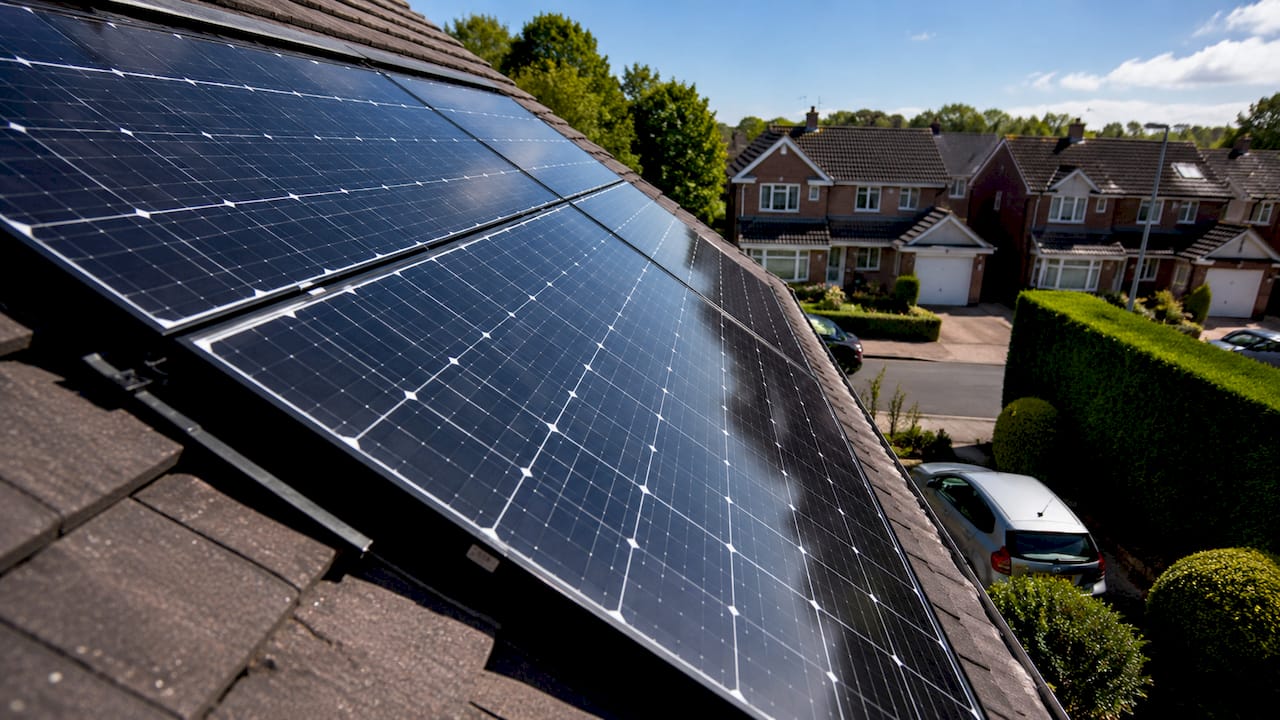
The ownership structure matters considerably here. Owned systems add value in a straightforward way. Leased or third-party owned systems typically do not increase home value in the same way, and often require lease transfer negotiations at resale, which can delay or complicate a sale. Buyers are generally more cautious about properties with a lease attached to the roof.
Pro Tip: Before signing a lease or Power Purchase Agreement, check the transfer terms carefully. A lease that cannot be transferred without the buyer’s credit approval can stall a property sale at the worst possible moment.
Local market conditions also affect the premium. Properties in areas with higher electricity prices or stronger environmental awareness among buyers tend to command the upper end of the 3% to 10% range.
4. Measurable environmental advantages
The environmental advantages of solar energy are quantifiable, not merely aspirational. Solar electricity generates approximately 35.8 g CO2-eq/kWh across its full life cycle, compared to grid averages that are several times higher depending on the fuel mix. This makes rooftop solar one of the most direct personal actions available for reducing a household’s carbon footprint.
| Energy source | Life-cycle CO2 emissions (g CO2-eq/kWh) |
|---|---|
| Rooftop solar PV | ~35.8 |
| Natural gas (grid) | ~490 |
| Coal (grid) | ~820 |
| UK grid average (2024) | ~148 |
Beyond carbon, solar generation reduces demand for water-intensive thermal power stations and cuts local air pollutants associated with fossil fuel combustion. The cumulative environmental impact of widespread residential solar adoption is a meaningful contribution to the UK’s legally binding net zero target for 2050. For homeowners who want to reduce their carbon footprint at home, solar panels represent the single highest-impact measure available.
5. Minimal maintenance requirements
One underappreciated benefit of solar panels is how little they demand once installed. Panels degrade in efficiency at an average rate of 0.5% per year, which means a system installed today will still operate at roughly 87.5% of its original output after 25 years. Most manufacturers back this with performance warranties of around 25 years.
Day-to-day maintenance is limited to occasional cleaning to remove dust, bird droppings, or leaf debris, and a professional inspection every three to five years to check inverter performance and wiring integrity. Scheduling professional inspections every few years is critical to maintaining returns, particularly for the inverter, which typically has a shorter lifespan than the panels themselves and may need replacement once during the system’s life.
There are no moving parts in a standard PV system, which eliminates the mechanical wear that affects other home energy technologies. This low-maintenance profile makes solar particularly well-suited to landlords and property investors who cannot afford frequent call-outs.
6. Energy independence and resilience with battery storage
Home solar power savings increase substantially when paired with battery storage. Solar-plus-storage systems provide electricity during grid outages, unlike grid-tied solar alone, which shuts down automatically when the grid goes offline for safety reasons. For homeowners in areas prone to power cuts, this operational resilience is a significant practical benefit.
Battery technology costs have fallen considerably, and UK government incentives have made storage increasingly accessible. A home battery such as the Tesla Powerwall or Givenergy system stores surplus daytime generation for use in the evening, when grid electricity is most expensive under time-of-use tariffs. This shifts more consumption onto self-generated power, pushing the effective savings rate higher.
Energy independence also means protection against future tariff increases. Once a solar and storage system is installed, a large portion of household electricity demand is effectively locked in at a near-zero marginal cost for the next 25 years. Understanding how SAP calculations reflect solar and storage contributions to a home’s energy performance rating helps homeowners quantify this benefit formally.
7. Impact of net metering and export tariff policies
Net metering policies vary across utility territories and directly affect payback periods and total savings. In the UK, the Smart Export Guarantee replaced the Feed-in Tariff in 2020. Under the SEG, licensed electricity suppliers with more than 150,000 customers must offer an export tariff, though the rate is set commercially and varies between suppliers.
Homeowners should verify current net billing structures before installation, as the export rate chosen can meaningfully alter the financial case. Rates in 2025 and 2026 have ranged from approximately 4p to 15p per kWh depending on the supplier and tariff type. Selecting a supplier offering a higher export rate, or one with a time-of-export premium, can add hundreds of pounds annually to the return.
Pro Tip: Compare SEG rates from at least three licensed suppliers before commissioning a solar installation. The difference between the lowest and highest available rates can represent over £200 per year in additional income on a typical 4 kW system.
8. Financing options and their effect on long-term benefits
The solar energy for homeowners equation changes significantly depending on how the system is financed. Outright purchase delivers the maximum financial and property value benefit. The homeowner captures all savings, qualifies for the full SEG income, and adds demonstrable value to the property.
| Ownership model | Upfront cost | Bill savings | Property value impact | Complexity at resale |
|---|---|---|---|---|
| Outright purchase | High | Maximum | Positive (3–10%) | Low |
| Solar loan | Medium | High | Positive | Low to medium |
| Lease / PPA | Low | Moderate | Neutral to negative | High |
Leased or Power Purchase Agreement arrangements reduce the upfront barrier but transfer most of the financial upside to the third-party owner. The homeowner pays a fixed rate for electricity generated on their roof, which may or may not remain competitive as grid prices change. Checking local policies and available incentives before choosing a financing route is the most consequential decision in the entire solar adoption process.
For those considering the broader picture of home energy savings in 2026, understanding how ownership structure interacts with EPC ratings and property value is particularly relevant.
Key takeaways
Owned residential solar installations deliver the strongest combination of bill savings, property value uplift, and environmental impact when sized correctly and supported by a competitive export tariff.
| Point | Details |
|---|---|
| Bill savings are substantial | A 5 to 6 kW system saves £1,080 to £1,500 annually, with lifetime savings reaching tens of thousands. |
| Ownership structure matters | Owned systems add 3% to 10% to property value; leased systems can complicate resale. |
| Environmental impact is measurable | Solar PV generates approximately 35.8 g CO2-eq/kWh, far below grid averages. |
| Maintenance demands are low | Panels degrade at just 0.5% per year and carry 25-year performance warranties. |
| Export tariffs affect returns | Comparing SEG rates before installation can add over £200 per year to the financial case. |
Why the UK solar opportunity is more straightforward than it appears
Having worked with property owners and energy assessors across the UK for a number of years, I find that the biggest barrier to solar adoption is not cost or technology. It is the perception that the decision is complicated. Homeowners worry about roof suitability, planning permission, the right installer, and whether the numbers will actually stack up.
The honest picture is simpler. For most detached and semi-detached properties with a south, southeast, or southwest-facing roof pitch, the financial case is clear. The payback period is finite and predictable. The maintenance burden is genuinely low. The property value uplift is real and increasingly recognised by surveyors and mortgage lenders.
Where I see homeowners go wrong is in focusing too narrowly on the upfront cost rather than the 25-year return. A system that costs £8,000 installed and saves £1,200 per year pays back in under seven years and then generates savings for another 18 years after that. No other home improvement delivers that kind of return on a predictable timeline.
My practical advice: get an EPC assessment before and after any solar installation, understand your current SAP score, and check the SEG rates available from your current electricity supplier before signing anything. The UK government’s net zero commitments mean that incentives and standards will continue to evolve, and staying informed is the most cost-effective thing a property owner can do.
— Danny
Explore energy performance resources with Homeenergymodel
Homeenergymodel provides UK-specific guidance on energy performance standards, EPC assessments, and the Home Energy Model methodology that will replace SAP from 2025 onwards. For property owners considering solar, understanding how a PV installation affects an EPC rating and energy efficiency score is a practical first step before commissioning any work. Homeenergymodel also covers home energy models for landlords in detail, explaining how different assessment methodologies capture the value of renewable installations. Whether the goal is compliance, cost reduction, or maximising resale value, the resources available through Homeenergymodel offer clear, authoritative guidance tailored to the UK property market.
FAQ
How much can a homeowner save with solar panels in the UK?
A typical 5 to 6 kW system reduces annual electricity bills by £1,080 to £1,500, with lifetime savings over 25 to 30 years potentially reaching tens of thousands of pounds depending on tariffs and usage.
Do solar panels increase the value of a UK property?
Owned solar installations increase property values by 3% to 10% on average. Leased systems do not typically add value and can complicate the sale process due to lease transfer requirements.
What maintenance do residential solar panels require?
Solar panels require occasional cleaning and a professional inspection every three to five years. Efficiency declines at approximately 0.5% per year, and most systems carry 25-year performance warranties.
Can solar panels power a home during a grid outage?
Standard grid-tied solar systems shut down during outages for safety reasons. A solar-plus-storage system with a home battery provides electricity during grid failures.
What is the Smart Export Guarantee and how does it affect solar savings?
The Smart Export Guarantee is the UK scheme that requires licensed electricity suppliers to pay homeowners for surplus solar electricity exported to the grid. Rates vary between suppliers, so comparing offers before installation directly affects the total financial return.