

Choosing how to assess and improve energy performance in homes invites a lot of questions. Some approaches dig deep into every detail of a property while others promise speed or government backing. Features range from smart prediction tools to robust training and trusted certifications. The differences can shape not just day to day energy use but also long term compliance and even property value. If you are curious about how the latest tools and services stack up and what they truly offer, there is plenty to discover.
Table of Contents
- Home Energy Model
- Elmhurst Energy
- Home Energy Model EPC Service
- Elmhurst Energy
- Stroma
- BREE Group
- Quidos
- Elmhurst
Home Energy Model
At a Glance
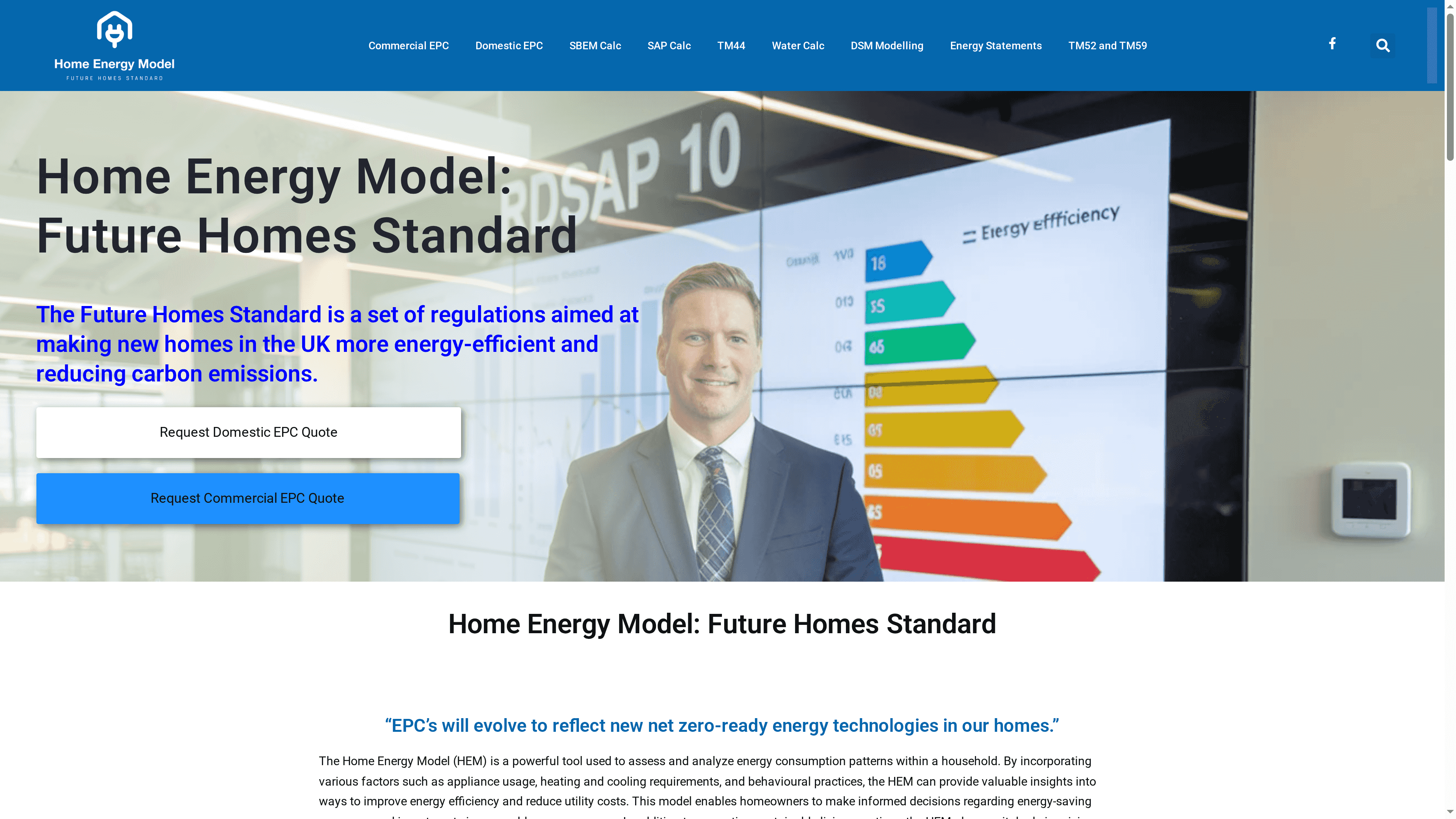
Home Energy Model (HEM) is a government-calculated methodology designed to give UK property stakeholders a far more precise picture of domestic energy performance. It refines assessment by accounting for thermal bridging and ventilation and is structured to support the UK’s net-zero carbon ambitions by 2027. HEM replaces the existing SAP framework and aims to empower homeowners, builders and assessors with predictive insight that informs practical energy-saving decisions. Bottom line: this is the most forward-looking, policy-aligned tool you will need to plan compliant, future-proof homes.
Core Features
HEM provides a comprehensive analysis of a dwelling’s energy consumption patterns and incorporates environmental factors to assess a property’s carbon footprint. It offers predictive capabilities for future energy requirements, enabling scenario modelling of different energy-saving strategies and renewable integrations. The model facilitates side-by-side comparisons of retrofit options, helping users identify the measures that deliver the best carbon and cost outcomes. In short, HEM is both an analytical engine and a decision-support system for energy performance.
Pros
- Delivers detailed and accurate assessments: HEM includes variables such as thermal bridging and ventilation, producing assessments that reflect real-world performance rather than idealised assumptions.
- Enables informed upgrade choices: By modelling different energy-saving strategies, it helps you prioritise interventions with the greatest impact on energy use and carbon emissions.
- Aligns with government policy: Developed as a government-calculated methodology, HEM is explicitly designed to support UK sustainability and regulatory goals, making compliance planning straightforward.
- Includes predictive analytics: The model forecasts future energy requirements so you can design homes that remain efficient as regulations and occupant behaviour evolve.
- Facilitates comparative appraisal: You can compare multiple retrofit or design options within the same framework to reach evidence-based decisions.
Who It’s For
HEM is tailored for homeowners, developers, property investors and energy assessors who need robust, policy-aligned analysis. It is especially valuable for those planning new builds to the Future Homes Standard, retrofit programmes aiming for improved EPCs, and consultants who advise clients on long-term carbon reduction strategies. Technical users will extract the most value, though accessible outputs mean informed homeowners can also act on its recommendations.
Unique Value Proposition
HEM’s unique strength is its combination of government endorsement, predictive modelling and granular input of physical phenomena such as thermal bridging and ventilation. That combination elevates it above legacy approaches by producing assessments that are both credible to regulators and actionable for practitioners. Where older methodologies offer a snapshot, HEM projects how a building will behave across time and under different interventions, enabling precise prioritisation of measures that reduce carbon and improve occupant comfort. In practice this means fewer surprises at planning or retrofit stages, better-aligned capital decisions and a clearer path to favourable EPC outcomes — a decisive advantage for anyone investing in energy performance.
Real World Use Case
A property developer uses HEM to evaluate the future energy performance of a new residential development, modelling different insulation, ventilation and renewable options to ensure the scheme meets the Future Homes Standard and secures favourable EPC ratings on completion.
Pricing
Not specified.
Website: https://homeenergymodel.co.uk
Elmhurst Energy

At a Glance
Elmhurst Energy is the UK’s largest independent provider of energy assessment, retrofit and property professional training, software and accreditation, aimed squarely at the building and retrofit sector. Its catalogue spans entry-level assessor training through to ongoing CPD and competency workshops, with on-demand and live delivery options to suit different learning styles. If you need a reliable, sector-focused training partner to upskill staff or qualify as an assessor, Elmhurst is a strong, practitioner-led choice — though you will need to enquire for exact pricing and entry requirements.
Core Features
Elmhurst’s core offering centres on training and professional support: energy assessor training, retrofit training, competency and CPD modules, and a mix of on-demand and live courses. The organisation also provides career-long support, accreditation pathways and industry updates, so learners remain current with evolving standards. The emphasis is clearly on practical, regulatory-aligned education for property professionals and organisations seeking to improve building energy performance.
Pros
- Comprehensive training offerings for all career stages: Elmhurst covers the full learning journey, from newcomers needing initial qualifications to seasoned professionals seeking CPD.
- Supportive team providing ongoing assistance: Learners benefit from continuing guidance throughout their career development, which helps translate learning into on-site practice.
- Industry-leading training provider in the UK: As the largest independent provider, Elmhurst has established credibility and sector reach that smaller providers may lack.
- Wide range of courses including CPD and live events: The mix of on-demand and live delivery makes it practical for busy professionals to fit training around work.
- Discounts for members: Returning learners or members can access discounted rates, which helps with organisational training budgets.
Cons
- Specific costs are not detailed on this page: You must contact Elmhurst for precise pricing, which slows procurement planning.
- Limited information about course prerequisites or certifications on this page: The site summary does not fully detail entry criteria, so prospective learners may need to make additional enquiries.
- Focus mainly on energy assessment and retrofit sectors: If you are seeking broader property specialisms outside energy and retrofit, Elmhurst’s offering may be narrower than multi-disciplinary training providers.
Who It’s For
Elmhurst Energy is ideal for energy assessors, retrofit coordinators, building professionals, landlords and company training managers who need sector-specific qualifications and CPD. It suits individuals aiming to gain recognised assessor credentials and organisations looking to upskill teams to meet regulatory or retrofit programme demands.
Unique Value Proposition
Elmhurst’s unique value lies in its scale and sector focus: it combines comprehensive, regulatory-aligned training with ongoing career support and accreditation, delivering a one-stop education pathway for UK energy professionals.
Real World Use Case
A retrofit coordinator enrols in Elmhurst’s retrofit training and CPD modules to gain the qualifications required to advise clients on energy-saving measures, then uses Elmhurst’s industry updates to stay compliant with changing guidance.
Pricing
Pricing is not specified on the public page; discounts are available for members and bulk organisational bookings, so learners should request a tailored quote.
Website: https://elmhurstenergy.co.uk
Home Energy Model EPC Service

At a Glance
Home Energy Model EPC Service delivers pragmatic, regulation-focused EPC assessments tailored to new builds, conversions and extensions. It combines qualified, accredited assessors with a quick-turnaround process designed to keep projects on schedule. The service emphasises compliance with UK building regulations and prepares the documentation that building control officers expect. Bottom line: a reliable, compliance-first option for professionals and homeowners who need clear, timely energy performance evidence.
Core Features
The service provides a structured assessment workflow: rapid energy performance evaluations, reporting of energy ratings, and preparation of compliance documentation for building control. Assessors are fully qualified and accredited, and the offering covers a range of residential project types including new builds, conversions and extensions, with particular attention to glazing and insulation details. The process relies on client-supplied drawings and specifications to model the dwelling accurately and produces the necessary outputs to demonstrate adherence to government standards.
Pros
- Strong regulatory expertise: The team demonstrates clear expertise in UK building regulations compliance, so you can expect assessments that reflect current statutory requirements.
- Accredited assessors: Assessments are carried out by qualified and recognised assessors, which reduces the risk of non-compliance during building control checks.
- Versatile for residential projects: The service supports new builds, conversions and extensions, making it applicable across the common project types encountered by developers and homeowners.
- Documentation support: It assists with preparing the documentation required for building control, streamlining the approval pathway for construction stages.
- Timely assessments: Quick turnaround times help keep construction schedules on track and reduce delays in project sign-off.
Cons
- Assessment complexity varies: The duration and complexity of the assessment depend on building size and intricacy, which means timelines are not fixed and can extend for complicated projects.
- Dependence on client information: The service requires detailed drawings and specifications from clients, so incomplete information can slow the process or affect the accuracy of results.
- Opaque pricing online: Pricing details are not published on the website and are provided only on request, which makes budget planning less straightforward for smaller clients.
Who It’s For
This service is aimed at homeowners, architects, builders and developers working on residential projects in the UK who must demonstrate compliance with energy performance standards. If you are managing a new development, a conversion or an extension and need an accredited EPC quickly to satisfy building control or planning conditions, this is a suitable choice.
Unique Value Proposition
Home Energy Model EPC Service positions itself as a compliance-focused EPC provider that pairs accredited assessors with a rapid assessment workflow. Its value lies in delivering documentation and ratings that align with UK regulations, helping projects progress through building control with minimal friction.
Real World Use Case
A property developer engaged the service to obtain an EPC for a new housing development prior to practical completion; the assessors modelled each dwelling, produced the necessary ratings and supplied building control documentation to confirm regulatory compliance before handover.
Pricing
Pricing is provided upon request and is tailored to project specifics and requirements, so costs vary depending on property size, complexity and the level of documentation needed.
Website: https://the-home-energy-model.co.uk
Elmhurst Energy

At a Glance
Elmhurst Energy is the UK’s largest independent provider of energy assessment, retrofit and property professional training, software and accreditation. It combines industry-focused courses with accredited software and a support network for assessors and retrofit practitioners. If you need career-stage training plus ongoing updates on regulations and CPD, Elmhurst offers a coherent one-stop solution that balances classroom, live and on-demand delivery. It is strong on technical depth, though pricing and some certification specifics require direct enquiry.
Core Features
Elmhurst’s core capabilities centre on comprehensive training pathways and professional support. Offerings include energy assessment training, retrofit and property professional courses, CPD modules and live training events, alongside software and accreditation services that help practitioners comply with changing regulations. A member support network and regular industry news updates help users stay current with the evolving policy and technical landscape.
Pros
- Extensive course range for all career stages: Elmhurst provides options from initial qualifications to advanced CPD, which helps learners progress without switching providers.
- Support beyond the classroom: Learners gain access to a network and ongoing updates, which keeps professional knowledge current between discrete courses.
- Member discounts and special offers: Members benefit from promotional pricing and course discounts, reducing the long-term cost of continuous development.
- Timely industry and regulatory updates: The provider actively shares sector news, helping practitioners anticipate regulatory changes rather than react to them.
- Flexible delivery models: A mix of on-demand and classroom sessions suits different learning styles and allows working professionals to fit training around projects.
Cons
- Sector focus is relatively narrow: Elmhurst mainly targets energy assessment and retrofit sectors, so professionals seeking broader property industry training may find the range limiting.
- Pricing not clearly displayed on the homepage: Course fees and package costs are not explicitly listed up front, which means you must contact Elmhurst for firm quotes.
- Limited certification detail on the homepage: Specifics about accreditation pathways and examination processes are not fully detailed on the landing pages, so clarifications are often required.
Who It’s For
Elmhurst Energy is aimed at energy assessors, retrofit professionals, property consultants and trade operatives who require accredited training, software tools and certification support within the UK property and energy-efficiency sectors. It is particularly useful for those building a career in retrofit or seeking to maintain assessor compliance through CPD.
Unique Value Proposition
Elmhurst’s distinguishing strength is its scale and integration: it couples being the largest independent provider in the UK with an ecosystem of training, accreditation and software. That combination reduces friction for professionals who need both qualification and the tools to implement standards in practice.
Real World Use Case
A newly qualified energy assessor uses Elmhurst’s qualification course, follows up with CPD modules and adopts Elmhurst software to produce compliant assessments. The assessor benefits from member discounts and industry updates, allowing faster professional development and improved service offerings to clients.
Pricing
Course pricing is not explicitly specified on the homepage; Elmhurst runs promotions and offers member discounts, so costs are typically confirmed via enquiry or when booking specific courses.
Website: https://elmhurstenergy.co.uk
Stroma

At a Glance
Stroma delivers end-to-end professional services across the built environment, specialising in inspection, maintenance, sustainability and compliance testing. They combine support for new-build projects with retrofit expertise, backed by UKAS-accredited testing and close engagement with industry regulators. The service model suits developers and building managers who need robust, auditable assurance rather than a one-size-fits-all product. Pricing is not published online, so expect bespoke quotations for most assignments.
Core Features
Stroma’s core capabilities cover the full project lifecycle: concept-stage advice, specialist access inspection and maintenance, sustainability and regulatory compliance services, plus targeted support for new builds and retrofit works. They emphasise UKAS-accredited testing and collaborative work with regulators, which helps translate technical assessments into actionable compliance outcomes for clients. Their remit also extends into transport infrastructure and environmental testing within the built environment.
Straight to the point.
Pros
- Provides comprehensive services across multiple sectors, meaning you can appoint the same supplier for design-stage advice through to post-construction testing, which simplifies project management.
- Accredited and recognised for sustainability and compliance testing, so test results and reports carry formal credibility for audit and regulatory processes.
- Offers tailored solutions for both new-build and retrofit projects, allowing interventions to be scaled to building type and project complexity.
- Collaborates with industry regulators and offers UKAS-accredited testing, improving the likelihood that findings will be accepted by statutory bodies and certifiers.
- Provides consultancy and support throughout project phases, which reduces the coordination burden on developers and building managers.
Cons
- Limited specific details about pricing are provided on the website, so you will need to request a bespoke quote to understand total costs.
- Mainly focused on the UK market, which means Stroma may not be a suitable choice if you require international coverage or overseas certification.
- No detailed information on specific certifications beyond UKAS accreditation is published, which can make it harder to verify specialist credentials for niche technical services.
Who It’s For
Stroma is aimed squarely at construction and property development companies, infrastructure operators, building managers and environmental consultants operating in the UK who require rigorous sustainability, compliance and specialist access services. If you manage schemes where auditability, regulatory acceptance and a single point of technical accountability matter, Stroma fits well.
Unique Value Proposition
Stroma’s unique strength is the breadth of its service offering combined with formal accreditation and regulator engagement. They bridge technical testing and practical compliance support, so clients receive not just data but clear routes to meet regulatory obligations and improve building performance.
Real World Use Case
A property developer engages Stroma to perform air-tightness testing and associated reporting to demonstrate compliance with Part L during a new residential development. Stroma provides on-site testing, collates evidence, and issues UKAS-backed reports that feed directly into the EPC and handover documentation.
Pricing
Pricing is not specified on the website and appears to be project-specific; you should contact Stroma for a tailored quotation based on the scope and complexity of the work required.
Website: https://stroma.com
BREE Group

At a Glance
BREE Group is a long-established authority delivering sustainability standards, certification and advisory services focused on improving buildings for people and the environment. Its offering spans BREEAM certification, training in passive and sustainable design, and software such as SmartWaste, making it a one-stop resource for professionals seeking recognised sustainability credentials. For those seeking hands-on certification and robust guidance towards net zero, BREE Group is a trusted option — though it is primarily geared towards professionals rather than casual homeowners.
Core Features
BREE Group’s core capabilities centre on third‑party certification and advisory services, led by the BREEAM suite for buildings and infrastructure. Complementary features include accredited training courses in sustainability and passive house design, the SmartWaste sustainability software for construction waste and material management, and expert product testing and verification services (including standards such as LPCB). The organisation also publishes regular insights and updates to help teams interpret evolving sustainability requirements and implement them effectively.
Pros
- Comprehensive certification ecosystem: BREE Group offers an integrated suite of certification and verification services that cover buildings, products and infrastructure, which helps streamline compliance processes for project teams.
- Industry‑focussed training: Their training courses in sustainability and passive house design provide structured learning for professionals aiming to meet higher performance standards.
- Innovative software offering: SmartWaste provides a practical tool to manage waste and sustainability performance on construction projects, tying software capability to certification aims.
- Global recognition and partnerships: The organisation’s standing and partnerships across the built environment sector give certifications real credibility with clients and regulators.
- Thought leadership and updates: Regular publications and news ensure practitioners can stay informed about standards and best practice as requirements evolve.
Cons
- Corporate‑focussed website content limits end‑user clarity: The site concentrates on corporate and product information, which can make it harder for individual homeowners to find straightforward, practical guidance.
- Complex offering requires expertise: The breadth and technicality of services mean project teams often need prior knowledge or consultancy support to extract full value from the suite.
- Pricing opacity: Specific pricing is not published openly, so obtaining a quote requires direct contact and can slow early procurement decisions.
Who It’s For
BREE Group is best suited to professionals in construction, property development, real estate asset management and environmental sustainability who need accredited certification, technical training or implementation support to meet sustainability and net zero targets. If you manage developments, lead compliance or advise on building performance, BREE Group provides tools and credentials that align with professional workflows.
Unique Value Proposition
BREE Group combines internationally recognised certification (notably BREEAM), targeted professional training and practical digital tools like SmartWaste to link policy, performance and delivery. That blend of standards, education and software helps teams translate sustainability ambition into verifiable outcomes.
Real World Use Case
A property developer engages BREE Group to certify a new office building to BREEAM standards, enrols the project team on passive‑house and sustainability courses, and deploys SmartWaste on site to monitor material flows and demonstrate compliance throughout construction.
Pricing
Pricing details are not specified on the website; interested parties are encouraged to contact BREE Group for quotes.
Website: https://bregroup.com
Quidos

At a Glance
Quidos is an experienced UK-based organisation offering specialist training, accreditation and software tools focused on energy efficiency, with over 10 years’ experience in the sector. Its portfolio emphasises government-approved courses and CPD modules that help professionals meet regulatory expectations and improve practical skills. If you need accredited learning and industry-recognised credentials in the UK market, Quidos is a dependable choice. Pricing transparency is limited, however, which means you should expect to contact them for exact fees.
Core Features
Quidos combines practical training and accreditation with software designed for energy assessment and retrofit calculations. The core offerings include government-approved courses, expert accreditation schemes, tailored CPD modules and bespoke training programmes for energy efficiency professionals. Their software solutions are presented as innovative tools to support assessment work and reporting, while regular industry news and events provide ongoing professional engagement and networking opportunities.
Pros
- Established sector expertise: Quidos brings over 10 years’ experience, which supports credibility and depth in course design and accreditation processes.
- Comprehensive course range: The organisation offers a wide variety of specialist courses, allowing assessors and professionals to select training that matches specific career paths and responsibilities.
- Government-approved content: Several courses are government-approved, which helps learners meet formal requirements for professional roles and schemes.
- Holistic offer: Quidos pairs training with accreditation and software, providing a one-stop option for practitioners seeking both skills and practical tools.
- Customer focus: The provider reports strong customer service and aims to keep prices affordable, which is helpful for smaller consultancies or individuals managing training budgets.
Cons
- Course fees not published: Specific pricing details for individual courses and accreditations are not provided on the website, requiring direct enquiry for budgeting.
- UK-centric focus: The service is primarily aimed at the UK market, so international professionals may find limited relevance or support outside the UK.
- Limited public detail on software: While software solutions are promoted, there is scant public detail about features, licensing or integration, making it harder to evaluate readiness for particular workflows.
Who It’s For
Quidos is aimed squarely at energy efficiency professionals, assessors and companies operating within the UK who need certified training, continuing professional development and recognised accreditation. It suits those seeking practical, government-aligned qualifications and organisations that prefer a combined training-and-tools supplier.
Unique Value Proposition
Quidos differentiates itself by combining government-approved training with accreditation pathways and complementary software tools, all delivered by an organisation with more than a decade of sector experience. That integration reduces the friction between learning, certification and practical assessment work.
Real World Use Case
A UK-based professional seeking certification as an energy assessor could take Quidos courses to achieve the necessary government-approved qualification, complete CPD modules to maintain competence, and adopt Quidos software for retrofit calculations and report generation when working on client projects.
Pricing
Pricing details are not specified on the website; prospective learners and organisations should contact Quidos directly to obtain course and accreditation fees.
Website: https://quidos.co.uk
Elmhurst

At a Glance
Elmhurst is the UK’s largest independent provider of energy assessment, retrofit and property professional training, software and accreditation, aimed squarely at energy and retrofit professionals. Its specialist courses span from introductory CPD to full assessor qualifications, and members benefit from discounted on-demand learning and ongoing support. If you need accredited, industry-focused training with post-course guidance, Elmhurst consistently delivers — though pricing transparency can be limited until you log in. Overall: highly specialist, well supported, and geared towards career progression in energy efficiency.
Core Features
Elmhurst’s core offering is training and professional development tailored to the energy sector: energy assessor and retrofit training courses, competency training and CPD, on-demand learning with member discounts, and a dedicated support team that follows learners through their professional journey. Delivery modes include classroom and on-demand options, allowing individuals and organisations to choose study patterns that align with work commitments and staff rollout plans.
Pros
- Comprehensive course range: Elmhurst provides a wide range of training courses that cover the key skillsets required by energy assessors, retrofit professionals and property specialists.
- Ongoing learner support: A dedicated support team offers assistance during and after courses, helping learners convert training into accredited practice.
- Member discounts for on-demand courses: Members receive cost benefits on self-paced learning, which reduces training spend for repeat learners or teams.
- Industry-relevant updates: Learners and professionals gain access to sector news and updates that keep qualifications aligned with evolving standards.
- Multiple delivery modes: Both classroom and on-demand formats are available, giving flexibility for different learning styles and logistical needs.
Cons
- Limited price transparency: Detailed pricing information is not readily available without logging in, which makes budget planning harder for individuals and organisations.
- Potentially higher cost for non-members: Those without membership may face higher fees, which could deter occasional learners or smaller firms.
- Narrow professional focus: Elmhurst concentrates primarily on energy and retrofit professions, which limits its usefulness for those outside these fields.
Who It’s For
Elmhurst is ideal for energy assessors, retrofit professionals, property specialists and individuals seeking accredited training in energy efficiency. It also suits organisations that need structured staff training in retrofit strategies or wish to maintain CPD compliance across teams. If your role sits in the energy performance or retrofit ecosystem, Elmhurst is explicitly built for you.
Unique Value Proposition
Elmhurst’s unique value lies in combining accredited qualifications with ongoing professional support and a choice of delivery methods. The blend of sector-specific courses, CPD pathways and member discounts makes it a practical long-term partner for career development in energy assessment and retrofit practice.
Real World Use Case
A new energy assessor can enrol in Elmhurst’s Level 3 energy efficiency course to obtain required certification, complete modules on-demand to fit around work, and rely on post-course guidance to prepare for accreditation. The result: a faster route from training to practising assessor with industry-relevant continuity.
Pricing
Varies by course; discounts available for members.
Website: https://nher.co.uk
Energy and Retrofit Tools Comparison
Here is a comprehensive comparison of energy and retrofit tools designed to assist professionals in evaluating and selecting the best options for energy assessment, training, and compliance. This table provides an overview of key features, pros, cons, and pricing details for each product or service mentioned.
| Product/Service | Key Features | Pros | Cons | Pricing |
|---|---|---|---|---|
| Home Energy Model (HEM) | Detailed energy analysis, predictive modeling, retrofit comparisons | Accurate assessments, government-aligned, predictive analytics | Pricing not specified | Not specified |
| Elmhurst Energy | Training courses, CPD modules, accreditation, industry updates | Comprehensive training, ongoing support, member discounts | Pricing not detailed online | Upon enquiry |
| Home Energy Model EPC | Quick EPC assessments, compliance documentation, qualified assessors | Regulatory expertise, accredited assessors, timely assessments | Variable complexity, requires client info | Upon request |
| Stroma | Sustainability services, UKAS-accredited testing, compliance support | Multi-sector services, UKAS accreditation, tailored solutions | Limited pricing info, UK-focused | Bespoke quotations |
| BREE Group | BREEAM certification, training, SmartWaste software, expert advisory | Comprehensive certification, innovative software, global recognition | Corporate-focused content, complexity | Not specified, contact needed |
| Quidos | Specialist training, accreditation, assessment software | Established expertise, government-approved courses, holistic offer | UK-centric, limited public software detail | Contact for detailed pricing |
| Elmhurst | Energy assessor training, CPD, on-demand learning, support team | Comprehensive course range, ongoing support, member discounts | Limited price transparency, higher cost for non-members | Varies, discounts for members |
Each service provides unique benefits to different stakeholders in the energy efficiency and compliance sectors, helping users to make informed decisions based on their specific needs and budget considerations.
Unlock the Future of Home Energy Efficiency Today
The article highlights the challenge of finding reliable and forward-thinking tools to accurately measure and improve home energy performance. With new government regulations like the Future Homes Standard and the imminent replacement of SAP by the Home Energy Model (HEM), homeowners, developers and property investors face the complex task of navigating evolving energy assessment methods to meet stricter energy and carbon targets. You want practical, up-to-date solutions that empower you to make informed decisions, avoid costly retrofits and secure favourable EPC ratings.
Discover how the Home Energy Model can transform your approach. It offers precise, government-aligned assessments that incorporate key factors such as thermal bridging and ventilation, delivering detailed insights that older tools simply cannot match. Whether you are planning a new build or retrofit, HEM equips you to confidently evaluate energy-saving strategies and optimise compliance with upcoming standards.
Explore the Home Energy Model to access comprehensive guidance and resources designed specifically for UK properties. Gain clarity on energy performance calculations, understand the EPC implications for your property type and learn how to prepare for future regulation changes.
Home Energy Model EPC Service offers a streamlined pathway to secure accredited EPCs, helping you stay on track with building control requirements and deadlines.
Learn more about the Home Energy Model and take control of your property’s energy future.
Act now to stay ahead of 2025 changes and build energy-efficient homes that meet not only current but future government standards. Visit homeenergymodel.co.uk and start making smarter, sustainable energy decisions today.
Frequently Asked Questions
What are the most effective home energy efficiency tools for 2025?
The most effective home energy efficiency tools for 2025 typically include energy assessment software, smart thermostats, and energy monitoring systems. To find the best fit for your needs, evaluate each tool’s features and compatibility with your home systems.
How do I choose the right energy efficiency tool for my home?
To choose the right energy efficiency tool, assess your specific energy usage, evaluate the tool’s capabilities, and consider your budget. Start by conducting a home energy audit to identify where improvements can be made, then match the tool to those findings.
What features should I look for in home energy efficiency software?
When evaluating home energy efficiency software, look for features such as accurate energy consumption tracking, user-friendly interfaces, and comprehensive reporting options. Ensure that the software allows for easy integration with your existing energy systems and delivers actionable insights for improvement.
How can I measure the effectiveness of my home energy efficiency tools?
You can measure the effectiveness of your home energy efficiency tools by monitoring changes in your energy consumption before and after implementation. Track your energy bills monthly for at least three months to gauge reductions, aiming for a decrease of around 20% as a benchmark.
Are there any common mistakes to avoid when using home energy efficiency tools?
Common mistakes to avoid include neglecting regular maintenance of smart devices and not fully understanding the tool’s features. Ensure you read the user manuals and regularly update software for optimal performance to maximise your energy savings.
How can these tools help me achieve net-zero energy consumption?
These tools can help you achieve net-zero energy consumption by optimising your energy use and integrating renewable energy solutions. Start by using tools to analyse your energy needs, then implement recommended efficiency upgrades and renewables to offset your energy consumption.
Recommended
- Guide to Efficient Appliances for Energy-Smart Homes – Home Energy Model
- 7 Smart Home Energy Saving Habits Every Property Owner Needs – Home Energy Model
- 7 Smart Energy Efficient Home Upgrades for Property Owners – Home Energy Model
- Cost vs Benefit Energy Upgrades: Complete Guide UK – Home Energy Model