
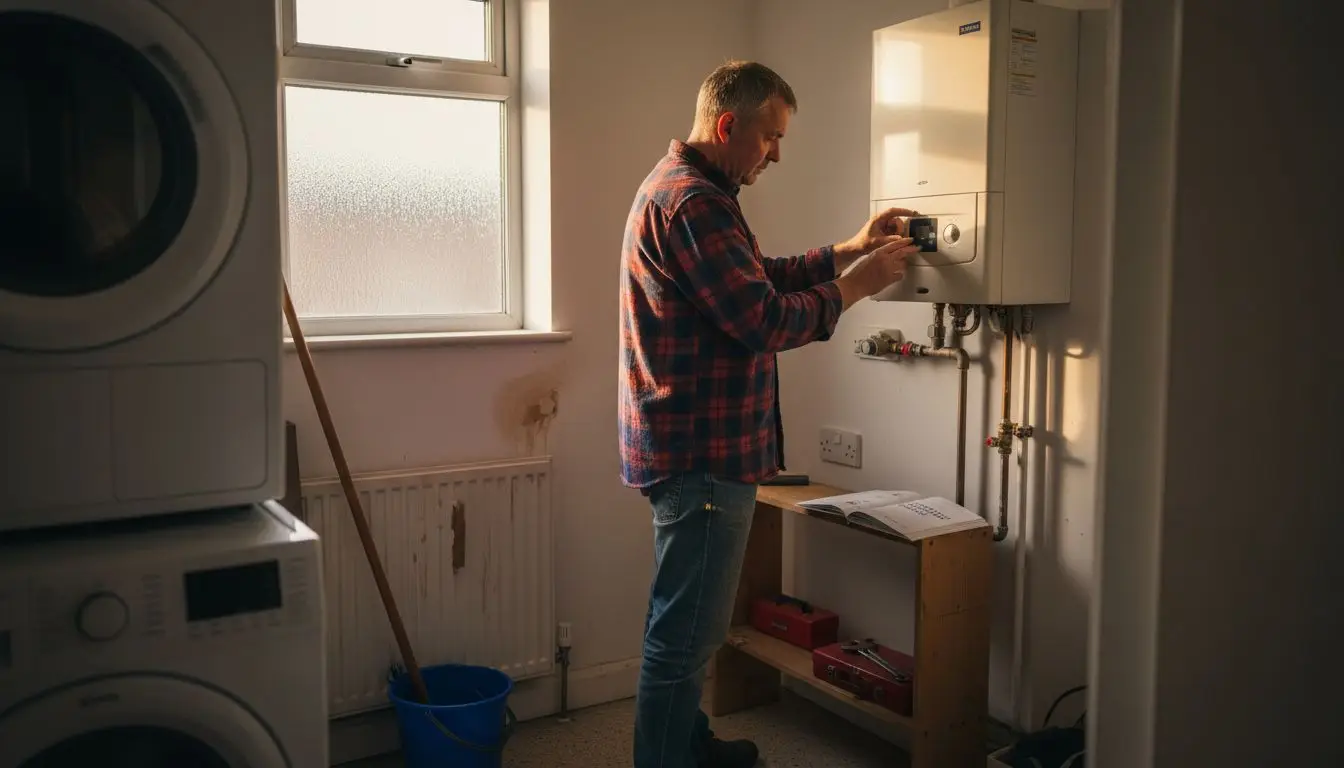
Realising your home or rental property could soon be affected by UK government energy regulations may feel daunting, but understanding your current heating system is the crucial first step towards making a positive change. With upcoming standards set to reshape how properties are heated, assessing your existing setup unlocks practical ways to increase comfort, reduce bills, and support a lower-carbon future. This guide shows how to identify your system, evaluate its performance, and gather the details needed to choose the most eco-friendly heating option for your property.
Table of Contents
- Step 1: Assess Your Current Heating System
- Step 2: Identify Suitable Eco-Friendly Heating Options
- Step 3: Install Selected Heating Technology
- Step 4: Optimise Heating Settings For Efficiency
- Step 5: Verify Performance And Compliance With Regulations
Quick Summary
| Key Insight | Explanation |
|---|---|
| 1. Assess your current heating system’s efficiency | Identify the type and age of your heating system to understand its performance and efficiency levels. This aids in determining when to upgrade. |
| 2. Explore eco-friendly heating options | Consider various renewable heating solutions like heat pumps, biomass boilers, or solar thermal. Each option has specific requirements and efficiency gains. |
| 3. Choose certified and experienced installers | Ensure installation is carried out by approved engineers to maintain warranties, meet regulations, and maximise efficiency of the new system. |
| 4. Optimise heating system settings post-installation | Set up your system to run efficiently, adjusting temperature settings and schedules based on actual occupancy to conserve energy and maintain comfort. |
| 5. Verify compliance and performance regularly | Obtain a commissioning certificate and an Energy Performance Certificate to ensure your system is up to standard and operating efficiently. |
Step 1: Assess your current heating system
Before exploring eco-friendly alternatives, you need to understand what heating system your property currently uses and how well it performs. This assessment forms the foundation for selecting an appropriate replacement that meets your home’s specific needs and energy performance goals.
Start by identifying your existing heating system type. Most UK properties use one of these:
- Gas boilers (combi, system, or conventional)
- Oil boilers
- Electric heating (storage heaters or direct acting)
- Heat pumps (air source or ground source)
- District heating systems
Locate your boiler or heating unit. Check the manufacturer’s nameplate for the model, fuel type, and installation date. Knowing the age helps determine efficiency levels and replacement urgency. Boilers installed before 2005 typically operate at significantly lower efficiency than modern alternatives.
Next, gather information about your home’s characteristics. These details influence which eco-friendly heating solutions suit your property best. The UK government provides a heat pump suitability checker that compares your home details against reference data to identify potential compatibility with sustainable heating options.
Document key facts about your property:
- Property type (detached, semi-detached, terraced, flat)
- Construction period (Victorian, 1960s, 2000s, etc.)
- Current insulation levels (loft, cavity wall, external)
- Available outdoor space for equipment
- Current hot water system setup
Assess your energy consumption patterns. Review your heating bills from the past year to understand seasonal variations and typical monthly costs. This data helps calculate potential savings from upgrading to more efficient systems. Evaluating heating and cooling needs across different building types reveals how your property compares to similar homes.
Consider your budget and available space. Different eco-friendly options require different financial investment and physical footprint. Heat pumps need outdoor units. Biomass boilers require fuel storage. Solar thermal systems demand roof space. Understanding these constraints early prevents wasted research time.
Document your current system’s age, efficiency rating, and performance issues now—this information becomes essential when comparing eco-friendly alternatives.
Pro tip: Request your boiler’s original installation certificate or conduct a basic efficiency test using online calculators specific to your model; older gas boilers often operate at 78-85% efficiency compared to modern condensing boilers achieving 90%+ efficiency, helping justify the upgrade investment.
Step 2: Identify suitable eco-friendly heating options
Now you understand your current heating system, it’s time to explore which eco-friendly alternatives match your property’s characteristics and your practical needs. The right choice depends on your home type, budget, space availability, and long-term energy goals.
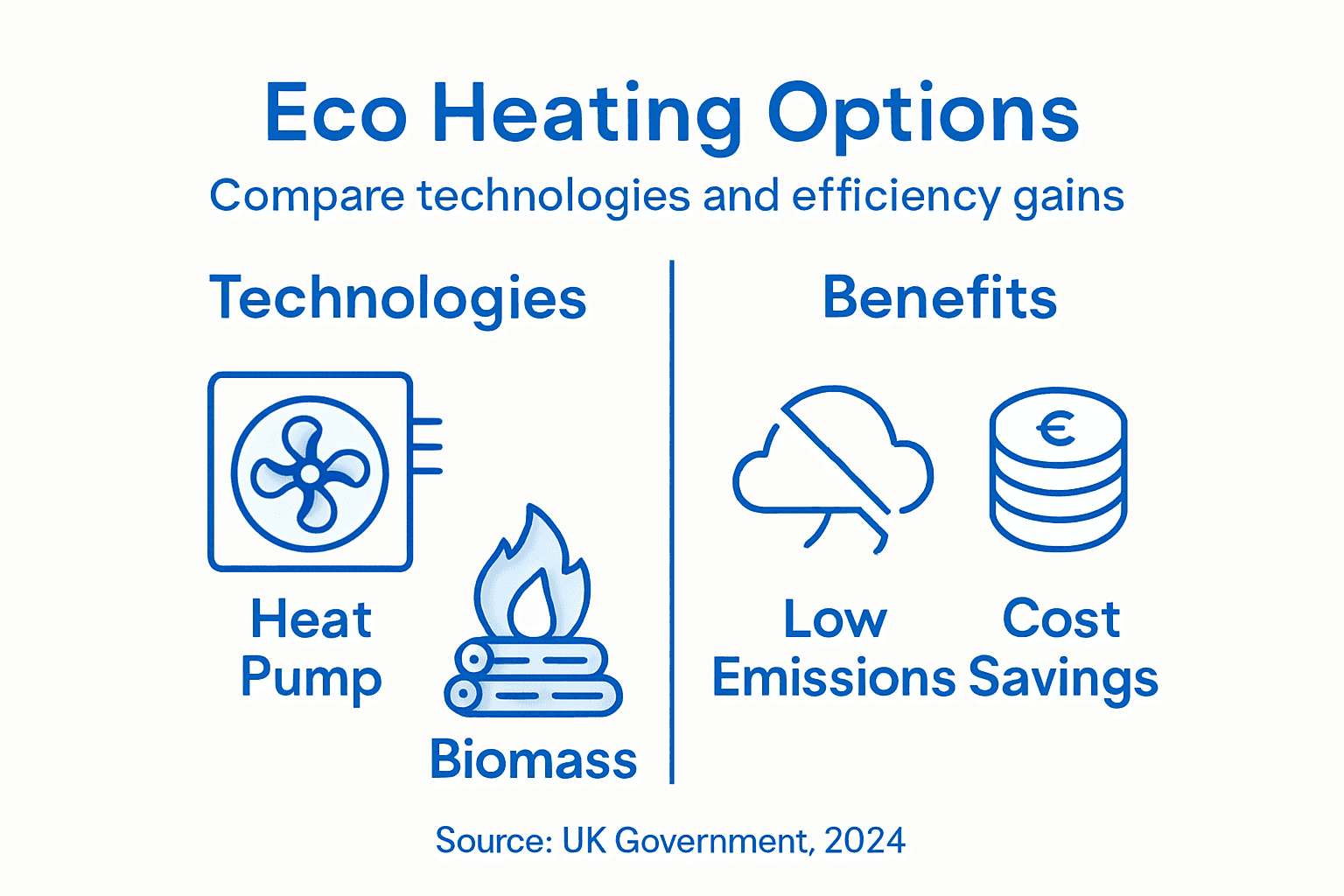
The main eco-friendly heating options available to UK homeowners are heat pumps, biomass boilers, solar thermal systems, and hybrid solutions. Heat pumps represent the government’s preferred low-carbon technology, offering significant environmental benefits compared to traditional gas boilers whilst delivering reliable heating performance across varying UK climates.
Evaluate each option against your specific circumstances:
- Air source heat pumps work in most properties, require outdoor space, and suit homes with good insulation
- Ground source heat pumps deliver highest efficiency but need substantial garden space and higher upfront investment
- Biomass boilers work well in rural areas with storage space and local fuel supply access
- Solar thermal systems supplement heating in properties with south-facing roof space
- Hybrid systems combine two technologies for improved flexibility and year-round performance
Check the prevalence and suitability of different technologies for your home type. Low-carbon technology adoption rates vary significantly across English homes, revealing which solutions work best for properties similar to yours.
Consider practical suitability factors for each option. Heat pumps need outdoor units and perform better with improved insulation. Biomass systems require dedicated storage and regular fuel ordering. Solar thermal systems depend on adequate roof orientation and space. Hybrid systems offer flexibility but cost more initially.
Assess financial viability by checking available grants and long-term savings potential. The Boiler Upgrade Scheme provides £5,000 towards heat pump installation costs. Calculate payback periods using current energy prices against projected fuel savings from each option.
Compare at least two heating alternatives against your property’s constraints before deciding, as suitability varies dramatically between homes.
Different eco-friendly options suit different property types and locations. Document your top two options alongside their estimated costs, space requirements, and potential efficiency gains before moving forward.
Here is a concise comparison of popular eco-friendly heating options for UK households:
| Technology | Typical Upfront Cost | Key Home Requirement | Estimated Efficiency Gain |
|---|---|---|---|
| Air Source Heat Pump | £7,000–£14,000 | Outdoor unit, good insulation | 25–45% improvement |
| Ground Source Heat Pump | £14,000–£25,000 | Large garden, high insulation | 30–55% improvement |
| Biomass Boiler | £9,000–£17,000 | Space for fuel storage | 20–30% improvement |
| Solar Thermal System | £4,000–£7,000 | South-facing roof | Up to 60% hot water need |
| Hybrid System | £9,000–£15,000 | Flexible for property type | Highly variable |
Pro tip: Request quotations from installers experienced with your top two options; they identify site-specific constraints you might miss and reveal whether grants or incentives apply to your particular property, potentially reducing costs by 20-30%.
Step 3: Install selected heating technology
Once you’ve chosen your eco-friendly heating system, the installation phase begins. This step involves selecting qualified installers, understanding the installation process, and ensuring your system meets all regulatory requirements and grant conditions.
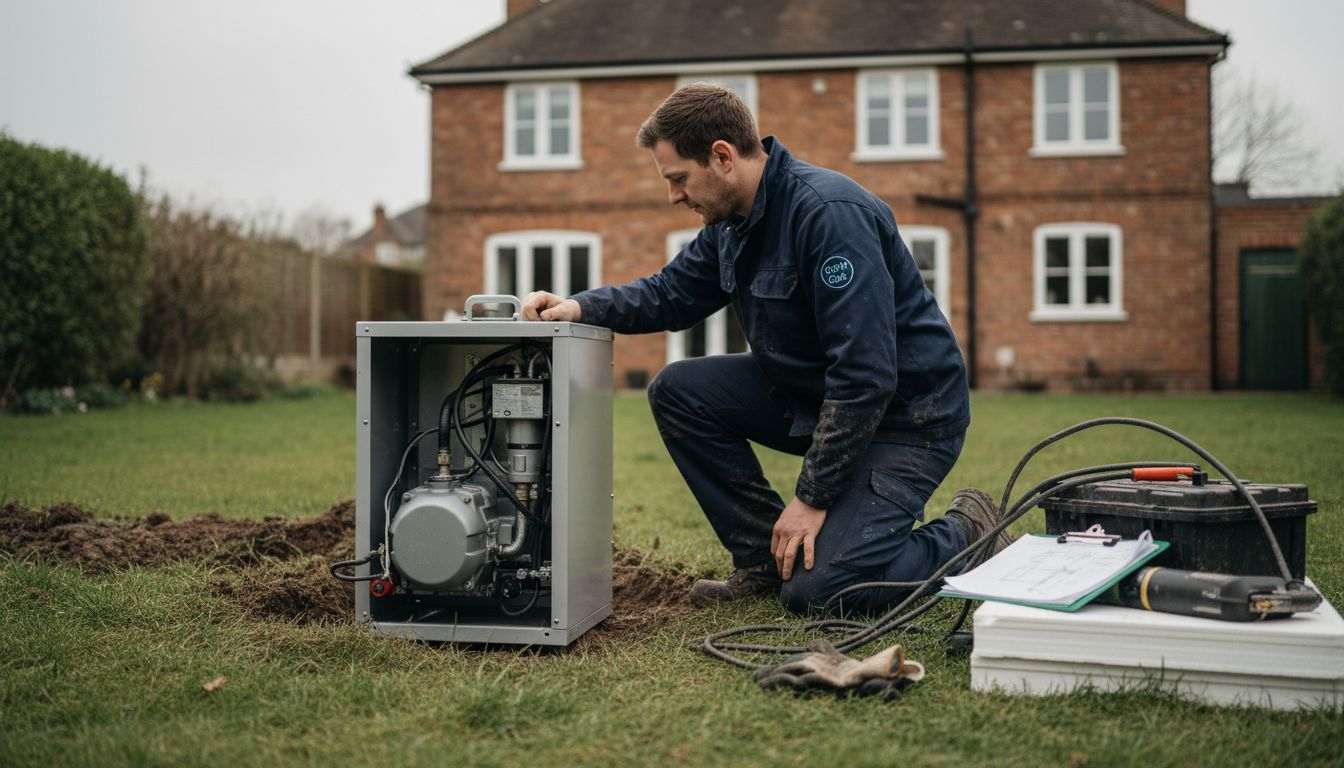
Start by choosing an approved installer. Your heating system must be installed by engineers certified for that specific technology. Gas Safe registered engineers handle biomass boilers, whilst MCS certified installers manage heat pumps and solar thermal systems. Using unapproved installers can invalidate warranties and disqualify you from government grants.
Gather quotes from at least three installers. Quality quotes include detailed specifications, timeline estimates, and post-installation support plans. Installers should visit your property to assess site-specific requirements and identify any preparatory work needed before installation commences.
Understand the pre-installation requirements for your chosen system:
- Existing boiler removal and disposal arrangements
- Pipework modifications or upgrades to accommodate new equipment
- Outdoor unit positioning for heat pumps or solar panels
- Fuel storage installation for biomass systems
- Electrical supply upgrades if necessary
If you’re applying for the Boiler Upgrade Scheme grant, your installer must be registered on the scheme. The scheme covers £5,000 towards heat pump costs or £5,000 towards biomass boiler installation. Submit your application before purchasing or installing the system to ensure eligibility.
Familiarise yourself with the heat pump installation process, including suitability assessments and technical integration steps. Most installations take between three to ten working days, depending on your system complexity and property modifications required.
Schedule your installation during appropriate weather conditions. Avoid severe cold or wet weather that complicates the work and compromises system performance. Plan for temporary heating disruption and arrange alternative heating arrangements if your old system must be removed before the new one becomes operational.
Confirm your installer holds current certifications and check they’re registered on any grant schemes you’re claiming before work commences.
Maintain clear communication with your installer throughout the process. Request progress updates, clarify any unexpected issues immediately, and document completion dates and performance readings upon handover.
Pro tip: Request a thorough commissioning demonstration from your installer covering system operation, controls adjustment, and efficiency settings specific to your property; this ensures you understand your new system and can identify performance issues early.
Step 4: Optimise heating settings for efficiency
Your new heating system is installed, but maximising its efficiency requires proper configuration and ongoing management. Correct settings can reduce energy consumption by 10-15% whilst maintaining consistent comfort throughout your home.
Start by understanding your system’s control capabilities. Modern heating systems include programmable thermostats, room thermostats, and radiator thermostats that work together to optimise performance. Advanced heating controls align with government standards for efficiency, allowing you to adjust temperatures by room and time period rather than heating your entire home uniformly.
Set your heating schedule based on your actual occupancy patterns. Most households benefit from lower temperatures during sleeping hours and when nobody is home. Typical efficient settings are 18-19 degrees Celsius when heating is needed and 15-16 degrees when unoccupied.
Configure your heating system settings using these principles:
- Set your room thermostat 1-2 degrees lower than your current comfort level
- Programme heating to run only during occupied hours
- Use radiator thermostatic valves to reduce heat in less-used rooms
- Set hot water to 60 degrees Celsius to prevent legionella growth
- Disable heating during mild weather when outdoor temperatures exceed 15 degrees
Invest in a smart thermostat if your system doesn’t include one already. Smart devices learn your patterns, adjust automatically, and provide energy consumption data through mobile apps. Flexible heating management through smart technology supports both financial savings and net zero targets.
Monitor your system’s actual performance after initial setup. Check your energy bills monthly to confirm savings materialise as expected. Most systems show performance improvements over their first heating season as controls reach optimal settings.
Schedule annual servicing for your heating system regardless of type. Professional maintenance ensures efficiency remains consistent and identifies potential issues before they cause failures or reduced performance.
Optimising heating settings requires balancing comfort with energy consumption, so adjust gradually and monitor results over several weeks.
Pro tip: Start with conservative temperature settings a few degrees lower than you think necessary, then adjust upward in 0.5-degree increments weekly; this approach identifies your genuine comfort threshold and prevents overshooting efficiency gains through unnecessarily cold settings.
Step 5: Verify performance and compliance with regulations
After your heating system is installed and optimised, verification ensures it performs as expected and meets current UK regulations. This step protects your investment and confirms compliance with building standards that affect property value and future resale prospects.
Request a commissioning certificate from your installer immediately after installation. This document confirms your system was installed correctly, tested for safety, and meets manufacturer specifications. Keep this certificate alongside your warranty documentation for future reference and insurance purposes.
Schedule an Energy Performance Certificate assessment within three months of installation. An accredited assessor evaluates your home’s energy efficiency using standardised measurement methodology. Energy Performance Certificates provide official compliance verification against UK building regulations and demonstrate the effectiveness of your new heating technology.
Verify your system’s actual performance against projected efficiency by monitoring these metrics:
- Monthly energy bills compared to previous consumption data
- System runtime hours and heating patterns through your thermostat display
- Hot water delivery temperature and consistency
- Radiator heat output in different rooms
- Response times when heating cycles engage or disengage
Understand your regulatory compliance obligations. The Building Regulations Part L sets minimum energy efficiency standards for heating systems. Your installation must align with these standards, and your EPC rating confirms this. Future regulations including the Future Homes Standard will increase these requirements further.
Address any performance discrepancies immediately. If your system underperforms projections, contact your installer to investigate potential issues. Common problems include incorrect thermostat calibration, blocked radiators, or control system programming errors that trained technicians can resolve.
Document your system’s performance baseline for future comparison. Government frameworks for decarbonising home heating increasingly require households to demonstrate compliance with low-carbon heating standards, making performance records valuable for regulatory purposes.
Maintain compliance records as your property circumstances change. If you extend your home, alter heating zones, or modify insulation, these changes may affect your heating system’s efficiency rating and regulatory compliance status.
Keep your commissioning certificate, EPC, and annual service records together in a single folder for easy access during property transactions or regulatory audits.
Pro tip: Request a detailed performance report from your installer showing baseline consumption figures and projected savings; compare your actual bills against these projections every six months to catch efficiency losses early and adjust settings before they become significant problems.
Elevate Your Eco-Friendly Heating Journey with Expert Energy Performance Insights
Choosing the right low-carbon heating system involves understanding your home’s energy efficiency and navigating evolving UK regulations. This guide highlights challenges like assessing current heating setups, evaluating eco-friendly options, and complying with regulatory standards—crucial steps before upgrading your system. Addressing these concerns ensures you optimise comfort while reducing energy costs and environmental impact.
At homeenergymodel.co.uk, we empower homeowners and professionals to stay ahead of these changes by providing comprehensive resources about the upcoming Home Energy Model (HEM). Our platform helps you grasp how HEM will transform energy performance assessments and EPC requirements in line with the Future Homes Standard. Explore expert advice on energy efficiency, understand regulatory compliance, and discover how to leverage new government initiatives to maximise your heating investment.
Take control of your property’s energy future now. Visit homeenergymodel.co.uk to learn more about advanced energy performance methodologies and begin planning your eco-friendly heating upgrade today. Gain the confidence to meet new standards while enhancing comfort and savings.
Explore how the new assessment approaches link with practical heating solutions at homeenergymodel.co.uk and prepare your property for a sustainable tomorrow.
Frequently Asked Questions
What are the first steps to assess my current heating system?
Start by identifying your existing heating system type, such as a gas boiler or heat pump. Document key details like its age and efficiency rating, then gather information about your home’s characteristics, including construction type and insulation levels, to effectively evaluate suitable eco-friendly heating options.
How can I determine which eco-friendly heating solution is right for my home?
Evaluate your property type, budget, and available space against the various eco-friendly options like heat pumps or biomass boilers. Compare at least two options based on factors like efficiency gains, installation costs, and specific site requirements to make an informed decision.
What certifications should my installer have for eco-friendly heating systems?
Your installer must hold relevant certifications according to the heating technology they are installing. For instance, use MCS certified installers for heat pumps and Gas Safe registered engineers for biomass boilers to ensure compliance and maintain warranty eligibility.
How can I optimise the settings of my new heating system for maximum efficiency?
Configure your system’s controls by setting lower temperatures during unoccupied hours and using programmable thermostats where possible. Monitor energy consumption over the first few months to adjust settings for maximum efficiency, aiming for a reduction in energy use by approximately 10-15%.
How do I verify that my heating system complies with regulations?
Request a commissioning certificate from your installer after installation to confirm your system meets safety and performance standards. Additionally, schedule an Energy Performance Certificate assessment within three months of installation to ensure compliance with current building regulations.
What should I do if my heating system does not perform as expected?
If your system underperforms, contact your installer to investigate potential issues such as incorrect settings or maintenance needs. Document performance metrics and compare them with projections to identify discrepancies and make necessary adjustments.