
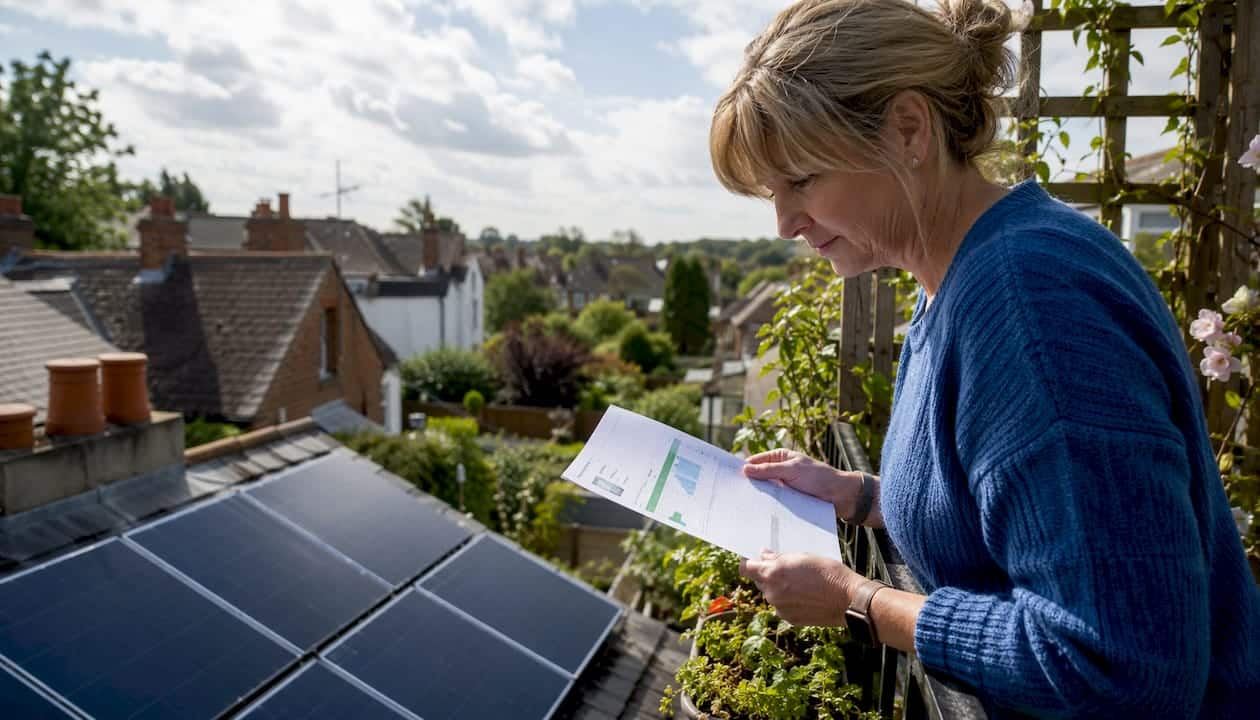
Renewable resources are energy sources replenished naturally on a human timescale; non-renewable resources are finite fuels formed over millions of years and depleted by use. For UK property owners and assessors, this distinction is not merely academic. Energy Performance Certificates (EPCs), the SAP/RdSAP methodology, and the incoming Home Energy Model (HEM) all treat on-site renewables differently from fossil-fuel heating, and that treatment directly shapes a property’s potential rating. The Department for Energy Security and Net Zero (DESNZ) reported that renewables generated 53.1% of UK electricity in Q1 2026, a figure that reflects both policy direction and the grid context every building connects into.
Table of Contents
- What counts as renewable and non-renewable: UK definitions and examples
- How renewables fit into the UK electricity mix: capacity, generation, and intermittency
- How EPCs, SAP/RdSAP and the Home Energy Model treat on-site renewables
- Common renewable technologies for UK properties: costs, timelines, and caveats
- How to decide whether renewables are right for your property
- Key takeaways
- Why fabric-first thinking still wins, even in a 53% renewable grid
- Homeenergymodel: assessment support for owners and professionals
- Useful UK sources and further reading
What counts as renewable and non-renewable: UK definitions and examples
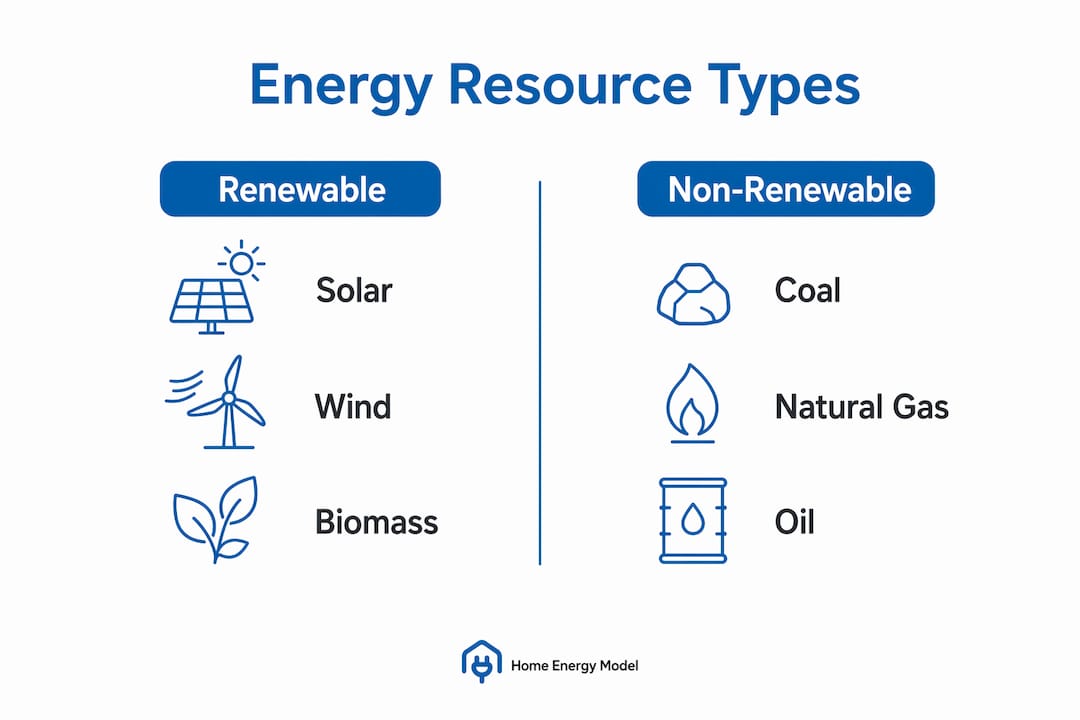
Renewable resources are those replenished by natural processes at a rate that matches or exceeds human consumption. In UK property and energy contexts, the main types of energy resources classed as renewable are:
- Wind (onshore and offshore): the UK’s largest renewable generator, with offshore projects such as Dogger Bank now contributing materially to national capacity.
- Solar PV: there are now a large number of domestic solar installations in the UK, with rooftop systems the most common property-level technology.
- Hydropower: significant in Scotland; small-scale run-of-river systems are occasionally viable for rural properties.
- Bioenergy (biomass and biogas): classed as renewable but subject to conversion losses in electricity generation, unlike wind and solar.
- Heat pumps: not a primary energy source, but an electrical application that extracts ambient heat, classified as low-carbon under SAP/RdSAP when powered by grid electricity.
Non-renewable resources are finite and cannot be replenished within any practical timeframe. UK non-renewable energy sources include natural gas (still the dominant heating fuel in UK homes), oil, coal (the last coal-fired power station, Ratcliffe-on-Soar, closed in September 2024), and peat. Nuclear energy occupies a distinct position: it is low-carbon in operation but relies on a finite uranium fuel, so DESNZ statistics treat it separately from renewables while grouping it with low-carbon sources.
A critical distinction for assessors: thermal renewables such as solid biomass and biogas incur conversion losses in electricity generation and are treated differently in primary energy accounting compared with non-thermal renewables such as wind and solar. This affects how these technologies appear in SAP calculations and HEM modelling.
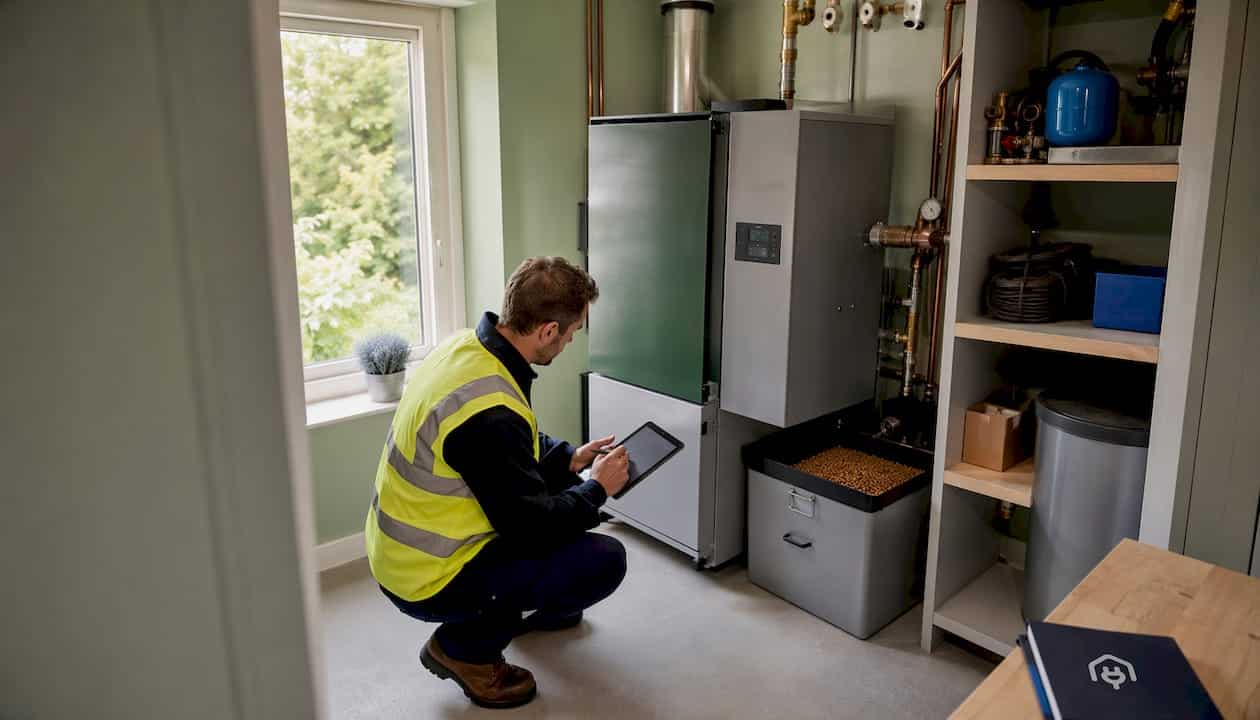
When conducting a site survey, assessors should record any installed system — solar PV array, biomass boiler, solar thermal collector, or EV charger — along with its rated output, installation date, and MCS certificate number. These inputs feed directly into SAP/RdSAP calculations and will be required for HEM assessments.
How renewables fit into the UK electricity mix: capacity, generation, and intermittency
Understanding the national picture helps assessors contextualise local decisions about on-site generation.
Capacity is the maximum output a system can produce; generation is what it actually produces over time. The gap between the two is determined by load factors, which vary by technology. Wind and solar are intermittent: they generate only when the wind blows or the sun shines. DESNZ analysts emphasise that operational efficiency and load factors are as important as installed capacity when tracking progress against national targets, and the same logic applies at building level.
For properties, intermittency means that on-site solar PV or small wind generation must be paired with battery storage or grid export arrangements to maximise value. National Grid confirms that no single technology is sufficient on its own; a balanced mix is required for reliability.
| Metric | Figure | Source period |
|---|---|---|
| Renewable share of UK electricity generation | 53.1% | Q1 2026 |
| Total renewable generation | — | Q1 2026 |
| Installed renewable capacity | — | Q1 2026 |
| Wind generation year-on-year change | — | Q1 2026 vs Q1 2025 |
| Renewable share of generation in 2024 | 50.4% | Full year 2024 |
The 2024 full-year figure of 50.4% was the first time renewables exceeded half of UK electricity generation in the published data series. The Q1 2026 figure of 53.1% shows the trend continuing, driven primarily by wind capacity growth.
How EPCs, SAP/RdSAP and the Home Energy Model treat on-site renewables
On-site renewables can improve a property’s potential EPC rating, but they are rarely the most cost-effective first step. SAP methodology and technical annexes consistently emphasise fabric-first measures — insulation, U-values, airtightness — before rewarding renewables. Adding solar PV to a poorly insulated property delivers a much smaller EPC uplift than improving the fabric first.
Under SAP/RdSAP, assessors model on-site generation by recording system type, rated output, and orientation. Solar PV reduces the property’s net energy demand from the grid, improving both the energy efficiency score and the environmental impact rating. Heat pumps are modelled on their Coefficient of Performance (CoP) and the carbon intensity of grid electricity. Biomass boilers replace gas or oil in the heating calculation, reducing CO₂ emissions but not eliminating them entirely due to combustion.
The Home Energy Model (HEM) is the methodology set to replace SAP, aligning with the Future Homes Standard. HEM retains the principle of modelling on-site renewables against fabric performance but introduces more granular inputs and updated carbon factors. Assessors should expect to document assumptions more precisely under HEM than under RdSAP.
EPC recommendations for renewables are non-mandatory; potential EPC improvements are estimates, and actual outcomes vary with site specifics including roof orientation, shading, and grid export capacity. Assessors must make clear that the ‘potential’ rating reflects modelled assumptions, not guaranteed results.
The distinction between current and potential ratings matters here. The current rating reflects the property as assessed; the potential rating shows what is achievable with recommended measures. Renewables typically appear in the potential rating column, not the current one, unless they are already installed and operational. For a deeper look at how ratings work, the EPC ratings guide covers the full methodology.
Common renewable technologies for UK properties: costs, timelines, and caveats
The table below summarises the technologies most relevant to domestic and small commercial properties, with indicative cost ranges and typical installation timelines. Figures are indicative; actual costs vary by property size, location, and specification.
| Technology | Typical cost range | Installation timeline | Key caveat |
|---|---|---|---|
| Rooftop solar PV (typical small system) | Cost varies by size and property | Installation usually takes a few days | Roof orientation and shading critical |
| Battery storage (add-on) | Cost varies with capacity | Installation usually takes a day | Sized to match PV output and demand |
| Air-source heat pump | Cost varies with property size | Installation may take several days | Fabric insulation must be adequate first |
| Ground-source heat pump | Cost varies with property and site conditions | Installation timeline varies | Requires land area for ground loops |
| Solar thermal | Cost depends on system size | Installation takes a few days | Supplements hot water only |
| Biomass boiler | Cost varies by system size | Installation timeline varies | Fuel storage and supply chain needed |
Key considerations for owners and assessors:
- MCS accreditation: installers of solar PV, heat pumps, solar thermal, and biomass systems should hold Microgeneration Certification Scheme (MCS) accreditation. MCS certification is required for eligibility under government grant schemes.
- Planning constraints: Listed buildings and properties in conservation areas face additional restrictions. Permitted development rights for solar PV and heat pumps do not apply universally; local planning authority consent may be required.
- Grid export capacity: properties in rural areas or on older network infrastructure may face constraints on export capacity, limiting the financial return from solar PV.
- Government schemes: the Boiler Upgrade Scheme (BUS) currently offers grants towards air-source and ground-source heat pumps. The Great British Insulation Scheme and ECO4 address fabric measures. Check GOV.UK for current eligibility and funding levels, as scheme terms change.
Solar PV remains the most accessible entry point for most UK homeowners. With over 2 million domestic installations already in place, supply chains and installer availability are well established.
How to decide whether renewables are right for your property
A structured sequence prevents costly mistakes and ensures EPC/HEM inputs are accurate.
Step 1: Fabric first
- Check loft, wall, and floor insulation levels against current Part L standards.
- Assess airtightness and identify draughts around windows, doors, and service penetrations.
- Confirm the heating system is operating efficiently before considering replacement.
Step 2: Site survey
- Measure roof area, orientation (south-facing is optimal for solar PV), and shading from trees or adjacent buildings.
- Assess ground availability for heat pump loops or biomass fuel storage.
- Check the distribution board capacity and incoming supply rating.
Step 3: Technical sizing
- Size solar PV to match annual electricity demand, not just available roof space.
- Size battery storage to capture surplus generation rather than maximise capacity.
- Confirm grid export arrangements with the Distribution Network Operator (DNO).
Step 4: Planning and accreditation checks
- Verify permitted development rights or apply for planning consent where required.
- Confirm installer MCS accreditation before signing contracts.
- Check Listed building or conservation area status with the local planning authority.
Step 5: Procurement and documentation
- Obtain at least three quotes with performance estimates (kWh/year, not just kWp).
- Request MCS certificates, performance data sheets, and warranty documentation.
- Retain all documentation for EPC/HEM inputs and future property transactions.
For a broader survey checklist, the EPC assessment checklist covers documentation requirements in detail.
Pro Tip: When preparing a potential EPC rating that includes solar PV, document the assumed roof orientation, tilt angle, and shading factor explicitly. RdSAP field surveys often estimate these rather than measure them precisely; under HEM, more granular inputs will be expected, and undocumented assumptions create audit risk.
Key takeaways
Renewables now generate over half of UK electricity, but fabric improvements typically deliver larger EPC gains than on-site generation for most properties.
| Point | Details |
|---|---|
| Definitions matter for assessments | Renewable resources replenish naturally; non-renewables are finite — and SAP/RdSAP models them differently. |
| UK renewables scale | Renewables reached a 53.1% share of UK electricity generation in Q1 2026, with — installed capacity. |
| Fabric first | Insulation and airtightness improvements typically deliver larger EPC gains than adding renewables to a poorly performing fabric. |
| Potential vs current ratings | On-site renewables usually appear in the potential EPC rating, not the current one, unless already installed and operational. |
| Homeenergymodel support | Homeenergymodel provides HEM-ready assessment support and EPC preparation services to help owners and professionals model renewables accurately. |
Why fabric-first thinking still wins, even in a 53% renewable grid
The most common mistake in retrofit planning is treating renewables as a shortcut to a better EPC rating. An owner installs solar PV on a property with uninsulated cavity walls and a D-rated boiler, expecting a significant rating jump. The EPC potential score improves modestly, but the property’s actual energy bills barely move because the fundamental heat loss remains unchanged. The renewable generation is exported to the grid rather than reducing consumption, because the building leaks heat faster than the panels can offset it.
The evidence is consistent: fabric measures deliver the largest EPC gains for most properties, and renewables work best when layered on top of a well-insulated, low-loss building. Assessors who present renewables as the primary recommendation, without first addressing fabric, are not serving their clients well and risk producing potential ratings that overstate real-world improvement. The HEM transition will make this sequencing more visible, not less, as its granular inputs expose the gap between modelled and actual performance.
Homeenergymodel: assessment support for owners and professionals
Property owners and assessors who need accurate EPC and HEM modelling — particularly when renewables are involved — can access structured support through PEAR energy assessment tools. The site provides clear guidance on how the Home Energy Model impacts property ratings and what the transition from SAP means in practice for retrofit planning and compliance.
Core services relevant to this article’s audience include:
- HEM-ready energy modelling and SAP/RdSAP assessment support
- Domestic and commercial EPC preparation
- Retrofit option appraisal, including fabric-first sequencing
- Technical surveys for landlords, portfolio owners, and commercial property managers
For London-based owners, the EPC services in London page covers local assessment requirements and how to obtain a certificate efficiently. To get started with an assessment or to discuss HEM modelling for a specific property, visit Homeenergymodel and request a quote.
Useful UK sources and further reading
- Energy Trends June 2026 — DESNZ quarterly statistics including Q1 2026 renewable generation and capacity figures.
- DUKES 2025 Chapters 1–7 — Digest of UK Energy Statistics; the primary annual reference for generation, capacity, and fuel use data.
- DUKES 2025 Chapter 6 — Primary energy accounting methodology, including conversion loss treatment for thermal renewables.
- Renewables methodology note — DESNZ technical note on how renewable performance is measured.
- A guide to EPCs for the marketing, sale and let of dwellings — GOV.UK primary guidance on EPC methodology, validity, and requirements.
- Technical annex for chapter 2: what EPCs measure — Detailed methodology note on fabric-first priorities and how renewables are modelled in SAP.
- National Grid: how much of the UK’s energy is renewable? — Accessible explainer on renewable integration and grid balancing.