

For UK landlords grappling with rising energy bills and stricter regulatory demands, finding practical ways to improve property performance has become urgent. Combined heat and power systems deliver remarkable benefits, enabling properties to achieve efficiencies over 80 percent and reduce carbon emissions by up to 30 percent compared to separate traditional systems. Discover how CHP can support compliance with upcoming Home Energy Model requirements while directly enhancing cost savings and energy security for your property portfolio.
Table of Contents
- What Is Combined Heat and Power?
- Types of CHP Systems in the UK
- How CHP Works for Buildings and Estates
- Regulations and Home Energy Model Impacts
- Costs, Benefits, and Common Pitfalls
- Comparing CHP with Alternative Solutions
Key Takeaways
| Point | Details |
|---|---|
| CHP Efficiency | Combined Heat and Power systems can achieve efficiency levels exceeding 80%, transforming waste heat into useful energy. |
| Environmental Benefits | Implementing CHP can reduce carbon emissions by up to 30% compared to traditional energy generation methods. |
| Optimal Applications | CHP systems are most beneficial for properties with high, consistent heat and power demands, such as hospitals and universities. |
| Regulatory Support | The UK government offers various incentives and regulatory support to encourage the adoption of CHP technologies. |
What Is Combined Heat and Power?
Combined heat and power (CHP) represents an innovative energy generation technology that dramatically improves efficiency by simultaneously producing electricity and useful heat in a single integrated process. Highly efficient energy generation allows organisations to capture and utilise heat that would typically be wasted during traditional electricity production.
At its core, a CHP system operates by capturing the thermal energy generated during electricity production – energy that would normally be released into the atmosphere as waste heat. This approach enables systems to achieve remarkable efficiency levels, often exceeding 80% compared to conventional separate heat and power generation methods. Key components of a typical CHP system include:
- A primary generator producing electricity
- Heat recovery mechanism
- Combustion air system
- Sophisticated control systems
- Protective equipment and enclosure
For UK landlords, CHP represents a strategic investment with multiple compelling advantages. The technology can reduce carbon emissions by up to 30% compared to traditional generation methods, while simultaneously lowering energy costs and improving overall system resilience. Energy efficiency becomes more than a theoretical concept – it transforms into a practical, measurable outcome.
Organisations with consistent heat and power demands exceeding 5,000 hours annually stand to benefit most from CHP implementation. These systems are particularly effective in contexts with sustained, predictable energy requirements such as residential complexes, hospitals, universities, and large commercial properties.
Pro tip: When considering CHP, conduct a comprehensive energy demand assessment to determine potential cost savings and emissions reductions specific to your property portfolio.
Types of CHP Systems in the UK
CHP systems in the United Kingdom encompass several distinctive technologies, each designed to meet varying energy generation needs across different sectors. CHP technology classifications primarily include packaged systems and custom-designed installations, which differ significantly in their operational characteristics and applications.
The most prevalent CHP technologies in the UK market can be categorised into three primary types:
- Gas Engine CHP: The most common system, utilising internal combustion engines running on natural gas
- Small Gas Turbine CHP: Suitable for larger commercial and industrial applications
- Fuel Cell CHP: Emerging technology offering high electrical efficiency and low emissions
Each technology brings unique advantages depending on specific energy requirements. Gas engine systems, for instance, are typically most effective for smaller-scale applications like residential complexes and small commercial properties. Small gas turbine systems excel in scenarios demanding higher power outputs, such as hospitals, universities, and large industrial facilities.
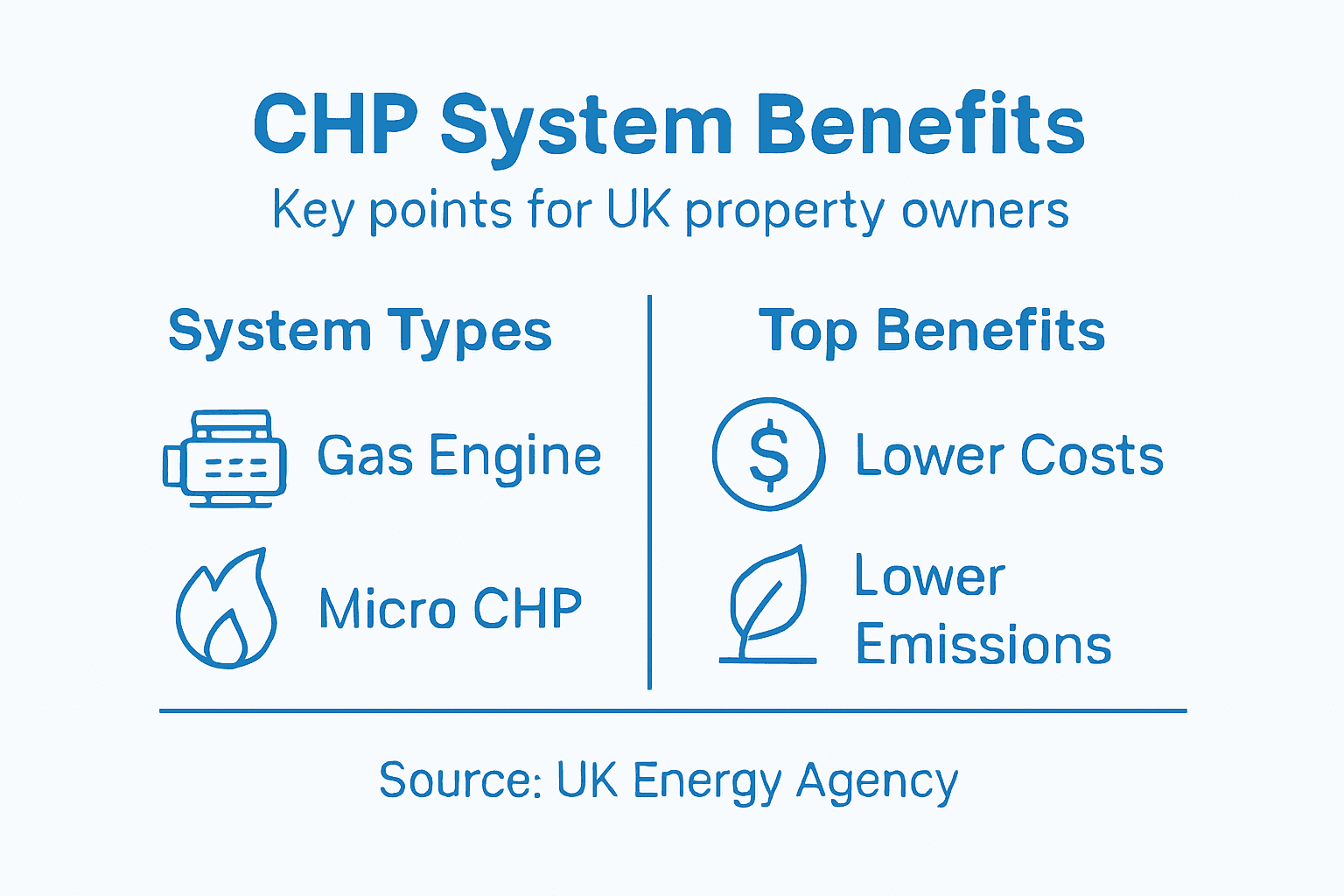
Here is a summary of prevalent CHP technologies and their ideal applications in the UK:
| CHP Type | Main Fuel Used | Optimal Building Type | Unique Benefit |
|---|---|---|---|
| Gas Engine | Natural gas | Residential, small commercial | Reliable and flexible output |
| Gas Turbine | Natural gas | Hospitals, industrial, large estates | Handles high power demand |
| Fuel Cell | Hydrogen, biogas | Technology-led commercial sites | High electrical efficiency |
Fuel selection and system design are critical factors in maximising CHP performance and achieving optimal energy efficiency.
The fuel diversity for CHP systems in the UK is notable, with advanced technological approaches supporting multiple fuel types. These include natural gas, biogas, waste-derived fuels, and increasingly, hydrogen-based solutions. Site-specific considerations such as fuel quality, system integration, and control mechanisms play pivotal roles in determining the most appropriate CHP technology.
Pro tip: Conduct a comprehensive energy demand assessment to identify the most suitable CHP system configuration for your specific property portfolio and operational requirements.
How CHP Works for Buildings and Estates
Combined Heat and Power (CHP) systems represent a sophisticated energy generation approach that transforms traditional power production for buildings and estates. CHP project development involves a complex process of generating electricity and capturing waste heat simultaneously, creating an unprecedented level of energy efficiency for property owners.
The fundamental operational mechanism of CHP systems involves several critical stages:
- Electricity Generation: Using engines running on natural gas, biogas, or emerging hydrogen technologies
- Heat Capture: Collecting thermal energy typically lost in conventional electricity generation
- Heat Distribution: Redirecting captured heat for building warming, hot water production, or industrial processes
- Grid Independence: Reducing reliance on external energy networks
For UK landlords and estate managers, CHP presents a transformative approach to energy management. Integrated energy solutions enable properties to generate their own power while simultaneously capturing and utilising waste heat, dramatically improving overall energy efficiency.
CHP technology can reduce energy costs by up to 30% compared to traditional separate heat and power generation methods.
The versatility of CHP systems makes them particularly attractive for large estates with consistent energy demands. Hospitals, universities, leisure centres, and multi-building complexes can benefit most from this technology. By generating electricity onsite and capturing waste heat, these systems provide a resilient and cost-effective energy solution that supports both economic and environmental objectives.
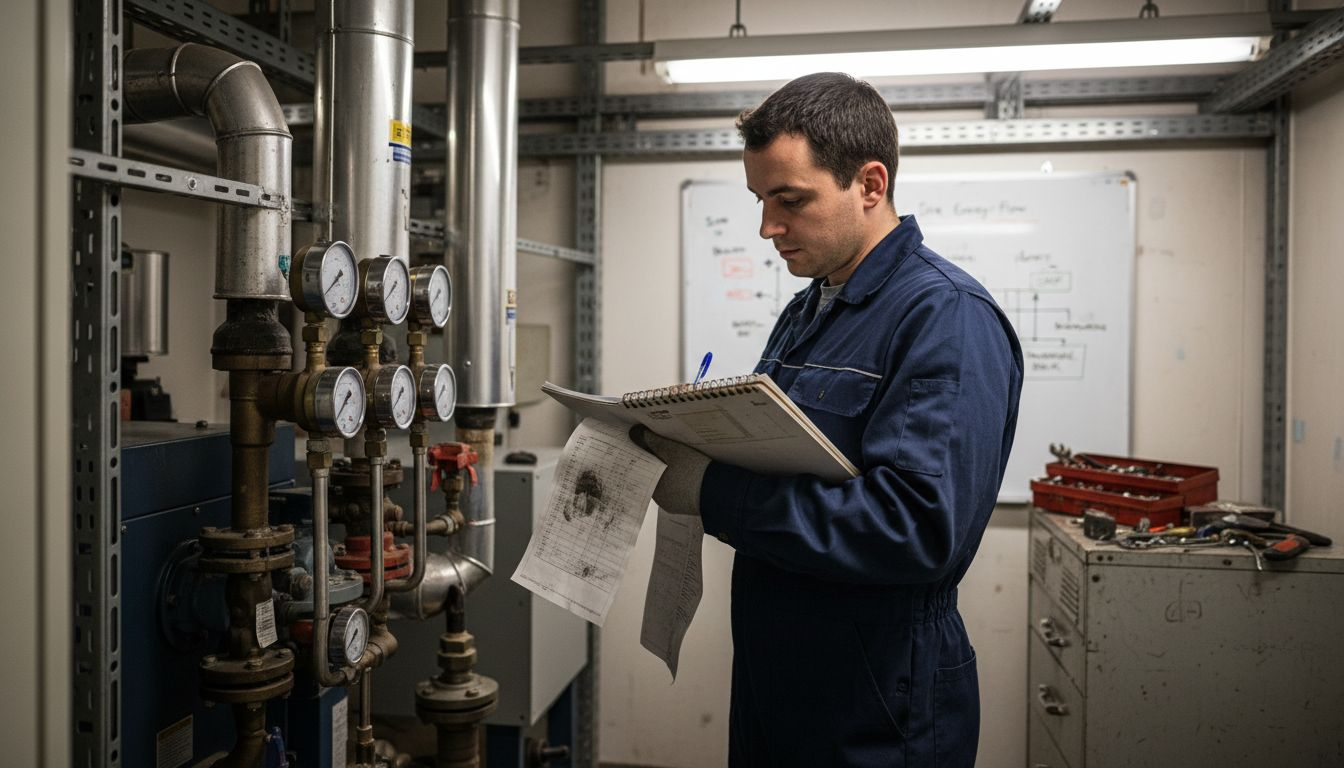
Pro tip: Conduct a detailed energy demand assessment to determine the most appropriate CHP configuration for your specific property portfolio and operational requirements.
Regulations and Home Energy Model Impacts
The UK’s regulatory landscape for Combined Heat and Power (CHP) systems continues to evolve, with increasingly sophisticated frameworks designed to promote energy efficiency and reduce carbon emissions. CHP regulatory standards play a critical role in shaping how landlords and property managers approach energy generation and consumption.
Key regulatory mechanisms impacting CHP implementation include:
- Quality Assurance: CHPQA programme certification
- Financial Incentives: Targeted economic support mechanisms
- Emissions Standards: Strict carbon reduction requirements
- Energy Performance Tracking: Integration with Home Energy Model assessments
The government has established a comprehensive set of incentives to encourage CHP adoption across various sectors. CHP investment incentives encompass multiple financial strategies, including:
- Climate Change Levy exemptions
- Carbon Price Support relief
- Enhanced Capital Allowances
- Business rate exemptions for qualifying schemes
Regulatory frameworks are designed to support high-efficiency cogeneration technologies while driving meaningful carbon reduction across the UK property sector.
Natural gas remains the dominant fuel for CHP systems, with emerging technologies like hydrogen presenting promising future alternatives. The Home Energy Model will likely play an increasingly significant role in assessing and encouraging CHP implementation, providing a more comprehensive approach to evaluating energy performance beyond traditional metrics.
Pro tip: Engage with a certified energy consultant to understand how specific CHP regulations and incentives can be strategically applied to your property portfolio.
Costs, Benefits, and Common Pitfalls
CHP project development represents a significant strategic investment for UK landlords, demanding careful financial and operational considerations. Understanding the nuanced landscape of costs, benefits, and potential challenges is crucial for making informed decisions about implementing Combined Heat and Power systems.
The primary financial considerations for CHP implementation include:
- Initial Capital Investment: Substantial upfront equipment and installation costs
- Operational Expenses: Ongoing maintenance and potential fuel procurement
- Energy Cost Savings: Potential reduction in electricity and heating expenditures
- Carbon Reduction Incentives: Financial benefits from emissions reduction
Key benefits of CHP systems for landlords encompass multiple dimensions:
- Reduced energy costs through high-efficiency generation
- Improved energy security and grid independence
- Potential revenue from excess energy generation
- Enhanced property value and sustainability credentials
Successful CHP implementation requires a thorough understanding of your property’s specific energy demand profile and consistent operational management.
Common pitfalls that landlords must carefully navigate include mismatched heat demand, complex installation processes, and potential operational inefficiencies. Heat network performance strategies highlight the critical importance of maintaining consistent heat loads and implementing robust monitoring systems to prevent financial underperformance.
Pro tip: Conduct a comprehensive feasibility study and engage technical experts to perform detailed energy demand analysis before committing to a CHP system installation.
Comparing CHP with Alternative Solutions
Comprehensive heating technology assessments reveal that no single energy solution fits every property’s requirements. UK landlords must carefully evaluate multiple technologies to determine the most appropriate heating and power generation strategy for their specific circumstances.
Key alternative heating technologies include:
- Heat Pumps: Highly efficient electrical heating systems
- Solar Thermal: Renewable energy solution using solar collectors
- Biomass Boilers: Sustainable heating systems using organic materials
- Traditional Gas Boilers: Conventional heating technology
Comparative analysis of these technologies reveals distinct advantages and limitations:
- Heat Pumps: Excellent for well-insulated properties with consistent low-temperature heating needs
- Solar Thermal: Best suited for properties with significant daytime hot water requirements
- Biomass Boilers: Ideal for rural properties with direct access to organic fuel sources
- CHP: Superior for properties with simultaneous and consistent heat and power demands
Alternative technologies are often most effective when integrated strategically rather than viewed as competing solutions.
CHP distinguishes itself by simultaneously generating electricity and heat, offering unique advantages in scenarios with continuous energy demands. While alternative technologies might excel in specific contexts, CHP provides a holistic approach to energy generation that can significantly reduce overall energy costs and carbon emissions for large estates, commercial properties, and multi-unit residential complexes.
To help compare CHP with alternative heating technologies, see this concise overview:
| Solution | Typical Fuel Source | Best Application Scenario | Key Limitation |
|---|---|---|---|
| CHP | Natural gas, biogas | Estates with consistent heat & power | High upfront investment |
| Heat Pump | Electricity | Insulated properties, low-temp needs | Reduced efficiency in cold snaps |
| Solar Thermal | Solar energy | Daytime hot water demand | Weather-dependent output |
| Biomass Boiler | Organic biomass | Rural areas with fuel access | Requires storage and maintenance |
Pro tip: Conduct a comprehensive energy audit to understand your property’s specific demand profile before selecting an energy generation technology.
Unlock Greater Energy Efficiency with the Home Energy Model
As the article highlights, UK landlords face the challenge of improving energy efficiency while navigating complex regulations like the upcoming Home Energy Model (HEM) set to replace SAP in 2025. Combined Heat and Power (CHP) systems offer an effective solution for properties with consistent heat and power demands but require comprehensive energy assessments to unlock their full potential. If you are striving to reduce energy costs, meet stricter emissions standards, and boost your property’s sustainability credentials, understanding how the HEM influences these goals is critical.
Discover how the Home Energy Model directly relates to CHP implementation and energy performance tracking. Our resource offers essential insights for landlords aiming to comply with new government initiatives and optimise their estate’s energy use. Benefit from expert guidance on energy demand assessments and prepare your property portfolio for smarter, more cost-effective energy management. Start today to turn energy challenges into opportunities by visiting homeenergymodel.co.uk and take decisive steps towards future-proofing your properties.
Frequently Asked Questions
What is Combined Heat and Power (CHP) and how does it work?
Combined Heat and Power (CHP) is an energy generation technology that simultaneously produces electricity and useful heat from a single integrated process. CHP systems operate by capturing the thermal energy generated during electricity production, typically achieving efficiency levels exceeding 80%.
What are the benefits of CHP systems for landlords?
CHP systems can reduce energy costs by up to 30% compared to traditional methods, lower carbon emissions by up to 30%, and improve energy security and resilience. They also enhance property value and sustainability credentials.
What types of properties can benefit most from CHP?
Properties with consistent heat and power demands exceeding 5,000 hours annually benefit most from CHP implementation. Ideal applications include residential complexes, hospitals, universities, and large commercial properties.
What are the potential challenges in implementing a CHP system?
Common challenges include high initial capital investment, operational complexities, and potential mismatches between heat demand and supply. Proper planning, including thorough feasibility studies and energy demand assessments, is essential to mitigate these challenges.