

TL;DR:
- Improving UK home energy efficiency involves insulation, smarter controls, renewable technology, and behavioral changes. These measures can significantly reduce energy bills and carbon emissions by tackling major heat losses and optimizing energy use.
The most effective ways to improve energy efficiency in UK homes combine insulation upgrades, smarter heating controls, renewable technology, and low-cost behavioural changes. Together, these measures can meaningfully reduce energy bills and carbon emissions. Lighting alone can account for up to 40% of electricity use in commercial buildings, and switching to LED bulbs cuts that consumption by up to 90%. For homeowners and property managers, the starting point is always the same: understand where energy is being lost, then act on the highest-impact improvements first.
The most effective immediate actions include:
- Upgrade loft and cavity wall insulation to reduce heat loss
- Install thermostatic radiator valves (TRVs) and a programmable thermostat
- Switch all bulbs to LED lighting
- Draught-proof windows, doors, and floors
- Consider solar photovoltaic (PV) panels or a heat pump for renewable generation
- Use your Energy Performance Certificate (EPC) as a prioritised improvement roadmap
- Adopt simple habits: wash at 30°C, air dry clothes, and turn off standby appliances
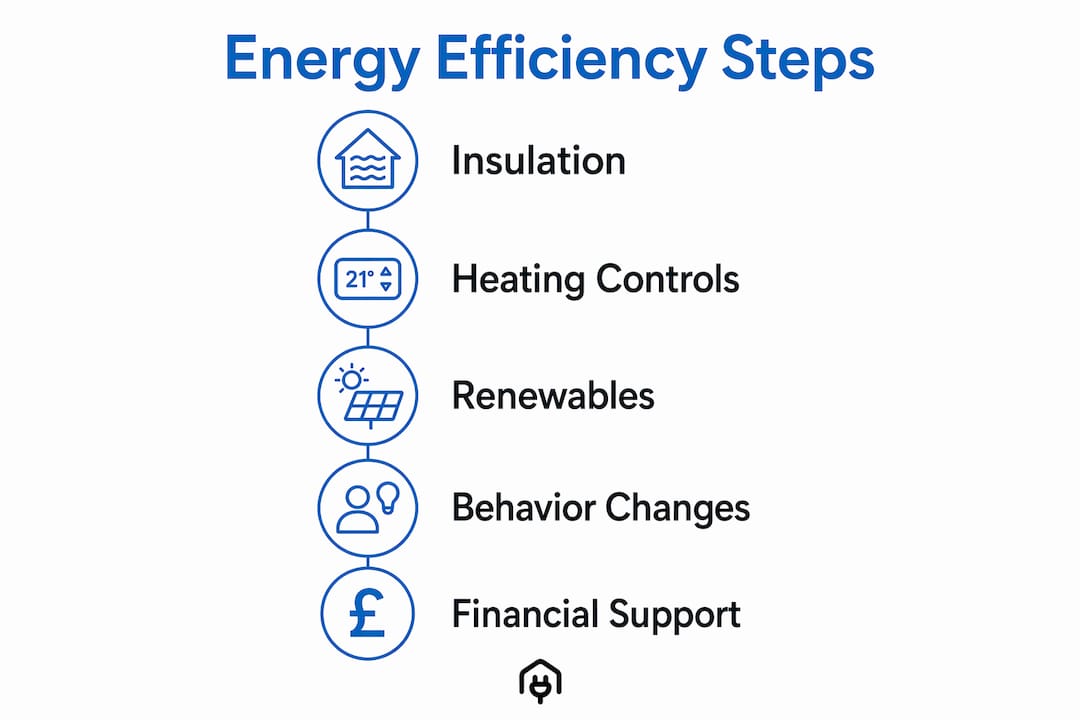
1. How does insulation reduce your home’s energy demand?
Insulation is the single most cost-effective way to retain heat and reduce how hard a heating system works. Loft insulation of at least 270mm reduces heat loss through the roof by around 26%, saving approximately £20 annually in Great Britain. Cavity wall insulation, floor insulation, and double or triple glazing each address different pathways through which warmth escapes a property.
Draught proofing is often underestimated. Sealing gaps around windows, doors, pipes, and floorboards stops cold air infiltration without requiring major works. Window film applied to single-glazed panes offers a lower-cost interim measure where full replacement is not yet feasible.
One important consideration when improving airtightness: sealing a home without adequate ventilation can cause condensation and mould. Trickle vents, mechanical ventilation with heat recovery (MVHR), or background ventilators should be retained or installed alongside any draught-proofing work.
Key insulation types to consider:
- Loft insulation (270mm mineral wool): highest return for most UK properties
- Cavity wall insulation: suited to post-1920s brick properties with unfilled cavities
- Solid wall insulation: internal or external, for older solid-brick homes
- Floor insulation: suspended timber floors benefit from mineral wool between joists
- Double or triple glazing: reduces heat loss and improves acoustic comfort
- Draught proofing: letterboxes, skirting boards, and loft hatches are common weak points
Pro Tip: Radiator reflector panels are a quick DIY win. They reflect heat back into the room rather than letting it escape through external walls, saving a modest amount annually on heating costs according to the Energy Saving Trust.
2. How do heating controls cut energy use without reducing comfort?
Smarter heating controls are one of the fastest ways to reduce energy consumption without any structural work. Thermostatic radiator valves (TRVs) allow individual room temperatures to be set independently, so unoccupied rooms are not heated unnecessarily. A programmable or smart thermostat ensures heating runs only when needed, rather than on a fixed schedule that ignores occupancy patterns.

Temperature settings matter more than most property owners realise. Turning heating down by 1°C can save approximately £90 per year in Great Britain. Setting the hot water cylinder to 60°C is the recommended standard: warm enough to prevent Legionella growth, but not so high that energy is wasted heating water beyond what is needed.
Furniture placement and curtains also play a role. Sofas or large units placed directly in front of radiators block heat from circulating freely. Closing curtains at night reduces heat loss through glazing, particularly in properties with single or older double-glazed windows.
Practical heating control actions:
- Install TRVs on all radiators except the one in the room containing the main thermostat
- Set a heating schedule aligned to actual occupancy, not default factory settings
- Lower combi boiler flow temperature to 60°C for improved efficiency
- Turn radiators down (not off) in unused rooms to avoid damp and mould risk
- Insulate the hot water cylinder with a British Standard jacket to retain heat between uses
3. What renewable energy options work best for UK properties?
Solar PV panels and heat pumps are the two most widely adopted renewable technologies for UK residential and commercial properties. Both reduce reliance on gas and grid electricity, lower carbon emissions, and can improve an EPC rating substantially.
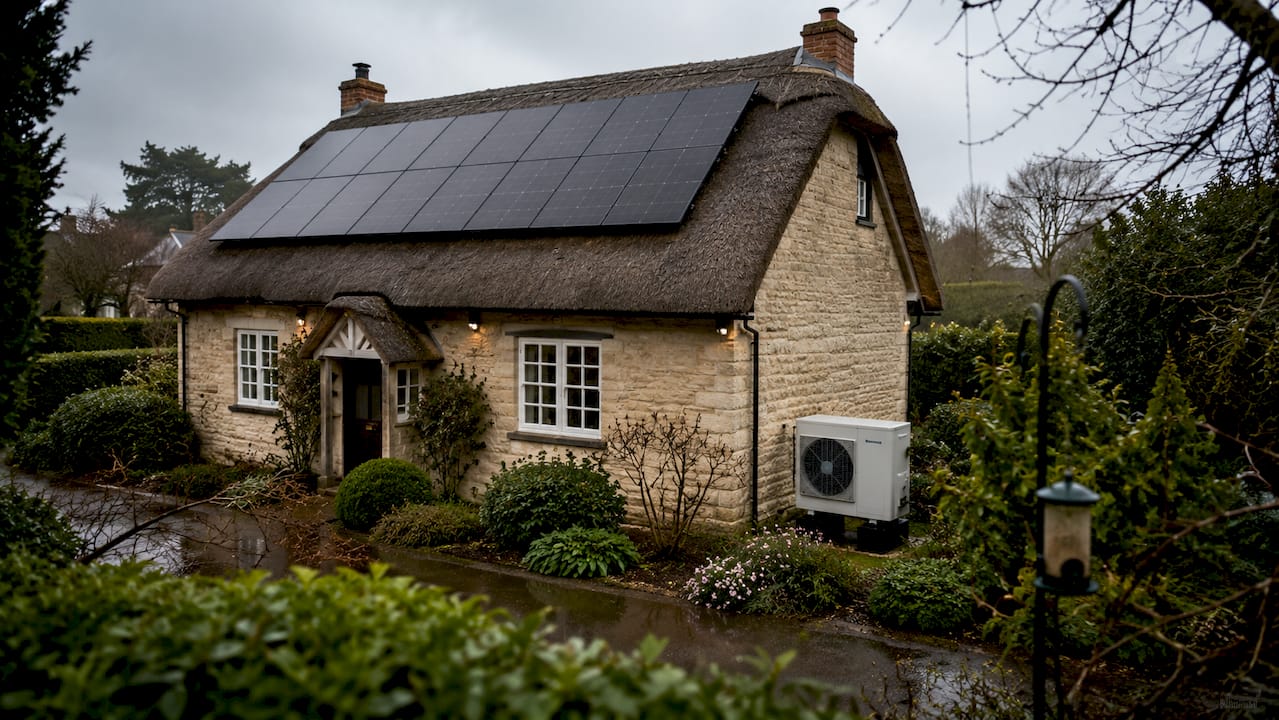
Solar PV systems cost around £6,100 to install for a typical domestic property and save approximately £360 per year on energy bills, while also reducing household CO2 emissions by roughly 750kg annually. Heat pumps, both air-source and ground-source, work by extracting heat from outside air or the ground and transferring it indoors at efficiencies well above conventional gas boilers. The Boiler Upgrade Scheme provides a government grant to reduce upfront installation costs for eligible properties.
| Technology | Typical installed cost | Estimated annual saving | Key consideration |
|---|---|---|---|
| Solar PV panels | ~£6,100 | ~£360 | Roof orientation and shading affect output |
| Air-source heat pump | — | Varies by property | Works best with good insulation |
| Ground-source heat pump | — | Varies by property | Requires adequate outdoor land area |
Planning permission is not usually required for solar panels on a domestic roof, but listed buildings and conservation areas may have restrictions. Properties in Wales can access an interest-free loan alongside the Boiler Upgrade Scheme grant; Scotland offers similar support through Home Energy Scotland. For those exploring how to finance these upgrades across a property portfolio, guidance on real estate funding options can help identify the right approach.
4. Low and no-cost ways to conserve energy right now
Not every energy saving measure requires investment. A range of daily habits and minor adjustments deliver genuine reductions in consumption with no upfront cost.
- Switch to LED bulbs. LED bulbs use 90% less energy than incandescent alternatives and last considerably longer, reducing both running costs and replacement frequency.
- Wash clothes at 30°C. Modern detergents clean effectively at lower temperatures, and shorter cycles use less energy and water.
- Air dry clothes. Tumble dryers are among the most energy-intensive household appliances. Air drying conserves energy at no cost.
- Only run full loads. Dishwashers and washing machines use roughly the same energy whether half-full or completely loaded.
- Unplug unused appliances. Devices left on standby continue drawing power. Switching off at the socket eliminates this waste.
- Use economy modes. Most modern appliances include an eco setting that reduces energy consumption per cycle.
- Install a tap aerator. These small fittings mix air into the water flow, maintaining pressure while reducing hot water use. Tap aerators save around £20 per year with no loss of flow.
- Install a smart meter. Energy suppliers fit smart meters at no extra cost. The accompanying in-home display shows real-time consumption, helping identify the most energy-intensive habits and appliances.
- Check your energy tariff. Smart meter users can access time-of-use tariffs with cheaper off-peak rates, particularly useful for properties with heat pumps or electric vehicle chargers.
- Close curtains at dusk. A simple habit that reduces overnight heat loss through windows, complementing any glazing upgrades already in place.
For a fuller list of behavioural changes and no-cost measures, Homeenergymodel’s energy saving tips guide covers practical steps suited to UK homes in 2025 and beyond.
5. How EPCs and UK financial schemes support energy improvements
An Energy Performance Certificate is more than a compliance document. The EPC lists recommended improvements ranked by cost-effectiveness and tailored to the specific property type, making it a practical planning tool for staged retrofits. Property owners can use EPC recommendations to prioritise which upgrades to fund first, avoiding wasted expenditure on measures that deliver little return for their particular building.
For landlords, the Minimum Energy Efficiency Standards (MEES) require that privately rented properties in England and Wales achieve at least an EPC rating of E before being let. The cost cap for MEES compliance is set at £3,500 including VAT. If all recommended improvements cannot bring a property to EPC E within that budget, landlords must complete all feasible measures and register an exemption on the PRS Exemptions Register. Exemptions last five years, after which compliance must be attempted again.
Key financial support available in the UK:
- ECO4 (Energy Company Obligation): Funded by energy suppliers, targeting low-income and fuel-poor households for insulation and heating upgrades
- Great British Insulation Scheme (GBIS): Closing march 2026; contact obligated suppliers or installers directly for remaining availability
- Boiler Upgrade Scheme: Grant support for heat pump installation in eligible properties
- Warm Homes: Local Grant: Funding for low-income households in privately owned homes, delivered through local authorities
- Green Homes Wales / Home Energy Scotland: Regional interest-free loans and grants for energy efficiency and heat pump installation
Tenant engagement matters too, particularly in multi-unit buildings. Active energy reporting and sustainable behaviour programmes improve building energy efficiency beyond what physical upgrades alone can achieve. Property managers who communicate energy data to tenants and encourage efficient habits see more sustained reductions in consumption.
For properties in London, understanding how EPCs function within the local market context is covered in depth in Homeenergymodel’s guide to energy performance certificates. Landlords navigating exemption registration will also find detailed guidance in the EPC exemption register explained.
How Homeenergymodel can help
Homeenergymodel supports UK property owners, landlords, and building managers in understanding and acting on energy performance requirements. From domestic and commercial EPC assessments to guidance on the Home Energy Model (HEM) replacing SAP in 2025, the platform provides the technical and practical knowledge needed to meet current standards and prepare for upcoming regulations. Start with the energy performance guide to identify the most cost-effective path forward for your property.
Key takeaways
Improving energy efficiency in UK properties requires a layered approach: insulation and heating controls deliver the largest savings, while renewable technologies and behavioural changes compound those gains over time.
| Point | Details |
|---|---|
| Insulation first | Loft insulation of 270mm reduces roof heat loss by around 26%, saving approximately £20 annually. |
| Heating controls save money fast | Lowering heating temperature by 1°C saves approximately £90 per year in Great Britain. |
| LED lighting cuts consumption sharply | LED bulbs use 90% less energy than incandescent bulbs, with longer lifespan reducing maintenance costs. |
| EPCs guide cost-effective upgrades | EPC recommendations are ranked by cost-effectiveness and tailored to the specific property type. |
| MEES cost cap for landlords | Landlords are not required to spend more than £3,500 (including VAT) on MEES compliance improvements. |