
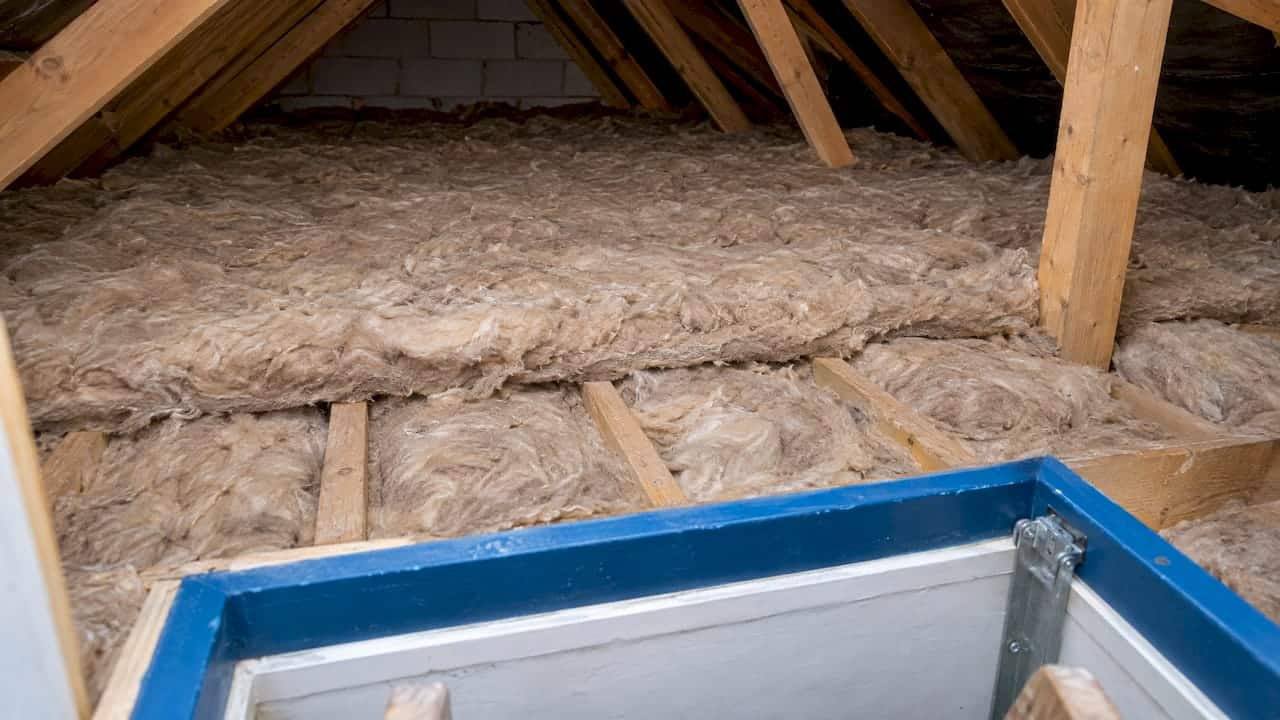
Loft insulation cuts the heat that escapes through the roof, so the heating works less to hold the same temperature. The main benefits are lower energy bills, a more even temperature through the house, lower carbon emissions and a fabric upgrade that lasts for decades. For a loft with no insulation at all, the Centre for Sustainable Energy puts the saving at £210 to £390 a year, depending on home type and size. The sections below explain where each benefit comes from, what to expect in pounds, and how to install it so the gains hold.
TL;DR
- An uninsulated loft can cost a household £210 to £390 a year in wasted heat, according to the Centre for Sustainable Energy (October 2025).
- Insulation is effective for at least 40 years and can pay for itself many times over in that time.
- Beyond bills, it evens out room temperatures, supports lower carbon emissions and cuts the size of heating system a home needs.
- Ventilation must be kept in the roof space, otherwise trapped moisture can cause condensation, damp and mould.
- Landlords and owners planning an EPC can have the property’s insulation assessed as part of that process.
Table of Contents
- Why heat escapes through the loft
- Benefit 1: lower heating bills
- Benefit 2: a steadier, more comfortable home
- Benefit 3: lower carbon emissions
- Benefit 4: a smaller heating system and an easier route to heat pumps
- Benefit 5: it lasts, and the bill saving repeats every year
- Benefit 6: protection for the roof timbers, if ventilation is kept
- Who gains most
- Insulation in the wider package
- Perspective
- Get the property assessed
- FAQ
- Sources
Why heat escapes through the loft
Warm air rises, and in a house with no loft insulation the ceiling of the top floor is the largest easy route out. The UK government’s loft insulation factsheet describes it as one of the most cost-effective ways to stop wasting energy, cutting heat loss year after year, creating an even home temperature and reducing CO2 emissions.
The government’s guide to retrofitting insulation in rooms in the roof adds that heat loss through roofs makes up a significant share of the total heat lost from a dwelling. That is why loft work is so often the first measure on a retrofit list.
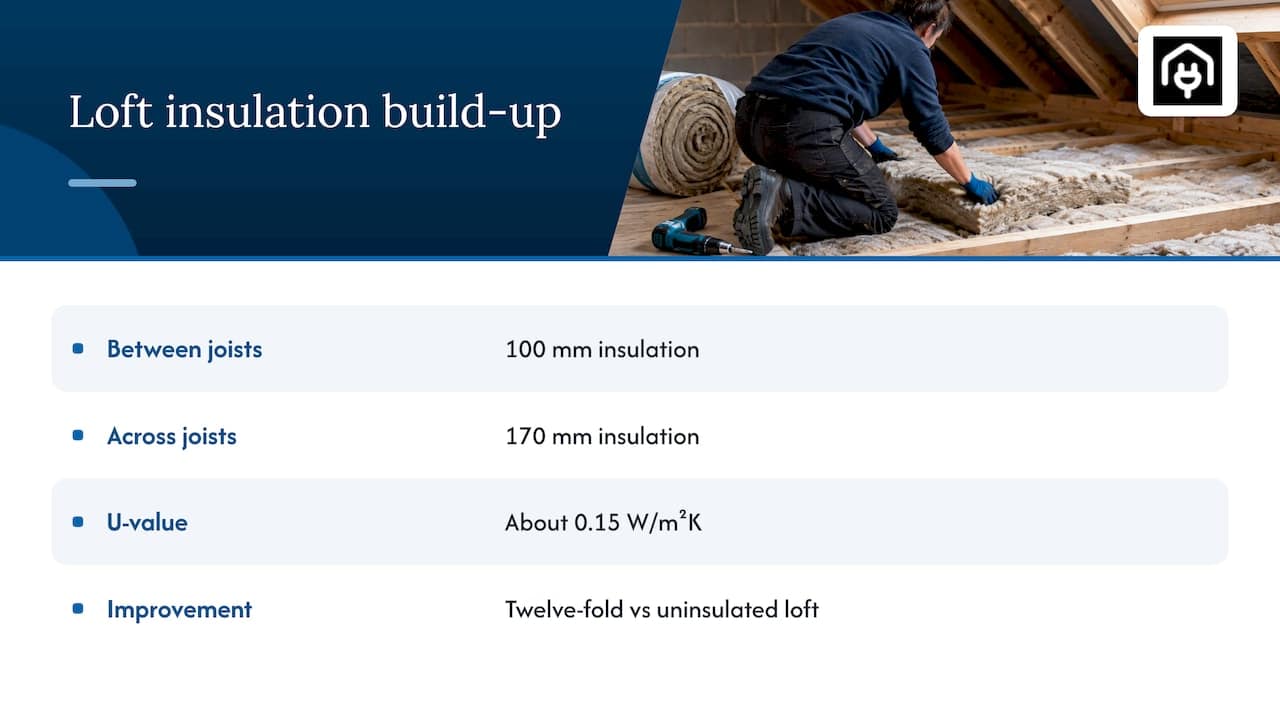
A layer of insulation slows that flow. The Open University’s energy in buildings course describes a 100mm layer between the joists plus a 170mm layer laid across them. That build-up blocks heat loss through the joists as well and is likely to reach a U-value of about 0.15 W/m²K, a twelve-fold improvement on an uninsulated loft. A U-value measures how quickly heat passes through a building element: the lower the number, the better it holds heat in.
Benefit 1: lower heating bills
This is the benefit most owners search for, and the figures depend heavily on what is in the loft now.
| Starting point | Typical saving | Source |
|---|---|---|
| Loft with no insulation at all | £210 to £390 a year, depending on home type and size | Centre for Sustainable Energy |
| Cavity wall and loft insulation together, centrally heated homes | About 10% less space-heating fuel | UCL study of 1,372 English households |
| Cavity wall and loft insulation together, homes without central heating | About 17% less space-heating fuel | UCL study of 1,372 English households |
Two points help in reading the table. First, the £210 to £390 range is a published estimate for a fully uninsulated loft, so the closer a home is to that starting point, the more it applies. Second, fuel prices change with each price cap period, so the pound value of a saving moves while the kilowatt-hours saved stay broadly the same. Check the Centre for Sustainable Energy page for its latest review before budgeting.
In the United States, the Department of Energy’s home insulation guide says insulating attics, floors, crawl spaces and accessible basement rim joists can save up to 20% on heating and cooling costs, or up to 10% on total energy costs. American housing and climate differ from the UK, so treat this as an indication of scale rather than a UK forecast.
A worked example
Take a semi-detached house with an empty loft and a gas boiler. Using the Centre for Sustainable Energy range, the household could be avoiding between £210 and £390 of heating cost every year. Over the 40 years the same organisation gives for the lifespan of loft insulation, that is a cumulative saving many times larger than the one-off cost of installation. The exact figure for a particular home depends on its size, heating system, how it is lived in and the fuel price in each year.
Benefit 2: a steadier, more comfortable home
Insulation does more than save money. When the ceiling is no longer losing heat quickly, the upper floor stops feeling like the coldest part of the house, and rooms hold their temperature after the heating switches off.
The government’s retrofit guidance says well-installed roof insulation can increase and maintain internal temperature and give higher internal surface temperatures, which improves comfort. Warmer ceiling and wall surfaces matter because a room feels cold when its surfaces are cold, even when the air temperature reads correctly on the thermostat.
The practical result for occupants is fewer cold spots in top-floor bedrooms and landings, and less need to turn the thermostat up to compensate.
Benefit 3: lower carbon emissions
Space heating is a large part of a typical home’s carbon footprint, so burning less fuel to heat the same rooms cuts emissions directly. The government factsheet lists reduced CO2 emissions among the core benefits of loft insulation, and the roof insulation guidance links insulation to greenhouse gas reduction and fuel poverty alleviation.
For a landlord or investor, this connects to wider rules on property performance. For a developer or energy consultant, it connects to the fabric-first approach.
Benefit 4: a smaller heating system and an easier route to heat pumps
The government’s room-in-roof guide advocates a fabric first approach. Improving insulation lowers overall heating demand, which in turn reduces the size of heating system needed and the demand placed on renewable energy supply. The guide presents this as necessary to meet the UK’s 2050 emissions targets.
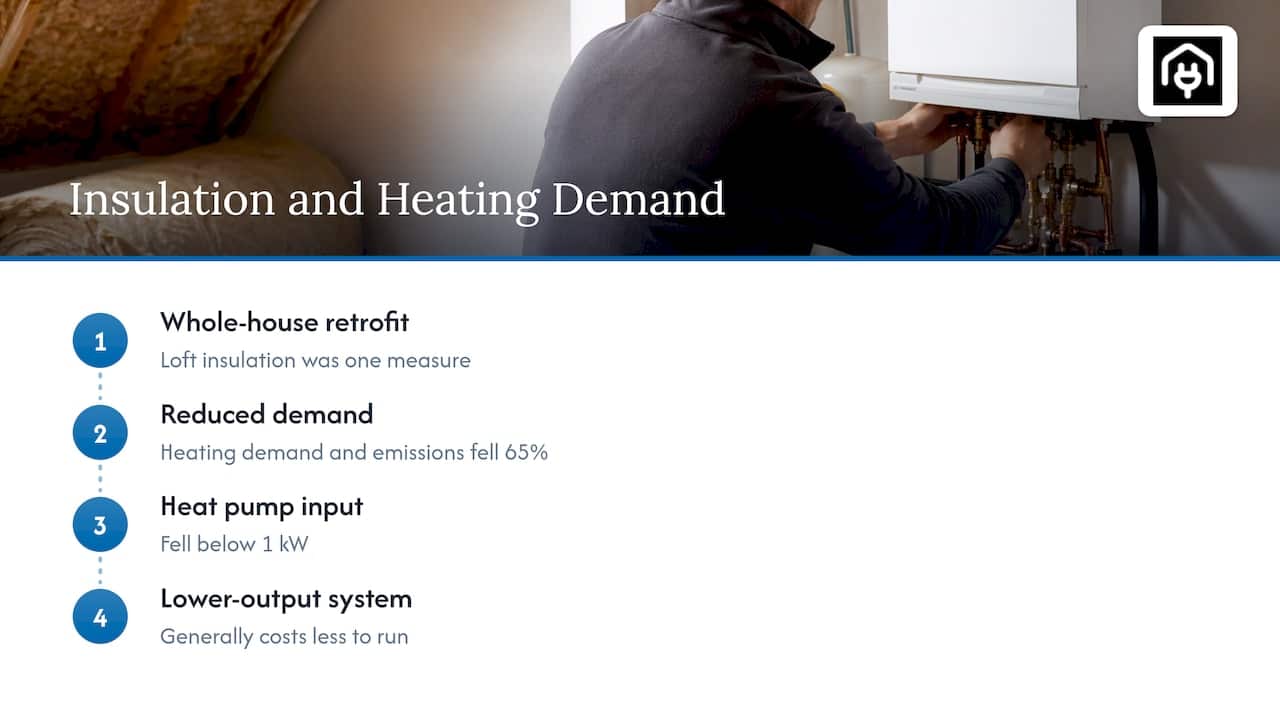
In practice, a home that loses less heat needs a lower-output boiler or heat pump, and a lower-output system generally costs less to run. Research on UK semi-detached retrofits by Joseph Lingard in the Building Services Journal found that a whole-house retrofit to Building Regulations standard cut heating demand and emissions by 65% and brought heat pump input demand below 1 kW. Loft insulation is one of the measures in that package, and among the simplest to carry out.
Homes that become better insulated and more airtight can also look at ventilation with heat recovery, which supplies fresh air while keeping most of the warmth that would otherwise leave with stale air.
Benefit 5: it lasts, and the bill saving repeats every year
Most home improvements wear out. Mineral wool quilt in a dry, undisturbed loft does not need replacing on a short cycle. The Centre for Sustainable Energy says loft insulation is effective for at least 40 years and can pay for itself many times during that time.
The factsheet from the former Department of Energy and Climate Change lists the common materials: mineral wool quilts, blown mineral wool or cellulose, and rigid boards made of expanded or extruded polystyrene or polyurethane and polyisocyanurate. Each suits different loft layouts.
| Material | Typical use |
|---|---|
| Mineral wool quilt (rolls) | Open lofts with regular joist spacing |
| Blown mineral wool or cellulose | Awkward corners, irregular spaces, hard-to-reach areas |
| Rigid boards (EPS, XPS, PUR, PIR) | Where thinner insulation is needed, such as rooms in the roof or boarded storage areas |
Benefit 6: protection for the roof timbers, if ventilation is kept
A properly installed layer also reduces cold surfaces on the ceiling below, which are where condensation tends to form. The reverse is also true. The Energy Saving Trust explains that insulation changes how air and moisture move through the loft: without adequate airflow, trapped warm air can lead to condensation, damp, mould or rot in roof timbers, so ventilation has to be preserved when installing.
The government’s DEEP literature review adds that poor installation, material degradation and disturbance can raise the risk of thermal bridging and condensation on ceilings below lofts. Put simply, the benefits come from installing the right depth, in the right places, without blocking air paths.
Safe installation checklist
- Keep eaves vents clear so air can still enter the roof space.
- Lay insulation across and between joists to limit thermal bridging at the timbers.
- Seal gaps around hatches, pipes and light fittings from the room side so warm moist air does not rise into the loft.
- Keep insulation away from recessed lights and cables that give off heat, following the manufacturer’s guidance.
- Avoid compressing the material, and do not leave it disturbed after storing items or running cables.
- Check the loft after any work by a plumber, electrician or aerial fitter.
Our step-by-step loft insulation guide covers the installation sequence in more detail.
Who gains most
Homeowners. Owners with a bare or thin loft see the biggest change, in bills and in how the upper rooms feel. Our page on how loft insulation affects UK energy bills looks at the running costs.
Landlords and investors. A warmer, cheaper-to-heat property is easier to let and easier to defend against complaints about cold and damp. Insulation also feeds into the energy rating shown on an EPC, the certificate that grades a property from A to G. See our guide to what an EPC rating means.
Developers and building professionals. New-build and extension projects show insulation performance through SAP calculations (the government’s method for rating dwellings) or SBEM for commercial buildings. A fabric-first design reduces the load carried by the heating system and renewables. Our SAP calculations guide explains how fabric values are used.
Energy consultants and advisers. Loft insulation is a sensible first recommendation because it is low in disruption, has a long life and works together with wall, floor and glazing upgrades. The wider list is in our home insulation tips for UK property owners.
Insulation in the wider package
Loft insulation works best alongside other measures. The UCL study of English households measured the combined effect of cavity wall and loft insulation, which is where the 10% and 17% reductions in space-heating fuel came from. Lingard’s whole-house retrofit work shows the same logic at a larger scale: insulation across the building shell lowers heating demand far more than a single measure.
A Danish case study of an old single-family house combined cavity wall and loft insulation, insulation under windows and new energy-saving glazing. It reduced gross energy consumption by around 50%, from 53,400 to 28,100 kWh per year, at a total renovation cost of DKK 157,000. The house and climate are different from a typical British home, but the point carries: a package of fabric measures compounds.
For a broader plan, our guides on improving energy efficiency in UK homes and the benefits of home insulation set out the order in which to tackle measures.
Perspective
Our view is simple: the fabric comes first. Every kilowatt-hour a home does not need is one it does not have to buy, generate or store, and the loft is usually the most accessible place to start.
What we see in the guidance behind our work is a consistent pattern. Insulation lowers the heat demand, which lowers the size of the system needed to meet it, which makes low-carbon heating easier to justify. That is the logic of the Home Energy Model and the Future Homes Standard, and it is why we explain fabric measures alongside the calculations that measure them.
For owners and landlords, the practical step is to know where the property stands. A domestic EPC assessment records the building as it is today, and an assessor can show where the fabric can improve. Our site is built to make that route clear, from the explanation of the rules to the request for a quote.
Danny
Get the property assessed
An Energy Performance Certificate records the energy performance of a property, including its insulation, and a Domestic EPC is the document landlords and sellers need. We provide the information and the online quote request for Domestic Energy Performance Certificates, and for commercial buildings the Commercial Energy Performance Certificate page. Developers can request SAP calculations through the same site.
FAQ
What is the main purpose of loft insulation?
Its purpose is to slow the flow of heat out through the roof so the home stays warm with less fuel. The UK government describes it as one of the most cost-effective ways to stop wasting energy, with an even home temperature and lower CO2 emissions as the results.
How much can loft insulation save?
The Centre for Sustainable Energy gives £210 to £390 a year for a completely uninsulated loft, depending on home type and size. The figure moves with fuel prices, so check the organisation’s page for its latest review.
How long does loft insulation last?
The Centre for Sustainable Energy says it is effective for at least 40 years. That holds when the material stays dry, is not compressed and the roof space keeps its ventilation.
Can loft insulation cause damp?
It can if airflow in the roof space is blocked, because trapped warm air can condense on cold timber. Keeping eaves vents clear and sealing gaps from the room below avoids this, as the Energy Saving Trust explains.
Does loft insulation help with comfort as well as bills?
Yes. Government retrofit guidance says roof insulation raises and maintains internal temperature and gives higher surface temperatures, which makes rooms feel more comfortable, particularly on the top floor.
Sources
- Loft insulation factsheet, UK Government (DECC, 2016)
- Loft insulation, Centre for Sustainable Energy
- Retrofit Room in Roof Insulation: guide to best practice, UK Government (2022)
- Energy in buildings: using insulation, OpenLearn
- Changes in space heating energy consumption following insulation, UCL (2010)
- Guide to Home Insulation, US Department of Energy
- Residential retrofit in the UK: the optimum retrofit, Lingard (2021)
- Energy renovation of an old single-family house, DTU
- Roof and loft insulation guide, Energy Saving Trust
- Demonstration of Energy Efficiency Potential: literature review, UK Government (2021)