
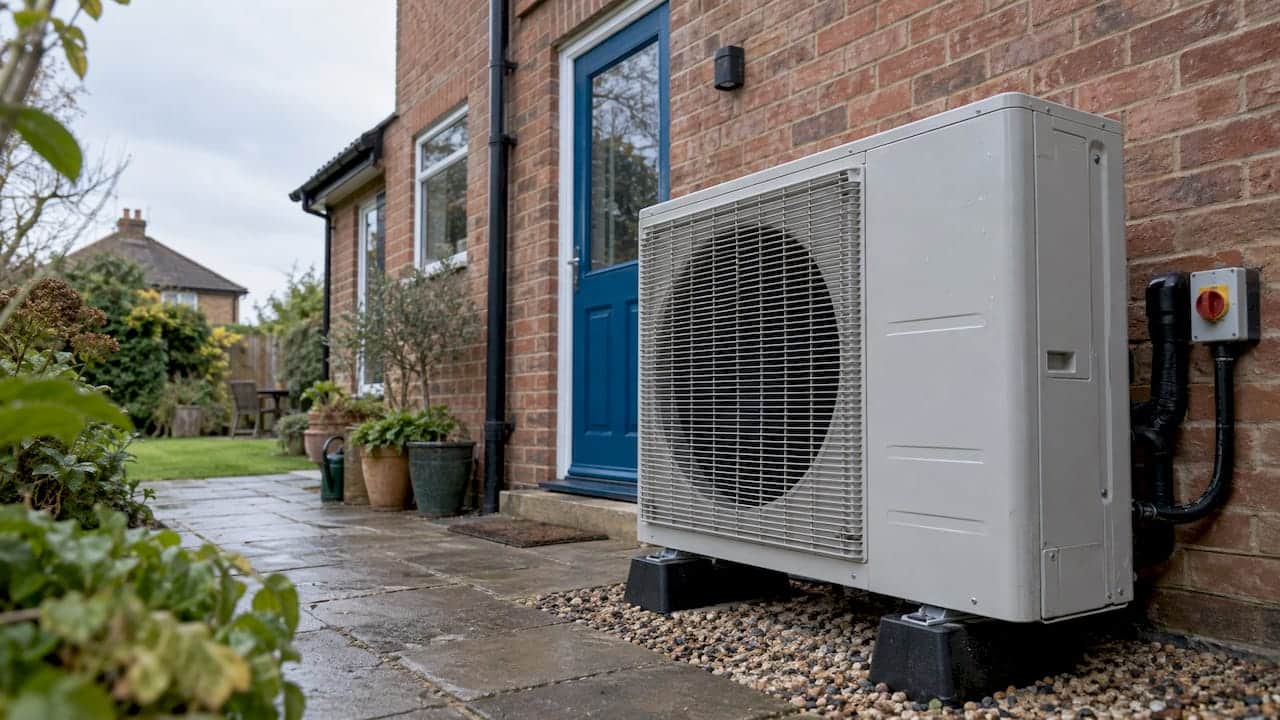
Heat pumps are grouped by where they take heat from (air, ground or water) and by where they deliver it (water or air). In UK homes, the air-to-water heat pump is the most common choice. Ground source suits larger plots. Water source needs a suitable water body. Air-to-air is a lower-cost option that heats and cools but does not make hot water. Hybrid systems pair a heat pump with a boiler.
This guide explains each type, what it suits, how efficiency is measured, and how the choice affects an Energy Performance Certificate (EPC).
TL;DR
- Heat pumps are classified by heat source (air, ground, water) and by how heat is delivered (to water or to air).
- Air-to-water systems feed radiators, underfloor heating and hot water cylinders. Air-to-air systems blow warm air and cannot produce hot water.
- Monobloc units keep everything in one outdoor box. Split units separate the refrigerant circuit between outdoor and indoor parts.
- Efficiency depends on sizing, installation, building fabric and flow temperature as much as on the type.
- A heat pump changes a property’s heating data, so an up-to-date EPC is worth commissioning after installation.
Table of Contents
- How a heat pump works, in brief
- The main types by heat source
- Air source heat pumps
- Ground source heat pumps
- Water source heat pumps
- Hybrid and thermally driven heat pumps
- Which type is most efficient?
- How to choose the right type
- Heat pumps, EPCs and compliance
- Our perspective
- Get the assessment behind your heating decision
- FAQ
- Sources
How a heat pump works, in brief
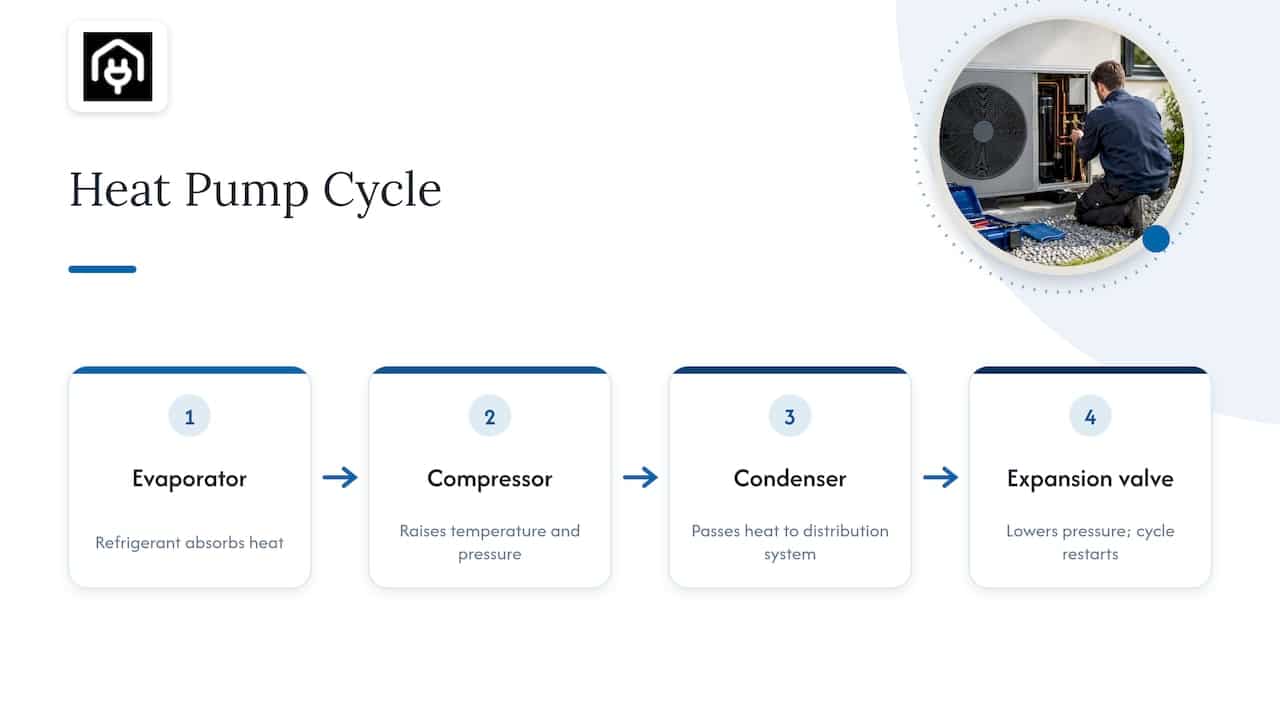
Every heat pump uses the same principle. A sealed loop carries a refrigerant and an electrically driven compressor. According to SEAI, the cycle has four parts: an evaporator where the refrigerant absorbs heat, a compressor that raises its temperature and pressure, a condenser that passes heat to the distribution system, and an expansion valve that lowers the pressure so the cycle can restart.
The result is that the machine moves heat rather than creating it. GOV.UK describes heat pumps as highly efficient electric appliances that produce around 3 units of heat for every unit of electricity they use.
The types below differ in the heat source, the delivery method and the way the unit is packaged.
The main types by heat source
The European Heat Pump Association classifies heat pumps primarily as air-source, ground-source or water-source. Each name describes the outside source of heat. A second label then describes what the heat is delivered into: water or air. That gives combinations such as air-to-air, air-to-water and ground-to-water.
| Type | Heat source | Delivers heat to | Hot water | Typical fit |
|---|---|---|---|---|
| Air-to-water (air source) | Outside air | Radiators, underfloor heating, cylinder | Yes | Most UK homes with wet heating |
| Air-to-air | Outside air | Fans and indoor units | No | Homes without a wet system, flats, extensions |
| Ground source (ground-to-water) | Ground, via loops or boreholes | Wet heating system | Yes | Larger plots, new builds, low-temperature systems |
| Water source | River, lake, pond or groundwater | Wet heating system | Yes | Properties beside suitable water |
| Hybrid | Outside air plus boiler | Wet heating system | Yes | Homes not ready for a full switch |
Air source heat pumps
Air source heat pumps draw heat from outdoor air, even in cold weather. They are the type most UK households meet first, because they need no groundworks and a small outdoor footprint. Our guide to air source heating and UK home efficiency covers the wider picture.
Air-to-water heat pumps
National Grid explains that air-to-water systems feed heat into a wet central heating system. That means radiators, underfloor heating and a hot water cylinder can all be served by one unit. For most households replacing a gas or oil boiler, this is the type under discussion.
Two packaging styles exist:
- Monobloc. The Future Homes Hub guide describes monobloc units as holding the air collector, compressor, condenser and hydraulic components for the heating circuit in a single outdoor unit. Water pipes run to the house, which keeps refrigerant outside.
- Split. The same guide notes that split systems divide the refrigerant circuit between an outdoor unit and an indoor unit. The indoor part often sits near the cylinder.
In practice, monobloc suits properties with space for the outdoor unit and a straightforward pipe run. Split can suit tighter layouts where the indoor component needs to be placed carefully.
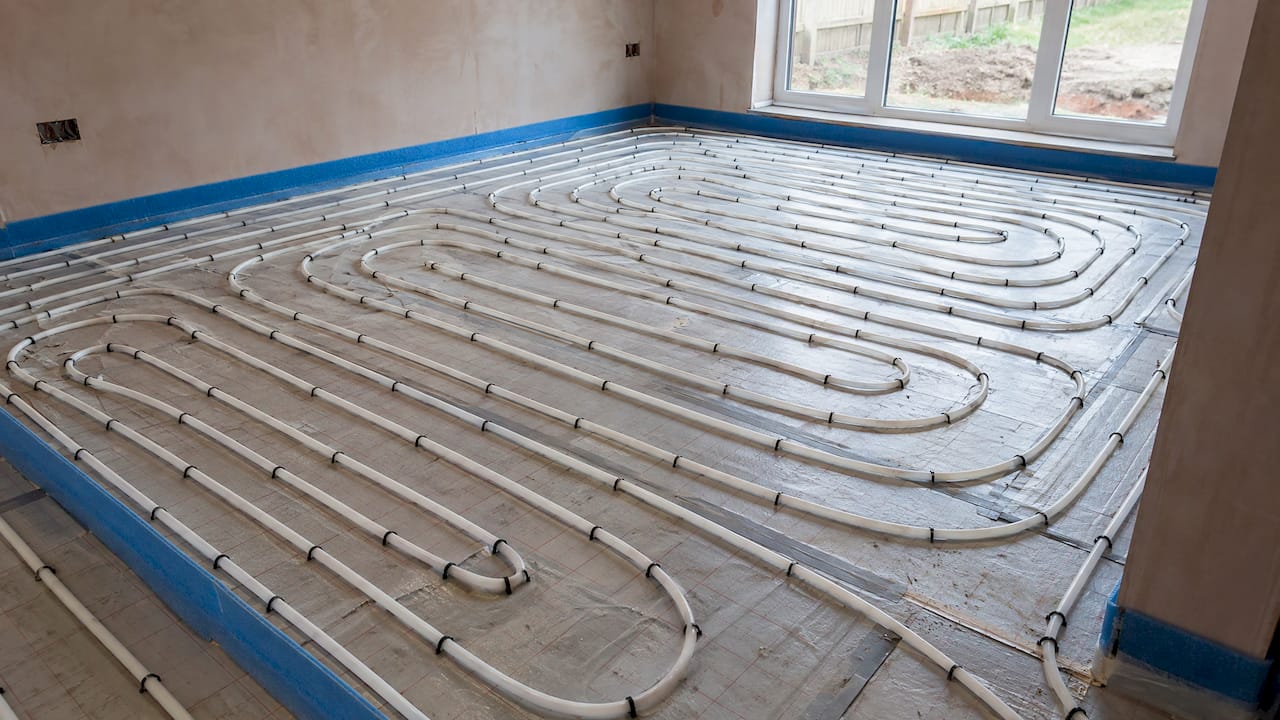
Emitters matter as much as the unit. Heat pumps run more efficiently when they heat water to lower temperatures, below about 45 to 50°C, which suits underfloor heating and fan-coil systems. Where existing radiators are too small for a low flow temperature, larger radiators or fan coil convectors for heat pumps are one way installers meet demand at lower temperatures.
Air-to-air heat pumps
Air-to-air systems use fans to deliver warm air into rooms. National Grid notes that they cannot produce hot water, so a separate hot water source stays in place. They are usually split into an outdoor unit and one or more indoor units.
These are the systems many people know as ducted or ductless (mini-split) units:
- Ductless (wall-mounted) indoor units serve a single room or zone each.
- Ducted systems distribute air through hidden ductwork, which suits new builds and major refurbishments where ducts can be planned in.
Because the system is reversible, it also cools. Natural Resources Canada confirms that in cooling mode a heat pump removes heat from indoor air and rejects it outdoors. In commercial buildings, cooling equipment above set thresholds can fall under TM44 air conditioning inspections, which is worth checking when specifying air-to-air units for offices or shops.
Ground source heat pumps
Ground source (geothermal) heat pumps take heat from the earth through a loop of pipe filled with a water-based fluid. The loop is laid in trenches across a garden or fitted into vertical boreholes. Natural Resources Canada says ground-source systems avoid extreme temperature swings because the ground acts as a constant-temperature source.
The site conditions decide feasibility:
- Land. Horizontal loops need open ground and access for diggers. Boreholes need less surface area but need a drilling rig.
- Ground. Soil and rock type affect how much heat can be collected per metre of loop.
- Budget and timing. Groundworks add to the project, so ground source is easiest to plan into a new build or a major renovation.
Our explainer on the impact of ground source heat pumps on UK homes goes further into layouts and what they mean for property standards.
Water source heat pumps
Water source heat pumps take heat from a river, lake, pond or groundwater. The European Heat Pump Association notes these systems are particularly efficient because water is a very good energy carrier. The trade-off is practical: the property needs legal access to a suitable body of water, and in the UK abstraction or discharge may need consent from the environmental regulator. Confirm this with an installer before design begins.
In the water-to-water variant, the system heats or cools water for applications such as radiant floors, pool heating or snow melt.
Hybrid and thermally driven heat pumps
Hybrid heat pumps
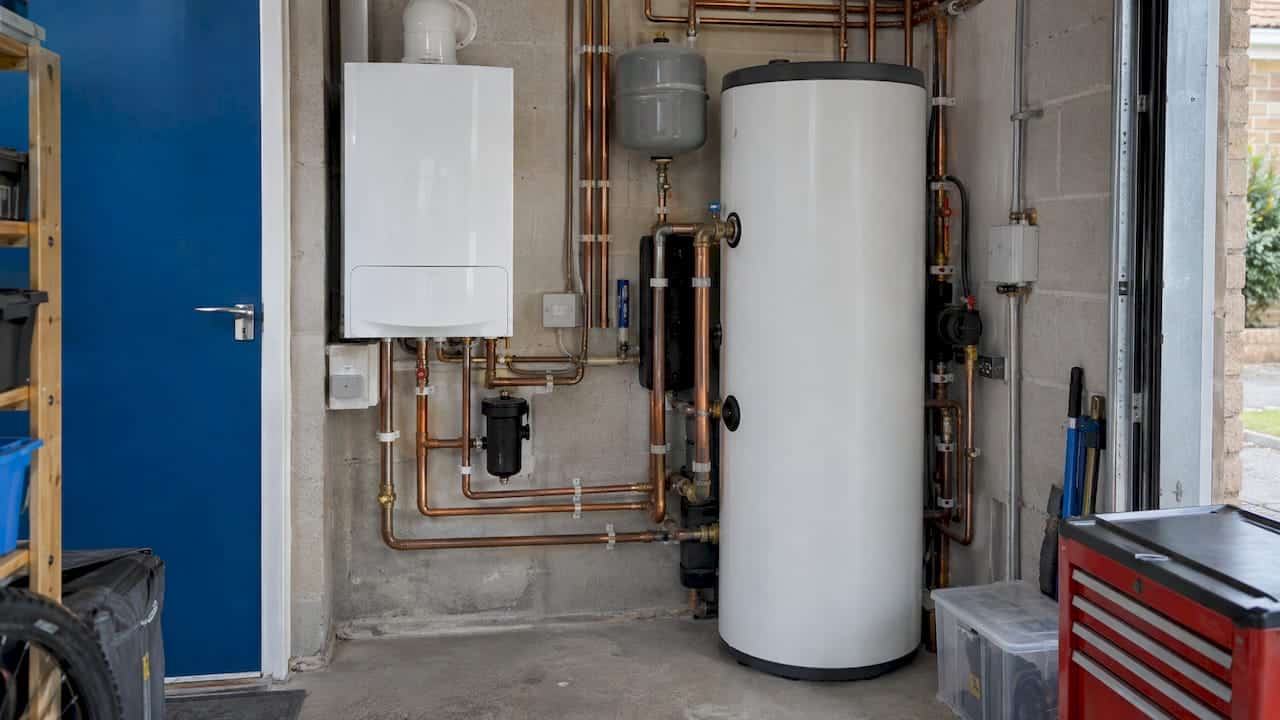
A hybrid system pairs an air source heat pump with a gas or oil boiler under one control unit. The controller chooses the heat source that is more efficient or cheaper at a given moment. In mild weather the heat pump leads, and the boiler supports it on the coldest days. Hybrids suit households that want to cut gas use without altering every radiator at once.
Thermally driven heat pumps
Most domestic units are electrically driven. The European Heat Pump Association also recognises thermally driven heat pumps, where heat rather than electricity drives the compression cycle. Gas sorption units are one example. These are mainly seen in larger or specialist installations, not in typical homes.
Which type is most efficient?
No single type wins everywhere. Two measures let you compare fairly. SEAI defines the Coefficient of Performance (COP) as the ratio of heat output to electricity input at stated operating temperatures. The Seasonal Performance Factor (SPF) is the heat delivered divided by the electricity used over a whole year. SPF is the better guide to real bills.
What shapes real-world efficiency:
- Flow temperature. Lower is better, as covered above.
- Correct sizing. New Zealand’s EECA guidance stresses that performance depends on sizing for ambient conditions, choosing a unit suited to the local environment and installing it correctly.
- Building fabric. The Future Homes Hub guide says heat pumps are less tolerant of poor thermal performance than boilers. Good fabric and larger emitters help meet demand at lower temperatures.
- Heat source stability. Ground and water sources are steadier than winter air, which is why they can be very efficient where they are feasible.
Our comparison of the most efficient way to heat a house puts heat pumps beside other options.
How to choose the right type
Work through these questions in order:
- Do you have a wet heating system? If yes, air-to-water or ground source slots in most easily. If not, air-to-air may be simpler.
- Do you need hot water from the same system? Only the water-based types provide it.
- How much outdoor space do you have? Air source needs a spot for one unit. Ground source needs land or a borehole location.
- How well insulated is the building? Improving fabric first usually makes any type work better.
- Are you comfortable replacing the boiler entirely? If not, a hybrid is a stepping stone.
Costs and grants
In England and Wales, the Boiler Upgrade Scheme takes £7,500 off the cost and installation of an air-to-water or ground source heat pump, water source included, and £2,500 off an air-to-air heat pump. Ofgem also states that installation of heat pumps carries 0% VAT until 31 March 2027. Check the Ofgem page for the current terms before you commit to a quote.
On running costs, GOV.UK quotes an industry expert estimating that a typical gas household could save around £234 a year with smart electricity tariffs and removal of the gas meter. Actual savings vary with how efficiently the system runs. For ways to trim bills in the meantime, see how to save money on gas heating.
Heat pumps, EPCs and compliance
A heat pump alters the heating data used to calculate a property’s energy rating. Once one is installed, an updated domestic EPC records the change. For background on how ratings work, see our guide to the EPC rating.
For new homes, heat pumps feature heavily in meeting current standards. Read more in heat pumps and UK home standards. Landlords weighing upgrades can start with our page on heat pumps for UK landlords.
Our perspective
Choosing between heat pump types is a data question before it is a product question. The same unit can perform very differently in two houses, depending on heat loss, emitters and flow temperature.
That is why we start from the building. A SAP calculation for a new dwelling, or an energy statement for planning, shows how a heat pump contributes to compliance. For existing homes, an EPC shows the current baseline and the recommended improvements, so the heating decision rests on figures rather than guesses.
Our work supports property owners, landlords and developers who need that evidence. Heat pumps are central to the way UK standards are moving, and a well-documented installation is easier to certify, let and sell.
Danny
Get the assessment behind your heating decision
We connect property owners, landlords and developers with assessors for EPCs, SAP calculations, energy statements for planning and TM44 inspections. If you are planning a heat pump or have just fitted one, you can request a quote for a domestic EPC through the site.
FAQ
What are the three types of heat pumps?
The three main types by heat source are air source, ground source and water source. Air source is the most common in UK homes. Ground and water source need suitable land or a water body and are more site-specific.
What type of heat pump is the best?
The best type is the one that suits your building and site. For most UK homes with radiators, an air-to-water heat pump is the practical choice. Ground source suits larger plots and new builds, and air-to-air suits properties without a wet system.
What is the most efficient type of heat pump?
Ground and water source systems benefit from steadier heat sources, so they can reach high efficiency where feasible. Whatever the type, sizing, installation and a low flow temperature have a large effect on the Seasonal Performance Factor you actually achieve.
Can an air-to-air heat pump heat my water?
No. Air-to-air systems deliver warm air through fans and do not produce hot water. You would keep a separate hot water source, or choose an air-to-water system instead.
Does a heat pump affect my EPC?
Yes. A heat pump changes the heating data behind the rating, so an updated certificate reflects the new system. Ask an accredited domestic energy assessor to produce one after installation.
Sources
- Types of heat pumps, European Heat Pump Association
- Factsheet: Air to Air Heat Pumps for Space Conditioning
- Heat Pumps Technology Guide, SEAI
- Heating and cooling with a heat pump, Natural Resources Canada
- The 9 Types of Heat Pumps, ACHR News
- Integrating heat pumps, Future Homes Hub
- How do heat pumps work?, National Grid
- Heat pumps explained: experts answer your questions, GOV.UK
- Heat pump installation good practice guide, EECA
- Boiler Upgrade Scheme for property owners, Ofgem