
Most UK households can lower an electricity bill by using less power at peak times, removing standby waste, fitting efficient lighting, and choosing a tariff that matches how the home actually uses energy. Each step is small. Together they add up, because every unit saved is charged at the current rate of 26.32p per kWh under the price cap.
This guide sets out the current rates, shows how to turn a saving in kWh into pounds, ranks the actions by effort and return, and explains when a home survey or an Energy Performance Certificate (EPC) is the better next step.
TL;DR
- From 1 October 2026 the capped electricity rate is 26.32p per kWh plus a 54.83p daily standing charge, so each kWh avoided saves about 26p.
- The standing charge cannot be reduced by using less power. Savings come from the unit rate and from the number of units used.
- The cheapest wins are standby switching off, LED lighting, lower wash temperatures and a lower combi boiler flow temperature.
- Smart meters and time-of-use tariffs reward shifting heavy use, such as laundry and car charging, to off-peak hours.
- Anyone over 65, with young children or with a health condition should protect warmth first and save second.
Table of Contents
- What the electricity price cap means for your bill
- Quick wins that cost little or nothing
- Match your tariff and your timing
- Home improvements that lower electricity use
- Keep warm first: who should not cut back
- Where an EPC fits in
- Our perspective
- A simple order of action
- FAQ
- Sources
What the electricity price cap means for your bill
The Ofgem price cap is often misread as a limit on the total bill. It is a limit on the unit rate and the daily standing charge for default tariffs. Ofgem makes this point itself: a household that uses more still pays more, and a household that uses less pays less.
For 1 October to 31 December 2026, the figures for a standard variable tariff paid by Direct Debit in England, Scotland and Wales are:
| Item | Rate |
|---|---|
| Electricity unit rate | 26.32p per kWh |
| Electricity standing charge | 54.83p per day |
| Typical household cap (gas and electricity) | £1,723 per year |
The typical household figure of £1,723 is up 4% on the previous period. Regional rates and prepayment rates differ slightly, so the Ofgem page is the place to check a specific postcode region.
There is also a temporary change on the electricity side. Between 1 October 2026 and 31 March 2027, the government has removed the 5% VAT from electricity bills. Gas keeps its 5% VAT. This lowers the cost of every unit for the period, but it does not change the habits that drive the bill.
Turning kWh into pounds
The standing charge is fixed. 54.83p a day comes to roughly £200 a year (54.83p x 365 = £200.13) whatever is used. What can be changed is the unit cost.
A simple sum helps rank actions:
- Saving 100 kWh a year at 26.32p is worth £26.32.
- Saving 500 kWh a year is worth £131.60.
- Saving 1,000 kWh a year is worth £263.20.
Any product claim can be checked this way. A device that uses 50 watts and runs for 8 hours a day uses 0.4 kWh daily, which is 146 kWh a year, or about £38.43 at the capped rate. The same sum answers the common question of what a given number of units costs: 350 units at 26.32p is £92.12, before the standing charge.
Quick wins that cost little or nothing
These actions need no building work and no contract change. Savings depend on the household, so the figures below are the ones published by official or sector bodies, not guarantees.
Switch off standby
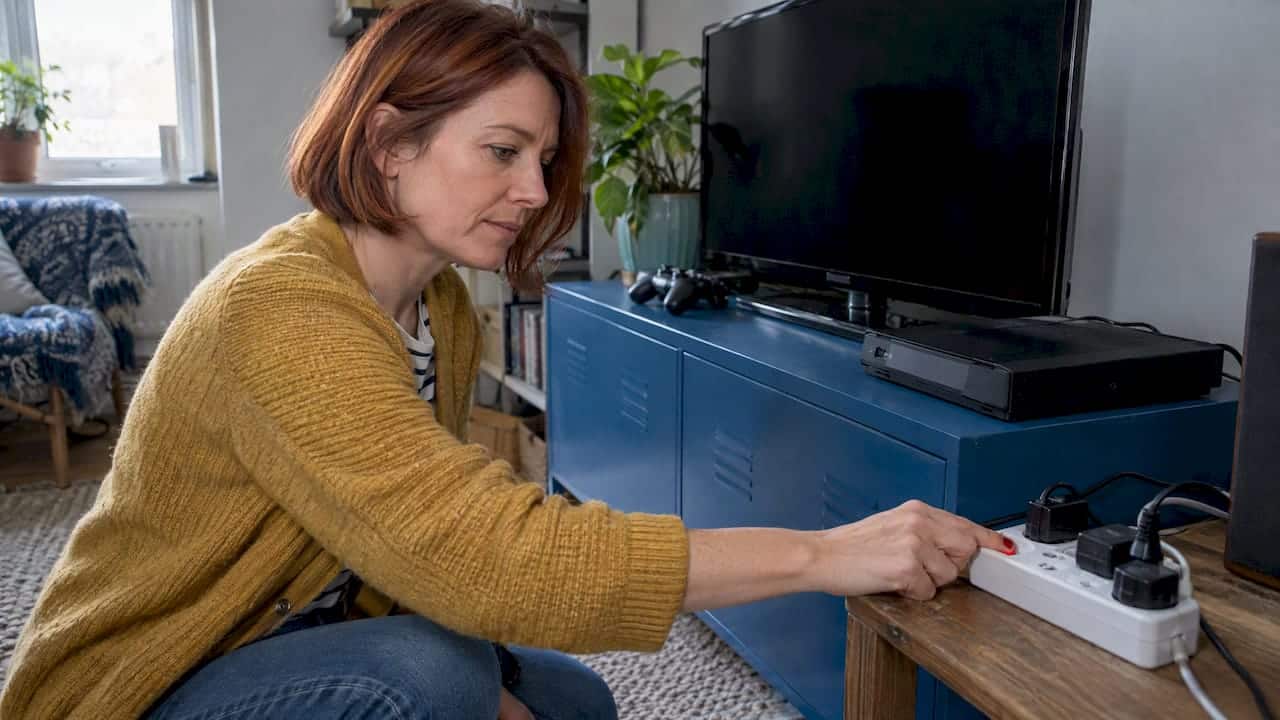
TVs, games consoles, set-top boxes and chargers keep drawing power when idle. Smart Energy GB, citing the Energy Saving Trust, says switching appliances off standby can save around £45 a year. Some recorders and boxes need to stay on to receive updates or scheduled recordings, so check the instructions first. A switched multi-socket extension for the TV area is a practical way to cut several devices at once.
Fit LED bulbs
Ofgem’s advice says LED lighting can save up to £4 per bulb each year. A home with 20 halogen or old-style bulbs has a real saving on the table, and LEDs also last far longer. The most useful bulbs to replace first are those in rooms used for several hours every evening: the kitchen, living room and hallway.
Wash cooler, and wash full
The same Ofgem guidance recommends washing clothes at 30°C and running full loads. A washing machine heats water with electricity, so a cooler cycle cuts the units used directly. Fewer, fuller loads cut them further. Drying on a rack rather than in a tumble dryer is usually the biggest laundry saving, since tumble dryers are among the most power-hungry appliances in a home.

Lower the combi boiler flow temperature
This one belongs to the gas bill, but it sits in most guides on household energy and is worth knowing. The government’s Clean Energy campaign says that reducing a combi boiler flow temperature to 60°C can make the boiler run more efficiently, and lists it among three tips worth around £100 a year in total. It needs no new equipment. Households with vulnerable members should make the change gradually and confirm that rooms still stay warm enough.
Use appliance eco settings and manage the kitchen
Eco programmes on dishwashers and washing machines take longer but use less energy. Boiling only the water needed in the kettle, and keeping fridge and freezer doors closed, are small habits that repeat many times a day.
Match your tariff and your timing
What the home does matters. When it does it can matter too.
Smart meters and live usage data
A smart meter shows usage in near real time. Ofgem lists smart meters among the tools for tracking use and for accessing time-of-use tariffs. The first useful exercise is to switch appliances on and off one by one and watch the display. Many households find one or two items, often an old fridge-freezer, a dehumidifier or an electric heater, account for more than expected.
Time-of-use tariffs
On a time-of-use tariff, units cost less at set off-peak times and more at peak times. A household that can move the washing machine, dishwasher and car charging to cheaper hours gains the most. A household that cannot, for instance one at home all day with heating on electricity, may pay more. Our guide to the time-of-use tariff in the UK explains the structure and who it suits.
Electric vehicle owners are the clearest case. Charging overnight at an off-peak rate can differ greatly from charging at a peak rate, and electric car charging costs show how far home and public prices diverge. A driver planning an EV should price the tariff before choosing a car.
Fixed or variable
The price cap applies to default tariffs. Ofgem notes that people can lower costs by switching to a fixed-rate tariff, adopting smart technology or joining government-backed efficiency schemes. A fixed deal can sit below or above the cap, and the cap changes every quarter, so compare the unit rate and standing charge together and check any exit fee. Because wholesale prices respond to global events and weather, neither choice is risk free.
Home improvements that lower electricity use
Behaviour has a ceiling. Beyond it, the building and its equipment decide the bill.
Draught-proofing, done carefully
Sealing gaps around doors, windows and floors keeps heat in, which matters most for homes with electric heating. The Clean Energy campaign warns that it must avoid blocking airbricks or extractor fans, because lost ventilation leads to damp and poor air quality. Seal the gaps, never the vents.
Efficient appliances and heating controls
When a fridge, washing machine or dishwasher fails, the energy label is a purchase criterion, not an afterthought. Thermostats, timers and thermostatic radiator valves stop heating running when no one needs it. Our guide to smart energy efficiency tips for UK families covers controls for a household with children.
Solar panels
Solar generation reduces the electricity drawn from the grid. The savings are larger for homes using power during the day, and the up-front cost is significant. The assessment process behind a plan like this, including panel orientation and roof pitch, is what solar calculations address for a specific property.
Keep warm first: who should not cut back
Saving money must not mean living in the cold. Official advice states that the general tips apply to most households, but people over 65, with young children, or with specific health conditions should put adequate warmth first. A household in this group should reduce waste (standby, lighting, laundry habits, draughts) and leave the heating comfort level alone. Anyone worried about a health condition and a cold home should speak to their GP, and anyone struggling to pay should contact their supplier, who must discuss options.
Where an EPC fits in
An Energy Performance Certificate rates a property from A to G and lists recommended improvements with estimated costs and savings. For an owner who does not know where the electricity is going, it gives a structured list rather than a guess. Landlords need a valid EPC to let a property, and an EPC is required when selling or letting in most cases. The recommendations can then be sequenced: cheap fixes first, larger works later.
Our pages on EPC energy saving tips and on using an EPC and a smart meter together show how to read the certificate against real meter data. For a short list of low-cost actions, the guide to cheap wins on an electric bill is a good companion.
Owners who need an assessment can request a quote for a domestic EPC through our site. Commercial premises have their own route through the commercial EPC service, and buildings with air conditioning may also need a TM44 inspection. Prices vary by property and assessor, and none are published on the pages, so the quote form is the way to get a figure.
Our perspective
We work with the technical side of energy performance: the methodologies behind EPCs, SAP calculations and the incoming Home Energy Model. That gives us a particular view of bill advice. Most lists of tips are right on their own terms and still miss the first question, which is how much energy a given home loses and where.
The unit rate is set by the market, and the owner cannot change it. Consumption is the one lever in the household’s hands, and the building fabric, heating system and appliances set a baseline for it. A home with a poor rating can have every light switched off and still cost a lot to run. A well-rated home forgives a lot of small habits.
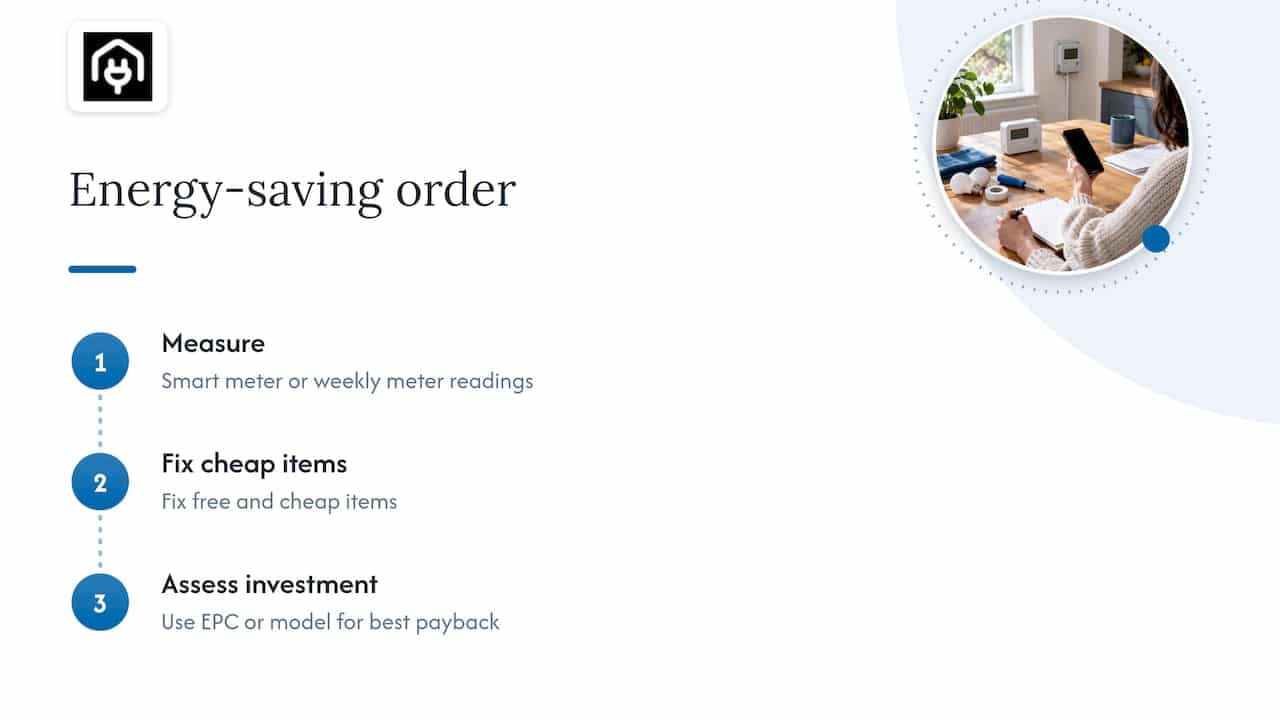
So our advice is to work in order. Measure first, with a smart meter or by reading the meter at the same time each week. Fix the free and cheap items. Then use an EPC or a fuller energy model to decide which larger investment pays back best, rather than buying the item with the best marketing. Anyone planning new work should also check how changing methodologies affect the rating the property will receive, which is the subject we follow most closely.
— Danny
A simple order of action
- Read the meter. Note the daily kWh over two weeks to find a baseline.
- Find the loads. Use the smart meter display or a plug-in energy monitor to locate standby and always-on devices.
- Do the free changes. Standby, 30°C washes, full loads, eco settings, lower flow temperature if suitable.
- Swap lighting. Start with rooms used most.
- Review the tariff. Compare unit rate and standing charge; consider time-of-use if usage can move.
- Get an EPC or survey. Prioritise insulation, draught-proofing and heating upgrades by return.
For wider reading, the guides on saving on energy bills in UK homes and using less electricity at home or work go deeper on each step.
FAQ
How can I save money on electricity quickly?
Start with standby, LED bulbs, 30°C washes and full loads, which cost little or nothing. Then check the smart meter display for devices drawing power constantly. At 26.32p per kWh, each 100 kWh avoided is worth £26.32 a year.
Does the price cap limit my total bill?
No. The cap limits the unit rate and standing charge on default tariffs, not the total. A household using more electricity pays more, so cutting consumption still lowers the bill.
Can I reduce the standing charge?
Not by using less energy, because it is a fixed daily amount, 54.83p under the current cap. It varies by tariff and region, so a comparison of fixed deals should include it alongside the unit rate.
Are time-of-use tariffs worth it?
They suit households that can move heavy use, such as laundry or EV charging, to off-peak hours. They are less suitable for homes that use most power at peak times. A smart meter is needed, and usage data should be checked before switching.
Sources
- Energy price cap unit rates and standing charges, Ofgem
- Changes to energy price cap between 1 October and 31 December 2026, Ofgem
- Summary of changes to energy price cap 1 October to 31 December 2026, Ofgem
- Save money on your energy bill, Ofgem
- Save energy in your home, Clean Energy campaign
- Unplug appliances and reduce energy bills, Smart Energy GB