

TL;DR:
- Non-renewable energy comes from finite resources like fossil fuels and uranium that cannot be replenished quickly. These sources, including coal, oil, natural gas, and nuclear, significantly impact the environment and contribute to climate change. The UK relies heavily on non-renewables, which causes economic volatility and delays the transition to cleaner energy.
Non-renewable energy is defined as energy derived from finite natural resources that cannot be replenished at the pace of human consumption. These resources, primarily fossil fuels such as coal, oil, and natural gas, formed over millions of years and exist in fixed quantities. Nuclear energy also falls into this category, despite producing far lower carbon emissions than fossil fuels. Understanding what non-renewable energy sources are, how they affect the environment, and what they mean for UK energy policy is increasingly relevant for property owners, landlords, and educators alike.
What are the main types of non-renewable energy sources?
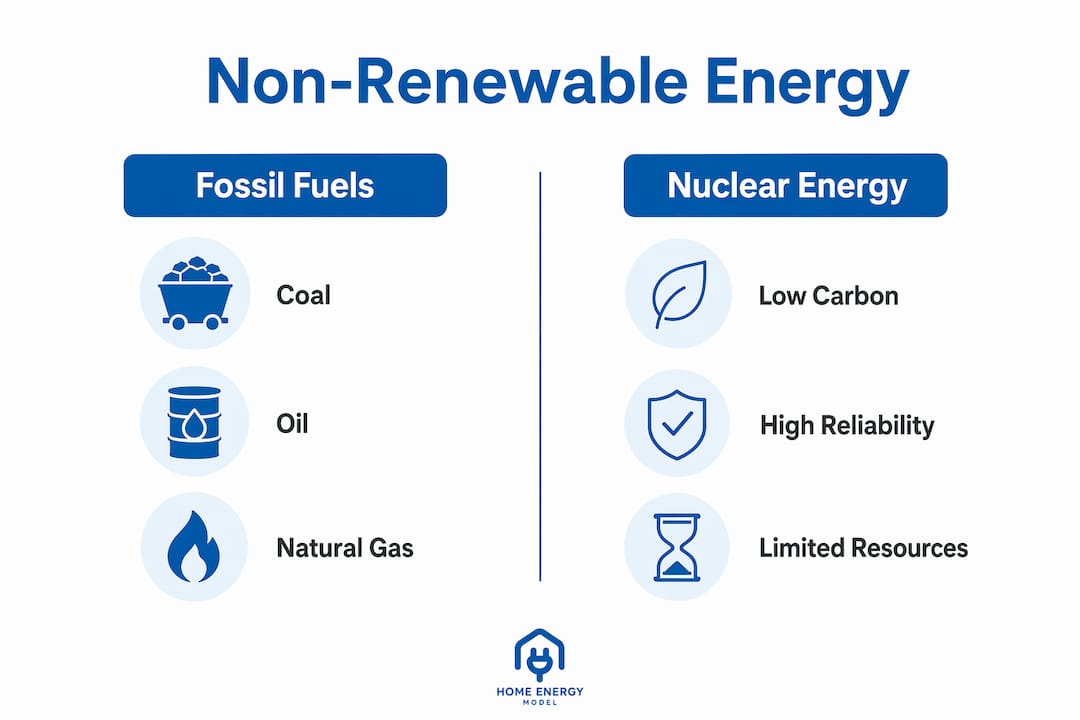
Non-renewable energy sources divide into two broad categories: fossil fuels and nuclear energy. Each has distinct characteristics, uses, and implications for the UK’s energy mix.
Fossil fuels
Fossil fuels are the most widely used non-renewable energy sources. Coal, formed from compressed plant matter over hundreds of millions of years, was the foundation of the Industrial Revolution and still powers electricity generation in parts of the world. Oil, refined into petrol, diesel, and aviation fuel, dominates transport globally. Natural gas burns more cleanly than coal or oil and currently serves as the UK’s primary heating fuel for homes and businesses.
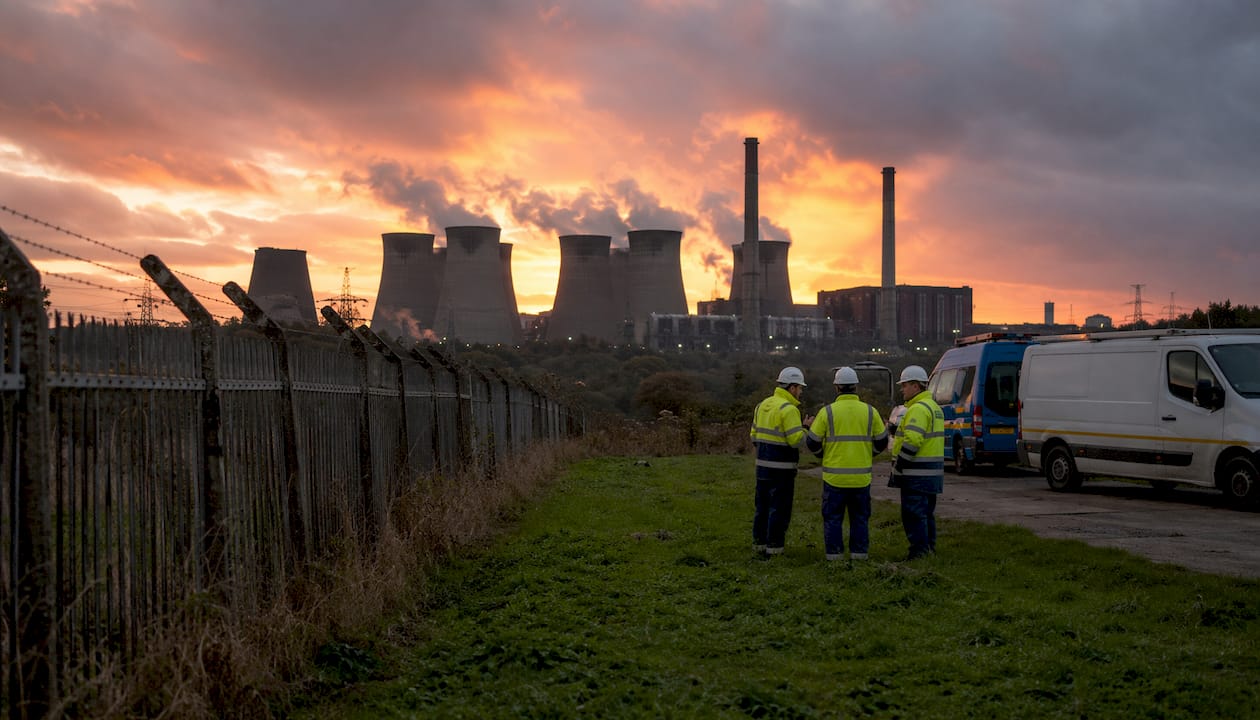
In 2025, natural gas supplied 31.5% of UK electricity generation, making it the single largest source on the grid. That figure rose 4.7% year on year, largely because ageing nuclear plants produced less power. The UK’s continued dependence on gas for both heating and electricity generation illustrates how deeply fossil fuels remain embedded in national infrastructure.
Nuclear energy
Nuclear energy occupies an unusual position in the non-renewable category. It produces very low carbon emissions during operation, which makes it attractive as a low-carbon baseload source. However, uranium fuel is finite and cannot be replenished, so nuclear qualifies as non-renewable under the standard definition. The UK’s nuclear fleet is ageing, and nuclear output fell 12% to 35.9TWh in 2025. That decline pushed gas generation higher, demonstrating how the loss of one non-renewable source can increase reliance on another.
| Energy source | Primary use | Carbon emissions | UK availability |
|---|---|---|---|
| Coal | Electricity generation | Very high | Declining rapidly |
| Oil | Transport, heating | High | Imported majority |
| Natural gas | Heating, electricity | Moderate | Partially domestic |
| Nuclear | Baseload electricity | Very low | Ageing fleet |
Understanding UK energy usage patterns helps clarify how these sources interact with residential demand across different property types.
What is the environmental impact of non-renewable energy?
The environmental impact of non-renewable energy is significant and operates across multiple scales, from local pollution to global climate change. Fossil fuels are the primary driver of greenhouse gas emissions worldwide, and the UK is no exception.
Greenhouse gas emissions and climate targets
Burning fossil fuels releases carbon dioxide, methane, and nitrous oxide into the atmosphere. These gases trap heat and drive climate change, which the Climate Change Committee (CCC) identifies as the central challenge for UK energy policy. The UK has a legally binding target to reach net zero emissions by 2050, and fossil fuel combustion remains the largest barrier to achieving it.
A landmark legal development has sharpened how environmental impacts are assessed. The 2024 Supreme Court ruling established that Scope 3 emissions must be included in Environmental Impact Assessments for new fossil fuel projects. Scope 3 emissions are those produced when consumers burn the fuel, not just those generated during extraction. This ruling significantly complicates consent for new North Sea projects such as Jackdaw and Rosebank, and signals a tightening regulatory environment for fossil fuel development in the UK.
Local and wider environmental damage
Beyond climate change, non-renewable energy extraction causes direct environmental harm. Coal mining degrades land and contaminates water. Oil spills damage marine ecosystems. Fracking for natural gas risks groundwater pollution and seismic activity. Nuclear energy carries the challenge of radioactive waste, which remains hazardous for thousands of years and requires secure long-term storage.
Key environmental consequences of non-renewable energy use include:
- Air pollution from combustion, contributing to respiratory illness in urban areas
- Land degradation from mining and drilling operations
- Water contamination from extraction processes and spills
- Radioactive waste from nuclear plants requiring permanent storage solutions
- Ocean acidification driven by elevated atmospheric CO2 from fossil fuel burning
Pro Tip: When assessing a property’s environmental footprint, consider both direct energy use and the source of that energy. A home heated by gas carries a higher carbon burden than one using a heat pump powered by renewable electricity, even if the energy bills appear similar.
How does non-renewable energy affect UK energy security and the economy?
The UK’s reliance on non-renewable energy creates significant economic and security risks. Much of the fossil fuel the UK consumes is imported, exposing consumers and businesses to global price volatility and geopolitical disruption.
Cost volatility and household bills
Fossil fuel prices fluctuate sharply in response to global events, supply constraints, and geopolitical tensions. The CCC’s 2026 Progress Report to Parliament found that fossil fuel-reliant households face energy bills that are 4 to 10 times more volatile than those of households using low-carbon alternatives such as heat pumps and electric vehicles. That gap is not marginal. It represents a structural financial disadvantage for millions of UK homes that have not yet transitioned away from gas heating.
“The total cost of reaching Net Zero by 2050 is less than the cost of a single fossil fuel price shock, and investments in clean energy deliver £2–£4 in economic benefits for every £1 spent.”
Energy UK, UK Energy Transition Supporting Statistics and Evidence
This finding reframes the net zero debate. The question is not whether the UK can afford to transition away from fossil fuels. The evidence shows the UK cannot afford not to.
The Capacity Market and fossil fuel infrastructure
The UK’s Capacity Market pays power generators to remain available during peak demand periods, regardless of how much electricity they actually produce. Gas-fired plants receive these payments as back-up capacity, effectively subsidising fossil fuel infrastructure to maintain grid security. This mechanism reflects the genuine tension between decarbonisation targets and the need for reliable power during periods when wind and solar output is low.
Wind power is already demonstrating its economic value. Wind generation reduced average day-ahead electricity prices by £38 per MWh in 2025. Lower wholesale prices feed through to consumer bills, making renewable expansion an economic priority as much as an environmental one.
How do non-renewable and renewable energy sources compare?
Renewable energy sources are naturally replenished on human timescales. Solar radiation, wind, rainfall, and geothermal heat are continuously available, unlike coal or oil which took millions of years to form. This fundamental difference in availability drives most of the contrasts between the two categories.
In 2025, renewables generated 52.5% of UK electricity, a record share. Yet fossil fuels still supplied 32.8%, with gas generation actually rising year on year. The coexistence of record renewable output and rising gas use reflects the grid’s continued need for dispatchable power when wind and solar generation falls.
Key contrasts between non-renewable and renewable energy sources:
- Availability: Fossil fuels are finite and depleting; renewables are continuously replenished
- Emissions: Fossil fuels produce high greenhouse gas emissions; renewables produce near-zero operational emissions
- Cost trends: Fossil fuel prices are volatile and subject to global markets; renewable costs have fallen sharply and continue to decline
- Grid role: Fossil fuels provide dispatchable baseload power on demand; renewables require storage or back-up to manage intermittency
- Environmental damage: Fossil fuels cause extraction and combustion harm; renewables have lower but non-zero environmental footprints
In march 2026, wind and solar generated enough electricity to power three million UK homes for a year, avoiding the import of approximately 21TWh of gas worth around £1 billion. That single month’s output illustrates the scale of economic and environmental benefit that renewable expansion delivers.
Nuclear energy sits between the two categories. It produces very low carbon emissions and provides reliable baseload power, which makes it valuable during the energy transition. However, its non-renewable status, high construction costs, and waste management challenges mean it cannot serve as a long-term substitute for renewables. For a detailed look at types of renewable energy available in the UK, the contrast with non-renewable sources becomes even clearer.
Pro Tip: Nuclear energy is frequently misclassified as renewable because of its low carbon emissions. The correct classification is low-carbon non-renewable. The distinction matters for policy, because nuclear does not address resource depletion in the way that wind or solar does.
The UK’s non-renewable dependency: a view from the ground
The statistics are clear, but the lived reality of the UK’s fossil fuel dependency is more complex than any single data point captures. Gas remains the dominant heating fuel for UK homes, and the infrastructure to replace it, primarily heat pumps and improved building fabric, is still being built out at scale. The policy frameworks are in place, but the pace of delivery has been uneven.
What strikes me most is the economic argument. The CCC’s finding that fossil fuel-reliant households face bills 4 to 10 times more volatile than low-carbon alternatives is not an abstract projection. It describes the financial exposure of millions of households right now. The energy crisis of 2021 to 2023 made that exposure visible in a way that years of climate communication had not managed to achieve.
The Capacity Market is a useful lens for understanding the policy challenge. It exists because the grid genuinely needs dispatchable back-up power. But paying gas plants to remain available also extends the economic life of fossil fuel infrastructure. Resolving that tension requires investment in grid-scale storage and demand flexibility, not just more renewable capacity. The UK has the policy ambition. The gap is in delivery speed and public understanding of why the transition matters beyond the environmental case.
Property owners and landlords who understand the economics of non-renewable energy are better placed to make decisions about heating systems, insulation, and EPC ratings. The shift away from gas is not only a regulatory requirement. It is increasingly a financial one.
— Danny
How Homeenergymodel supports UK property owners on energy efficiency
Homeenergymodel provides practical guidance for UK landlords and property owners navigating the shift away from fossil fuel-dependent heating and towards low-carbon alternatives. As the government’s Home Energy Model replaces SAP as the standard methodology for assessing building energy performance, understanding how a property uses energy becomes central to compliance and investment decisions. Homeenergymodel covers EPC requirements, energy modelling tools, and efficiency improvements in plain language. Landlords looking to understand their options can start with the guide to types of home energy models to see which assessment approach fits their portfolio.
Key takeaways
Non-renewable energy sources are finite, carbon-intensive, and increasingly costly compared with renewable alternatives, making the UK’s energy transition both an environmental and economic priority.
| Point | Details |
|---|---|
| Definition of non-renewable energy | Non-renewable energy comes from finite resources like fossil fuels and uranium that cannot be replenished at human timescales. |
| UK fossil fuel dependency | Natural gas supplied 31.5% of UK electricity in 2025, rising 4.7% year on year as nuclear output fell. |
| Environmental and legal impact | The 2024 Supreme Court ruling requires Scope 3 emissions to be assessed in new fossil fuel project consents. |
| Economic cost of fossil fuels | Fossil fuel-reliant households face bills 4 to 10 times more volatile than those using low-carbon alternatives. |
| Renewable energy progress | Renewables generated a record 52.5% of UK electricity in 2025, with wind alone reducing average prices by £38 per MWh. |
FAQ
What is non-renewable energy?
Non-renewable energy is energy sourced from finite natural resources, primarily fossil fuels such as coal, oil, and natural gas, that cannot be replenished within a human lifetime. Nuclear energy also qualifies as non-renewable because uranium fuel exists in limited quantities.
What are the main examples of non-renewable energy sources?
The four main examples are coal, oil, natural gas, and nuclear energy. Coal and oil are the most carbon-intensive; natural gas burns more cleanly but still produces significant emissions; nuclear is low-carbon but generates radioactive waste.
What is the environmental impact of non-renewable energy?
Fossil fuels are the primary source of greenhouse gas emissions driving climate change. Extraction also causes land degradation, water contamination, and air pollution. Nuclear energy produces radioactive waste that requires secure storage for thousands of years.
How does non-renewable energy affect UK energy bills?
Households reliant on fossil fuels for heating and transport face bills 4 to 10 times more volatile than those using low-carbon alternatives, according to the Climate Change Committee’s 2026 report. Global price shocks pass directly through to consumer costs.
Is nuclear energy renewable or non-renewable?
Nuclear energy is non-renewable. Although it produces very low carbon emissions during operation, uranium fuel is finite and cannot be replenished. The correct classification is low-carbon non-renewable, which is distinct from renewable energy sources such as wind or solar.