
TL;DR:
- Improving building energy efficiency requires proper sequencing, starting with fabric upgrades before mechanical systems. Operational measures like maintenance and occupancy controls deliver cost-effective savings without significant capital expenditure. UK and EU regulations accelerate demands for early retrofit planning to maintain property value and ensure compliance.
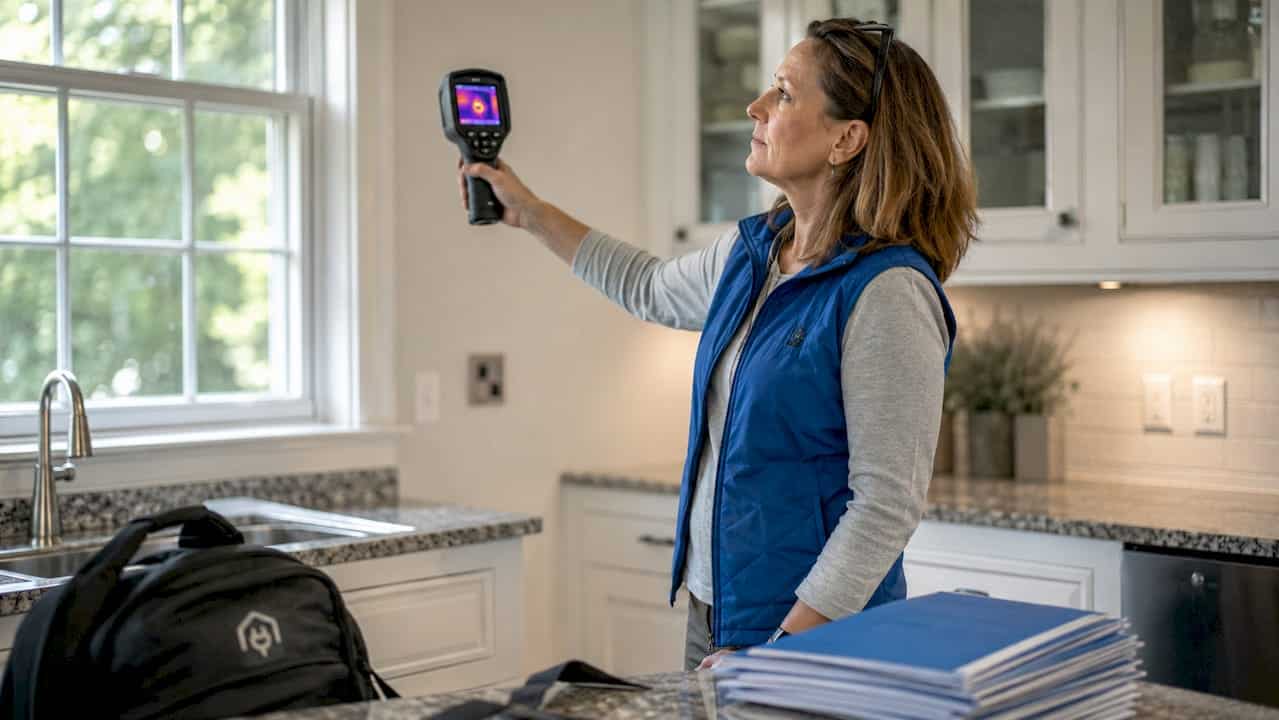
Energy efficiency in buildings is defined as the practice of reducing energy consumption while maintaining or improving occupant comfort, operational performance, and regulatory compliance. For property owners and managers across the UK, knowing how to improve energy efficiency in buildings has never been more pressing. EU mandates now require a 16% reduction in residential energy use by 2030 compared to 2020 levels. That target directly affects asset valuations, EPC ratings, and lettability. The most effective approach combines fabric upgrades, mechanical improvements, and operational controls, applied in the right sequence.
What are the most effective energy efficiency upgrades for buildings?
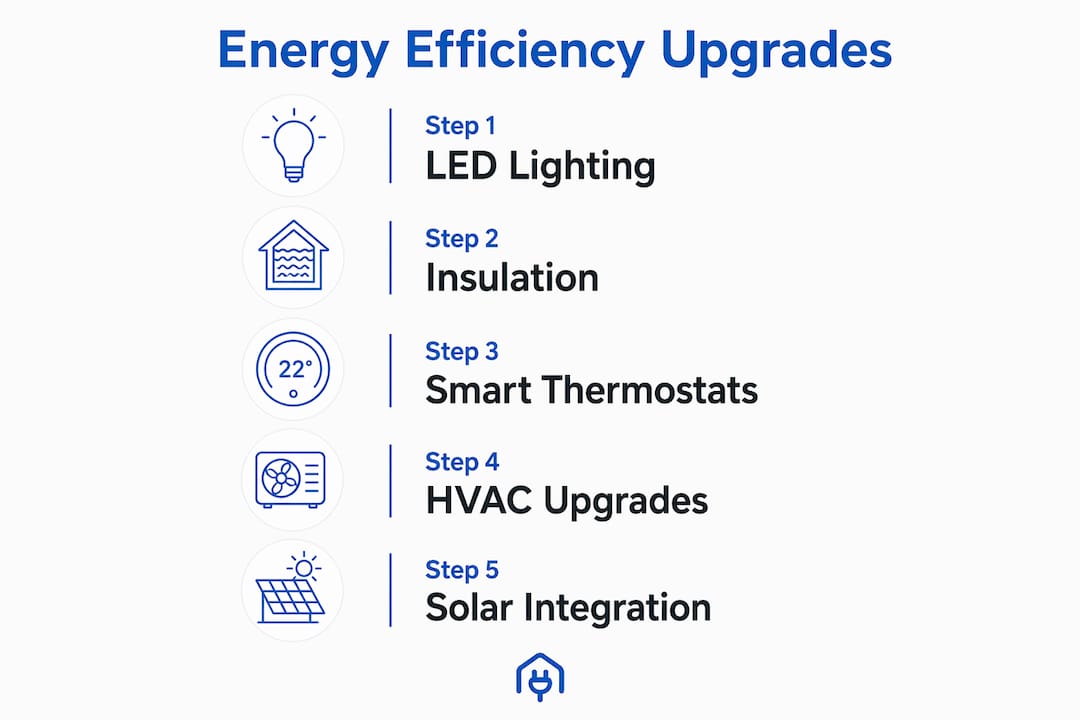
Switching to LED lighting is the fastest win available to most property owners. LED lighting cuts energy use by up to 75% compared to incandescent bulbs and lasts up to 25 times longer. That combination of lower consumption and reduced replacement costs makes it the logical starting point for any building.

Insulation and air sealing deliver the next tier of savings. Improved attic and crawl space insulation saves around 10% annually on heating and cooling bills. Beyond the numbers, tighter building fabric reduces the load on heating and cooling systems, which means those systems run less and last longer.
Smart thermostats add a further layer of control. Smart thermostats save about 8% on annual utility costs by adjusting settings based on occupancy patterns. In commercial settings, each £1 invested in energy efficiency typically yields £4 in savings over the investment lifetime. That return makes the case for upgrading controls even before touching mechanical plant.
Heat pumps and right-sized HVAC systems represent the next step for buildings with older heating infrastructure. Solar panels and onsite renewables work best as a later-stage measure, once the building fabric and mechanical systems are already performing well.
Pro Tip: Before specifying any new heating system, commission a heat loss calculation. Oversized boilers and heat pumps cycle on and off inefficiently, wasting energy and shortening equipment life.
| Upgrade category | Typical energy impact | Relative cost |
|---|---|---|
| LED lighting | Up to 75% reduction in lighting energy | Low |
| Insulation and air sealing | ~10% annual saving on heating and cooling | Low to medium |
| Smart thermostats and controls | ~8% annual utility saving | Low |
| Heat pump or HVAC upgrade | Significant reduction in heating energy | Medium to high |
| Solar panels and onsite renewables | Offsets grid consumption | High |
How to prioritise and sequence energy efficiency improvements
Proper sequencing is the single most important factor in avoiding wasted investment. Improving the building envelope first reduces heating and cooling loads, which then allows right-sized and more efficient mechanical systems to be installed. Skipping this step leads to oversized equipment, higher capital costs, and systems that never perform as specified.
A three-tier retrofit framework gives property portfolios a practical structure for decision-making. Tier 1 covers low-cost operational optimisations, Tier 2 covers targeted data-driven retrofits, and Tier 3 covers capital-intensive deep renovations. This structure prevents analysis paralysis and keeps progress moving across buildings of different ages and conditions.
Project selection should also account for factors beyond simple payback periods. Non-energy benefits such as improved indoor air quality, reduced compliance risk, and lower maintenance downtime sometimes justify longer payback periods. A landlord who improves ventilation alongside insulation, for example, gains both an energy saving and a healthier tenancy, which reduces void periods.
A structured planning sequence looks like this:
- Commission a professional energy audit to establish a baseline.
- Identify and address air leakage and insulation gaps in the building fabric.
- Calibrate and upgrade controls, including thermostats and lighting sensors.
- Right-size and upgrade mechanical heating and cooling systems.
- Evaluate onsite renewables once fabric and systems are performing efficiently.
- Monitor consumption data continuously and adjust operations accordingly.
Pro Tip: An energy assessment checklist helps property managers capture baseline data systematically before committing to any capital spend.
| Tier | Focus area | Typical investment level |
|---|---|---|
| Tier 1 | Operational optimisation and maintenance | Minimal |
| Tier 2 | Targeted retrofits based on monitoring data | Moderate |
| Tier 3 | Deep renovation of fabric and mechanical systems | Significant |
What operational measures can reduce energy use without major capital investment?
Operational improvements deliver savings without the lead times or costs of capital projects. They are also the most underused tool in most property managers’ repertoire.
Regular preventive maintenance is the clearest example. Twice-yearly HVAC maintenance, including cleaning filters, lubricating motors, and calibrating controls, provides some of the fastest and most cost-effective energy savings available. Most buildings run on systems that have not been properly tuned in years, meaning significant energy is wasted before any upgrade is considered.
Occupancy-based scheduling and sensor controls for lighting and HVAC remove energy waste from unoccupied spaces automatically. A building that heats empty meeting rooms or lights vacant corridors overnight is paying for energy it does not need. Occupancy sensors and time-of-use scheduling address this directly and at low cost.
Smart building technologies extend these gains further. 55% of organisations plan increased investment in smart building technologies, according to a Siemens 2025 infrastructure survey. That figure reflects a broader recognition that digital controls and monitoring are now central to building energy management, not optional extras.
For property owners who face capital barriers, Energy-as-a-Service models offer an alternative route. These arrangements shift upgrade costs from capital expenditure to operational expenditure, removing the upfront barrier while still delivering efficiency gains.
Operational optimisation and regular maintenance provide quick, cost-effective energy savings that are consistently undervalued compared to equipment replacement.
- Clean HVAC filters and check refrigerant levels every six months.
- Install occupancy sensors in low-traffic areas such as stairwells, storage rooms, and meeting rooms.
- Calibrate thermostats seasonally to avoid unnecessary heating or cooling.
- Review time-of-use schedules for lighting and HVAC at least annually.
- Use smart building controls to monitor consumption in real time and identify anomalies quickly.
How do upcoming regulations affect energy efficiency requirements for building owners?
Regulatory pressure on building energy performance is accelerating across both the EU and the UK. Property owners who treat compliance as a future concern are already behind the planning curve.
EU mandates set specific, time-bound targets that affect both residential and non-residential stock. The key requirements are:
- Worst-performing non-residential buildings: mandatory renovation of the worst-performing 16% by 2030 and 26% by 2033.
- Residential stock: a 16% reduction in average energy use by 2030 compared to 2020 levels.
- New public buildings: zero-emission status mandated by 2028.
- All new buildings: zero-emission standards required by 2030.
Deep renovation is described by EU policy as the gold standard for existing buildings seeking long-term asset value protection. That framing matters for landlords and investors. A building that meets minimum standards today but sits in the worst-performing quartile faces mandatory renovation costs within the decade. Planning those works now, rather than reactively, reduces both cost and disruption.
In the UK, Energy Performance Certificates remain the primary compliance tool for demonstrating a building’s energy performance. The incoming Home Energy Model, which replaces SAP as the government’s assessment methodology, will change how EPC ratings are calculated and what improvements are recognised. Property owners planning upgrades now should factor in how those changes will affect their ratings under the new framework.
Understanding your current EPC rating and its trajectory under tightening standards is the first step in aligning planned upgrades with regulatory timelines. Homeenergymodel provides detailed guidance on EPC ratings and compliance for UK property owners navigating these changes.
Key takeaways
The most effective way to improve building energy efficiency is to sequence upgrades correctly: fabric first, then controls, then mechanical systems, then renewables.
| Point | Details |
|---|---|
| Start with the building fabric | Air sealing and insulation reduce heating loads before any mechanical upgrade is made. |
| LED lighting delivers fast returns | Switching to LEDs cuts lighting energy use by up to 75% at low upfront cost. |
| Operational maintenance is undervalued | Twice-yearly HVAC servicing provides some of the fastest energy savings available. |
| Use a tiered retrofit framework | Tier 1 to Tier 3 sequencing prevents wasted investment across mixed property portfolios. |
| Regulations set hard deadlines | EU mandates require renovation of the worst-performing buildings by 2030, making early planning critical. |
Why I think most property owners are planning their upgrades in the wrong order
After working closely with UK property owners on energy performance, the pattern I see most often is the same: capital goes into new boilers or heat pumps before anyone has addressed the building fabric. The result is an expensive system working harder than it should, in a building that still leaks heat through uninsulated walls and draughty windows.
The sequencing principle is not complicated. Fix the envelope first. Reduce the load. Then specify the mechanical system to match the actual demand. A building that has been properly air-sealed and insulated needs a smaller, cheaper heating system than one that has not. That saving alone often funds a significant portion of the fabric work.
I also think the value of operational measures is consistently underestimated. Calibrating thermostats, cleaning filters, and installing occupancy sensors costs a fraction of any capital project. Yet these steps can deliver meaningful savings within weeks. For landlords managing multiple properties, starting with operational optimisation at every site before committing to retrofits is the most capital-efficient approach available.
The regulatory timeline is real and it is tightening. Property owners who align their upgrade plans with EPC requirements and the incoming Home Energy Model methodology now will be in a far stronger position than those who wait for enforcement. The buildings that will hold their value are the ones being improved deliberately, not reactively.
— Danny
Homeenergymodel: practical support for property owners
Homeenergymodel provides property owners and landlords with clear, regulation-aligned guidance on improving building energy performance across the UK. Whether you are planning your first retrofit or managing a mixed portfolio, the home energy assessment resources on the site help establish a reliable baseline before any capital is committed. For landlords seeking to understand how the Home Energy Model methodology affects their properties, the types of home energy models for landlords guide explains the options in plain terms. Homeenergymodel also covers EPC compliance, upgrade sequencing, and the Future Homes Standard in depth, making it a practical reference for anyone managing UK property in 2026.
FAQ
What is the most cost-effective first step to improve building energy efficiency?
Switching to LED lighting and addressing air leakage in the building fabric are the most cost-effective first steps. LED lighting reduces energy use by up to 75%, and improved insulation saves around 10% annually on heating and cooling costs.
How does proper sequencing affect energy efficiency upgrades?
Improving the building envelope before upgrading mechanical systems reduces heating and cooling loads, allowing smaller and more efficient equipment to be installed. Skipping this step leads to oversized HVAC systems that cost more and perform less efficiently.
What do EU regulations require from building owners by 2030?
EU mandates require renovation of the worst-performing 16% of non-residential buildings by 2030 and a 16% reduction in average residential energy use compared to 2020 levels. Zero-emission standards apply to all new buildings from 2030.
Can operational measures reduce energy use without capital investment?
Twice-yearly preventive HVAC maintenance, occupancy-based scheduling, and thermostat calibration deliver measurable energy savings at minimal cost. These measures are consistently undervalued compared to equipment replacement but often produce faster results.
How will the Home Energy Model affect EPC ratings for UK properties?
The Home Energy Model replaces SAP as the UK government’s methodology for assessing building energy performance, changing how EPC ratings are calculated. Property owners planning upgrades should factor in how the new methodology recognises different improvement measures before committing to works.