

TL;DR:
- The UK property sector must adapt to new energy measurement and regulation standards coming in 2025, with the Home Energy Model replacing SAP. Insulation and air sealing offer the highest return on investment, while smart thermostats and LED lighting provide quick savings on energy bills. Property owners should prioritize professional assessments and stay informed on grants and regulations to improve energy performance effectively.
The UK property sector is facing a significant shift in how energy performance is measured, regulated, and rewarded. For homeowners, landlords, and property investors, staying across the latest home energy facts 2025 is no longer optional. The Home Energy Model is set to replace SAP as the primary assessment methodology, EPC requirements are tightening, and the cost of falling behind is measurable in both fines and lost property value. This guide covers the ten facts that matter most, with practical implications for every type of UK property stakeholder.
Table of Contents
- Key takeaways
- 1. How to evaluate home energy facts 2025: a framework for UK property owners
- 2. Insulation and air sealing: the highest-return upgrades in 2025
- 3. HVAC systems and smart thermostats: where the biggest savings are hiding
- 4. Phantom loads and lighting: the invisible drains on your energy bill
- 5. Incentives, grants, and regulatory updates for UK landlords and investors in 2025
- 6. My perspective on prioritising energy upgrades in 2025
- How Homeenergymodel can help you act on these facts
- FAQ
Key takeaways
| Point | Details |
|---|---|
| HEM replaces SAP in 2025 | The Home Energy Model becomes the standard methodology for assessing residential energy performance in the UK. |
| HVAC dominates consumption | Heating and cooling systems account for 45 to 54% of household electricity use, making them the priority upgrade target. |
| Insulation delivers fastest ROI | Air sealing and insulation upgrades can cut energy costs by 15 to 45%, with payback periods as short as two years. |
| Phantom loads cost hundreds annually | Standby electronics can add £110 to £230 to annual bills, with smart power strips offering rapid payback. |
| Start with a professional assessment | Expert assessments identify the highest-impact inefficiencies before any money is spent on upgrades. |
1. How to evaluate home energy facts 2025: a framework for UK property owners
Not every energy upgrade delivers the same return. Before acting on any of the facts below, it pays to apply a consistent framework for deciding what matters most.
Three criteria should drive every decision:
- Cost-effectiveness: Compare upfront costs against long-term bill savings, available grants, and payback period. An upgrade with a three-year payback is very different from one with a twenty-year horizon.
- Regulatory compliance: EPC ratings and Minimum Energy Efficiency Standards (MEES) are increasingly non-negotiable for landlords. Any property with an EPC rating below E cannot legally be let in England and Wales, and further tightening is expected.
- Carbon impact: Reducing a property’s carbon footprint is both an ethical priority and a commercial one. Buyers and tenants are placing greater weight on energy performance, and home energy consumption statistics show this trend accelerating.
Understanding your current energy consumption patterns is the logical starting point. Without a baseline, it is impossible to know which upgrades will deliver the greatest improvement. Professional home energy assessments consistently identify critical inefficiencies that owners would not find on their own, and they produce a higher ROI than speculative spending on visible upgrades.
Pro Tip: Before requesting quotes for any upgrade, obtain a detailed energy assessment first. It will tell you exactly where heat is escaping and which measures will move your EPC rating most efficiently.
2. Insulation and air sealing: the highest-return upgrades in 2025
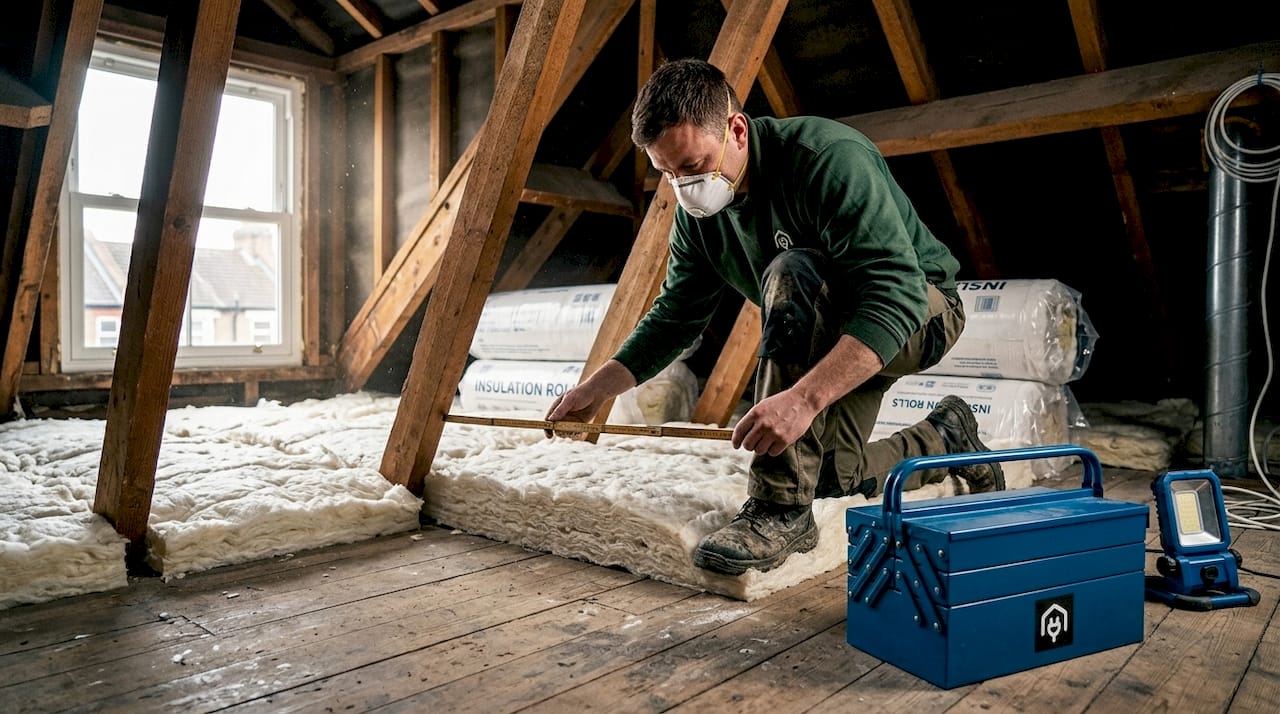
Insulation remains the single most cost-effective home efficiency upgrade available. Air sealing and insulation can reduce heating and cooling energy costs by 15 to 45%, with attic upgrades from R-19 to R-49 insulation levels yielding payback periods of just two to four years.
| Upgrade type | Typical cost | Estimated annual saving | Payback period |
|---|---|---|---|
| Loft insulation | £300 to £500 | £150 to £250 | 1 to 3 years |
| Cavity wall insulation | £400 to £700 | £100 to £200 | 2 to 4 years |
| Solid wall insulation (external) | £6,000 to £15,000 | £200 to £500 | 15 to 30 years |
| Air sealing (draught proofing) | £100 to £400 | £75 to £200 | 1 to 2 years |
One of the most persistent misconceptions in home energy management is that replacing windows is the priority. In reality, window replacement payback often exceeds 15 to 30 years, making it far less cost-effective than addressing gaps in the building envelope first. Air sealing around windows, doors, and service penetrations is the highest-return measure and the most frequently overlooked.
- Focus on loft and floor insulation before walls, as these areas typically lose the most heat per pound spent.
- Check eligibility for the Great British Insulation Scheme and ECO4 grants before paying full price for insulation works.
- Draught proofing letterboxes, loft hatches, and pipe penetrations often costs under £200 and can show results on the next bill.
Pro Tip: Air sealing is not glamorous, but it consistently outperforms expensive technology upgrades. Address gaps and cracks before spending on any other measure.
3. HVAC systems and smart thermostats: where the biggest savings are hiding
Heating and cooling systems are the dominant energy consumers in any UK home. HVAC accounts for 45 to 54% of household electricity use, which makes them the most consequential category for bill reduction and carbon performance.
Smart thermostats are one of the most accessible upgrades available. A well-configured smart thermostat can reduce HVAC consumption by 10 to 15%, translating to annual savings of £150 to £230 for a typical UK property. The upfront cost of most models sits between £100 and £250, meaning payback can occur within a single heating season.
When considering a full system replacement, resist the temptation to chase the highest possible efficiency rating. An 18 SEER HVAC unit paired with a smart thermostat offers the optimal balance of efficiency and cost. Units with significantly higher ratings often provide diminishing returns relative to their premium price, particularly in moderate UK climates.
- Schedule annual boiler and heat pump servicing to maintain rated efficiency levels.
- Ensure systems are correctly sized for the property. Oversized units cycle on and off frequently and consume more energy than a correctly specified model.
- Consider heat pump eligibility under the Boiler Upgrade Scheme if replacing a gas boiler.
4. Phantom loads and lighting: the invisible drains on your energy bill
Phantom loads, also called vampire loads, are the power draw from electronics and appliances left on standby. These loads can account for 5 to 10% of home energy consumption, costing households £110 to £230 per year. The culprits are often surprising: televisions on standby, games consoles, phone chargers left plugged in, and older broadband routers all contribute.
Smart power strips eliminate phantom loads by cutting power to devices when the primary appliance is switched off. They carry a modest cost of £15 to £40 and typically pay back within weeks for households with multiple entertainment or office setups.
Lighting deserves separate attention. Switching to LED lighting can reduce bills by up to 40% on lighting costs alone, with payback typically under three years. Lighting accounts for 5 to 12% of home electricity use, and switching to LED bulbs saves £75 to £115 annually compared with traditional incandescent bulbs.
Pro Tip: Walk through your property at night with nothing switched on intentionally. Every glowing standby light is costing money. A single smart power strip across an entertainment unit can remove four or five phantom loads in one action.
5. Incentives, grants, and regulatory updates for UK landlords and investors in 2025
The regulatory and financial support picture for energy efficiency in the UK is active and evolving. Many UK rebate and incentive programmes are either active or being updated for 2025, including schemes for insulation, heat pumps, and whole-home retrofits. Understanding what is available before committing to any upgrade is a material financial consideration.
Key steps for UK property owners and landlords:
- Check eligibility for ECO4 (Energy Company Obligation), which provides fully funded or heavily subsidised insulation and heating upgrades for qualifying properties and tenants.
- Review the Great British Insulation Scheme, which targets properties with EPC ratings of D and below.
- Investigate the Boiler Upgrade Scheme grant of £7,500 for air source heat pumps and £7,500 for ground source heat pumps, available in England and Wales.
- Verify local rebate eligibility through your local authority, as some councils offer additional funding for specific upgrade types.
- Obtain a professional home energy assessment before applying, as many schemes require evidence of current performance and a recommended upgrade pathway.
“Landlords with properties below EPC band C should treat the regulatory trajectory as a financial planning issue, not just a compliance one. The direction of travel is clear, and early investment in the right upgrades now avoids significantly higher costs under tighter future standards.”
The 2025 residential energy standards landscape is also shaped by the incoming Home Energy Model, which replaces SAP as the assessment methodology for new builds. Understanding how the HEM calculates performance is directly relevant to landlords seeking to predict future EPC outcomes for their portfolios.
6. My perspective on prioritising energy upgrades in 2025
I’ve spent considerable time working with data on what actually moves the needle for UK property owners, and the pattern is consistent. Most people want to start with the visible and the technological. Heat pumps, solar panels, smart home systems. These are not wrong choices, but they are frequently the wrong starting point.
In my experience, the properties that achieve the greatest efficiency gains in the shortest time are the ones that started with a professional energy assessment and then addressed air sealing and insulation before anything else. The assessment tells you what you are actually dealing with, and insulation fixes the underlying problem rather than compensating for it with more efficient heating.
The behavioural dimension is also underestimated. Changing thermostat schedules, unplugging devices overnight, and being deliberate about hot water use can collectively reduce bills by 10 to 15% without a single pound of capital expenditure. These gains compound when combined with physical upgrades.
My honest take on the 2025 regulatory environment: landlords who are waiting to see what happens with MEES and EPC reform are taking a real financial risk. The cost of upgrading a property from EPC E to C will only increase as demand for qualified installers grows. Acting now, guided by a proper assessment rather than guesswork, is the lower-cost and lower-risk path.
— Danny
How Homeenergymodel can help you act on these facts
Homeenergymodel provides UK homeowners, landlords, and property investors with detailed guidance on the Home Energy Model, EPC requirements, and the practical steps needed to improve property energy performance. Whether you are preparing a rental portfolio for tightening MEES standards or planning a retrofit for your own home, the resources on home energy models for landlords give you a clear view of the methodology that will shape assessments going forward.
For those ready to take a concrete next step, the Home Energy Model explained page breaks down exactly how the new assessment framework affects your property’s rating and what upgrades will have the most impact under the new system. Pair that with a professional home energy assessment and you have everything needed to invest in the right upgrades with confidence.
FAQ
What are the most impactful home energy upgrades for 2025?
Air sealing and insulation consistently deliver the highest return, reducing heating and cooling costs by 15 to 45% with payback periods as short as two years. Smart thermostats are the second most impactful measure for most UK properties.
How much can phantom loads add to a UK energy bill?
Standby electronics and phantom loads can account for 5 to 10% of household energy consumption, adding between £110 and £230 to annual bills. Smart power strips are a low-cost solution that pays back quickly.
What grants are available for home energy upgrades in the UK in 2025?
ECO4, the Great British Insulation Scheme, and the Boiler Upgrade Scheme (offering up to £7,500 for heat pumps) are the main active programmes. Eligibility depends on property EPC rating, household income, and the type of upgrade planned.
What is the Home Energy Model and why does it matter for landlords?
The Home Energy Model is the new UK government methodology replacing SAP for assessing residential energy performance, aligned with the Future Homes Standard. It will directly affect how EPC ratings are calculated for new builds and, in time, the broader rental sector.
Is LED lighting worth upgrading to in 2025?
LED lighting can reduce lighting energy costs by up to 40% and saves £75 to £115 annually compared with incandescent bulbs, with payback typically under three years. It is one of the fastest-returning home efficiency upgrades available.