

TL;DR:
- Homeowners and investors in the UK must prioritize fabric improvements like insulation and airtightness before upgrading heating systems to meet upcoming EPC Band C standards by 2028. Proper planning, early assessment, and leveraging rebates are essential for cost-effective, compliant retrofits that improve energy efficiency and reduce long-term costs. Working with certified contractors and understanding materials and regulations are vital for successful, durable home upgrades.
Energy bills are rising, regulations are tightening, and the window for low-cost compliance is narrowing. For homeowners and property investors in the UK, understanding the right home retrofit tips 2025 is no longer optional. EPC minimum standards are moving towards a Band C requirement by 2028, and the upcoming Home Energy Model will replace SAP as the primary assessment methodology. Acting early, with a clear plan, puts you in a far stronger position than scrambling to comply at the last moment.
Table of Contents
- Key takeaways
- 1. Set clear retrofit objectives before spending anything
- 2. Insulation and airtightness: the foundation of every retrofit
- 3. Heating system upgrades: heat pumps and smart controls
- 4. Window and door upgrades: closing the envelope
- 5. Maximising financial support: rebates, grants, and incentive stacking
- 6. Choosing the right materials for long-term performance
- 7. How to retrofit old homes: working with pre-1919 properties
- My take: why rushing retrofits costs more than it saves
- How Homeenergymodel helps you plan your retrofit with confidence
- FAQ
Key takeaways
| Point | Details |
|---|---|
| Fabric improvements come first | Insulation and airtightness upgrades deliver the greatest EPC gains before any heating system changes. |
| EPC Band C is the target | Regulations are pushing towards a minimum EPC C by 2028 for rental properties, making early action cost-effective. |
| Rebates can cover significant costs | Stacking available incentive programmes can reduce total retrofit costs by up to 70%. |
| Phased planning avoids costly errors | A methodical, staged approach prevents expensive rework and helps prioritise high-impact measures. |
| Contractor selection matters | Using approved contractors is required for rebate eligibility and quality assurance on all major upgrades. |
1. Set clear retrofit objectives before spending anything
The most common and costly mistake in retrofitting is starting work before establishing what the property actually needs. A proper energy assessment gives you a baseline EPC rating and identifies the specific measures that will move the needle most efficiently.
Before committing to any spend, consider the following:
- Check your current EPC rating. Know your starting point and the gap to Band C or above. Fabric upgrades typically improve EPC performance by one to two bands, while heating upgrades alone often deliver far less without fabric improvements in place first.
- Understand your income tier. Rebate eligibility varies significantly based on household income, and knowing this early shapes what you can realistically fund.
- Prioritise fabric before mechanical systems. Insulation and air sealing reduce the heating demand, which in turn allows correct sizing of heat pumps and other systems.
- Commission a professional energy audit. An assessor can model the impact of different measures and help you sequence them for maximum return.
A structured home energy assessment should sit at the start of any retrofit project, not at the end as a formality.
Pro Tip: Before signing any contractor quote, ask for a written breakdown of projected EPC improvement per measure. It forces clarity and protects you from paying for upgrades that deliver minimal compliance benefit.
2. Insulation and airtightness: the foundation of every retrofit
No area of retrofitting advice 2025 is more consistently supported by evidence than the fabric-first approach. Insulation and airtightness are the single most cost-effective set of improvements available to most UK homeowners.
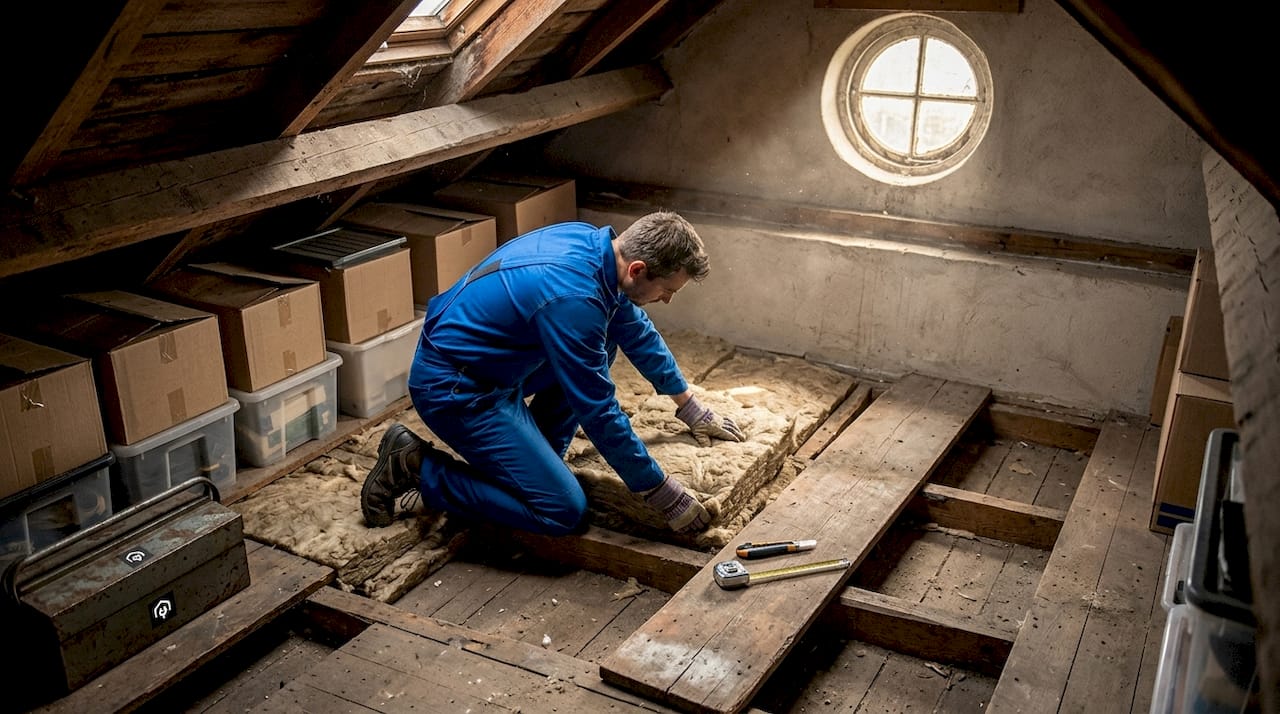
Loft insulation
Loft insulation is typically the cheapest and fastest upgrade with the quickest payback. Most older UK properties have either no loft insulation or far less than the recommended 270mm depth. Adding or topping up loft insulation costs relatively little and can significantly reduce heat loss through the roof.
Cavity wall insulation
Cavity wall insulation costs between £1,000 and £2,500 for a typical property, with payback periods of two to three years. It is one of the highest-impact measures for EPC improvement in properties built after the 1920s.
Solid wall insulation
For older properties with solid walls, internal or external insulation is a larger investment but often unavoidable. It is more disruptive and more expensive, yet prioritising fabric improvements remains the most robust compliance strategy regardless of property type.
Air sealing and ventilation
Sealing gaps around windows, doors, pipework penetrations, and loft hatches reduces uncontrolled heat loss significantly. Sealing ducts can reduce system runtime by as much as 9%. However, airtightness work must always be paired with adequate controlled ventilation. Poor ventilation after air sealing leads to condensation, damp, and poor indoor air quality.
Pro Tip: When upgrading airtightness in an older property, install a mechanical ventilation with heat recovery (MVHR) system or at minimum a demand-controlled extract fan. The cost is small relative to the problems it prevents.
3. Heating system upgrades: heat pumps and smart controls
Once the building fabric is improved, heating system upgrades become far more effective. This is a critical sequence that many homeowners get wrong by installing heat pumps into poorly insulated properties.
Key considerations when upgrading heating systems include:
- Avoid oversizing. Oversized HVAC systems cause short cycling, poor humidity control, higher running costs, and premature wear. Always request a proper heat loss calculation before specifying a heat pump size.
- Duct leakage matters more than most owners realise. Duct leakage above 15% can negate the efficiency gains of new heating equipment entirely. Duct sealing is a pre-installation requirement, not an optional extra.
- Heat pumps perform best in well-insulated properties. After fabric upgrades, an air source heat pump can deliver a coefficient of performance above three, meaning three units of heat for every one unit of electricity consumed.
- Smart controls reduce running costs substantially. Smart thermostat scheduling reduces energy use by a further 8 to 12% beyond the equipment efficiency gains alone.
- Use approved contractors. Rebate eligibility and warranty validation both depend on using contractors on approved installer registers such as the Microgeneration Certification Scheme (MCS).
The energy efficient home upgrades guide from Homeenergymodel provides detailed guidance on sequencing these measures correctly.
4. Window and door upgrades: closing the envelope
Upgrading glazing and sealing doors is one of the most visible home improvement trends in 2025, and for good reason. Windows and doors account for a significant proportion of total heat loss in older UK properties.
The table below illustrates the typical performance and cost differences between the main glazing options:
| Glazing type | Typical U-value (W/m²K) | Estimated cost per window | EPC impact |
|---|---|---|---|
| Single glazing | 5.0 | N/A (baseline) | None |
| Double glazing (standard) | 1.6–2.0 | £400–£600 | Moderate improvement |
| Double glazing (low-E) | 1.2–1.4 | £450–£650 | Good improvement |
| Triple glazing | 0.6–0.8 | £600–£900 | Significant improvement |
Triple glazing delivers the lowest heat loss but comes at a cost premium. For most UK properties, high-performance double glazing with low-emissivity coating offers the best balance of cost against efficiency gain. Installation quality matters as much as the unit specification. Poorly fitted frames with cold bridging and air gaps can undermine the performance of even the best glazing products.
Door upgrades, particularly solid external doors with good seals, complement glazing works and complete the building envelope. These upgrades integrate directly with the airtightness measures covered earlier and should be planned together where possible.
5. Maximising financial support: rebates, grants, and incentive stacking
Understanding the financial support available is one of the most practically useful areas of home renovation tips for 2025. The available programmes are generous but require careful navigation.
Key points to understand:
- The HOMES programme provides up to $8,000 for whole-home retrofits based on demonstrated energy savings, while the HEAR programme offers up to $14,000 for efficient appliances, targeting low and moderate income households, effective from 2026.
- Income tiers determine eligibility levels. Low-income households at or below 80% AMI can access combined support of up to $22,000. Moderate income households receive approximately half that amount.
- Rebate stacking is permitted but rule-bound. Stacking federal, state, and utility rebates can cover 50 to 70% of total retrofit costs, but the same expenses cannot be claimed under multiple programmes simultaneously.
- Documentation discipline is non-negotiable. Most HEAR programmes require approved contractors, income verification, and full installation paperwork before rebates are processed.
Pro Tip: Never begin a retrofit project expecting rebate funding before your application is approved and confirmed. Starting works early is the most common reason applications are rejected or reduced.
The 2025 UK proposed cost cap for landlord retrofit obligations sits at £15,000, making understanding available financial support a direct business concern for investors.
6. Choosing the right materials for long-term performance
The best materials for retrofitting are not always the most expensive. They are the ones that perform reliably over decades, integrate well with existing fabric, and hold their properties in real UK weather conditions.
Mineral wool and rigid foam board insulation both perform well, but their suitability depends on the wall construction type and the property’s moisture exposure. Breathable membranes are particularly important in older solid-walled properties where vapour management is critical to preventing interstitial condensation.
For external wall insulation, renders and cladding systems must carry the appropriate certification for weather resistance. Cheap materials used on exposed elevations can fail within five years, creating significant remediation costs. On windows, look for frames with a BFRC (British Fenestration Rating Council) rating label rather than manufacturer-only performance claims.
Sustainable living ideas 2025 increasingly focus on circular and low-carbon materials, such as natural fibre insulation products made from sheep’s wool or hemp. These carry a lower embodied carbon footprint than conventional foam alternatives and perform well in breathable wall constructions. They are particularly relevant for listed buildings or conservation areas where planning constraints limit other options.
7. How to retrofit old homes: working with pre-1919 properties
Knowing how to retrofit old homes requires a different approach from modern properties. Pre-1919 solid-wall stock represents a significant proportion of the UK housing stock and presents specific challenges.
Solid walls cannot simply be filled with cavity insulation. Instead, either internal wall insulation or external wall insulation is required, both of which carry higher costs and require careful detailing to avoid thermal bridging and moisture issues.
Floor insulation in older properties often involves suspended timber floors, which can be insulated from below using rigid boards without removing floorboards. However, access for inspection first is important to check the condition of the joists. Ground floor heat loss is frequently underestimated and addressing it as part of a whole-house programme can make a meaningful difference.
Heritage properties require breathable materials throughout to allow moisture movement. Using impermeable modern insulation systems in a historic solid-wall property can trap moisture and cause serious structural damage over time. The practical retrofit examples published by Homeenergymodel cover several real-world case studies relevant to older UK housing types.
My take: why rushing retrofits costs more than it saves
I’ve advised on a significant number of retrofit projects over the years, and the pattern I see repeatedly is homeowners investing in heating upgrades before the fabric is ready. They install a heat pump into a property leaking heat through the walls and roof, and then wonder why the running costs are disappointing.
Phased approaches consistently outperform rushed renovations, and the evidence is clear. Spending money in the right order, starting with the building envelope, produces better outcomes than spending the same total budget out of sequence.
My contrarian view is this: the single most effective piece of retrofitting advice 2025 has to offer is not about any specific technology. It is about the discipline to stop, plan properly, and resist the marketing pressure to install shiny new heating systems before the basics are done.
The regulations will keep evolving. The incentive programmes will change. What stays constant is the physics of heat loss, and that always rewards fabric investment first. Stay informed about changes to EPC methodology through sources like Homeenergymodel, keep your paperwork in order, and work only with certified contractors.
— Danny
How Homeenergymodel helps you plan your retrofit with confidence
Homeenergymodel provides homeowners, landlords, and property investors with the tools and guidance needed to plan compliant, cost-effective retrofits. The site covers the incoming Home Energy Model methodology, which replaces SAP in 2025, and explains precisely how different retrofit measures will be scored under the new framework.
Readers can explore the types of home energy models relevant to their property type, or use the energy simulation guide to understand how to model the impact of planned upgrades before committing spend. For investors and landlords assessing portfolio compliance, the home energy assessment service provides property-specific EPC impact modelling aligned with current and upcoming standards.
FAQ
What is the fabric-first approach in home retrofitting?
The fabric-first approach prioritises insulation and airtightness improvements before upgrading heating systems. This sequence reduces overall heating demand, enables correctly sized heat pumps, and delivers the strongest EPC band improvements.
Which insulation upgrade gives the best payback in 2025?
Cavity wall insulation typically offers the fastest payback, costing between £1,000 and £2,500 with a two to three year return. Loft insulation comes close behind and is often the cheapest measure to install.
Can retrofit rebates be combined to reduce costs further?
Yes. Stacking federal, state, and utility rebate programmes can cover 50 to 70% of total retrofit costs, provided the same expense is not claimed under more than one programme simultaneously.
Do heat pumps work in older UK properties?
Heat pumps perform well in older properties once fabric improvements are in place. Without adequate insulation and airtightness, they will underperform and cost more to run than expected.
What EPC rating will UK rental properties need to meet?
Regulations are pushing towards a minimum EPC Band C for rental properties by 2028, with proposals currently under consultation. Landlords should plan retrofit programmes now to avoid last-minute compliance costs.