

Upgrading property energy efficiency can feel overwhelming when every building is different and compliance demands keep changing. For UK landlords and property investors, understanding retrofit is vital as the Home Energy Model and stricter energy rules reshape what good property management means. This guide explains retrofit concepts, clarifies common misconceptions, and outlines practical strategies that balance regulatory compliance, building performance, and protecting long-term investment value.
Table of Contents
- Retrofit Defined: Concepts And Common Misconceptions
- Types Of Retrofit Measures And Their Distinctions
- How Retrofit Works Under UK Regulations
- Home Energy Model And Retrofit Obligations
- Costs, Funding And Financial Implications
- Risks, Common Pitfalls And Compliance Issues
Key Takeaways
| Point | Details |
|---|---|
| Strategic Retrofit Approach | Retrofit enhances building energy performance and sustainability, requiring a tailored strategy for each property. |
| Common Misconceptions | Many property owners overlook the importance of understanding how new interventions interact with existing systems. |
| Financial Considerations | Upfront costs vary significantly; funding options like grants and loans can mitigate these expenses. |
| Risk Management | Compliance with regulations and engaging qualified professionals are essential to avoid potential retrofit pitfalls. |
Retrofit Defined: Concepts and Common Misconceptions
Retrofit represents a strategic approach to upgrading existing buildings to enhance their energy performance, sustainability, and operational efficiency. At its core, retrofit involves modifying and improving existing structures to meet contemporary energy standards, reduce carbon emissions, and create more environmentally responsible properties. For UK landlords, this process goes beyond simple renovations, requiring a comprehensive understanding of building science and regulatory requirements.
The concept of retrofit encompasses a range of interventions, from installing improved insulation and upgrading heating systems to implementing advanced energy-efficient technologies. Whole building approaches to retrofit are critical, recognising that buildings function as interconnected systems where changes in one area can significantly impact overall performance. UK landlords must understand that successful retrofit is not about applying generic solutions, but developing tailored strategies that consider the unique characteristics of each property.
Several common misconceptions can derail retrofit projects. Many property owners assume that retrofit is simply about adding new technologies or materials, without considering how these interventions interact with existing building systems. Risks of improper retrofit include potential moisture problems, reduced building performance, and unintended structural consequences. Older properties, in particular, require specialist knowledge to ensure modifications do not compromise the building’s integrity or historic value.
Professional Tip: Before commencing any retrofit project, conduct a comprehensive building assessment with a qualified energy performance specialist to understand your property’s specific requirements and potential retrofit pathways.
Types of Retrofit Measures and Their Distinctions
Retrofit measures in the United Kingdom encompass a diverse range of interventions designed to improve building energy performance, categorised by their complexity, cost, and potential impact. Domestic retrofit strategies typically fall into three primary categories: low-cost interventions, moderate upgrades, and comprehensive deep retrofits. Understanding these distinctions is crucial for UK landlords seeking to enhance property efficiency while managing investment risks and potential returns.
Low-cost retrofit measures include simple yet effective improvements such as draught-proofing, basic insulation, and minor heating system adjustments. These interventions offer quick wins with relatively minimal financial investment, often delivering immediate energy performance benefits. Moderate upgrades involve more substantial modifications like wall insulation, window replacements, and advanced heating controls. These measures require greater upfront costs but can significantly reduce energy consumption and improve tenant comfort.
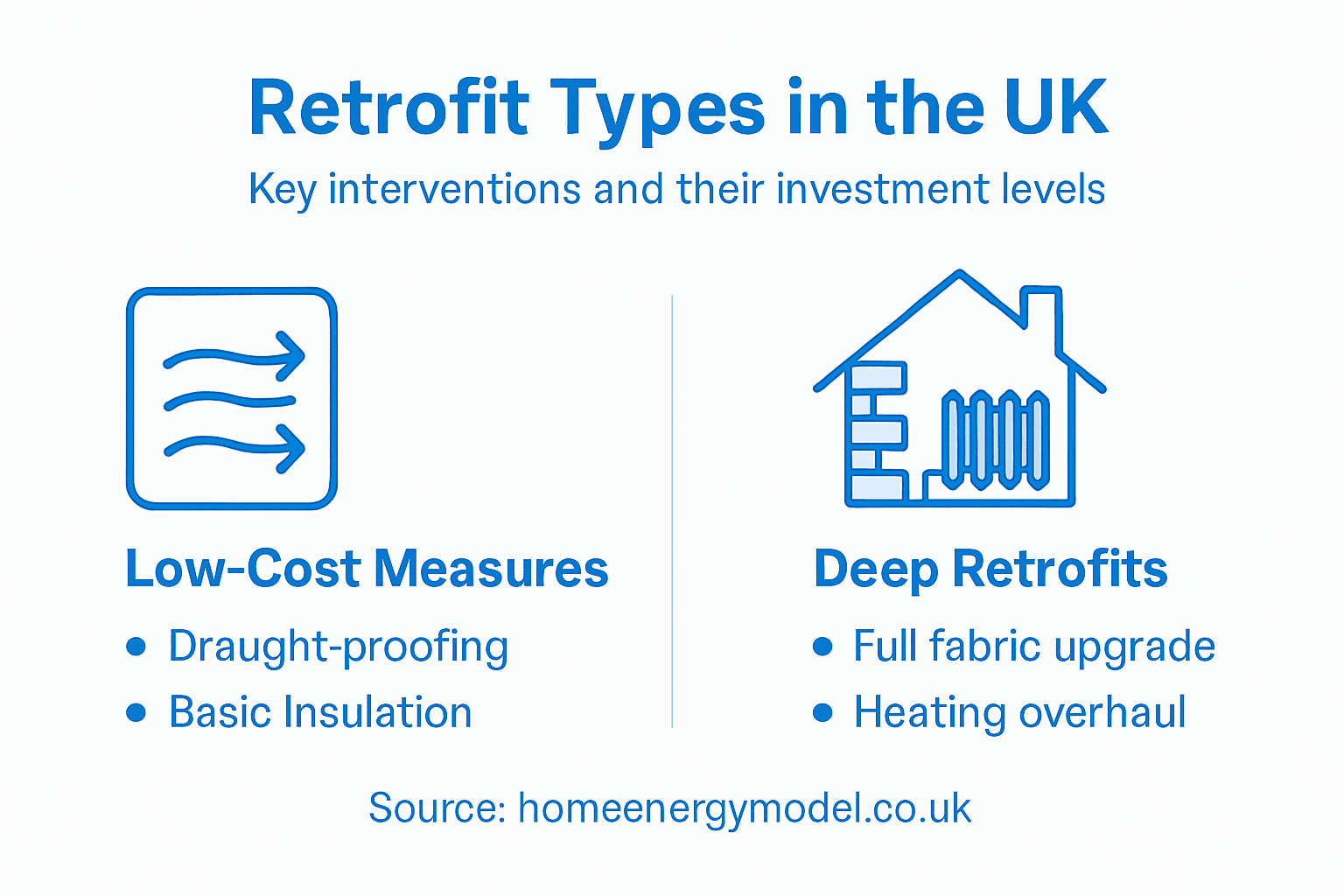
Deep retrofit represents the most comprehensive approach, involving holistic building fabric upgrades, complete heating system replacements, and renewable energy integrations. These extensive interventions often include installing air source heat pumps, implementing solar panel systems, and conducting whole-house fabric improvements. While demanding substantial investment, deep retrofits can dramatically transform a property’s energy efficiency, potentially achieving near-zero carbon emissions and substantially increasing property value.
Pro Tip: Prioritise a professional energy assessment to identify the most cost-effective retrofit measures tailored specifically to your property’s unique characteristics and existing infrastructure.
Below is a summary of retrofit measure types, highlighting key features and suitable property situations:
| Retrofit Type | Typical Interventions | Investment Level | Best Suited For |
|---|---|---|---|
| Low-cost | Draught-proofing, basic insulation | Minimal | Older homes, quick improvements |
| Moderate upgrade | Wall insulation, new windows | Moderate | Properties needing major upgrades |
| Deep retrofit | Whole fabric, renewable systems | Significant | Transformational renovations |
How Retrofit Works Under UK Regulations
Navigating the complex landscape of UK retrofit regulations requires landlords to understand a comprehensive framework of standards and legal requirements designed to improve building energy performance. UK retrofit regulatory frameworks primarily revolve around key standards such as PAS 2035 and the Building Safety Act, which establish rigorous guidelines for design, installation, and post-installation assessment. These regulations aim to ensure energy efficiency, safety, and sustainable property improvements while protecting both landlords and tenants.

The regulatory process typically involves several critical stages. Initial property assessments are mandatory, requiring detailed evaluations of existing building fabric, heating systems, and potential energy efficiency improvements. Landlords must work with certified assessors who can provide comprehensive reports identifying specific retrofit opportunities. These assessments must consider not just immediate energy savings, but also long-term performance, potential occupant impacts, and compliance with evolving energy performance standards.
Compliance with UK retrofit regulations is increasingly stringent, with specific targets driving property improvements. Social housing landlords, for instance, are currently required to achieve an Energy Performance Certificate (EPC) rating of band C by 2030, necessitating strategic and systematic retrofit approaches. The regulatory landscape continues to evolve, reflecting the UK’s broader commitment to reducing carbon emissions and transitioning towards more sustainable housing infrastructure. Landlords must stay informed about changing requirements, potential financial incentives, and emerging technologies that can help meet these increasingly ambitious energy efficiency goals.
Pro Tip: Engage a professional retrofit coordinator accredited under PAS 2035 to ensure your property improvements meet the latest regulatory standards and maximise potential energy efficiency benefits.
Home Energy Model and Retrofit Obligations
The Home Energy Model represents a sophisticated framework for assessing and improving property energy performance, establishing clear retrofit obligations for UK landlords. Home energy performance assessments fundamentally evaluate a property’s energy efficiency through comprehensive metrics like heat loss, energy demand, and carbon emissions. This model serves as a critical mechanism for determining the specific retrofit measures required to meet increasingly stringent national energy standards and climate action targets.
Under the Home Energy Model, landlords face specific obligations tied to Energy Performance Certificate (EPC) ratings. The primary goal is to achieve a minimum EPC rating of band C by 2030, which necessitates strategic property improvements focusing on insulation, heating systems, and ventilation efficiency. These obligations are not merely bureaucratic requirements but represent a systematic approach to reducing carbon footprints, minimising energy costs, and enhancing overall building performance. Different property types and tenures may have varying specific requirements, but the overarching objective remains consistent: transforming the UK’s housing stock to be more environmentally sustainable.
The regulatory landscape surrounding the Home Energy Model continues to evolve, with government schemes like the Energy Company Obligation (ECO) providing additional mechanisms to support and incentivise retrofit activities. Landlords must navigate these complex requirements by understanding not just the immediate compliance needs, but also the long-term benefits of energy efficiency improvements. These benefits extend beyond regulatory compliance, potentially increasing property values, reducing maintenance costs, and improving tenant comfort and wellbeing.
Pro Tip: Conduct a comprehensive energy assessment annually to stay ahead of changing retrofit obligations and identify incremental improvements that can boost your property’s energy performance.
Costs, Funding and Financial Implications
Retrofit investments represent a complex financial landscape for UK landlords, characterised by significant upfront costs and long-term potential benefits. Retrofit funding challenges demonstrate that while the initial investment can be substantial, strategic planning can mitigate financial risks and unlock multiple economic advantages. The cost spectrum ranges from relatively modest interventions like draught-proofing and insulation to comprehensive whole-house retrofits potentially exceeding £50,000 for complex property transformations.
Government funding mechanisms play a crucial role in supporting landlords’ retrofit ambitions. Initiatives such as the Social Housing Decarbonisation Fund and various green grants provide targeted financial support, though navigating these opportunities requires careful research and strategic planning. Private landlords must also consider alternative financing routes, including specialised green finance products, energy efficiency loans, and potential tax incentives that can offset initial investment costs. The financial calculus extends beyond immediate expenditure, encompassing potential increases in property value, reduced maintenance expenses, and enhanced rental attractiveness.
The following table outlines key funding sources and their main benefits for landlords considering retrofit projects:
| Funding Source | Main Benefit | Typical Eligibility |
|---|---|---|
| Social Housing Decarbonisation Fund | Reduces upfront cost | Social landlords |
| Green finance products | Flexible financing options | Private landlords with good credit |
| Energy efficiency loans | Spreads costs over time | Landlords investing in retrofits |
| Government grants | Direct support for compliance | Properties meeting criteria |
Critical financial considerations extend beyond simple cost calculations. Research indicates that many landlords remain hesitant due to complex financing structures and uncertain returns. The economic model for retrofit must account for multiple variables: energy cost savings, potential rental premium for more efficient properties, reduced maintenance requirements, and alignment with evolving regulatory standards. Landlords who approach retrofit as a strategic investment rather than a pure compliance exercise are more likely to achieve meaningful financial and environmental outcomes.
Pro Tip: Develop a comprehensive financial model that includes not just retrofit costs, but projected energy savings, potential property value increase, and anticipated regulatory compliance expenses to make a holistic investment decision.
Risks, Common Pitfalls and Compliance Issues
Retrofit projects present a complex landscape of potential risks that UK landlords must carefully navigate to ensure successful property improvements. Retrofit implementation risks encompass technical, structural, and regulatory challenges that can significantly impact property performance and tenant wellbeing. The most critical risks include moisture accumulation, inadequate ventilation, and unintended structural consequences that can arise from poorly planned interventions.
Compliance represents another critical dimension of retrofit risk management. Landlords must meticulously adhere to standards such as PAS 2035, which provides a comprehensive framework for retrofit design and implementation. Common pitfalls include rushing projects without comprehensive building assessments, neglecting building-specific characteristics, and failing to consider the interconnected nature of building systems. Non-compliance can lead to maladaptation, potentially causing more harm than good by compromising building integrity, reducing energy efficiency, and exposing landlords to potential legal and financial repercussions.
Technical competence and communication emerge as crucial factors in mitigating retrofit risks. Many challenges stem from inadequate skills, poor installation practices, and insufficient understanding of whole-house retrofit approaches. Landlords must prioritise working with certified professionals who understand the nuanced requirements of different property types. This includes thorough initial assessments, careful planning, and ongoing monitoring to ensure that retrofit interventions deliver intended energy performance improvements while maintaining occupant comfort and building structural integrity.
Pro Tip: Engage a qualified retrofit coordinator accredited under PAS 2035 to conduct a comprehensive pre-retrofit assessment and develop a tailored implementation strategy that addresses your specific property’s unique characteristics and potential risks.
Understand Retrofit Challenges and Empower Your Property Upgrades Today
UK landlords face increasing pressures to meet stringent energy efficiency standards with retrofit projects that can be complex and demanding. The article highlights key challenges such as regulatory compliance, accurate building assessments, and the need for tailored solutions rather than generic fixes. These pain points echo the uncertainty and risk many landlords feel when navigating retrofit obligations, EPC improvements, and long-term property value enhancement.
At homeenergymodel.co.uk, we provide a clear and trusted guide to the upcoming Home Energy Model (HEM), the new government methodology replacing SAP in 2025. Understanding HEM is critical for landlords aiming to stay ahead of regulations and unlock practical retrofit pathways tailored to individual properties. Our platform offers essential insights on energy performance assessments, how retrofit fits into the evolving regulatory landscape, and guidance on meeting EPC targets efficiently.
Take control of your retrofit journey with confidence. Discover how to align your property improvements with future standards and reduce compliance risks by visiting homeenergymodel.co.uk. Start exploring now to access expert advice, updates on government initiatives, and resources to support every stage of your retrofit investment.
Frequently Asked Questions
What is retrofit in the context of building management?
Retrofit involves upgrading existing buildings to improve energy performance and sustainability by modifying structures to meet contemporary energy standards and reduce carbon emissions.
What are the types of retrofit measures available for improving energy efficiency?
Retrofit measures can be categorised into low-cost interventions like draught-proofing, moderate upgrades such as wall insulation, and comprehensive deep retrofits that include whole fabric upgrades and renewable energy integrations.
How do UK regulations affect retrofit projects for landlords?
UK regulations, such as PAS 2035 and the Building Safety Act, establish guidelines for design, installation, and evaluation of retrofit measures, ensuring compliance with energy efficiency goals while safeguarding landlord and tenant interests.
What financial support is available for landlords considering retrofit projects?
Various funding sources, such as the Social Housing Decarbonisation Fund, government grants, and green finance products, are available to help landlords offset the costs of retrofit projects and promote energy-efficient improvements.