
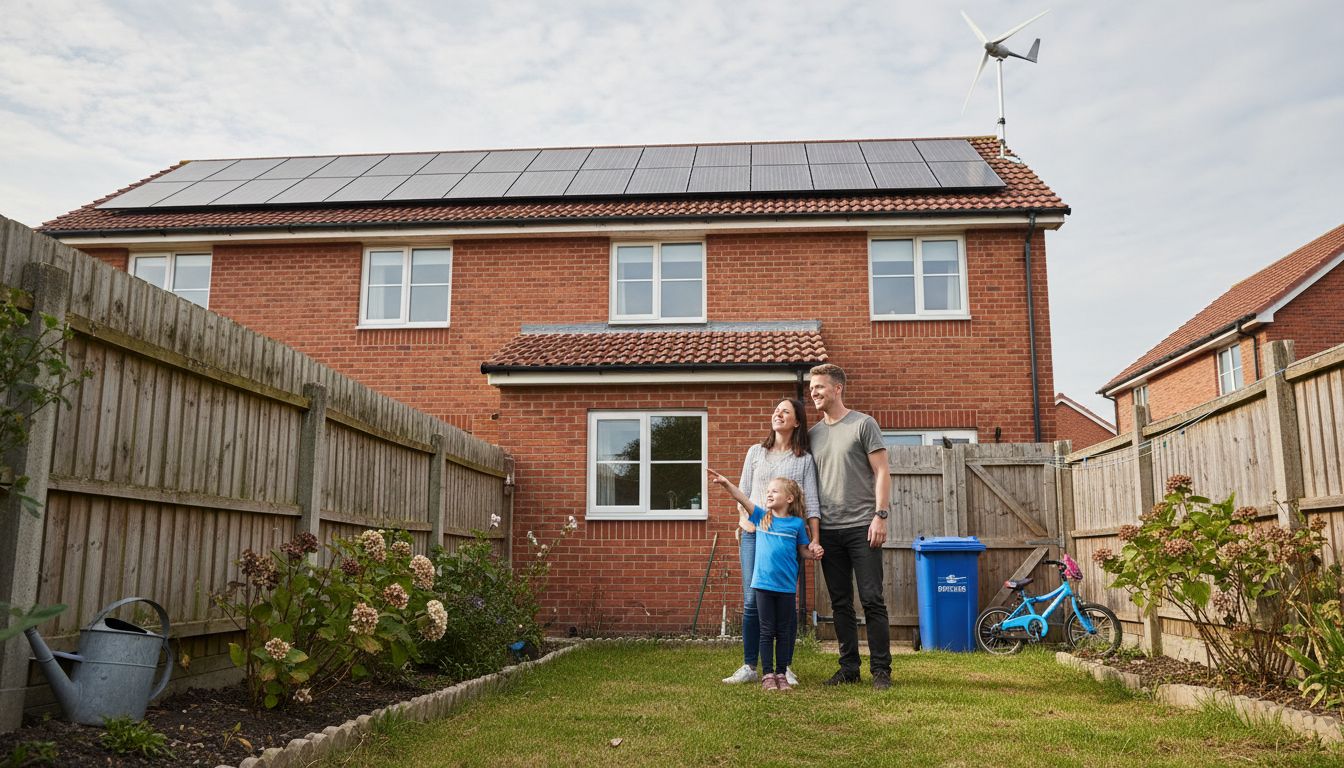
More than half of British homeowners are seeking ways to cut energy costs and reduce their carbon footprint, yet the path to installing home renewables can seem complex. Understanding each stage from property assessment to compliance is essential for making smart investments in solar, wind, or energy storage. This guide provides practical knowledge to help British residents evaluate options, plan installations, and ensure long term performance for future-ready, sustainable living.
Table of Contents
- Stage 1: Evaluate Property Suitability For Renewables
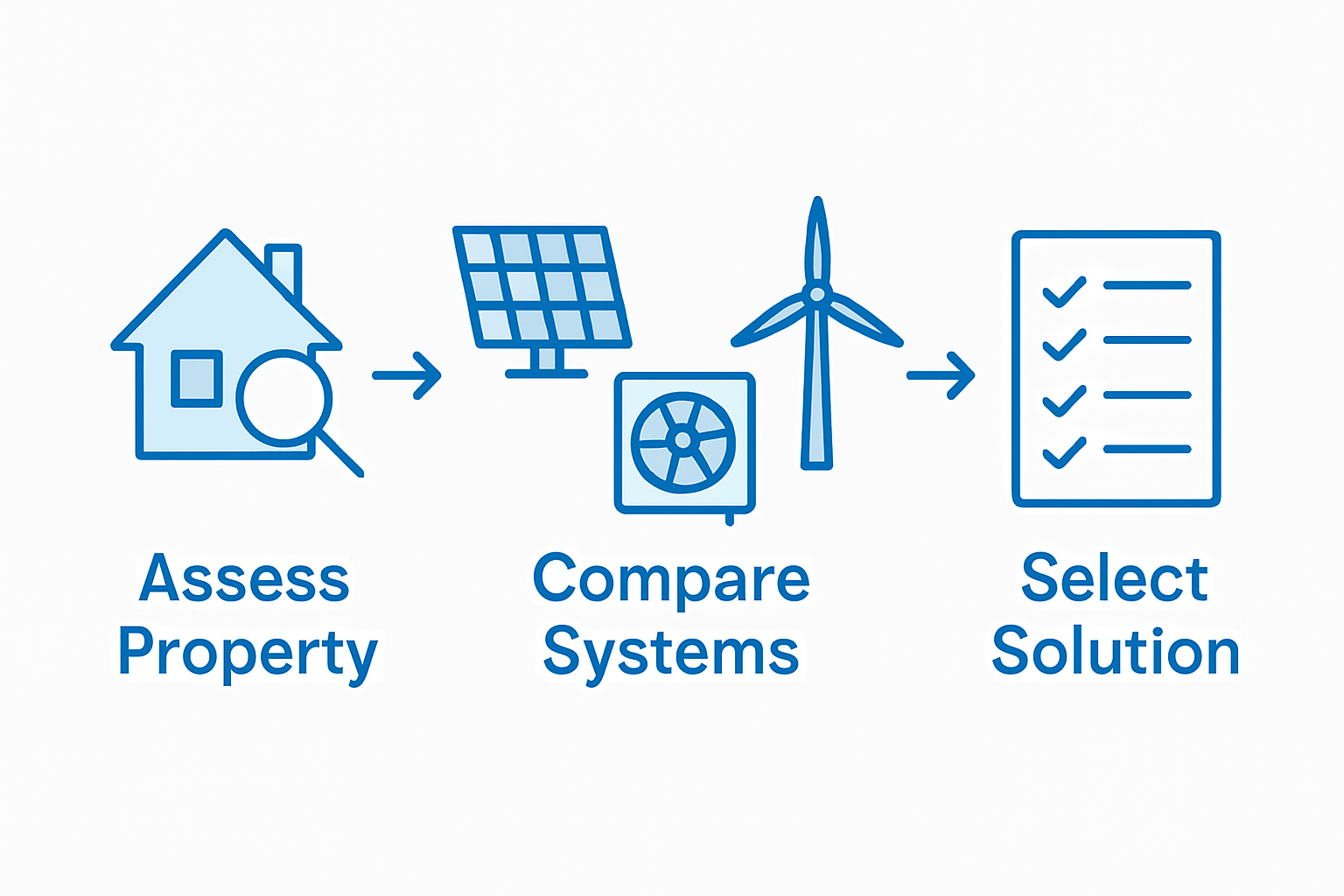
- Stage 2: Plan And Select Renewable Energy Systems
- Stage 3: Install Renewable Technologies Safely
- Stage 4: Integrate Energy Storage And Smart Controls
- Stage 5: Verify Performance And Achieve Compliance
Quick Summary
| Key Insight | Explanation |
|---|---|
| 1. Assess Property Suitability | Evaluate factors like roof orientation and space for renewable technology before proceeding. |
| 2. Select Appropriate Systems | Match renewable energy systems like solar or heat pumps to your property’s specific energy needs. |
| 3. Ensure Safe Installations | Professional installation is crucial to adhere to safety regulations and ensure system efficiency. |
| 4. Integrate Smart Energy Solutions | Use energy storage and smart controls to optimise performance and reduce grid reliance. |
| 5. Verify Performance Compliance | Conduct regular assessments to confirm your systems meet efficiency standards and promote improvements. |
Stage 1: Evaluate Property Suitability for Renewables
Assessing your property’s potential for renewable energy installations requires strategic analysis of several key factors that determine feasibility and potential return on investment. This evaluation process helps homeowners understand whether their specific property can effectively support solar, wind, or other renewable technologies.
Property characteristics play a critical role in determining renewable energy suitability. Spatial analysis of energy efficiency factors demonstrates significant variations across property types, with roof orientation, structural integrity, and geographic location emerging as primary considerations. Solar photovoltaic systems, for instance, require unobstructed southern facing roof spaces with minimal shade and optimal angle for maximum solar capture. Wind turbine installations demand open spaces with consistent wind patterns and minimal surrounding structural interference.
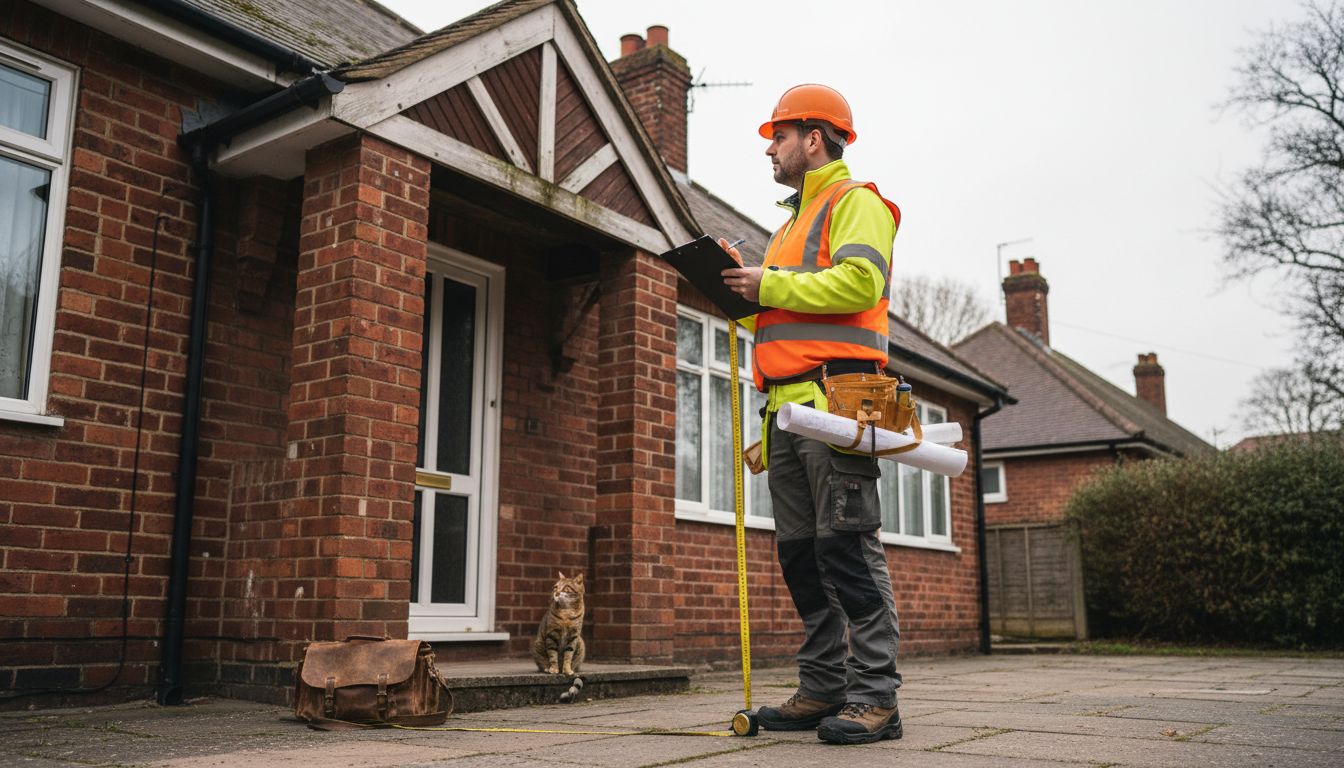
Digital surface modelling techniques provide sophisticated methods for precise property assessment. Advanced methodologies utilising digital surface models can comprehensively evaluate roof spaces and potential renewable energy generation capabilities by mapping precise architectural characteristics. Homeowners should consider professional energy assessments that include detailed thermal imaging, structural analysis, and microclimate evaluations to determine the most appropriate renewable technology for their specific property configuration.
Key evaluation criteria include roof pitch, material composition, structural load capacity, local wind patterns, and potential energy generation potential. Consulting with certified renewable energy assessors can provide nuanced insights beyond basic property characteristics, helping you make informed decisions about potential installations.
Stage 2: Plan and Select Renewable Energy Systems
Planning and selecting the most appropriate renewable energy systems requires a comprehensive understanding of your property’s specific energy needs, environmental conditions, and potential technological solutions. This critical stage transforms your net zero ambitions from conceptual goals into practical implementation strategies.
Comprehensive energy systems analysis reveals multiple factors influencing renewable technology selection, with property characteristics, local climate, and financial considerations forming the primary decision matrix. Solar photovoltaic panels, air source heat pumps, and biomass systems each present unique advantages depending on your specific property configuration. Ground source heat pumps work exceptionally well for properties with sufficient land area, while solar installations demand optimal roof orientation and minimal shading.
UK housing retrofit policies highlight the importance of strategic technology selection for emissions reduction, emphasising that renewable energy systems must be carefully matched to individual property requirements. Professional energy assessors can provide detailed modelling of potential system performance, calculating expected energy generation, efficiency rates, and potential carbon savings. Homeowners should consider not only initial installation costs but also long term maintenance requirements, potential government incentives, and projected energy savings when making their final technology selections.
A strategic approach involves comparing multiple renewable technologies, understanding their specific performance characteristics, and aligning them with your property’s unique energy profile. Consulting with certified renewable energy specialists can provide nuanced insights beyond basic technical specifications, ensuring you select the most appropriate and cost effective solutions for achieving your net zero objectives.
Stage 3: Install Renewable Technologies Safely
Successfully installing renewable energy technologies requires meticulous planning, professional expertise, and strict adherence to safety regulations. This critical stage transforms your renewable energy strategy from theoretical design into practical implementation while ensuring comprehensive protection for your property and its occupants.
UK government regulations provide comprehensive frameworks for safe renewable technology installation, emphasising stringent safety standards and professional compliance protocols. Professional installation involves multiple critical steps including comprehensive site assessment, electrical system compatibility evaluation, structural load analysis, and precise technical implementation. Electrical solar panel installations, heat pump systems, and wind turbine technologies each demand specialised knowledge and certified professional expertise to guarantee safe and efficient deployment.
Local planning authorities play a significant role in regulating renewable technology installations through specific energy efficiency requirements, ensuring that every renewable energy system meets strict technical and safety standards. Homeowners must collaborate with certified renewable energy installers who possess appropriate accreditations, such as Microgeneration Certification Scheme membership, which guarantees adherence to national safety and performance standards. This approach minimises potential risks associated with electrical integration, structural modifications, and system performance.
Professional installation encompasses comprehensive safety checks, including electrical system compatibility, structural integrity assessment, and precise technical implementation. Prioritising certified professional expertise ensures your renewable energy technologies are installed safely, efficiently, and in full compliance with national regulatory requirements.
Stage 4: Integrate Energy Storage and Smart Controls
Integrating energy storage systems and smart controls represents a sophisticated approach to maximising renewable energy efficiency and reducing grid dependency. This critical stage transforms your renewable energy infrastructure into an intelligent, responsive network capable of optimising energy consumption and generation.
Advanced research demonstrates precise methodologies for optimising solar photovoltaic and battery storage systems, highlighting the critical role of intelligent energy management technologies. Smart control systems enable real time monitoring and automatic energy distribution, allowing homeowners to track energy production, storage capacity, and consumption patterns with unprecedented granularity. Lithium battery storage technologies paired with intelligent control interfaces can dramatically reduce reliance on national grid electricity, providing greater energy independence and potential cost savings.
Interdisciplinary research from UK energy centres emphasises the transformative potential of integrated energy storage solutions, underscoring the importance of selecting sophisticated control systems that can adapt to changing energy generation and consumption patterns. Modern smart control platforms offer comprehensive features including remote monitoring, predictive energy management, and automatic load balancing, enabling homeowners to maximise the efficiency of their renewable energy infrastructure.
Successful integration requires careful system design, professional installation, and ongoing performance monitoring. Selecting compatible technologies that communicate seamlessly and provide intuitive user interfaces will ensure your energy storage and smart control systems deliver optimal performance throughout their operational lifecycle.
Stage 5: Verify Performance and Achieve Compliance
Verifying the performance of your renewable energy systems and ensuring comprehensive regulatory compliance represents the final critical phase of your net zero transformation. This stage validates the effectiveness of your investments and confirms that your property meets the highest standards of energy efficiency and environmental responsibility.
The Department for Energy Security and Net Zero plays a pivotal role in establishing and enforcing national performance standards, providing comprehensive frameworks for assessing renewable energy system efficacy. Performance verification involves detailed technical assessments including energy generation measurements, system efficiency calculations, and comprehensive compliance documentation. Professional energy assessors will conduct thorough evaluations using sophisticated monitoring equipment to track actual energy production, consumption patterns, and overall system performance against predicted benchmarks.
Dedicated research initiatives have consistently emphasised the importance of rigorous performance verification in renewable energy technologies, highlighting the critical need for ongoing monitoring and assessment. Homeowners should anticipate comprehensive documentation processes, including detailed performance reports, certification documentation, and potential recommendations for system optimisation. These assessments not only validate your renewable energy investments but also provide crucial insights into potential future improvements and efficiency enhancements.
Successful compliance verification involves maintaining meticulous records, engaging professional assessment services, and demonstrating a commitment to continuous improvement in your property’s energy performance. By prioritising thorough performance evaluation, you transform your renewable energy installation from a theoretical concept into a measurable, verified contribution to sustainable energy infrastructure.
Maximise Your Home’s Renewable Energy Potential with Expert Guidance
Transitioning to net zero at home comes with many challenges such as accurately assessing your property’s suitability for solar panels or heat pumps, selecting the right renewable technology, and ensuring compliance with ever-evolving UK government standards. The article highlights critical concepts like roof pitch, structural integrity, and energy system performance verification that every homeowner must consider to avoid costly mistakes and achieve lasting energy savings.
Do not let uncertainty slow your net zero journey. Our website at homeenergymodel.co.uk is designed to support you by explaining the upcoming Home Energy Model, a revolutionary government methodology replacing SAP in 2025. This tool will empower you to track and improve your property’s energy performance with confidence. Learn how to interpret Energy Performance Certificates and navigate regulations with expert-backed advice. For tailored strategies or to obtain quotes for your property’s detailed energy assessment visit https://homeenergymodel.co.uk.
Start your journey today by exploring how the Home Energy Model can help you plan, install, and verify renewable energy systems with precision. Act now to ensure your home complies with future standards and unlock government incentives before they change. Visit homeenergymodel.co.uk to take the next critical step towards a sustainable and energy-efficient future.
Frequently Asked Questions
How can I evaluate my property’s suitability for renewable energy installations?
To evaluate your property’s suitability for renewable energy, assess factors such as roof orientation, structural integrity, and local climate conditions. Conduct a professional energy assessment to analyse your specific characteristics and determine the best renewable technologies that can be installed on your property.
What are the key factors to consider when selecting renewable energy systems for my home?
Key factors in selecting renewable energy systems include your property’s energy needs, available space, and environmental conditions. Compare different technologies such as solar panels, heat pumps, and wind turbines, considering their advantages based on your unique circumstances to make an informed decision.
What steps are involved in the installation of renewable energy technologies?
The installation of renewable energy technologies involves several steps, including site assessments, structural load evaluations, and ensuring compliance with safety regulations. Engage certified professionals for the installation process to ensure your renewable energy systems are set up safely and efficiently.
How can I integrate energy storage and smart controls with my renewable energy systems?
Integrate energy storage systems and smart controls by selecting compatible technologies that allow real-time monitoring and automatic energy management. This setup maximises your renewable energy efficiency and reduces reliance on the grid, providing greater energy independence and potential cost savings.
How do I verify the performance of my renewable energy systems?
To verify the performance of your renewable energy systems, conduct thorough technical assessments that measure energy generation and system efficiency. Maintain detailed records and engage professional assessors to ensure compliance and validate that your systems meet expected performance standards.