
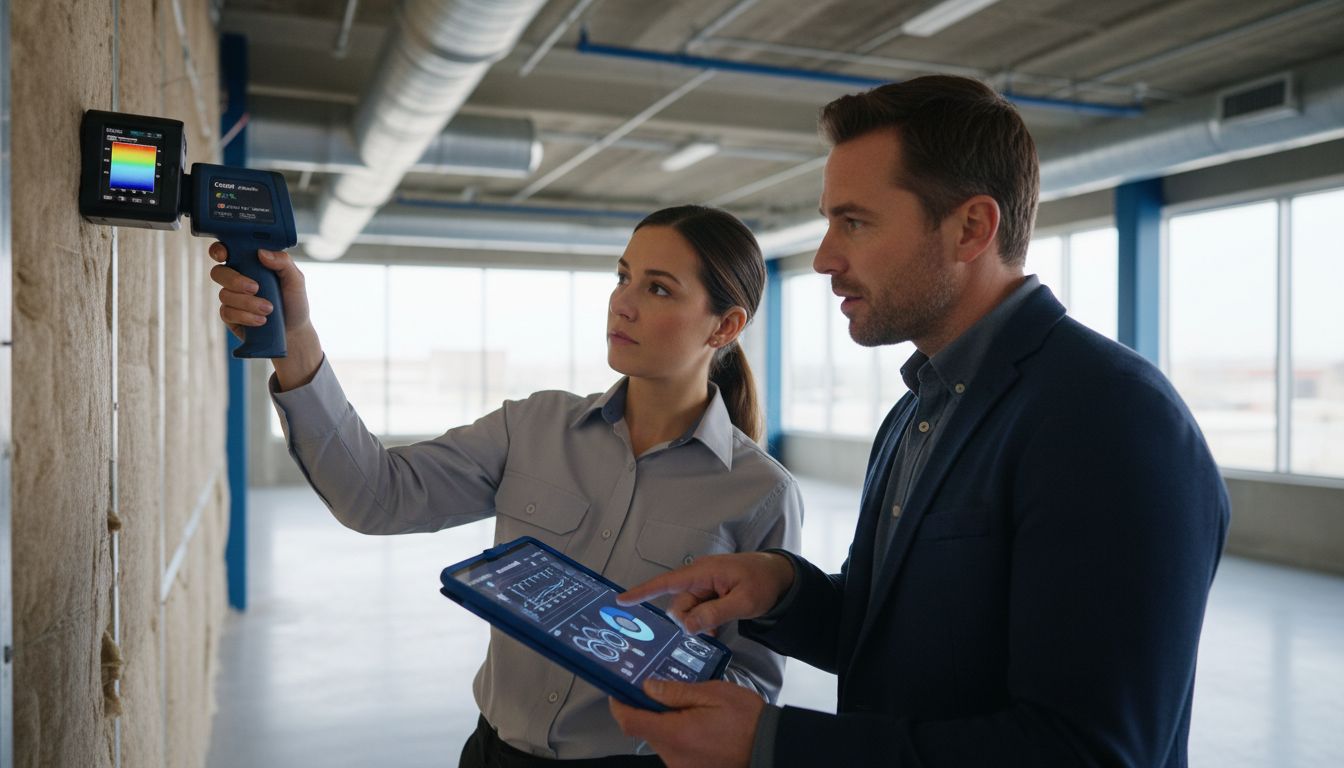
More than 60 percent of british buildings struggle to meet modern energy standards. For property owners and managers, improving energy efficiency is not just about cutting costs but also complying with ongoing regulations and protecting long term investments. Understanding each step in the process can make the difference between wasted resources and real savings. This guide breaks down exactly how to assess, upgrade, and maintain the energy performance of any building to meet current british requirements.
Table of Contents
- Step 1: Assess Current Energy Performance And Gather Data
- Step 2: Identify Required Upgrades And Efficient Solutions
- Step 3: Implement Recommended Energy Improvements
- Step 4: Verify Upgrades And Review Energy Performance
- Step 5: Maintain Ongoing Compliance With Regulations
Quick Summary
| Key Point | Explanation |
|---|---|
| 1. Conduct a thorough energy assessment | Gather comprehensive data on your building’s current energy performance for informed improvements and potential savings. |
| 2. Prioritise cost-effective upgrades | Focus on energy upgrades that yield the best return on investment based on your property’s unique characteristics. |
| 3. Implement upgrades methodically | Follow a structured approach using qualified professionals to ensure effective energy improvements and minimal disruption. |
| 4. Verify performance post-upgrades | Systematically assess the effectiveness of upgrades by comparing energy usage data before and after implementation. |
| 5. Maintain compliance with regulations | Regularly review energy performance certifications and stay updated on evolving regulatory requirements to avoid penalties. |
Step 1: Assess Current Energy Performance and Gather Data
To kickstart your journey towards improved building efficiency, you need a comprehensive understanding of your property’s current energy performance. This initial assessment will serve as the foundation for targeted improvements and potential cost savings.
Begin by collecting detailed data about your building’s characteristics. Historic England recommends conducting a thorough Building Performance Evaluation (BPE) which involves systematically documenting key parameters such as insulation levels, heating systems, window quality, and overall structural integrity. You will want to gather specific measurements including:
- Thermal conductivity of walls and roof
- Current heating and cooling system efficiency
- Air leakage rates
- Window and door thermal performance
- Existing energy consumption patterns
Utilising professional energy assessment tools can help you obtain precise measurements. Consider engaging a certified energy assessor who can provide an accurate Energy Performance Certificate (EPC) and offer insights into potential upgrades. These professionals use specialized equipment to conduct precise thermal imaging, blower door tests, and comprehensive energy audits.
Warning: Do not rely solely on visual inspections. Accurate data collection requires scientific measurement techniques and professional equipment to truly understand your building’s energy performance.
Once you have gathered comprehensive data, you’ll be ready to move to the next stage of identifying specific energy efficiency opportunities for your property.
Step 2: Identify Required Upgrades and Efficient Solutions
Now that you have gathered comprehensive data about your building’s energy performance, it is time to translate those insights into actionable upgrade strategies. Understanding where to invest your resources can significantly improve your property’s energy efficiency and reduce long-term operational costs.
The UK Government recommends prioritizing upgrades based on their cost-effectiveness and potential impact. The key is to focus on improvements that offer the best return on investment through strategic energy upgrades. The Office for National Statistics highlights several critical areas for potential improvements:
- Enhancing wall and roof insulation
- Upgrading heating and cooling systems
- Implementing double or triple glazing
- Installing smart energy management systems
- Replacing older appliances with energy efficient models
When evaluating potential upgrades, create a prioritized list that considers both immediate impact and long-term benefits. Consider consulting with a professional energy assessor who can provide tailored recommendations specific to your property’s unique characteristics.
Warning: Not all upgrades are created equal. Some may seem attractive but could have minimal actual energy savings. Always seek professional advice and conduct a thorough cost-benefit analysis before making significant investments.
With a clear roadmap of required upgrades, you are now prepared to move forward with implementing your energy efficiency strategy.
Step 3: Implement Recommended Energy Improvements
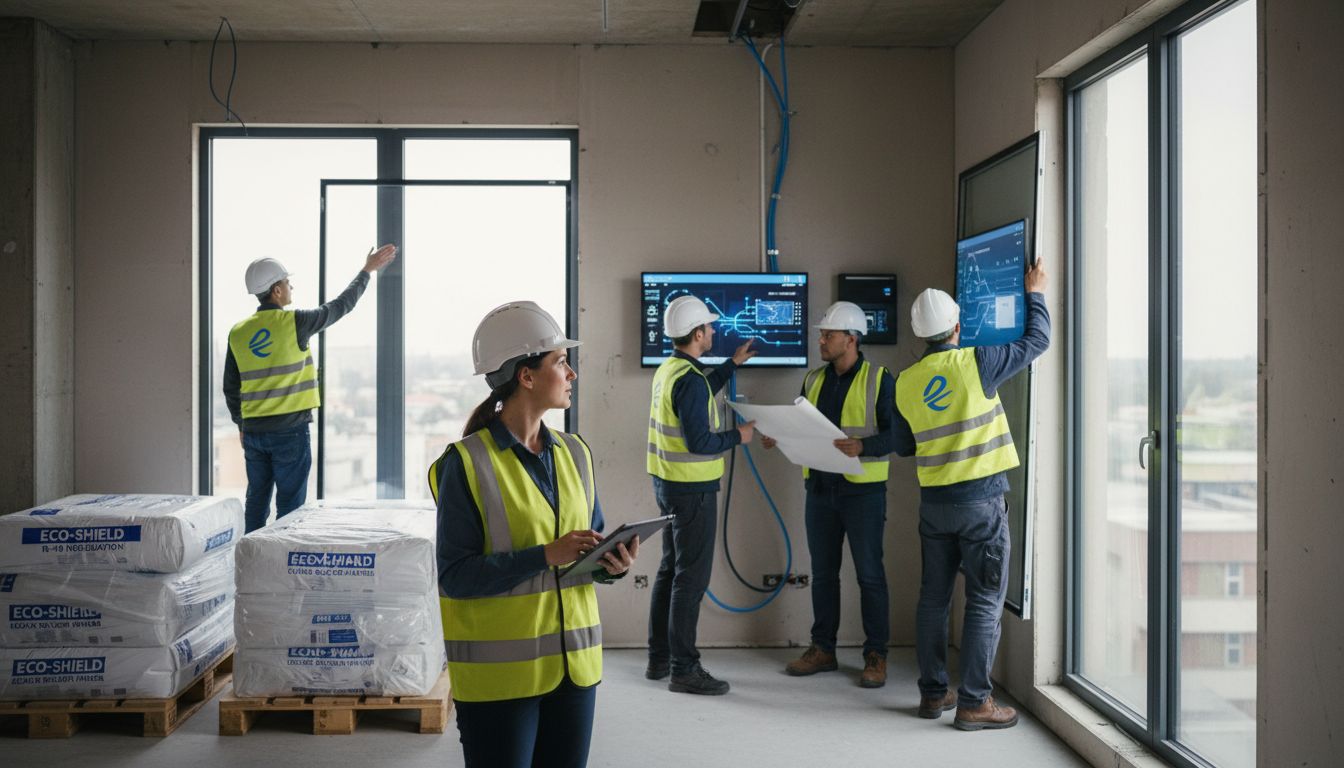
With your detailed assessment and prioritized upgrade list in hand, you are ready to transform your building’s energy performance through strategic implementation. This stage requires careful planning, precise execution, and a methodical approach to achieving maximum efficiency.
The Building Data Exchange provides critical insights into best practices for implementing energy improvements. When executing your upgrades, follow a structured approach that ensures comprehensive and effective implementation. The Building Energy Performance Assessment recommends utilizing specialized tools like the Standard Assessment Procedure (SAP) to validate and track your improvements.
Key implementation strategies include:
- Sequencing upgrades for minimal disruption
- Working with certified energy efficiency professionals
- Using high quality, verified energy efficient materials
- Ensuring proper installation techniques
- Conducting interim performance assessments
Prioritize improvements with the most significant impact on energy consumption. This might involve upgrading insulation, replacing windows, optimizing heating systems, or installing smart energy management technologies. Each upgrade should be carefully selected based on your initial performance assessment and potential return on investment.
Warning: Poor implementation can negate potential energy savings. Always hire qualified professionals and ensure rigorous quality control throughout the upgrade process.
Once your recommended improvements are complete, you will be ready to validate and monitor your building’s new energy performance levels.
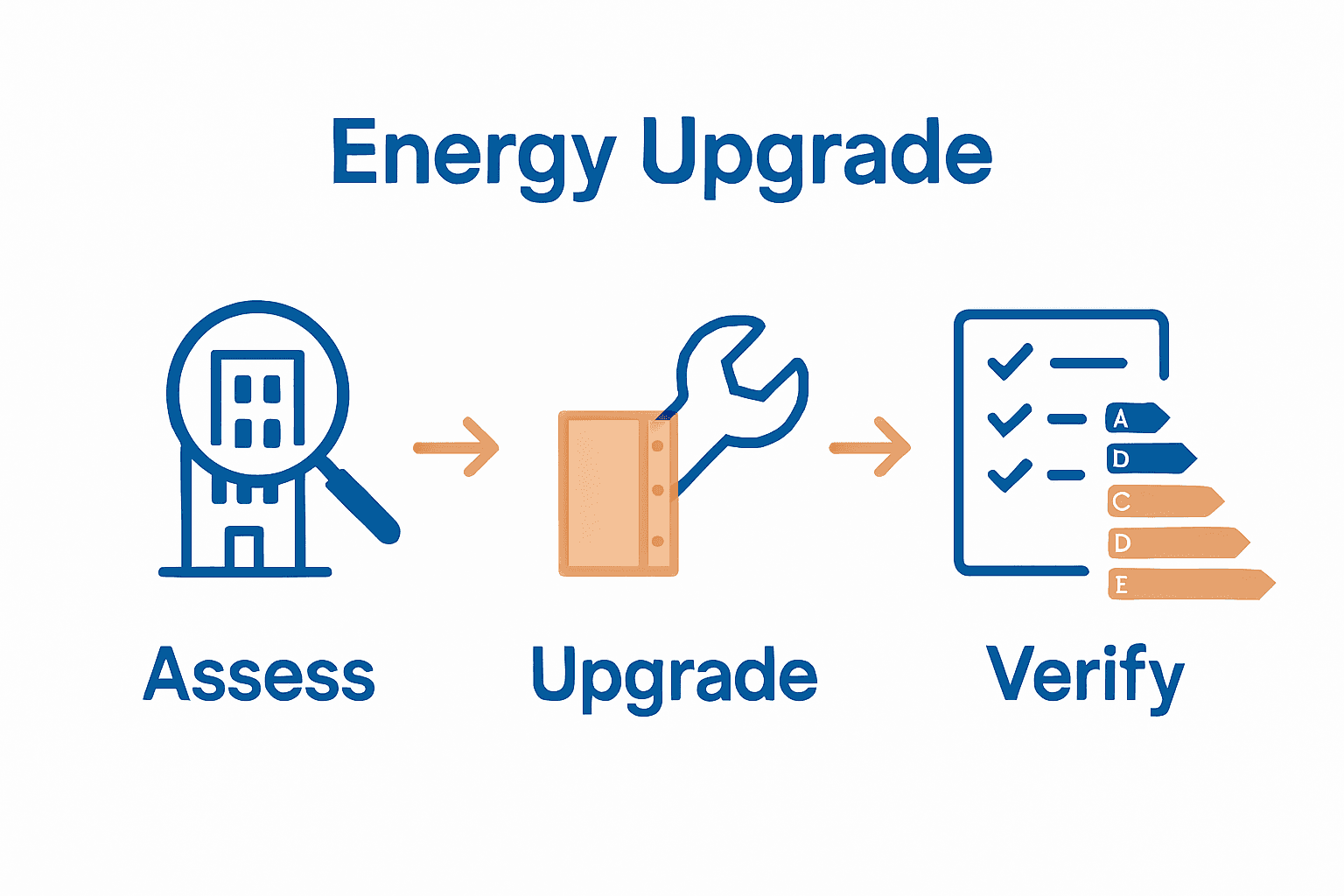
Step 4: Verify Upgrades and Review Energy Performance
After implementing your recommended energy improvements, the critical next phase is systematically verifying the effectiveness of these upgrades and comprehensively reviewing your building’s new energy performance. This evaluation will confirm the success of your investment and identify any additional opportunities for optimization.
The Energy Performance of Buildings Certificates Data Dashboard provides an essential framework for tracking and measuring your improvements. Utilize quarterly statistical data to objectively assess your building’s energy performance changes. Government statistical releases recommend several key verification strategies:
- Conduct a comprehensive post-upgrade energy audit
- Compare new energy consumption data with previous records
- Analyse changes in your Energy Performance Certificate (EPC) rating
- Review utility bills and energy usage patterns
- Engage a professional energy assessor for independent verification
Pay close attention to both quantitative measurements and qualitative improvements. Look for reductions in energy consumption, lower utility costs, and enhanced comfort levels within your property. Use detailed documentation and tracking tools to create a clear before and after performance snapshot.
Warning: Do not assume improvements have been successful without rigorous data verification. Measurement and continuous monitoring are crucial to validating your energy efficiency investments.
Once you have thoroughly verified your upgrades, you will be well positioned to maintain and further improve your building’s energy performance over time.
Step 5: Maintain Ongoing Compliance with Regulations
As energy efficiency regulations continue to evolve, maintaining compliance becomes a critical ongoing responsibility for property owners and managers. Your commitment to staying current with legal requirements will protect your investment and ensure your building meets the latest performance standards.
The UK Government Guide emphasizes the importance of regular Energy Performance Certificate (EPC) assessments and understanding current regulatory requirements. National Occupational Standards recommend implementing a proactive compliance strategy that includes:
- Scheduling regular energy performance inspections
- Tracking changes in national energy efficiency regulations
- Updating documentation and certification
- Maintaining comprehensive energy performance records
- Conducting periodic professional assessments
Establish a systematic approach to monitoring regulatory changes. Subscribe to government energy efficiency newsletters, participate in professional networks, and consider working with an energy compliance consultant who can provide timely updates and guidance.
Warning: Regulatory non-compliance can result in significant financial penalties and potential legal challenges. Stay informed and proactive to avoid unexpected complications.
By maintaining a consistent and informed approach to energy performance regulations, you will protect your property investment and contribute to broader national energy efficiency goals.
Take Control of Your Building’s Energy Future Today
Understanding your building’s current energy performance is essential for making cost-effective and impactful improvements. The article highlights common challenges such as precise energy assessments, choosing the right upgrades, and staying compliant with evolving regulations. These issues can feel overwhelming without the right guidance or tools.
At homeenergymodel.co.uk, we simplify this complex process by delivering clear insights about the upcoming Home Energy Model (HEM). The HEM will replace SAP in 2025 offering a more accurate and future-proof method for measuring energy efficiency in both residential and commercial properties. By exploring our resources you gain access to expert advice on EPCs, energy performance tracking, and strategies to meet the Future Homes Standard.
Start improving your building’s efficiency with confidence. Visit homeenergymodel.co.uk now to discover how the new Home Energy Model transforms your approach to energy assessment and compliance. Equip yourself with the knowledge that landlords, property investors and homeowners need to make smart, sustainable choices before the new regulations take effect.
Frequently Asked Questions
How do I assess my building’s current energy performance?
To assess your building’s current energy performance, gather data on insulation, heating systems, air leakage rates, and energy consumption. Conduct a thorough energy audit using professional tools to obtain accurate measurements, which will help identify areas for improvement.
What types of upgrades can improve my building’s energy efficiency?
Common upgrades that enhance energy efficiency include improving insulation, upgrading heating and cooling systems, installing double or triple glazing, and implementing smart energy management systems. Prioritise upgrades based on their cost-effectiveness to maximise your return on investment.
How can I verify if the energy improvements I made are effective?
You can verify the effectiveness of your energy improvements by conducting a post-upgrade energy audit, reviewing utility bills, and comparing energy consumption data before and after the upgrades. Regularly track your Energy Performance Certificate rating to monitor improvements over time.
What steps should I take to maintain compliance with energy efficiency regulations?
To maintain compliance, schedule regular energy performance inspections and stay updated on changes in energy regulations. Keep thorough records of your energy performance assessments and certifications to ensure your building meets current standards.
How can I create a roadmap for energy efficiency upgrades?
Start by conducting a comprehensive energy assessment to identify your building’s weaknesses. Then, create a prioritised list of upgrades based on potential impact and cost, ensuring you focus on improvements that provide the best return on investment.
Recommended
- Role of Energy Upgrades: Complete UK Property Guide – Home Energy Model
- Top Energy Saving Steps for UK Homes: A Complete Guide – Home Energy Model
- Energy Saving Tips 2025: Achieve Maximum Efficiency at Home – Home Energy Model
- 7 Key Energy Efficiency Benefits for UK Property Owners – Home Energy Model