
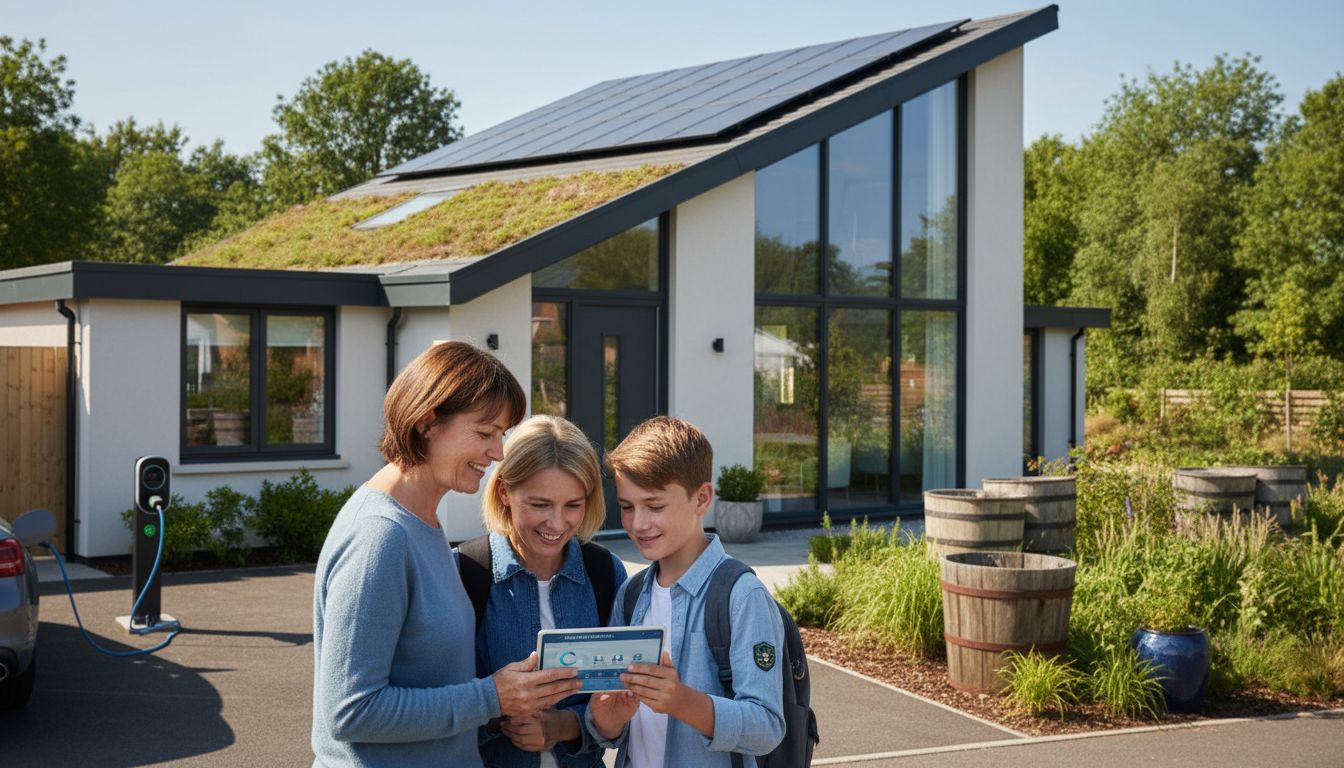
More than a quarter of the UK’s total carbon emissions come from residential buildings, making the way we design and power our homes a critical issue for everyone. As climate goals become stricter and energy costs climb, net zero homes stand out as a practical solution that offers both environmental and financial rewards. With new rules set to transform the housing market, understanding the core principles of net zero design could shape how you live, invest, and contribute to a cleaner future.
Table of Contents
- What Is A Net Zero Home? Core Principles
- Design Features Of Net Zero Homes UK
- Government Standards And 2025 Regulations
- Benefits For Homeowners And Investors
- Compliance Challenges And Common Pitfalls
Key Takeaways
| Point | Details |
|---|---|
| Net Zero Concept | A net zero home achieves carbon neutrality by balancing energy consumption with on-site renewable energy generation. |
| Design Features | Key design elements include high performance insulation, strategic orientation, and advanced window systems to minimize energy use. |
| Regulatory Landscape | By 2025, UK regulations will impose stricter energy efficiency standards, affecting both new constructions and existing properties. |
| Investment Benefits | Homeowners and investors can expect reduced energy costs, increased property value, and a positive environmental impact from net zero homes. |
What Is a Net Zero Home? Core Principles
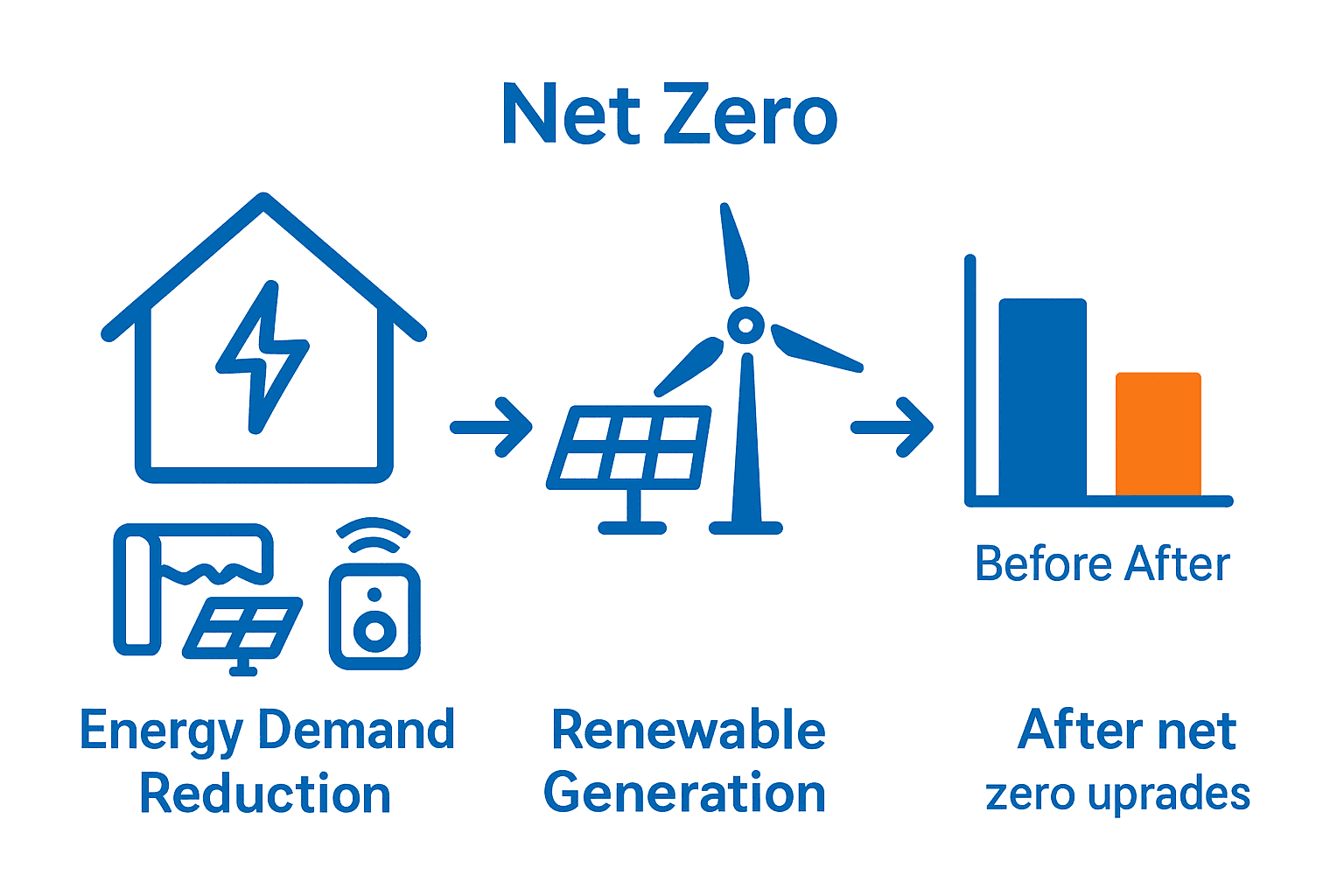
A net zero home represents an innovative approach to residential design that completely eliminates carbon emissions through strategic energy management. According to the fdean.gov.uk Net Zero Carbon Toolkit, these homes are built on three fundamental principles: maximising energy efficiency, implementing low carbon heating systems, and generating renewable energy on-site.
The core objective of a net zero home is to balance the total amount of energy consumed with an equivalent amount of renewable energy generated. This means the home produces zero carbon emissions over its operational lifecycle. As outlined by the goodhomes.org.uk Green Building Council framework, achieving this status requires a comprehensive approach:
- Reducing Energy Demand: Implementing advanced insulation techniques
- Efficient Energy Supply: Using high-performance heating and cooling systems
- Renewable Energy Generation: Installing solar panels, wind turbines, or other clean energy technologies
Practically speaking, a net zero home goes far beyond traditional energy-efficient buildings. These properties are meticulously designed to minimise energy consumption through superior building materials, intelligent architectural design, and cutting-edge technologies that dramatically reduce carbon footprint. The ultimate goal is creating a home that not only consumes minimal energy but actively contributes to environmental sustainability by generating its own clean, renewable power.
Design Features of Net Zero Homes UK
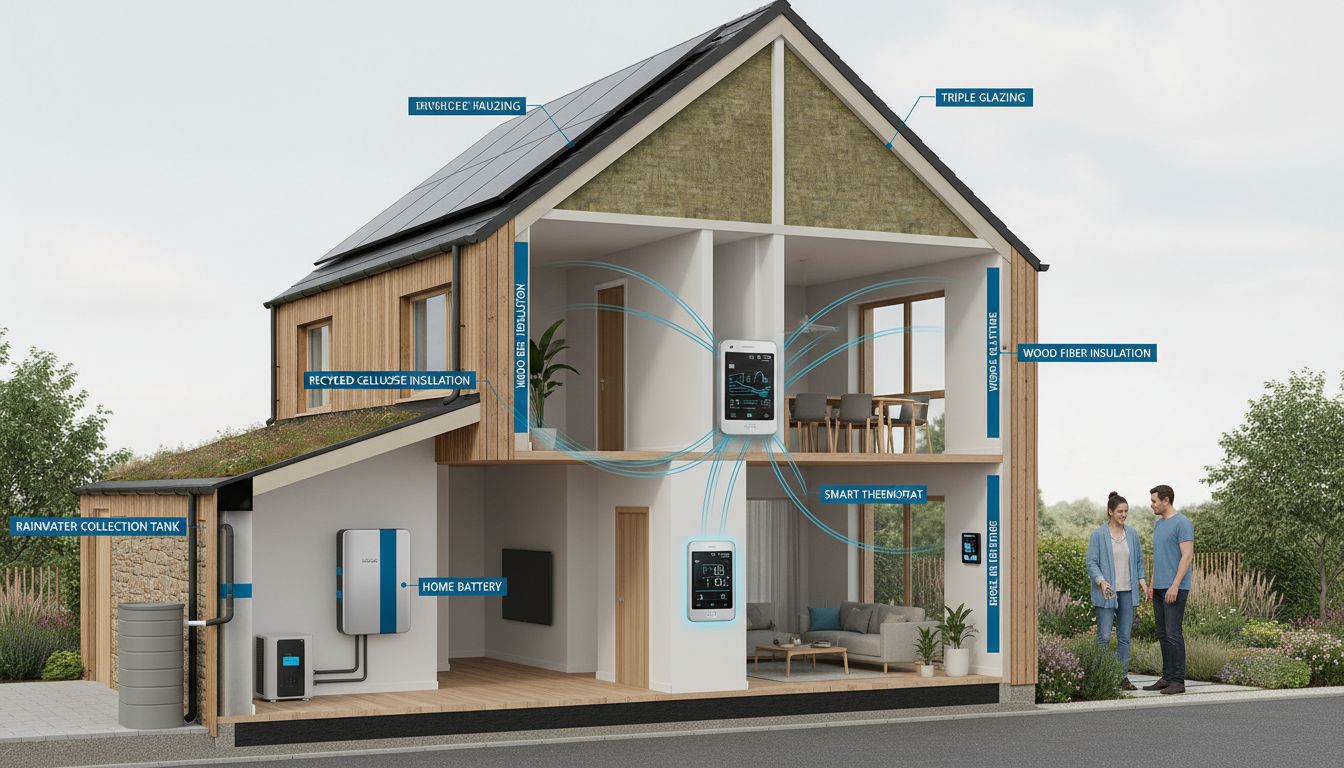
Net zero homes in the UK feature a sophisticated blend of innovative architectural design and cutting-edge sustainable technologies. As demonstrated by the en.wikipedia.org Oxford Ecohouse, these properties incorporate advanced design elements that dramatically reduce carbon emissions. Key architectural strategies include maximising passive solar design, creating high thermal mass structures, and integrating renewable energy generation systems.
The fundamental design features of UK net zero homes typically encompass several critical components:
- Thermal Envelope: Ultra-high performance insulation
- Orientation: Strategic building positioning to maximise natural light and solar gain
- Window Design: Triple-glazed, low-emission windows with exceptional heat retention
- Renewable Energy Integration: Roof-mounted solar panels and potential wind energy systems
Taking inspiration from innovative projects like en.wikipedia.org Earthship Brighton, sustainable material selection becomes another crucial design consideration. Architects and builders are increasingly using recycled and low-carbon materials such as reclaimed timber, recycled steel, and locally sourced building components. These materials not only reduce the embodied carbon of the construction process but also contribute to the home’s overall energy efficiency.
Beyond structural elements, net zero homes incorporate intelligent systems for energy management. Smart home technologies enable real-time monitoring and automatic optimization of energy consumption, ensuring that every kilowatt is used efficiently. By combining passive design principles, renewable energy generation, and advanced technological integration, these homes represent a holistic approach to sustainable living that goes far beyond traditional energy-efficient housing.
Government Standards and 2025 Regulations
The UK government is implementing ambitious regulatory frameworks to transform residential properties towards net zero carbon emissions. According to the commonslibrary.parliament.uk House of Commons Library, residential buildings represent a significant source of carbon emissions, prompting legally binding targets designed to dramatically improve energy efficiency across the housing sector.
Key regulatory milestones and standards for net zero homes include:
- Future Homes Standard: Mandating substantial carbon reduction in new constructions
- Building Regulations Part L: Introducing stricter energy efficiency requirements
- Minimum Energy Efficiency Standards (MEES): Establishing performance thresholds for existing properties
- Energy Performance Certificate (EPC) requirements: Enforcing minimum energy rating standards
The gov.uk Net Zero Research and Innovation Framework emphasizes the critical need for technological innovation to support decarbonization. This means future regulations will not just mandate standards but actively encourage breakthrough technologies and integrated solutions that can transform how UK homes generate, consume, and manage energy.
By 2025, homeowners can expect more comprehensive and stringent regulations that will fundamentally reshape the residential property landscape. These standards aim to not only reduce carbon emissions but also create more resilient, energy-efficient homes that deliver long-term environmental and economic benefits. The transition will require significant investment, collaboration between policymakers, builders, and homeowners, and a commitment to sustainable living practices.
Benefits for Homeowners and Investors
Net zero homes offer a compelling array of financial and environmental advantages for both homeowners and property investors. According to bristol.ac.uk, University of Bristol researchers highlight significant benefits including reduced energy bills, enhanced property comfort, and increased market value. These attributes make net zero properties an increasingly attractive investment opportunity.
Key benefits for homeowners encompass:
- Energy Cost Reduction: Dramatic decreases in monthly utility expenses
- Improved Living Comfort: Better temperature regulation and indoor air quality
- Property Value Appreciation: Higher resale potential compared to traditional homes
- Lower Carbon Footprint: Personal contribution to environmental sustainability
For investors, the net zero housing market presents remarkable opportunities. The imperial.ac.uk Grantham Institute emphasizes the economic potential of sustainable housing, noting that strategic investments in green properties can yield substantial long-term financial returns. This emerging market segment is poised for significant growth as government regulations and consumer preferences increasingly prioritize energy-efficient buildings.
Beyond immediate financial gains, net zero homes represent a forward-thinking investment in both personal and planetary well-being. Homeowners and investors who embrace these properties are not just purchasing real estate, but investing in a more sustainable future. With potential government incentives, reduced operational costs, and increasing market demand, net zero homes offer a compelling proposition that balances economic pragmatism with environmental responsibility.
Compliance Challenges and Common Pitfalls
Net zero home compliance represents a complex landscape of regulatory requirements and technical challenges. According to thebritishacademy.ac.uk, achieving low-carbon housing demands a systematic approach that addresses multiple stakeholder perspectives and navigates intricate policy implementation barriers.
Common compliance challenges for homeowners and developers include:
- Data Collection Complexity: Difficulty obtaining comprehensive energy consumption data
- Technical Knowledge Gaps: Limited understanding of advanced energy efficiency technologies
- High Initial Investment: Significant upfront costs for retrofitting or new construction
- Regulatory Uncertainty: Evolving standards and potential changes in building regulations
The arxiv.org NEBULA dataset research highlights a critical underlying issue: the profound challenge of obtaining detailed, geo-located building energy consumption data. This data deficit makes national energy planning and individual property compliance significantly more challenging, creating a complex environment for homeowners and investors seeking to meet net zero standards.
Navigating these challenges requires a proactive, informed approach. Successful net zero home implementation demands continuous education, strategic financial planning, and a willingness to adapt to emerging technologies and regulatory frameworks. Homeowners and developers must view compliance not as a burden, but as an opportunity to create more sustainable, efficient, and future-proof properties.
Take Control of Your Net Zero Home Journey Today
Navigating the complex requirements of a net zero home can feel overwhelming, especially with evolving standards like the Future Homes Standard and new methodologies such as the Home Energy Model. Key challenges such as understanding detailed energy performance assessments and meeting the stringent carbon reduction targets highlighted in the article can stall your progress. You deserve clear, practical guidance that helps you confidently meet these goals while maximising the long-term benefits of your sustainable investment.
Discover how homeenergymodel.co.uk equips UK homeowners, landlords and investors with essential insights and resources to master the upcoming energy performance changes. Learn about the Home Energy Model’s impact on Energy Performance Certificates (EPCs) and access expert advice on improving energy efficiency to comply with 2025 regulations. Don’t wait for the new rules to disrupt your plans – visit Home Energy Model now and start transforming your property into a truly net zero home that delivers comfort, savings, and compliance.
Benefit from up-to-date knowledge that makes meeting energy targets simpler and stay ahead in the evolving property market with what you need to know about EPCs and energy performance. Your sustainable future begins with informed action today.
Frequently Asked Questions
What is a net zero home?
A net zero home is a residential property designed to eliminate carbon emissions by balancing the total energy consumed with an equivalent amount of renewable energy generated on-site, aiming for zero carbon emissions over its operational lifecycle.
What are the core principles of net zero homes?
The core principles include maximizing energy efficiency, implementing low carbon heating systems, and generating renewable energy on-site. This involves reducing energy demand, using efficient energy supply methods, and integrating renewable energy technologies like solar panels.
What design features should I expect in a net zero home?
Key design features of net zero homes typically include ultra-high-performance insulation, strategic building orientation for maximizing natural light, triple-glazed low-emission windows, and renewable energy integration like roof-mounted solar panels.
What are the benefits of owning a net zero home?
Owning a net zero home offers benefits such as reduced energy bills, improved living comfort, increased property value, and a lower carbon footprint, contributing to environmental sustainability while providing financial advantages.