
The biggest savings come from a short list: cut standby and lighting waste, change how laundry and hot water are used, stop heat escaping, and then measure the result. Typical UK figures run from about £20 a year for switching lights off to £250 a year for solid wall insulation. The order matters. An Energy Performance Certificate (EPC), the rating that scores a property’s energy efficiency from A to G, shows which of these measures suit a particular building before any money is spent. Homeowners and landlords can request a domestic EPC assessment through Home Energy Model.
This guide covers ten measures, what each is worth, what uses the most power in a typical home, and how to tell whether the changes are working.
TL;DR
- Appliances are the largest slice of a typical UK energy bill: washing machines, dishwashers and tumble dryers alone account for about 14%.
- Habit changes such as switching off standby (around £55 a year) and washing at 30°C (around £28 a year) cost nothing to start.
- Insulation and draught-proofing have the highest yearly savings: loft insulation around £155, cavity walls around £185, solid walls around £250.
- An EPC ranks improvements for a specific property, so spending goes where it saves most.
- Compare bills and meter readings before and after each change to see what actually worked.
Table of Contents
- What uses the most electricity in a typical home
- 10 ways to save electricity and energy at home
- Which measures to do first
- A note for landlords and property investors
- A note for commercial properties
- Our perspective
- Request an EPC assessment
- FAQ
- Sources
What uses the most electricity in a typical home
Before picking measures, it helps to know where the energy goes. The Energy Saving Trust reports the following shares of a typical UK energy bill:
| Category | Share of a typical UK bill |
|---|---|
| Washing machines, dishwashers, tumble dryers | about 14% |
| Fridges and freezers | about 13% |
| Consumer electronics | about 6% |
| Lighting | about 5% |
| Kitchen appliances | about 4% |
Heating and hot water sit on top of this and are usually the largest costs of all in a UK home. That is why the list below mixes electricity-specific habits with heat-saving measures: for most households, the whole energy bill is the target, not only the electricity line.
10 ways to save electricity and energy at home
The yearly figures below come from Energy Saving Trust estimates as published by the Consumer Council, unless another source is named. They are typical savings. A household’s own result depends on its size, tariff and how it already uses energy.
1. Switch off standby
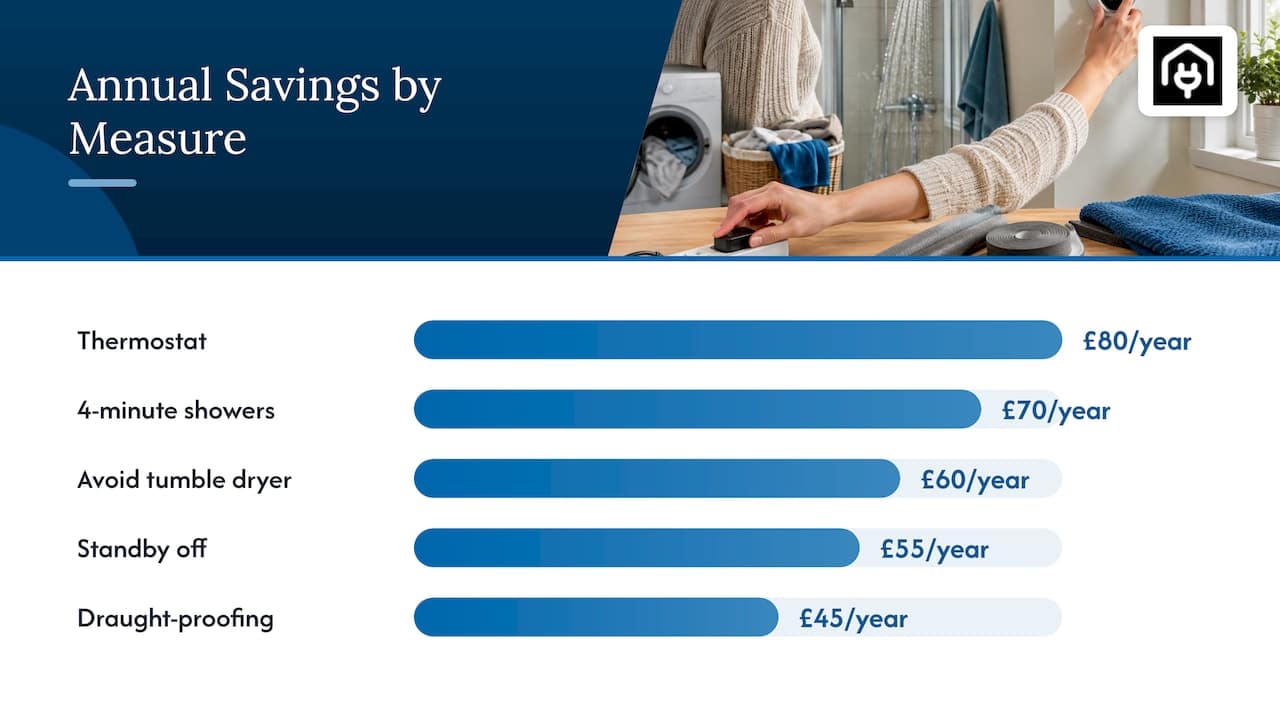
Televisions, games consoles, set-top boxes and chargers keep drawing power when they look switched off. The Consumer Council cites around £55 a year saved by switching off standby mode. A single multi-socket extension with a switch makes this a one-button habit for a whole media corner. Consumer electronics are about 6% of a typical bill, so this is where the waste hides.
2. Switch to LED bulbs and turn lights off
Switching to LED bulbs saves £4 to £13 per bulb per year, according to the same figures, and turning lights off when leaving a room is worth around £20 a year. Lighting is about 5% of a typical bill, so the saving per bulb is small but the cost of an LED is recovered quickly in a home with many fittings. Start with the lights used longest each day: the kitchen, living room and hallway.
3. Wash clothes at 30°C
A 30-degree wash is worth around £28 a year. A Which? report published by the Welsh Government puts the cut at 38% when laundry moves from 40°C to 30°C. Modern detergents are made to work at lower temperatures, so the change costs nothing. Run full loads: a half-empty drum uses nearly the same energy as a full one.
4. Rethink the tumble dryer
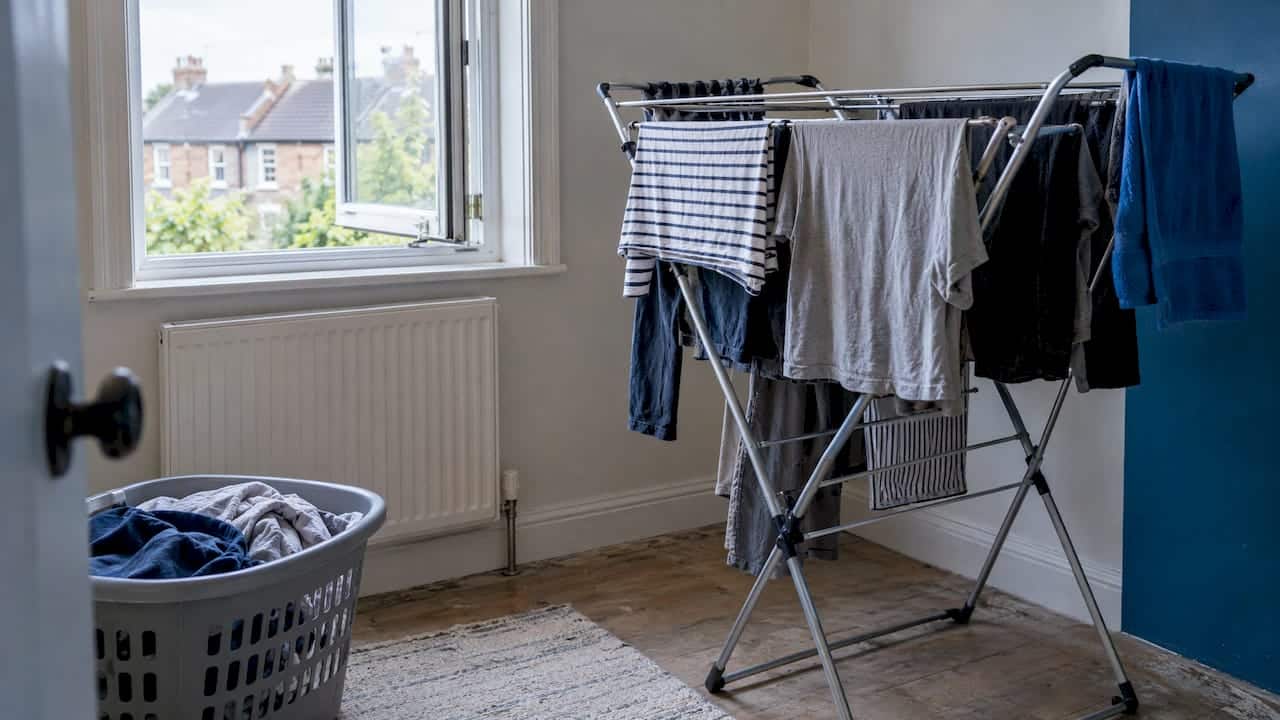
Avoiding the tumble dryer in warmer weather is worth around £60 a year. The same Which? report finds washer-dryers are the priciest appliance to run, at over £200 a year on average, with condenser tumble dryers and American-style fridge freezers each adding over £125 a year on average. Air-drying on a clothes airer or line in a well-ventilated room is the simplest alternative. Where a dryer is needed, spin the washing at the highest speed the fabric allows first, so there is less water to remove.
5. Keep showers to four minutes
Keeping showers to four minutes is worth around £70 a year in the Energy Saving Trust figures. Water heating is a large part of household energy use, so every minute shaved off matters in a household with several people. A shower timer is a cheap prompt.
6. Insulate the hot water cylinder
A hot water cylinder insulated to 80mm thick saves around £35 a year. This suits homes with a stored hot water tank rather than a combi boiler. A jacket costs little and takes minutes to fit, which makes it one of the quickest paybacks on the list.
7. Draught-proof windows and doors
Draught-proofing windows and doors is worth around £45 a year. Gaps around frames, letterboxes, loft hatches and pipework let warm air out and cold air in, so the heating runs longer. For older single-glazed or poorly fitted frames, the way windows are built also affects heat loss; a guide on reducing heat loss through windows explains the principle.
8. Turn the thermostat down by 1°C
Turning the thermostat down by 1°C could save around £80 a year. That is one of the largest figures for a measure that costs nothing. Make the change in steps over a few days so the household adjusts. A programmable thermostat or timer also stops the heating running when nobody is home.
9. Insulate the loft and walls
Insulation costs more up front but saves the most each year. The Consumer Council gives these UK estimates:
| Measure | Typical saving per year |
|---|---|
| Loft insulation | around £155 |
| Cavity wall insulation | around £185 |
| Solid wall insulation | around £250 |
Real-world measurement backs the direction of travel. A study of smart meter data from nearly 2,500 households in France found that insulation works reduced electricity use by 3% to 13% and gas use by 5% to 16%, depending on the type of retrofit. The results are from French homes, so UK outcomes will differ, but they show that the savings appear in metered data and not only in calculations.
10. Measure before and after
The tenth measure makes the other nine count. Take a meter reading on the same day each week, or use a smart meter’s in-home display, and note the figure before and after each change. Change one thing at a time where possible. Seasonal weather moves heating use more than most habits, so compare the same months year on year, or compare against a cold spell of similar length.
The EPC fits here as the starting point. It rates the building, not the household, which means it identifies what the property itself needs, such as insulation or a heating upgrade. A more detailed explanation of the rating bands is on the EPC rating page.
Which measures to do first
A sensible order for most homes follows effort and cost:
- No-cost habits first: standby, lights, 30°C washes, thermostat, shorter showers. These can start today.
- Low-cost fixes next: LED bulbs, cylinder jacket, draught-proofing strips.
- Larger works last: loft, cavity wall and solid wall insulation, and heating system changes.
The last group needs the most planning. A property-specific assessment helps there, because the savings for insulation depend on what is already in place. More appliance advice is in the efficient appliances guide, and a longer list of everyday habits is on the best ways to save electricity page.
A note for landlords and property investors
For a rented property the tenant pays the bills, but the landlord controls the fabric: insulation, glazing, the heating system and the EPC. Measures 6, 7 and 9 sit with the landlord. A better EPC rating also makes the property easier to describe to prospective tenants and buyers. Landlords with several properties can compare ratings across the portfolio to decide where to start. The EPC exemption guide covers the cases where a certificate is not required.
A note for commercial properties
Small commercial premises share the same logic: heat loss, lighting and equipment left on. Where a building has air conditioning above the size threshold, a TM44 inspection is the compliance report for those systems, and Home Energy Model offers TM44 inspections for air conditioning systems. A commercial EPC is also available for non-domestic buildings.
Our perspective
Most advice on saving electricity is a list of habits. The habits are worth doing, but the list treats every home as the same, and no two buildings lose energy in the same way.
We start from the building. An EPC gives a property a rating and shows where its energy performance can improve, so a landlord or homeowner can put money into the measure that suits that property, rather than the one a generic list puts first.
For new buildings and major works, the same thinking applies through the calculations that sit behind compliance. Our services include SAP calculations, and our guidance follows the Home Energy Model, the government methodology intended to replace SAP, which sits alongside the Future Homes Standard.
Habits first, then the fabric, then measurement: that is the order we would follow in any UK home.
Danny
Request an EPC assessment
For homeowners who want the building assessed before choosing improvements, Home Energy Model takes quote requests online for domestic EPCs. Landlords, developers and consultants can use the same route for commercial EPCs, TM44 inspections, SAP calculations and Home Energy Model reports. The quote form is on each service page, and the home page lists them all.
FAQ
What is the quickest way to save electricity at home?
Switching off standby is the quickest, at around £55 a year in the Energy Saving Trust figures cited by the Consumer Council. Turning lights off when leaving a room adds around £20 a year. Both take effect the same day and cost nothing.
What uses the most electricity in a home?
In a typical UK home the Energy Saving Trust puts washing machines, dishwashers and tumble dryers first, at about 14% of the bill, then fridges and freezers at about 13%. Heating and hot water are separate and usually larger overall. Tumble dryers and American-style fridge freezers are among the most expensive single appliances to run.
Does turning the thermostat down really help?
Yes. Turning the thermostat down by 1°C could save around £80 a year according to the Consumer Council. The saving is larger in a home that is heated for long hours. Keep the home warm enough for anyone who is elderly, unwell or has a baby, and lower the setting only as far as is comfortable.
Is insulation worth the cost?
Insulation has the highest yearly savings of the measures listed: around £155 for the loft, £185 for cavity walls and £250 for solid walls. The payback depends on the cost of the work and the property. An EPC shows which insulation a particular home lacks.
How do I know if my changes are working?
Record meter readings before and after each change and compare the same period across years, since the weather shifts heating use. A smart meter display makes the daily pattern visible. Make one change at a time where possible so the effect is clear.
Sources
- Energy Efficiency, Consumer Council
- What appliances drive up energy bills, Energy Saving Trust
- Five top tips from Which? to cut your energy bills in 2026, Welsh Government
- Impact of Residential Retrofits on Gas and Electricity Consumption, arXiv
- Isolamento termico serramenti: come ridurre consumi e comfort