

TL;DR:
- An EPC rating is an official measure of a property’s energy efficiency, affecting rental legality, value, and energy costs. It ranges from A to G with a numerical score, reflecting building characteristics and potential improvements, guiding upgrades and compliance strategies. Regular assessments and strategic upgrades are essential to meet evolving legal standards and optimize property desirability.
An EPC rating is an official measure of a property’s energy efficiency, expressed as a letter grade from A to G and supported by a numerical score. The Energy Performance Certificate, or EPC, is a mandatory legal document required whenever a UK property is built, sold, or let. For property owners and landlords, understanding the EPC rating meaning is not simply a compliance exercise. It directly affects rental legality, property value, and future energy costs.
What does EPC rating mean for your property?
An EPC rating tells you how energy efficient a building is, using a scale from A (most efficient, scoring 92–100) down to G (least efficient, scoring 1–20). The certificate also carries a numerical score that sits behind the letter band, giving a more precise picture of performance. EPCs rate energy efficiency from A to G with this numerical score backing each letter, and certificates remain valid for 10 years.
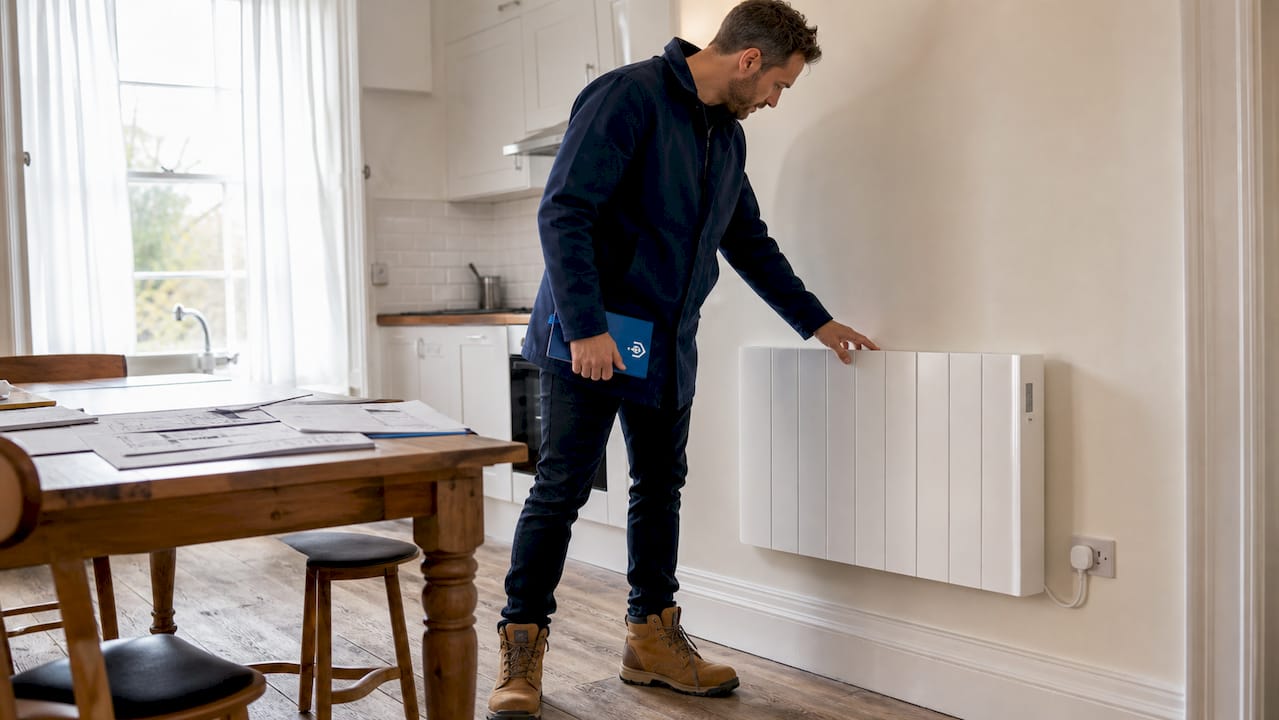
The EPC meaning for a house goes beyond a simple label. It estimates typical annual fuel costs, highlights where energy is being lost, and signals to buyers and tenants how expensive the property will be to run. A Band A home costs significantly less to heat than a Band G home, and that gap shows up directly in monthly bills.
What does each EPC band mean, a to g?
The seven rating bands each describe a distinct level of energy performance. Most UK homes fall into Band D, with a score range of 55–68, typically featuring some insulation and a gas boiler. That statistic matters because it means the majority of UK properties have room to improve before reaching the legally anticipated minimum of Band C.
The table below summarises each band, its score range, typical property characteristics, and current legal letting status in England and Wales.
| Band | Score Range | Typical Property Description | Legal Letting Status |
|---|---|---|---|
| A | 92–100 | New build, high-spec insulation, heat pump or solar | Fully compliant |
| B | 81–91 | Well-insulated modern home, efficient heating | Fully compliant |
| C | 69–80 | Good insulation, double glazing, efficient boiler | Fully compliant |
| D | 55–68 | Average insulation, standard gas boiler | Fully compliant |
| E | 39–54 | Older property, partial insulation, older boiler | Minimum legal standard |
| F | 21–38 | Poor insulation, inefficient heating system | Cannot be let without exemption |
| G | 1–20 | Uninsulated, very old heating, high running costs | Cannot be let without exemption |
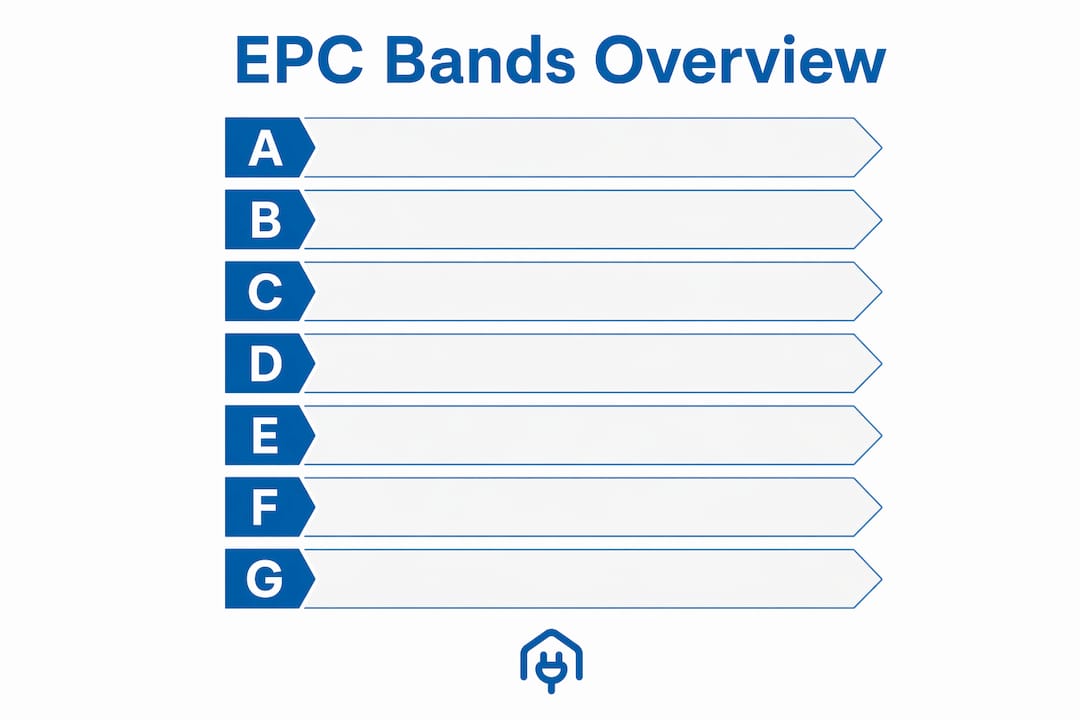
Properties in Bands F and G are the most expensive to run and carry the highest legal risk for landlords. Bands A and B represent the top tier of performance, typically found in new builds designed to meet Part L building regulations or the Future Homes Standard.
How is an EPC rating calculated?
The EPC rating is calculated using the Standard Assessment Procedure (SAP) or its simplified version, RdSAP, which is used for existing homes. The EPC calculation uses SAP or RdSAP to reflect building fabric and heating systems rather than occupant behaviour. This distinction is critical. Two identical houses occupied by different households will receive the same EPC score, even if their actual bills differ.
The certificate produces two scores. The Energy Efficiency Rating (EER) estimates typical annual fuel costs. The Environmental Impact Rating (EIR) measures carbon dioxide emissions. Both scores derive from the same assessment of the building’s physical characteristics.
Key factors considered during an EPC assessment include:
- Wall and roof insulation type and thickness
- Window glazing (single, double, or triple)
- Heating system type, age, and controls
- Hot water system efficiency
- Lighting (proportion of low-energy fittings)
- Renewable energy installations such as solar panels
An EPC assessment typically takes 30–60 minutes and relies entirely on visual inspection. Assessors do not perform intrusive checks, so they cannot verify insulation hidden within walls unless documentary evidence is provided. This means the accuracy of the rating depends partly on what the assessor can observe or confirm.
Pro Tip: Gather any installation certificates, building control sign-offs, or receipts for insulation work before the assessor arrives. Providing this documentation can prevent the assessor from defaulting to a worst-case assumption, which would lower your score.
What are the legal requirements for EPC ratings?
The Minimum Energy Efficiency Standards (MEES) regulations set the legal floor for rental properties in England and Wales. The current minimum is EPC E for rental properties, and landlords who let properties below this standard without a registered exemption face fines of up to £30,000. That penalty level reflects how seriously the government treats energy compliance.
The regulatory picture is changing. The planned minimum standard will rise to EPC C by October 2030 for all rental properties. This timetable gives landlords a window to act, but properties requiring significant fabric improvements, such as solid wall insulation or heating system replacements, can take time and budget to upgrade.
The steps landlords should take now are clear:
- Check the current EPC for every rental property and confirm its band and expiry date.
- Identify properties rated D or E that will fall below the 2030 minimum.
- Commission improvement works such as loft insulation, cavity wall insulation, or boiler upgrades.
- Register an exemption if the property genuinely cannot reach Band C due to cost cap or consent issues. The EPC exemption register outlines valid grounds and the registration process.
- Commission a new EPC after improvements to confirm the updated rating.
Exemptions exist for specific circumstances, including listed buildings, properties where tenants refuse access, and situations where the cost of reaching Band C exceeds the permitted spending cap. However, exemptions must be formally registered and are time-limited.
Pro Tip: Do not wait until 2029 to act. Demand for insulation contractors and heat pump installers is rising sharply ahead of the 2030 deadline. Landlords who commission works early will face lower costs and shorter waiting times.
Properties rated C or better are increasingly desirable to buyers and tenants due to upcoming legal standards and running cost concerns. Acting ahead of the deadline protects both compliance and asset value.
How can EPC ratings benefit homeowners and buyers?
The EPC certificate explained in full contains more than just the current rating. It also shows a potential rating, which is the score the property could achieve if all recommended improvements were carried out. The gap between the current and potential rating tells you exactly how much room for improvement exists.
For buyers, comparing EPCs across properties provides an objective measure of likely running costs. A Band C property will cost less to heat than a Band E property of the same size, and that difference compounds over years of ownership. The EPC recommendations section lists cost-effective measures such as loft insulation, cavity wall insulation, and LED lighting upgrades, each with an estimated cost and saving.
Homeowners often overlook this recommendations section entirely. It is the most practical part of the certificate because it translates the abstract rating into specific, costed actions. Typical measures include:
- Loft insulation to 270mm, often the highest-impact, lowest-cost improvement
- Cavity wall insulation, where the property construction allows
- Upgrading to a condensing boiler or installing heating controls
- Solar photovoltaic panels, which can push a property from Band D into Band C
One important point on EPC property meaning after improvements: a new EPC must be commissioned to reflect any upgrades. The original certificate does not update automatically. A landlord who installs loft insulation and a new boiler will still show the old rating until a fresh assessment is carried out. Commissioning a new assessment after works is the only way to formally record the improvement and demonstrate compliance.
For guidance on improving your EPC rating cost-effectively, Homeenergymodel provides practical tips covering the most impactful measures for different property types.
Key takeaways
An EPC rating is a legally required, standardised measure of a property’s energy efficiency that directly determines rental compliance, running costs, and future marketability under MEES regulations.
| Point | Details |
|---|---|
| A to G scale with numerical score | Each band reflects a score range; Band D (55–68) covers most UK homes. |
| SAP and RdSAP drive the calculation | Ratings reflect building fabric and heating systems, not actual energy bills. |
| MEES minimum is currently Band E | Landlords face fines up to £30,000 for letting below E without a registered exemption. |
| Minimum rises to Band C by 2030 | Properties rated D or E need improvement works before the October 2030 deadline. |
| New assessment needed after works | Improvements do not update the EPC automatically; a fresh assessment is required. |
Why the recommendations page is the most underused part of an EPC
Most property owners treat the EPC as a pass or fail document. They check the letter, confirm it meets the legal minimum, and file it away. That approach misses the real value of the certificate.
The recommendations section is where the EPC becomes a practical tool. I have seen landlords spend thousands on improvements that were not listed on their EPC, while missing cheaper measures that would have delivered a bigger rating jump. Loft insulation, for example, consistently delivers one of the highest score improvements per pound spent, yet it is frequently overlooked in favour of more visible upgrades.
There is also a widespread misunderstanding about what the EPC actually measures. The rating reflects modelled energy use under standard occupancy assumptions, not what residents actually spend. A property occupied by a single person working away from home will have lower real bills than the EPC suggests. Conversely, a large family in the same property may spend more. The EPC standardises comparison by assuming typical occupancy rather than actual lifestyle, which ensures fairness but means the certificate is a benchmark, not a bill forecast.
My strongest advice for landlords approaching the 2030 deadline is to treat the EPC as a planning document rather than a compliance checkbox. Commission an assessment now, read the recommendations in full, and build an improvement schedule around the measures with the best cost-to-rating ratio. Properties that reach Band C ahead of the deadline will attract better tenants, command stronger rents, and require no last-minute scramble.
— Danny
Take the next step with Homeenergymodel
Understanding the EPC rating meaning is the starting point. Acting on it is what protects compliance and reduces running costs. Homeenergymodel provides detailed guidance on EPC assessments and assessor selection, helping property owners find qualified professionals and understand what to expect from the process. For landlords managing multiple properties or planning significant upgrades, the home energy model explained resource covers how the new HEM methodology will replace SAP and affect future EPC calculations. Staying ahead of regulatory change starts with understanding the tools that drive it.
FAQ
What is the EPC rating meaning for a rental property?
An EPC rating measures a rental property’s energy efficiency on a scale from A to G. Landlords in England and Wales must hold a valid EPC and meet at least Band E to let legally.
What is an EPC a rating?
Band A is the highest EPC rating, with a score of 92–100. Properties in this band are highly energy efficient, typically new builds with advanced insulation, heat pumps, or solar panels.
How long does an EPC last?
An EPC certificate is valid for 10 years. However, if significant improvements are made to the property, a new assessment should be commissioned to reflect the updated rating.
Can a landlord let a property with an EPC f or g rating?
No. Landlords cannot legally let a property rated F or G in England and Wales without a registered exemption. Fines for non-compliance can reach £30,000.
Does improving a property automatically update the EPC?
No. Improvements such as insulation or a new boiler do not update the EPC automatically. A new assessment must be commissioned to record the improved rating officially.