

TL;DR:
- The EnergyGuide label displays the annual energy consumption and estimated operating cost of household appliances. The annual kilowatt-hour figure is the most reliable metric for comparing appliance efficiency, unaffected by regional energy prices. Applicants should prioritize the kWh value and ensure comparisons are made within the same category and size class for accurate assessments.
The EnergyGuide label is a federally mandated yellow sticker that shows the annual energy consumption and estimated operating cost of a household appliance, giving homeowners and property managers a standardised way to compare energy guide rating appliances before purchase. In the UK, appliance efficiency ratings sit alongside Energy Performance Certificates (EPCs) and Minimum Energy Efficiency Standards (MEES) as part of a broader compliance picture. Understanding these labels is not just about saving money on bills. It directly affects how well a property performs under regulations such as MEES, which landlords must meet to legally let residential properties. The EnergyGuide label provides five core data points that, when read correctly, make appliance selection far more precise.
What does an energy guide rating label actually show?
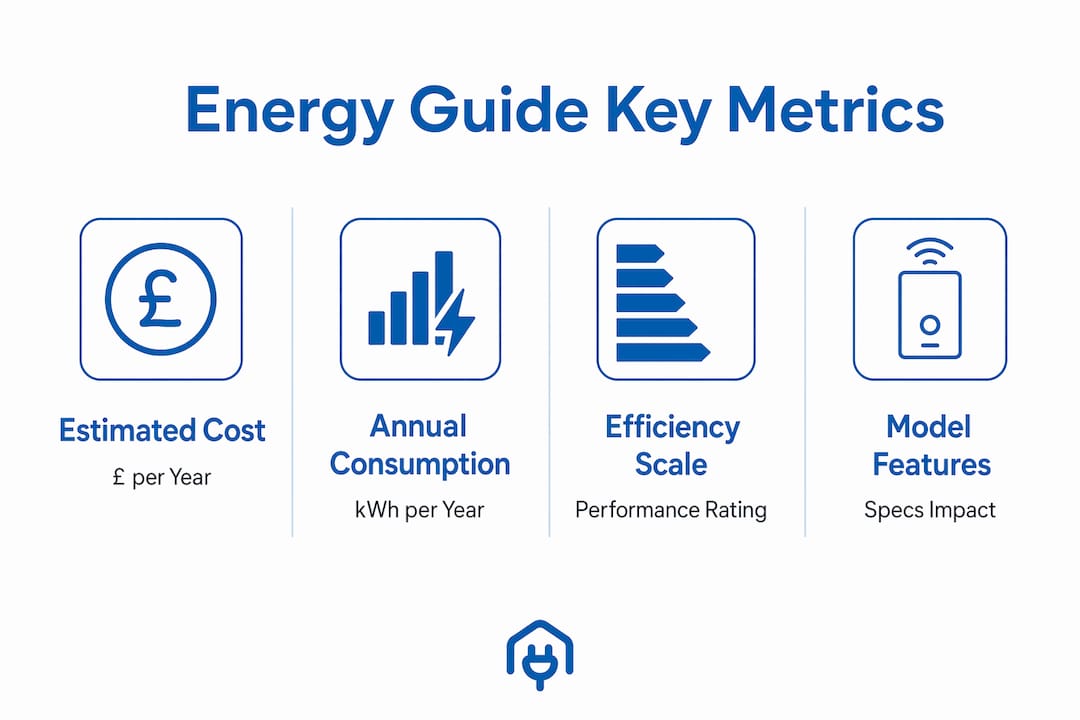
The EnergyGuide label contains five key sections: estimated yearly operating cost, estimated annual energy consumption in kWh, an efficiency scale comparing similar models, model features, and the ENERGY STAR logo where applicable. Each section serves a distinct purpose, and reading them together gives a complete picture of an appliance’s efficiency.
Estimated yearly operating cost
The large figure displayed prominently on the label shows the estimated annual cost to run the appliance. This figure uses national average utility rates, not local tariffs. That matters because energy prices vary significantly across regions, so the number on the label may not reflect what a property owner in London or Manchester will actually pay.
Annual kWh consumption
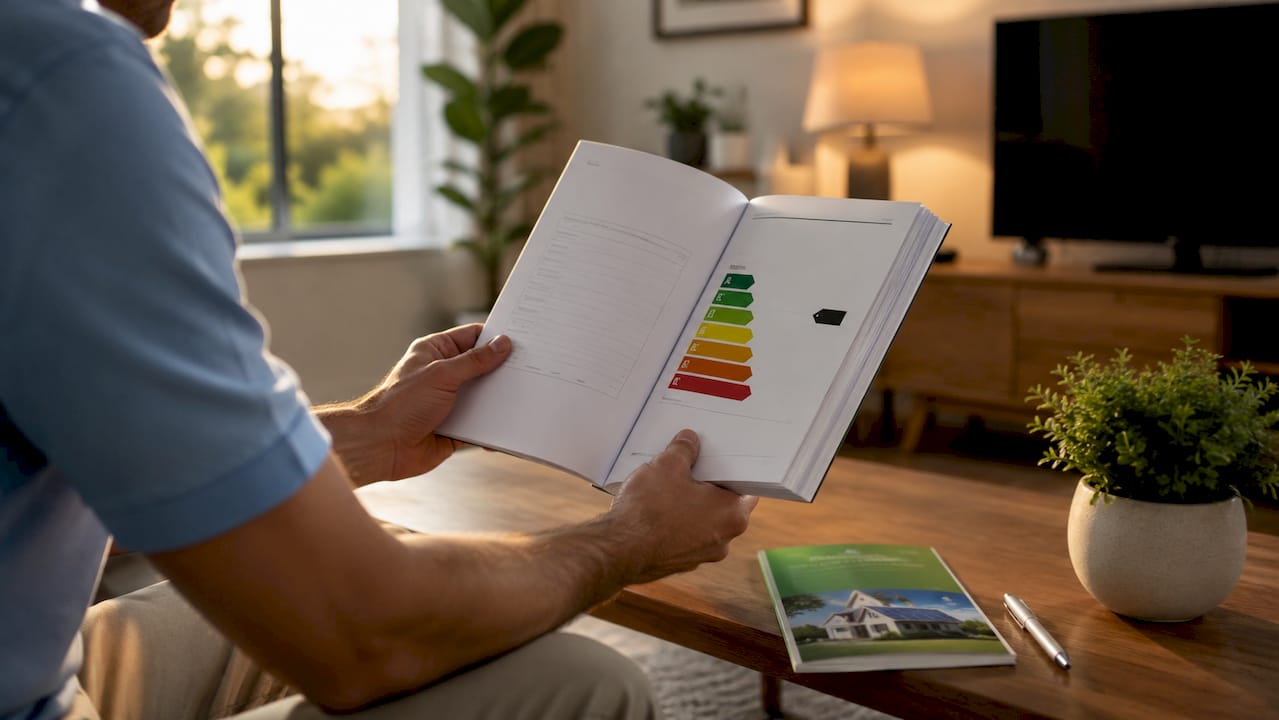
Directly below or alongside the cost figure sits the annual kWh consumption. This is the most objective metric on the label. It does not change with energy prices, making it the most reliable figure for comparing two appliances of the same type and size.
Efficiency scale
The efficiency scale is a horizontal bar showing where the appliance sits relative to similar models in the same category and size class. A position towards the left end of the scale indicates higher efficiency. This scale only compares appliances within the same category, so a refrigerator scale cannot be used to assess a washing machine.
Model features and ENERGY STAR branding
The model features section lists specifications such as capacity or cycle options that affect energy use. The ENERGY STAR logo, where present, signals that the appliance meets stricter efficiency thresholds set by the US Environmental Protection Agency (EPA) and the Department of Energy (DOE).
Pro Tip: When comparing two appliances on the shop floor, ignore the cost figure first and focus on the kWh number. That single figure gives a like-for-like comparison regardless of where the property is located.
Why is annual kWh the most reliable comparison metric?
The annual kWh figure remains constant regardless of local tariff, making it the best metric for appliance efficiency comparison. The estimated cost figure, by contrast, shifts with every change in regional energy pricing. A property manager overseeing multiple sites across different regions cannot rely on cost estimates alone for consistent decision-making.
Comparing appliances must always account for size and capacity. Larger units consume more energy but can still be more efficient relative to their class. A 600-litre fridge-freezer will always use more kWh than a 300-litre model, but its efficiency rating reflects performance within the 600-litre category, not against smaller units. Comparing across size classes produces misleading conclusions.
Appliance lifespan also shapes the real value of a lower kWh figure. Typical lifespan ranges vary considerably by appliance type, and the cumulative energy savings over that period can far outweigh a higher upfront purchase price.
| Appliance type | Typical lifespan | Key label focus |
|---|---|---|
| Refrigerator | 10–15 years | Annual kWh and efficiency scale position |
| Washing machine | 10–12 years | Annual kWh and cycle energy use |
| Dishwasher | 9–12 years | Annual kWh and water heating load |
| Television | 7–10 years | Annual kWh and screen size class |
| Gas furnace | 15–20 years | Annual energy consumption and ENERGY STAR status |
Pro Tip: Multiply the annual kWh figure by the appliance’s expected lifespan to calculate total lifetime energy consumption. Then compare two models side by side. The difference is often larger than the upfront price gap suggests.
How do ENERGY STAR rated appliances complement the label system?
ENERGY STAR is an independent certification governed by the EPA and DOE that identifies the top 25% efficiency performers within each appliance class. Its presence on an EnergyGuide label acts as a shortcut for property owners who want to identify high-performing models without analysing every figure on the label.
ENERGY STAR certified appliances typically use 10–50% less energy than standard models, depending on the appliance type. That range is wide because the savings vary significantly between categories. A certified heat pump may save closer to 50%, while a certified dishwasher may save around 10–12%.
The criteria for ENERGY STAR certification tightened in 2026, particularly for heat pumps and refrigerators. This means a model that qualified two years ago may no longer meet the current threshold. Property managers replacing older appliances should verify that a model carries current certification, not just a legacy label.
Key points to understand about ENERGY STAR in practice:
- ENERGY STAR covers over 75 product categories, but not every appliance type has a certification tier.
- Where the logo is absent from an EnergyGuide label, the appliance may still be efficient. It simply has not been assessed under the ENERGY STAR programme.
- ENERGY STAR and EnergyGuide labels form complementary tools alongside federal minimum efficiency standards, which are updated periodically to reduce national energy demand.
- For UK property owners, ENERGY STAR certification provides a useful reference point even though it originates in the US, as many appliances sold in the UK carry equivalent EU energy label ratings.
Common pitfalls when using energy guide ratings to choose appliances
The most frequent mistake property owners make is treating the estimated operating cost as a guaranteed annual bill. The cost figure uses national average electricity rates and does not reflect local tariffs. A landlord in a high-tariff area will pay more than the label suggests; one on a cheaper tariff will pay less. Adjusting the kWh figure against the actual local rate gives a far more accurate projection.
Comparing appliances across different categories or size classes is equally misleading. The efficiency scale on the label only has meaning within a specific appliance type and size band. A washing machine rated near the left end of its scale is not comparable to a dishwasher in the same position on its own scale.
Efficiency standards evolve over time, and older labels are not directly comparable to current models. A label from five years ago used different baseline standards. An older ‘A’ rating may indicate lower efficiency than a current ‘B’ or ‘C’ rated model assessed under tighter criteria. The 2026 federal efficiency standard updates reinforce the importance of reading labels on current stock, not relying on historical ratings.
Practical guidance for avoiding these pitfalls:
- Always compare the kWh figure, not the cost estimate, when assessing two models.
- Check that both appliances belong to the same category and size class before comparing their efficiency scales.
- High-efficiency appliances typically deliver greater savings over a 10–15 year lifespan, making the higher upfront cost financially sound.
- Factor in personal or tenant usage patterns. An appliance used twice daily will accumulate energy costs far faster than one used weekly.
- For rental properties subject to MEES regulations, appliance efficiency contributes to the overall EPC rating. Choosing lower-kWh models supports compliance.
Pro Tip: Before purchasing, use the appliance’s annual kWh figure and your actual electricity tariff to calculate a personalised annual running cost. Divide the tariff rate by 100 and multiply by the kWh figure. This takes under a minute and gives a far more accurate figure than the label’s cost estimate.
Key takeaways
The annual kWh figure on an EnergyGuide label is the single most reliable metric for comparing appliance energy efficiency, because it remains objective regardless of local energy tariffs or evolving cost estimates.
| Point | Details |
|---|---|
| Use kWh, not cost estimates | The annual kWh figure is objective and unaffected by regional tariff variations. |
| Compare within the same class | Efficiency scales only apply within the same appliance category and size band. |
| ENERGY STAR signals top performers | Certified models represent the top 25% in their class and use 10–50% less energy. |
| Lifespan shapes total savings | Multiply annual kWh by expected lifespan to calculate true lifetime energy cost. |
| Standards evolve, so check current labels | Older ratings use outdated baselines; always read labels on current stock. |
Why I think most property owners read these labels backwards
Most property owners glance at the large cost figure on an EnergyGuide label and move on. That is the wrong number to lead with. The cost estimate is built on national averages that may bear little resemblance to what a landlord in central London or a homeowner in rural Scotland actually pays per unit of electricity.
The kWh figure is the one that travels. It stays accurate regardless of tariff changes, price cap adjustments, or regional variation. I have seen property managers make appliance decisions based on a £20 annual cost difference shown on the label, only to find that difference disappears entirely once local rates are applied. The kWh figure would have told a different story from the start.
The other thing most people miss is the lifespan calculation. A fridge-freezer that runs for 15 years with a 50 kWh annual advantage over a cheaper model saves 750 kWh over its lifetime. At current UK rates, that is a meaningful sum. The appliance energy guide for UK homeowners covers this in more detail, and it is worth reading before any major appliance purchase.
For landlords managing multiple properties, the cumulative effect of appliance choices across a portfolio is substantial. Combining label literacy with a broader understanding of efficient appliances for energy-smart homes turns individual purchasing decisions into a coherent efficiency strategy.
— Danny
How Homeenergymodel supports UK property energy compliance
Homeenergymodel provides practical guidance on energy efficiency for UK residential and commercial properties, with a focus on the Home Energy Model (HEM) and its implications for EPCs, landlords, and property investors. For property owners looking to connect appliance efficiency decisions with broader compliance requirements, the site offers detailed resources on home energy assessment and the full range of home energy models for landlords. As the UK moves towards the Future Homes Standard, understanding how individual appliances contribute to a property’s overall energy performance becomes increasingly relevant for meeting EPC targets and MEES obligations.
FAQ
What is an EnergyGuide label?
An EnergyGuide label is a federally required yellow sticker displayed on household appliances that shows the estimated annual energy consumption in kWh and the estimated yearly operating cost, enabling consumers to compare appliance efficiency before purchase.
How do I read the energy rating on an appliance label?
Focus on the annual kWh figure rather than the estimated cost, and use the efficiency scale to see where the model sits relative to similar appliances in the same category and size class.
What does ENERGY STAR mean on an appliance label?
ENERGY STAR certification indicates that the appliance meets stricter efficiency thresholds set by the EPA and DOE, placing it in the top 25% of its class and typically using 10–50% less energy than standard models.
Why does the estimated cost on the label differ from my actual bills?
The label’s cost figure is calculated using national average utility rates. Actual running costs depend on local tariffs, which vary by region and supplier, so the label figure should be treated as a reference point rather than a precise forecast.
Do EnergyGuide ratings affect UK EPC compliance?
Appliance efficiency contributes to a property’s overall energy performance, which feeds into its EPC rating. Landlords subject to MEES regulations benefit from choosing lower-kWh appliances as part of a broader strategy to meet minimum EPC standards.