

Managing UK property in the face of changing regulations can feel daunting, especially with the 2025 Home Energy Model on the horizon. Growing pressure to improve energy efficiency and cut carbon emissions means understanding building science is now more than just a technical advantage, it’s a core part of long-term property success. This guide highlights key principles behind thermal performance, ventilation, and structural safety—giving British landlords and investors clear, practical knowledge for regulatory compliance and enhanced asset performance.
Table of Contents
- Building Science Explained for UK Properties
- Core Principles and Methods in Building Science
- How Building Science Supports Energy Efficiency
- Role in Home Energy Model Compliance 2025
- Common Challenges and Misconceptions in Practice
Key Takeaways
| Point | Details |
|---|---|
| Building Science Importance | Understanding building science is essential for UK property owners to comply with stringent regulations regarding energy efficiency and structural integrity. |
| Key Components | Thermal insulation, air tightness, and moisture control are critical for optimising energy performance in homes and buildings. |
| Role in Compliance | Building science provides methodologies to ensure properties meet upcoming Home Energy Model requirements effectively. |
| Challenges in Retrofitting | Balancing energy efficiency improvements with the preservation of historical features often presents challenges for practitioners in the field. |
Building Science Explained for UK Properties
Building science represents a comprehensive approach to understanding how physical and environmental systems interact within constructed environments. At its core, building science examines how structures perform under various conditions, focusing on critical aspects like thermal performance, moisture management, ventilation, and energy efficiency. In the United Kingdom, this discipline has become increasingly crucial as property owners seek to meet stringent building regulatory standards.
The fundamental principles of building science revolve around creating buildings that are safe, comfortable, durable, and energy-efficient. This involves understanding complex interactions between structural elements, environmental conditions, and human occupancy. UK properties face unique challenges including variable weather conditions, older building stock, and increasingly strict energy performance requirements. Modern building science provides strategies to address these challenges through sophisticated design, material selection, and engineering techniques that optimise building performance.
Key components of building science in UK properties include thermal insulation, air tightness, ventilation systems, and moisture control. These elements work together to create living environments that maintain consistent temperatures, prevent heat loss, manage indoor air quality, and protect against potential structural damage. Professionals in this field use advanced diagnostic tools like thermal imaging, blower door tests, and computational modelling to assess and improve building performance. By applying scientific principles, property owners can significantly enhance energy efficiency, reduce carbon emissions, and create more sustainable living spaces.
Pro tip: Invest in a professional building science assessment to identify potential energy inefficiencies and structural vulnerabilities in your UK property.
Core Principles and Methods in Building Science
Building science in the United Kingdom is fundamentally grounded in a systematic approach to understanding and improving building performance, with core principles defined within building regulations. These principles encompass a holistic view of building design, focusing on the intricate interactions between structural elements, environmental conditions, and human occupancy. The primary objectives include ensuring structural integrity, thermal efficiency, moisture management, and overall occupant comfort and safety.
The methodological framework of building science involves comprehensive analysis and assessment techniques that enable professionals to evaluate and enhance building performance. These methods include advanced diagnostic tools such as thermal imaging, computational modelling, blower door tests, and hygrothermal analysis. By applying scientific principles and empirical research, building science practitioners can identify potential vulnerabilities in building design, predict performance outcomes, and develop targeted strategies for improving energy efficiency, structural durability, and environmental sustainability.
Critical components of building science methodology in the UK involve detailed assessment of thermal performance, air tightness, ventilation systems, and moisture control mechanisms. Professionals utilise sophisticated computational models and simulation tools to predict building behaviour under various environmental conditions, enabling them to design and modify structures that meet stringent energy performance standards. This approach allows for the development of buildings that not only comply with regulatory requirements but also provide optimal living environments that balance energy efficiency, comfort, and long-term structural resilience.
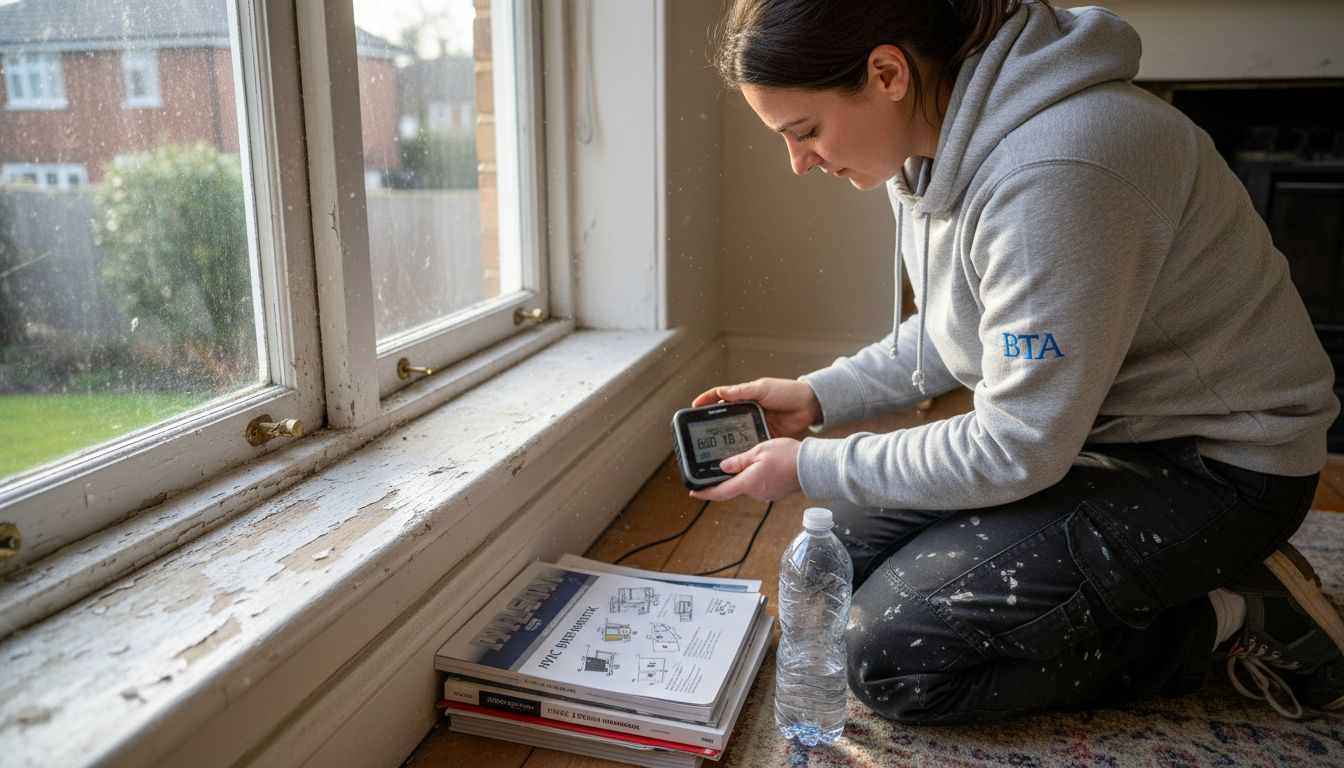
Here’s a summary of primary building science diagnostic tools and their advantages:
| Diagnostic Tool | Purpose in UK Properties | Key Advantage |
|---|---|---|
| Thermal imaging | Identifies heat loss areas | Visual, instant results |
| Blower door test | Measures air tightness | Quantifies leakage |
| Computational modelling | Simulates building performance | Predicts future issues |
| Hygrothermal analysis | Assesses moisture movement | Prevents damp problems |
Pro tip: Consult a certified building science professional to conduct a comprehensive performance assessment of your property, identifying potential improvements in energy efficiency and structural integrity.
How Building Science Supports Energy Efficiency
Building science plays a crucial role in enhancing energy efficiency by providing sophisticated analytical approaches to understanding and improving building performance. Detailed energy performance assessments reveal how scientific methodologies can systematically reduce energy consumption and carbon emissions in UK properties. This approach involves comprehensive evaluation of thermal performance, insulation effectiveness, ventilation systems, and overall building envelope characteristics.
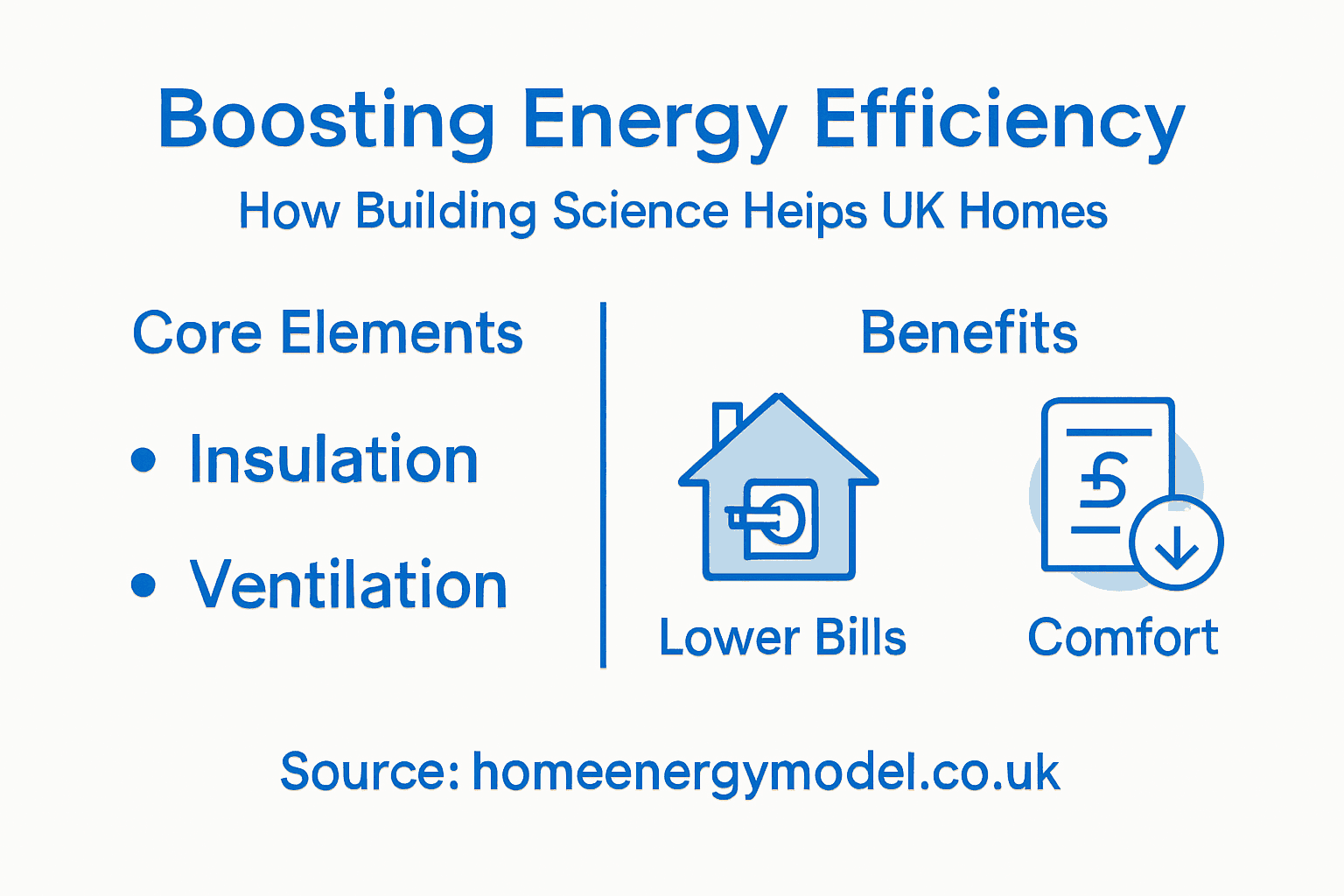
The practical application of building science in energy efficiency focuses on creating holistic strategies that address multiple aspects of building performance. Professionals employ advanced diagnostic tools like thermal imaging, computational modelling, and air tightness testing to identify specific areas of energy loss and develop targeted intervention strategies. These techniques allow for precise understanding of how different building components interact, enabling property owners to implement evidence-based improvements that significantly reduce energy demand and improve overall building performance.
Particular emphasis is placed on understanding the intricate relationships between building materials, environmental conditions, and energy consumption. By applying scientific principles to retrofit and renovation processes, building science supports sensitive improvements that maintain structural integrity while enhancing energy performance. This approach is especially critical in the UK, where many properties feature historic construction that requires careful, scientifically informed approaches to energy efficiency upgrades. The methodology ensures that interventions are not only effective but also respectful of existing architectural characteristics and structural requirements.
Pro tip: Arrange a professional building science assessment to uncover hidden energy inefficiencies and develop a targeted strategy for improving your property’s thermal performance.
Role in Home Energy Model Compliance 2025
Building science plays a pivotal role in preparing UK properties for the 2025 Home Energy Model compliance requirements, providing essential frameworks for understanding and improving energy performance. Advanced testing methodologies enable property owners and developers to accurately assess and predict building energy consumption, ensuring alignment with increasingly stringent regulatory standards. These scientific approaches involve comprehensive evaluation of thermal performance, insulation effectiveness, and overall energy efficiency across residential and commercial structures.
The compliance mechanisms introduced by the Home Energy Model demand sophisticated analytical techniques that go beyond traditional assessment methods. Professionals utilise cutting-edge diagnostic tools including thermal imaging, computational modelling, and precise air tightness testing to identify specific energy performance characteristics. These scientific approaches allow for granular understanding of how building components interact, enabling targeted interventions that can significantly reduce energy demand and improve overall building performance in line with 2025 regulatory expectations.
Critical to the Home Energy Model compliance is the holistic approach building science brings to energy performance evaluation. This methodology considers the complex interactions between building materials, environmental conditions, and energy consumption patterns. By providing robust, data-driven insights, building science supports property owners in developing comprehensive strategies that not only meet regulatory requirements but also enhance long-term energy efficiency. The approach ensures that compliance is not merely about meeting minimum standards, but about creating genuinely sustainable and high-performing built environments that contribute to broader national energy reduction goals.
Pro tip: Engage a certified building science professional to conduct a comprehensive pre-2025 energy performance assessment, identifying potential improvements and ensuring compliance with upcoming Home Energy Model regulations.
Common Challenges and Misconceptions in Practice
Building science practitioners encounter numerous challenges when applying technical principles to real-world property scenarios, particularly when balancing energy efficiency with structural preservation. Sustainable building approaches reveal complex interactions between conservation, performance, and technological innovation. Property owners and developers frequently misunderstand the nuanced requirements of energy-efficient retrofitting, believing that modern interventions necessarily compromise traditional architectural characteristics.
One significant misconception centres on the perceived incompatibility between historical building fabric and contemporary energy performance standards. Many property owners assume that achieving high energy efficiency necessitates complete structural replacement, when in fact building science offers sophisticated methods of thermal improvement that respect existing architectural integrity. Advanced diagnostic techniques enable targeted interventions that can dramatically enhance performance without extensive demolition or reconstruction, challenging the traditional binary thinking about building upgrades.
Navigating regulatory compliance presents another substantial challenge, with building science practitioners required to interpret complex requirements while maintaining practical feasibility. Technical standards often appear abstract and difficult to translate into actionable improvements, leading to confusion about the precise modifications needed to meet evolving energy performance benchmarks. Successful implementation demands a holistic understanding that integrates technical knowledge, regulatory insight, and sensitivity to individual building characteristics, moving beyond simplistic compliance checklists towards genuinely sustainable building practices.
This table contrasts retrofitting approaches for historic versus modern UK buildings:
| Approach | Historic Properties | Modern Properties |
|---|---|---|
| Insulation upgrades | Sensitive, preserves features | Supports new materials |
| Air tightness solutions | Minimises visual impact | Maximises efficiency |
| Ventilation enhancements | Adds discreet systems | Integrated solutions |
| Regulatory compliance | Requires specialist input | Follows standard codes |
Pro tip: Consult a specialised building science professional who understands both historical preservation techniques and contemporary energy performance standards to develop nuanced, context-sensitive improvement strategies.
Unlock Energy Efficiency and Compliance with Expert Insights
Understanding building science is essential for navigating the complex challenges UK property owners face in improving energy performance while preserving structural integrity. The article highlights critical pain points such as managing thermal insulation, air tightness, and moisture control alongside meeting the upcoming Home Energy Model compliance requirements in 2025. This demands clear, science-based strategies to reduce energy loss and avoid costly mistakes when retrofitting or upgrading properties.
Take the next step to future-proof your property by exploring the comprehensive resources at homeenergymodel.co.uk. Our site offers invaluable guidance on the new Home Energy Model, tailored advice for both residential and commercial properties, and practical tips that align with the Future Homes Standard. Ensure your property meets the latest energy performance standards and secures regulatory compliance by acting now. Visit homeenergymodel.co.uk to discover expert solutions, stay informed, and create sustainable, energy-efficient buildings with confidence.
Frequently Asked Questions
What is building science?
Building science is the study of how physical and environmental systems interact within constructed environments, focusing on aspects like thermal performance, moisture management, ventilation, and energy efficiency.
How does building science improve energy efficiency in properties?
Building science enhances energy efficiency by employing diagnostic tools and methodologies that identify heat loss, optimise insulation, and improve ventilation systems, ultimately reducing energy consumption and carbon emissions.
What are common misconceptions about retrofitting historic properties for energy efficiency?
A common misconception is that achieving high energy efficiency in historic properties requires complete structural replacement; however, building science offers sensitive methods of thermal improvement that can enhance performance while preserving architectural integrity.
Why is a professional building science assessment important for my property?
A professional building science assessment is crucial as it identifies energy inefficiencies and structural vulnerabilities, enabling tailored strategies for improvements that enhance energy efficiency, safety, and comfort.