
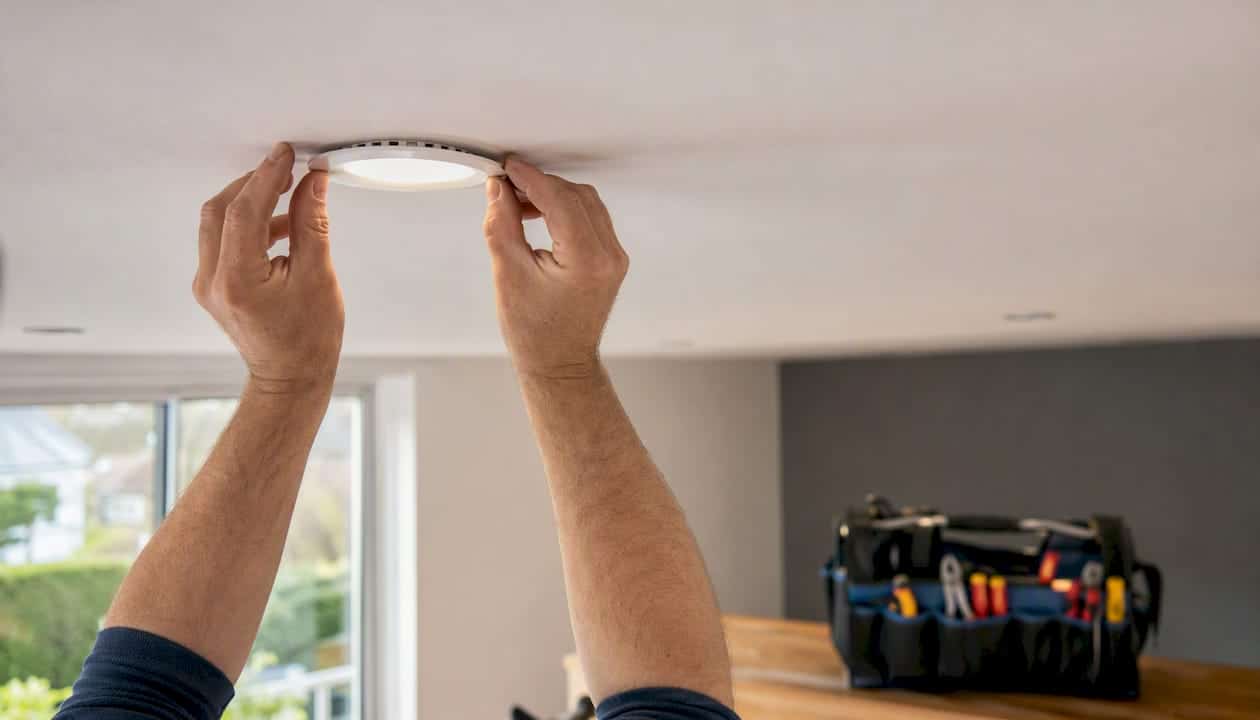
LED lighting offers lower energy bills, a lifespan of 25,000–50,000 hours; improved light quality, and reduced fire risk — making it the most practical lighting upgrade available to UK homeowners and businesses today. Under the UK’s MEPS/ecodesign framework, which now targets a minimum efficacy of 120 lm/W, LEDs are not just a sensible choice but increasingly the only compliant one. The advantages to LED lights span energy performance, safety, design flexibility, and long-term cost control.
Key advantages at a glance:
- Use up to 90% less energy than incandescent bulbs for equivalent brightness
- Last 25–50 times longer than traditional incandescent lamps
- Produce better-quality light with higher CRI and adjustable colour temperature
- Run significantly cooler, reducing fire risk in enclosed fittings
- Contain no mercury and generate less electronic waste over their lifetime
- Qualify as compliant products under UK ecodesign regulations
Lighting accounts for around 20% of UK electricity consumption — switching to LEDs is one of the fastest ways to cut that figure.
Pro Tip: Start with the fittings used most hours per day. A kitchen downlight running eight hours daily saves far more than a guest bedroom lamp switched on twice a week.
Key takeaways
LED lighting is the most cost-effective, compliant, and practical lighting upgrade for UK homes and businesses, delivering energy savings, a lifespan of 25,000–50,000 hours, and improved light quality under current ecodesign standards.
| Energy savings are substantial | A 5W LED replaces a 50W halogen, cutting running costs by up to 90% per fitting.
| Lifespan reduces maintenance costs | At 25,000–50,000 hours, LEDs last up to 25 times longer than incandescent bulbs. |
| UK regulations favour LEDs | Current MEPS require 120 lm/W minimum; incandescent sales have been banned since 2021. |
| Safety improves with lower heat | LEDs run at 30–50°C versus 200°C+ for halogens, reducing fire risk in enclosed fittings. |
| Buying checklist prevents problems | Check lumens, CRI, colour temperature, rated life, dimmer compatibility, and IP rating before purchasing. |
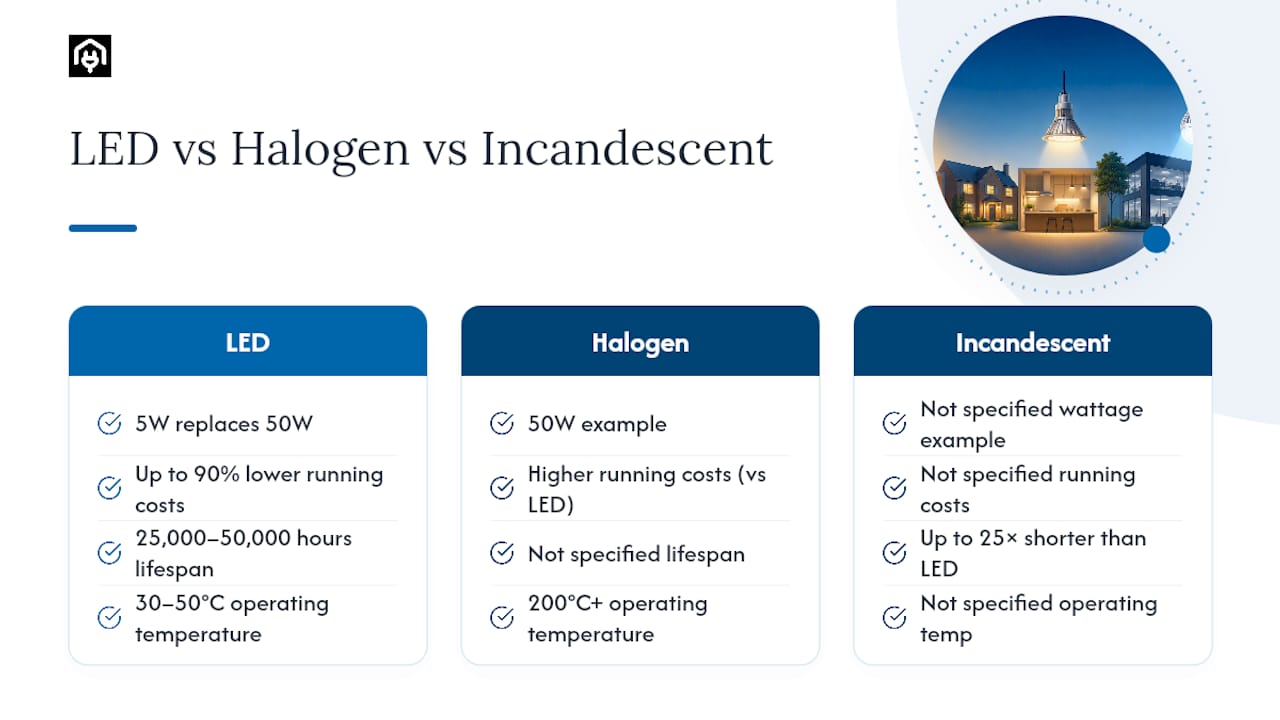
Table of Contents
- What are the main advantages to LED lights for energy savings?
- How long do LED lights last compared with other lamps?
- Does LED lighting actually produce better-quality light?
- Are LED lights safer because they produce less heat?
- How durable are LEDs, and what design options do they offer?
- What do UK regulations say about LED lighting efficiency?
- When might LEDs be a poor choice or need special attention?
- How to choose the right LED: a practical buying checklist
- A practical view from Homeenergymodel
- Sources
What are the main advantages to LED lights for energy savings?
LEDs work through electroluminescence: electricity passes through a semiconductor and produces light directly, with very little energy lost as heat. In practical terms, a 5W LED can match the output of a 50W halogen — a tenfold reduction in wattage for the same task.
That difference compounds quickly across a property. Replace ten 50W halogen downlights with 5W LEDs and the circuit load drops from 500W to 50W. Run those lights for four hours a day at a typical UK unit rate and the annual saving per fitting is material.
For a typical household replacing ten halogen downlights, the annual saving approaches £160 at current UK tariffs. A small retail unit running 30 fittings for ten hours a day can recoup the cost of an LED upgrade within one to two years, consistent with the government’s impact assessment for higher MEPS, which found businesses often recover upgrade costs within that window depending on hours of use.
Controls extend the savings further. Occupancy sensors and daylight-linking controls can add 30–50% additional savings in intermittently occupied spaces such as corridors, storerooms, and meeting rooms.
Pro Tip: Pair LED fittings with occupancy sensors in communal areas of rental properties. The combination cuts both energy bills and the landlord’s maintenance burden — two gains from one installation. See the lighting energy saving guide for UK landlords for a fuller breakdown.
How long do LED lights last compared with other lamps?
Quality LED bulbs have a typical operational lifespan of 25,000–50,000 hours, compared with roughly 1,000 hours for a standard incandescent bulb and 8,000–15,000 hours for a CFL. At four hours of daily use, a 25,000-hour LED lasts over 17 years before needing replacement.
An LED rated at L70/25,000 hours will still deliver usable light at that point, rather than failing abruptly as an incandescent does.
That longevity has important maintenance implications:
- Fewer replacement purchases over the life of a fitting
- Reduced labour costs for businesses with high or hard-to-reach fittings
- Lower disposal volumes and associated costs
- Less disruption in occupied commercial or residential spaces
- Reduced risk of a fitting going dark in a communal stairwell or car park
For a high-ceiling warehouse or a communal stairwell, the Energy Saving Trust’s LED field trials recorded maintained average performance over months of continuous use, with significant energy savings and positive return on investment across multiple sites. An outdoor floodlight running dusk-to-dawn — roughly 4,000 hours per year — would last over six years on a 25,000-hour LED, compared with replacing an incandescent equivalent roughly 25 times over the same period.
Pro Tip: For rental properties, note the fitting location before buying. A recessed ceiling downlight in a two-storey hallway costs more in labour to replace than the bulb itself — a 50,000-hour LED there pays back in avoided call-outs alone.
Does LED lighting actually produce better-quality light?
Brightness is measured in lumens, not watts. Watts measure power consumption; lumens measure light output. When replacing a bulb, check the lumen figure on the packaging rather than trying to match wattage. A 60W incandescent produces roughly 800 lumens; an 8W LED matches that output at a fraction of the energy.
Two further specifications matter for light quality:
Colour Rendering Index (CRI) measures how accurately a light source renders colours compared with natural daylight, on a scale of 0–100. A CRI of 80 or above is adequate for most domestic and commercial applications; CRI 90+ is preferable for retail displays, art studios, and anywhere accurate colour judgement matters.
Colour temperature is measured in Kelvin (K). Warm white (2700K–3000K) suits living rooms and bedrooms. Cool white (3500K–4000K) works well in kitchens and bathrooms. Daylight (4000K–4500K) suits workspaces, garages, and task lighting where alertness and detail matter.
LEDs also offer directional beam control. Unlike a traditional bulb that radiates light in all directions, an LED can be manufactured to direct light precisely where it is needed, reducing wasted light and improving efficiency in spot and task applications.
Common LED forms and their best uses:
- GLS/filament bulb: living rooms, hallways, period fittings
- Downlight/GU10: kitchens, bathrooms, retail
- LED strip: under-cabinet task lighting, accent lighting, stairwells
- Panel: offices, commercial ceilings, workshops
- Floodlight: external security, car parks, sports facilities
Pro Tip: Buy all lamps for a single room from the same batch. Even within one product line, colour temperature can vary slightly between production runs. MacAdam ellipse step ratings (aim for Step 3 or lower) indicate tighter colour consistency — worth checking on the product datasheet for living areas and retail spaces.
Are LED lights safer because they produce less heat?
LEDs convert a much higher proportion of input electricity into light rather than heat. A halogen downlight can reach surface temperatures above 200°C; an equivalent LED typically runs at 30–50°C. That difference has direct safety implications for enclosed fittings, loft spaces, and anywhere insulation sits close to a light fitting.
Safety benefits include:
- Significantly lower fire risk in enclosed or recessed fittings
- Reduced burn hazard for children and pets who touch or knock fittings
- Safer for use near flammable materials in storage areas and lofts
- Lower surface temperatures on lamp holders and surrounding materials
- No UV output from most LEDs, reducing fading of furnishings and artwork
There are caveats. Not all LED downlights are rated for insulation contact (IC-rated). Where loft insulation covers a recessed fitting, the fitting must carry the correct IC or fire-rated designation. An electrician’s advice is sensible before retrofitting downlights in a ceiling with insulation above.
Lower heat output also has a marginal HVAC benefit: in air-conditioned commercial spaces, less heat from lighting means slightly less cooling load in summer.
Pro Tip: Check for the fire-rated designation on any recessed downlight going into a timber-joisted ceiling. A non-fire-rated fitting creates a gap in the fire barrier between floors — a safety and building regulations issue, not just a performance one.
How durable are LEDs, and what design options do they offer?
LEDs contain no fragile filament and no glass envelope under pressure, making them far more resistant to shock and vibration than incandescent or halogen lamps. They also contain no mercury, unlike CFLs, which simplifies disposal and removes the breakage hazard associated with fluorescent tubes.
Operating temperature range is another practical advantage. Quality LEDs perform reliably from well below freezing to above 40°C, making them suitable for cold stores, outdoor fittings, and unheated outbuildings where CFLs struggle to start and incandescent lamps fail quickly.
Design advantages include:
- Available in IP44, IP65, and IP67 ratings for bathrooms, outdoor use, and wet environments
- Filament-style LEDs for period or decorative fittings without sacrificing efficiency
- Slim panels and battens for commercial ceilings with limited void depth
- Strip lighting for continuous runs in retail, hospitality, and residential accent applications
- Colour-tunable and RGBW options for retail, hospitality, and smart home integration
For garden lighting, a GU10 LED floodlight rated IP65 will withstand rain and frost without the warm-up delay of a CFL or the short life of an incandescent. Retail display lighting benefits from directional LEDs with CRI 90+ that render merchandise colours accurately. Smart-home integration via Zigbee, Z-Wave, or proprietary protocols is now standard across many LED product ranges, supporting tunable white and dimming scenes from a single app. For a broader view of smart lighting integration, the smart homes energy efficiency guide covers controls in detail.
Pro Tip: For outdoor fittings, always check the IP rating against the installation zone. A garden path light needs at least IP44; a fitting directly exposed to rain or jet washing needs IP65 or higher. The IP rating is printed on the product label.
What do UK regulations say about LED lighting efficiency?
The UK has progressively tightened minimum energy performance standards (MEPS) for lighting products. Incandescent bulb sales were banned in 2021. UK ecodesign regulations now set a minimum efficacy of 120 lm/W for many lamp categories, with proposals targeting 140 lm/W by 2027, pushing the market firmly toward high-performance LEDs.
Environmental benefits of that shift are significant:
- Lower electricity consumption per lumen delivered reduces CO2 emissions at the grid level
- Longer lamp life means fewer units manufactured, packaged, and disposed of
- No mercury content (unlike CFLs) simplifies end-of-life handling
- Reduced e-waste volume from less frequent replacements
The government’s impact assessment for higher MEPS projects that upgrading to higher-efficacy lighting will reduce energy demand across the GB market, with domestic consumers saving several pounds per bulb per year when replacing halogens.
For property owners and landlords, lighting efficiency also feeds into Energy Performance Certificate (EPC) ratings. Replacing inefficient lamps with LED equivalents can improve a property’s EPC score, which matters for compliance with Minimum Energy Efficiency Standards (MEES) and for property valuations. The EPC energy saving tips guide explains how lighting improvements interact with overall EPC assessments.
Pro Tip: When purchasing LED products, look for the EU/UK energy label and check the efficacy figure (lm/W) on the packaging. Products meeting or exceeding 120 lm/W are already aligned with current MEPS; those approaching 140 lm/W offer the best long-term compliance position as standards tighten.
When might LEDs be a poor choice or need special attention?
LEDs are the right choice for most applications, but there are situations where they require careful selection or where alternatives remain preferable.
Common caveats:
- Higher upfront cost than incandescent or halogen equivalents, though payback is typically fast
- Dimmer incompatibility: many older leading-edge dimmers do not work correctly with LEDs, causing flicker, buzz, or failure to dim smoothly. Trailing-edge dimmers and LED-specific drivers are recommended for retrofit installations
- Transformer minimum load: replacing multiple MR16 halogens on a 12V transformer can drop the circuit load below the transformer’s minimum operating threshold, causing the transformer to fail to start or behave erratically. An LED-specific driver or load correction device resolves this
- Colour consistency: budget LEDs from unverified suppliers can show significant colour variation between units and batches
- Specialist applications: some theatrical and studio lighting applications require specific spectral characteristics that standard LEDs do not replicate; specialist LED products exist but cost more
- Recycling: LEDs contain electronic components and must be disposed of via WEEE-compliant channels, not general household waste
Practical mitigations: verify dimmer compatibility before buying (most reputable LED manufacturers publish a dimmer compatibility list), use LED-specific drivers for 12V MR16 retrofits, and buy from suppliers who can confirm the product’s rated life and CRI specification.
How to choose the right LED: a practical buying checklist
Selecting the correct LED product avoids the most common retrofit problems. Work through this checklist before purchasing:
- Lumens: match to the output of the lamp being replaced, not the wattage. A 60W incandescent equivalent needs roughly 800 lm.
- CRI: 80+ for general use; 90+ for kitchens, retail, and anywhere colour accuracy matters.
- Colour temperature: 2700K–3000K for living spaces; 3500K–4000K for kitchens and bathrooms; 4000K–4500K for workspaces and garages.
- Efficacy (lm/W): aim for 100 lm/W minimum; 120 lm/W or above for best compliance with current MEPS.
- Rated life and L70: look for a stated L70 figure (e.g. L70/25,000 hrs) rather than a vague “up to X hours” claim.
- Warranty: a minimum two-year warranty from the supplier; three years is preferable for commercial installations.
- Dimmable label: if dimming is required, confirm the lamp is labelled dimmable and check the manufacturer’s dimmer compatibility list.
- IP rating: IP44 minimum for bathrooms (Zone 2); IP65 for outdoor and wet locations.
- Driver type: for MR16 retrofits, confirm whether the existing transformer is compatible or whether an LED driver is needed.
- Safety certification: look for UKCA or CE marking and confirm the product meets current ecodesign requirements.
When buying for multiple fittings in one room, order from the same batch to minimise colour variation. For a first installation in a new colour temperature, buy one lamp and trial it for a week before committing to the full order.
When to consult a qualified electrician:
- Replacing MR16 downlights on a 12V transformer system
- Installing fire-rated downlights in a ceiling with insulation above
- Adding or replacing a dimmer switch
- Any work that involves re-testing the circuit (earth fault loop impedance, RCD protection)
Pro Tip: For a rental property or commercial fit-out, ask the supplier for a photometric datasheet. It confirms the actual lumen output, beam angle, and CRI under test conditions — not just the marketing claim on the box. This is the document an assessor or building control officer will want to see.
A practical view from Homeenergymodel
For most UK properties, switching to LED lighting is one of the highest-impact, lowest-disruption energy upgrades available. It requires no structural work, no planning permission, and no specialist installation for straightforward lamp swaps. The combination of reduced energy consumption, longer lamp life, and improved light quality makes it a logical first step before tackling larger measures such as insulation or heating system upgrades.
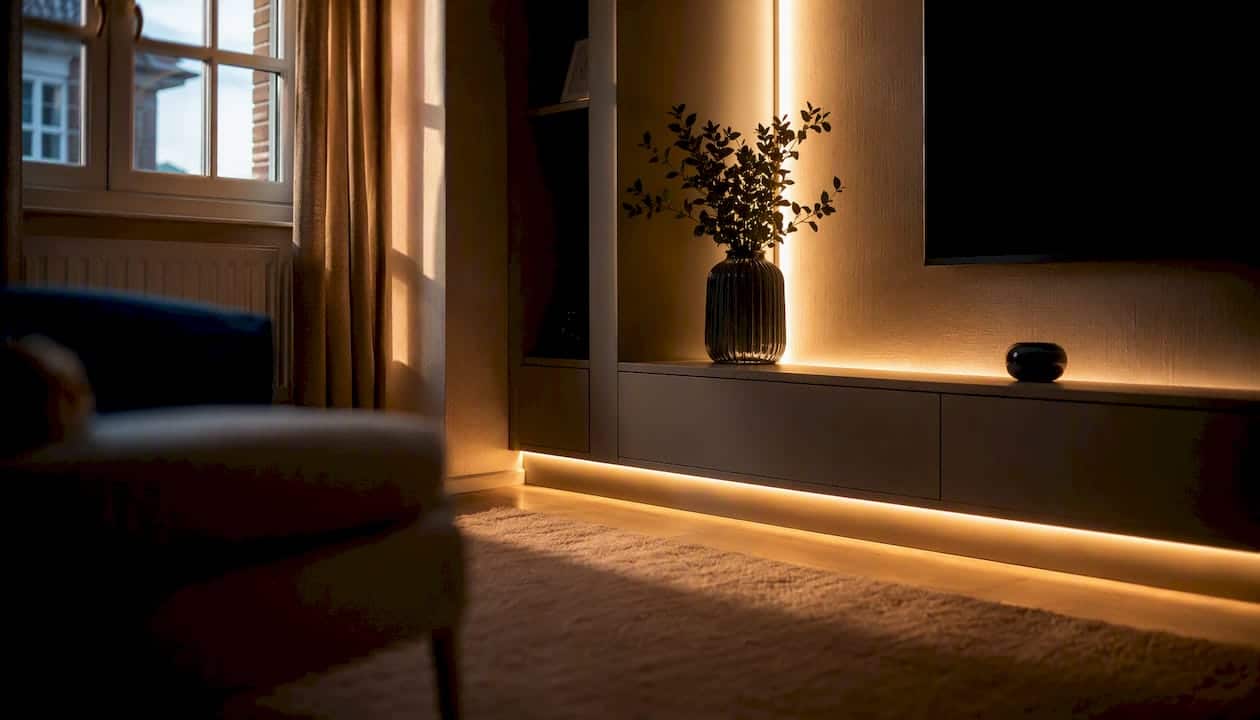
The priority order is straightforward: replace the fittings used most hours per day first. Kitchen downlights, living room lamps, and communal area fittings in rental properties typically deliver the fastest payback. Combining those replacements with occupancy sensors in corridors and stairwells extends the saving further.
For landlords and property investors, LED upgrades also contribute to EPC scores, which are increasingly relevant under MEES compliance requirements. Homeenergymodel’s home energy assessment service can help identify where lighting improvements will have the greatest impact on a property’s energy performance rating, alongside other measures. For those wanting to understand how the Home Energy Model methodology treats lighting within a full property assessment, the Home Energy Model explained guide provides a clear overview.
Sources
- The Benefits of LED Lighting in 2026: Why Switching Makes Sense for UK Homes and Businesses – Balcan Lighting
- Gov
- Lighting technology information leaflet (April 2020) – BEIS/Departmental asset