
The quickest way to cut an electricity bill is to find where the units go, then act on the biggest items first: hot water, laundry, standby devices, lighting and heating. Most of these changes cost little or nothing. Larger savings come from insulation, draught-proofing and efficient appliances. This guide sets out each step in order, with figures from named sources, and shows how to check that the changes are working.
TL;DR
- Start with a baseline: read the meter, note the daily kWh and compare it again after four weeks of changes.
- The biggest no-cost wins are shorter showers, fewer and cooler washes, a full dishwasher, line-drying and switching devices off standby.
- Replace frequently used bulbs with LEDs, which use up to 90% less energy than standard bulbs, according to ENERGY STAR.
- Longer-term savings come from draught-proofing, insulation and efficient appliances chosen on lifetime running cost.
- An up-to-date EPC lists the improvements that suit a specific property, in order of priority.
Table of Contents
- Start with a baseline
- Where the electricity goes
- No-cost changes that add up
- Quick reference: what to change first
- Heating and comfort
- Longer-term upgrades
- How to check the changes are working
- Our perspective
- Get a property-specific starting point
- A simple 30-day plan
- FAQ
- Sources
Start with a baseline
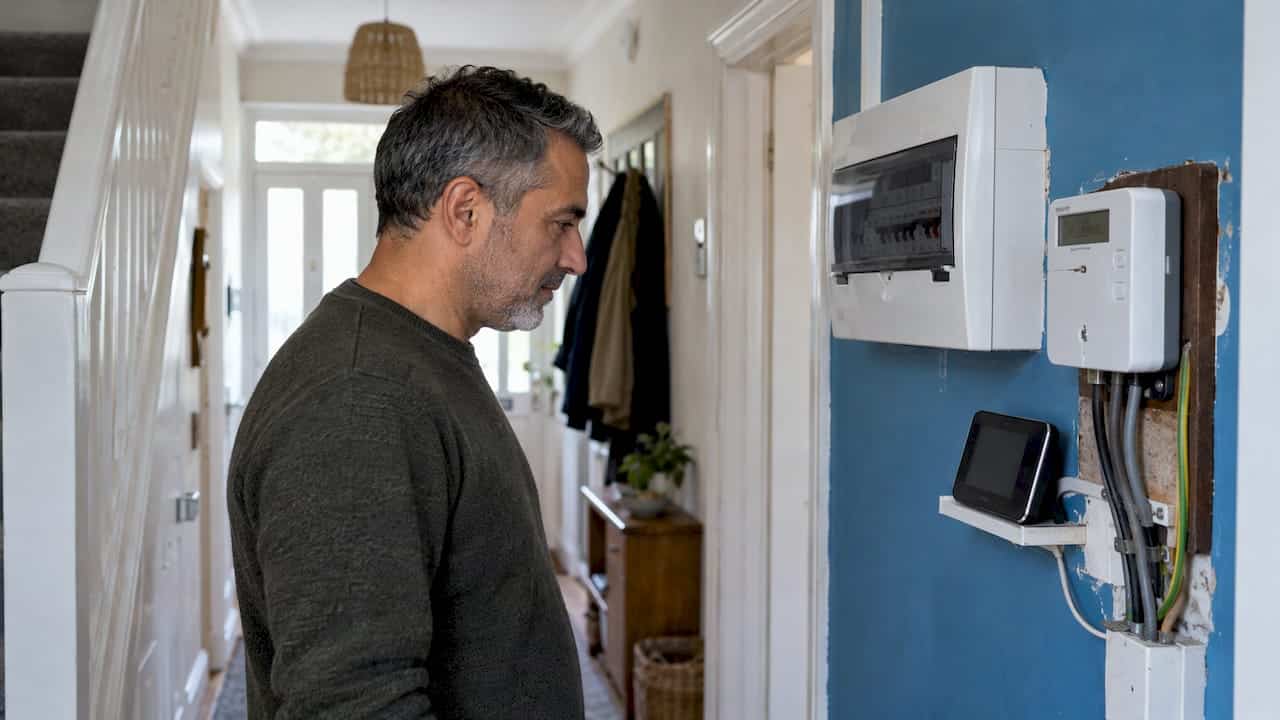
Savings cannot be judged without a starting point. Before changing anything, record the electricity meter reading at the same time each day for a week. Divide the total kWh by seven to get a daily figure. Keep that number alongside the unit rate and standing charge shown on the latest bill.
The unit rate is the price per kilowatt-hour (kWh). The standing charge is a fixed daily amount that does not fall when usage falls. Savings therefore come from the units used, so the target is a lower daily kWh figure.
A smart meter makes this easier. It sends readings to the supplier automatically and comes with an in-home display. Energy Saving Trust reports that over 71% of meters in Great Britain were smart at the end of 2025, and that the display shows near real-time electricity readings and cost. Without one, a weekly manual reading works well enough.
Where the electricity goes
In most UK homes, electricity runs lighting, appliances, electronics, and often hot water and cooking. In homes with electric heating, a heat pump or an immersion heater, the share is much larger. Four areas deserve attention first.
- Hot water. Showers, baths and immersion heaters use a lot of energy for the time they are on.
- Laundry and dishwashing. Washing machines, tumble dryers and dishwashers are high-draw appliances used often.
- Always-on devices. Televisions, set-top boxes, chargers and consoles draw power even when idle.
- Heating and cooling. Where electricity provides heat, draughts and poor insulation drive the bill.
A useful habit is to look at the wattage label on each appliance. Multiply the kilowatts by the hours of use to find the kWh, then multiply by the unit rate. A 2 kW appliance running for one hour uses 2 kWh. At a unit rate of 25p, that is 50p. The same sum applied to a kettle, an oven or a dryer shows quickly which habits cost most.
No-cost changes that add up
Energy Saving Trust lists ten quick tips that it says could save up to £313 a year in Great Britain. The figure covers gas as well as electricity, and actual savings depend on the household. The tips below are the ones that most affect an electricity bill.
Shorten showers
Hot water is expensive to heat, and electric showers and immersion heaters turn that directly into a bill. Energy Saving Trust states that keeping showers to four minutes could save £45 a year in Great Britain. A shower timer in the bathroom is the simplest way to hold to it.
A water-efficient showerhead helps too. One US programme, as summarised by Energy Trust of Oregon, estimates that an efficient showerhead saves around 2,700 gallons of water a year, which is over 330 kWh of electricity with an electric water heater. The figures are American, but the logic applies anywhere: less hot water used means less energy spent heating it. Fixing dripping taps has the same effect.
Wash fewer, cooler loads
Wait for a full load. Use the 30°C or 40°C programme for everyday laundry. A UK government report, Powering the Nation 2, found that households that always wash at 40°C or less save around 24 kWh of electricity a year. That report dates from 2014, so treat the figure as an indication of direction rather than a current price saving. ENERGY STAR also advises washing full loads with cold water where it suits the fabric.
The same rule applies to the dishwasher: run it full, and use the eco programme where available.
Dry clothes without the tumble dryer
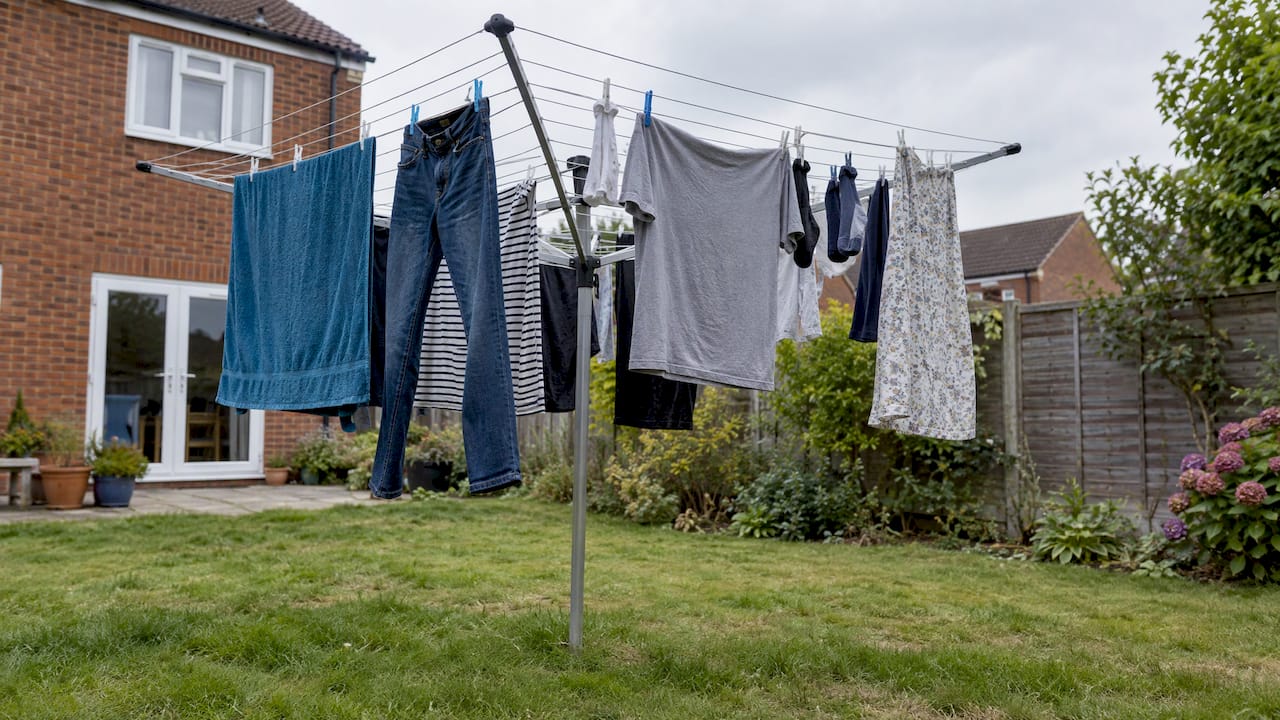
The tumble dryer is one of the most energy-hungry appliances in the home. Energy Saving Trust says that line-drying or using an indoor rack can save £50 a year in Great Britain. An airer in a room with a window open slightly, or a dehumidifier in a closed room, avoids damp. When the dryer is unavoidable, clean the filter after each load and spin clothes at a higher speed first, so they start less wet.
Switch off standby
Devices left on standby draw a small amount of power all day. The Ohio Office of the Consumers’ Counsel states that standby power may account for 5% to 10% of annual electric costs. That figure is from the United States, and the share in a UK home depends on how many devices are left plugged in.
The practical fix is a power strip with a switch for each cluster of equipment: the television, box, console and soundbar on one, the desk setup on another. ENERGY STAR recommends using a power strip to disconnect electronics when not in use. For a room-by-room approach, see the guide on how to reduce standby power in a UK home.
Light only what is in use
Switch lights off when leaving a room. Replace the bulbs used for the longest hours first, normally in the kitchen, living room and hallway. ENERGY STAR states that its certified LED bulbs use up to 90% less energy and last 15 times longer than standard bulbs. Outdoor lighting can also be cut: solar lamps need no mains electricity, and this guide to choosing solar garden lights explains the numbers that matter when comparing them.
Use the kettle and cooker sensibly
Boil only the water needed. Use lids on pans, choose the smallest suitable hob ring and use a microwave or air fryer for small portions in place of the full-size oven. These are small changes individually but they repeat every day.
Quick reference: what to change first
| Change | Cost | Source of the saving figure |
|---|---|---|
| Four-minute showers | None | £45 a year in Great Britain, Energy Saving Trust |
| Line-dry in place of tumble dryer | None | £50 a year in Great Britain, Energy Saving Trust |
| Wash at 40°C or less | None | About 24 kWh a year, Powering the Nation 2 (2014) |
| Switch off standby | Low (power strip) | 5% to 10% of annual electric costs in US homes, Ohio OCC |
| LED bulbs | Low | Up to 90% less energy than standard bulbs, ENERGY STAR |
The figures are not additive. Savings overlap, and each home differs in size, occupancy and tariff.
Heating and comfort
Where electricity supplies the heat, small adjustments matter more. Lowering the thermostat by one degree reduces the load without a big change in comfort. A 30/90/365 electricity saving plan shows one way of splitting changes into quick, medium and year-long steps, which helps keep a programme of savings manageable.
Add these habits:
- Close curtains at dusk to hold heat in. ENERGY STAR also suggests opening shades during cold-weather daylight to gain warmth from the sun, and closing them in warm weather.
- Use timers and thermostat schedules so heating is not running in empty rooms.
- Keep radiators and electric heaters clear of furniture.
- Draught-proof gaps around doors, windows, loft hatches and floors.
Guidance on the wider picture is in the client guide to how to save money on gas and electricity bills.
Longer-term upgrades
Once the free changes are in place, upgrades reduce the base load for years. Spending sensibly means ranking measures by cost against likely saving.
Draught-proofing and insulation
A US energy audit calculator estimates that air sealing saves 10% to 20% of heating and cooling costs, and that loft insulation upgrades save 15% to 25%. These are broad American estimates for heating and cooling, not UK guarantees, but they show why building fabric is usually the first upgrade for homes with electric heating. A property-specific assessment gives better numbers than a general range.
Efficient appliances
When a fridge, washing machine or oven needs replacing, compare lifetime cost, not just the shelf price. The Australian government’s YourHome guide advises choosing an appliance sized for actual needs and comparing purchase price with running costs. A cheaper, less efficient model will cost more to run over its life. The same guide recommends operating appliances efficiently and keeping them maintained. Clean fridge coils, descaled kettles and clear dryer filters all help. More detail is in the guide to appliance energy use for UK homeowners.
Expect real-world results to vary
Research on household efficiency programmes in the US by Chuang, Delmas and Pincetl (2022) found that realised savings were inconsistent with engineering estimates. The practical lesson is to measure results against the baseline rather than rely on a label figure. The same study found that cost sharing worked better than free distribution for lighting upgrades, which suggests that bulbs a household has chosen and paid for are more likely to be fitted and used.
How to check the changes are working
Tracking closes the loop and keeps the habits in place.
- Take the weekly reading. Compare the daily kWh with the baseline week.
- Use the in-home display. With a smart meter, watch the live figure when switching an appliance on and off to see its draw.
- Allow for the season. Winter use is higher than summer, so compare against the same period in a previous year where the bills allow it.
- Compare tariffs separately. A change in unit rate affects the pounds, but not the kWh. Keep the two apart so a price rise does not hide a real reduction in use.
- Review monthly. If daily kWh has not fallen after a month, return to the highest-draw appliances.
Our perspective
Most advice about electricity bills stops at habits. Habits matter, but they cannot tell a homeowner which building improvements are worth the money.
We approach it from the building outward. An energy assessment starts with the fabric, the heating system, the hot water and the ventilation, then ranks what to do. That is why we publish guidance on EPCs, SAP calculations and the upcoming Home Energy Model, which is designed to replace SAP as the government’s method for assessing a building’s energy performance.
For landlords and developers, the same data supports decisions on compliance and investment. For homeowners, it turns a list of 50 tips into a short list of the five that suit the property. We offer domestic EPC assessments and SAP calculations so that owners and professionals can start from a documented position.
Danny
Get a property-specific starting point
General tips give general results. A domestic Energy Performance Certificate records the current rating of a home and lists recommended improvements, which makes it a practical guide to where electricity and heat are being lost. Owners of offices, shops and other non-domestic premises can request a commercial EPC, and operators of air conditioning systems can arrange TM44 inspections. A quote request through the site connects the owner with an assessor. For background on ratings, see the guide to EPC ratings.
A simple 30-day plan
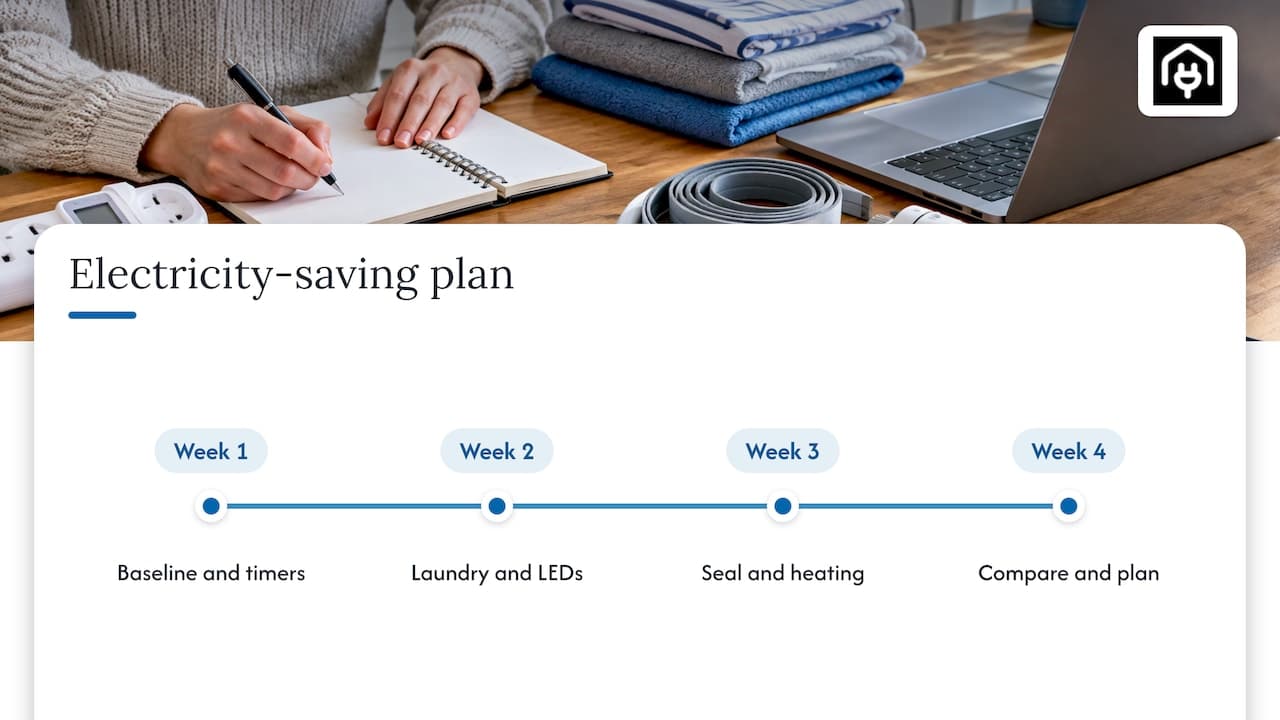
Week 1. Record the baseline. Fit a shower timer. Put a power strip on the television and desk set-ups.
Week 2. Switch laundry to full, cooler loads. Dry on a rack where possible. Replace the five most-used bulbs with LEDs.
Week 3. Draught-proof doors and the loft hatch. Set heating timers and review the thermostat setting.
Week 4. Take a new reading week. Compare the daily kWh with Week 1. Note which changes made the biggest difference, then plan any larger upgrades.
More household-focused ideas are in the guides to best ways to save electricity at home and using less electricity at home or work.
FAQ
What uses the most electricity in a home?
This depends on the home. Electric heating, immersion heaters and electric showers use the most where they are installed. Among everyday appliances, tumble dryers, ovens, washing machines and dishwashers draw heavily, and always-on devices add a steady background load. Checking appliance wattage and the in-home display shows which items matter in a specific property.
Does switching things off standby really make a difference?
Yes, though the size varies by household. A US consumer advocate estimates that standby power may account for 5% to 10% of annual electric costs. A switched power strip is the easiest way to cut it without unplugging devices one by one.
How quickly will a lower bill show up?
Usage changes show up on the meter within days, but the bill follows the next billing period. Compare daily kWh before and after, not the pound total, since tariffs and seasons change the price. A four-week comparison gives a fair picture.
Are LED bulbs worth the cost?
ENERGY STAR says its certified LED bulbs use up to 90% less energy and last 15 times longer than standard bulbs. Start with the lights that burn for the most hours each day, as those repay the cost soonest.
Sources
- Quick tips to save energy at home, Energy Saving Trust
- Smart meters explained, Energy Saving Trust
- Low- to No-Cost Tips for Saving Energy at Home, ENERGY STAR
- “Watts” Driving Up Your Electric Bill?, Office of the Ohio Consumers’ Counsel
- Powering the Nation 2, UK government
- Low-cost and no-cost efficiency tips for property owners, Energy Trust of Oregon
- Appliances and technology, YourHome
- Free Home Energy Audit Savings Estimator, Profession Calculators
- Residential energy efficiency study, Chuang, Delmas and Pincetl (2022)