
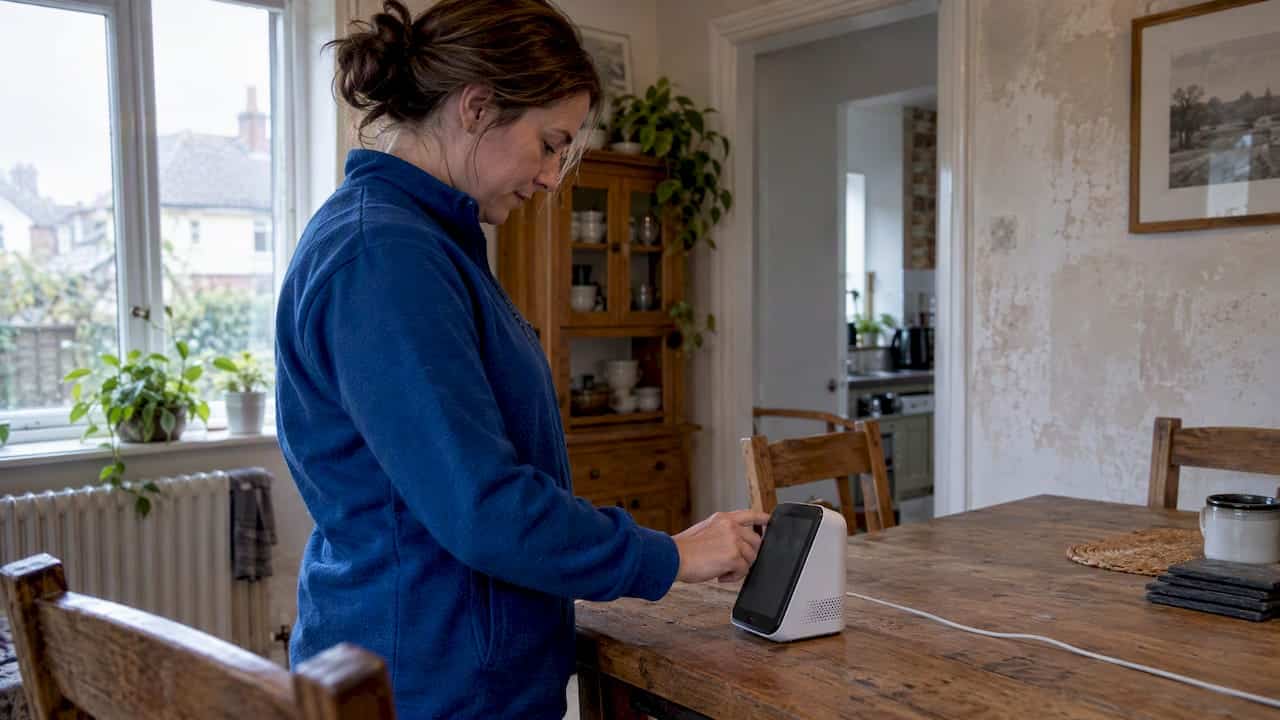
The four major indoor air pollutants are particulate matter (PM), carbon monoxide (CO), volatile organic compounds (VOCs) including formaldehyde, and biological pollutants such as mould, dust mites and pet allergens, as highlighted in UK guidance on indoor air quality. How much harm any of them causes depends on the concentration in the room, how long you are exposed, and whether you fall into a vulnerable group such as young children or people with existing respiratory conditions.
TL;DR:
- Switch on the cooker hood before frying, then open a window briefly; consider a HEPA purifier only if symptoms persist despite proper ventilation.
- Carbon monoxide has no smell or color, so install a BS EN 50291-1 alarm near sleeping areas and fuel appliances, and arrange annual servicing.
- Fix leaks promptly, wash bedding at 60°C or higher to reduce dust mites, and seek professional help when mould is extensive or keeps returning.
- Test for radon if you live in a higher risk area, and choose monitors that measure the specific pollutant you want to track.
- Insulation and airtightness upgrades can trap pollutants unless ventilation changes alongside them; plan extraction or heat recovery and test indoor levels after the work.
Table of Contents
- Particulate matter: what it is and where it comes from indoors
- Carbon monoxide: the invisible danger and how to stop it
- Biological pollutants: mould, dust mites and pet allergens
- A practical checklist for detecting and reducing indoor pollutants
- Why tightening a home without planning ventilation backfires
- Danny’s short takeaway for homeowners
- FAQ
- Sources
- Improve air quality while you improve energy efficiency
Particulate matter: what it is and where it comes from indoors
Particulate matter is a mix of tiny solid and liquid particles suspended in the air. PM2.5, the fraction measuring 2.5 micrometres or smaller, penetrates deep into the lungs and is the size most closely linked to health problems.
Indoors, most PM comes from everyday activity rather than outside pollution. Cooking, particularly frying, is one of the biggest contributors, alongside burning candles, open fires, wood stoves, tobacco smoke and some DIY tasks like sanding or cutting materials.

Breathing in raised PM levels over time is associated with worsened asthma and increased cardiovascular risk, according to the NICE evidence review on indoor pollutants. Children, older people and anyone with heart or lung conditions face the greatest risk from repeated exposure.
A few simple habits cut exposure without any cost:
- Switch on the cooker extractor hood before you start frying, not after.
- Avoid smoking indoors and keep wood burners well maintained and properly vented.
- Open a window briefly after cooking or using candles to clear lingering particles.
- Consider a HEPA air purifier if you notice ongoing symptoms despite ventilating properly.
Carbon monoxide: the invisible danger and how to stop it
Carbon monoxide has no colour and no smell, which makes it impossible to detect without an alarm, as the UK Health Security Agency explains. It builds up when fuel-burning appliances, boilers, gas fires or wood stoves do not get enough air to burn fully, or when flues and chimneys are blocked.
In England, most carbon monoxide deaths occur during autumn and winter, when heating use rises and windows stay shut, according to UKHSA data. Yet less than half of English homes had a CO alarm fitted in 2020, the same source reports, leaving many households unprotected during the riskiest months.
Three actions matter more than any others:
- Fit an alarm that meets BS EN 50291-1 and place it near sleeping areas and fuel-burning appliances.
- Book annual servicing for boilers, gas fires and flues with a registered engineer.
- If the alarm sounds, get everyone outside into fresh air immediately and call the emergency services before re-entering.
Never ignore a CO alarm as a false trigger. If you suspect a leak, treat it as an emergency and have a registered installer check the appliance before using it again.
Biological pollutants: mould, dust mites and pet allergens
Mould, dust mites and pet dander are biological pollutants that thrive on moisture, warmth and poor air circulation. Damp patches, condensation on windows and gaps in ventilation after building work all create the conditions mould needs to establish itself.
These pollutants are well established triggers for allergies and asthma, and the HECC 2023 report notes that biological contaminants are among the pollutants that can worsen when homes are tightened up without adequate ventilation.
Practical fixes work for most households:
- Fix leaks and condensation promptly rather than painting over the symptoms.
- Run extractor fans in kitchens and bathrooms every time you cook or shower.
- Wash bedding at 60°C or higher to reduce dust mite populations.
- Call in professional remediation if mould covers a large area or keeps returning after cleaning.
Radon deserves a separate mention. It is not biological, but it is an invisible, geographically variable gas that seeps up from the ground in some parts of the UK. Testing is the only reliable way to know whether your home has a problem, as the national radon action plan sets out.
A practical checklist for detecting and reducing indoor pollutants
Most indoor air problems respond well to a staged approach: find the source, ventilate properly, then filter what is left.
- Fit a BS EN 50291-1 compliant CO alarm near sleeping areas and combustion appliances.
- Test for radon if you live in a known higher-risk area, using a short-term or long-term detector.
- Use an affordable PM and VOC monitor to spot trends over weeks rather than relying on a single reading. Our guide on measuring air quality at home walks through how to interpret the numbers.
- Service boilers and gas appliances annually and check extractor fans in kitchens and bathrooms are working, not just installed.
- Add a HEPA purifier where PM remains high despite source control and ventilation.
- Review ventilation options such as trickle vents, extract fans or MVHR if rooms still feel stuffy or damp after these steps.
Some problems need a specialist rather than a DIY fix: mould that keeps returning after cleaning, any suspected CO leak, a radon test that comes back elevated, or unexplained symptoms that appeared after insulation or airtightness work.
Pro Tip: Before buying a monitor, check it reports the specific pollutant you are worried about, PM2.5, CO2 or VOCs are measured differently and a cheap all-in-one device sometimes blends readings in ways that are hard to interpret.
Why tightening a home without planning ventilation backfires
We know from assessing homes for energy performance that airtightness improvements, loft insulation, draught-proofing, new windows reduce heat loss but also reduce the natural air changes a home relies on to clear pollutants. The HECC 2023 chapter on indoor environmental quality sets out how efficiency measures can raise indoor concentrations of CO, PM, NO2, VOCs, formaldehyde, radon and biological contaminants when ventilation is not upgraded alongside them.
A retrofit that protects air quality rather than worsening it tends to follow the same pattern:
- Plan extract ventilation or MVHR alongside any insulation or airtightness work, not as an afterthought.
- Have combustion appliances inspected and serviced before and after major works.
- Specify mechanical ventilation with heat recovery where airtightness is significantly improved, covered in our piece on fresh air exchangers.
- Test pollutant levels after the works are finished, not just before, to confirm the changes have not trapped anything indoors.
If you are planning an EPC assessment or a Home Energy Model report, our page on measuring air quality at home is worth reading alongside it.
Danny’s short takeaway for homeowners
Control what you can at source, cooking, smoking, chemical products, then ventilate what is left, and use alarms or testing for the risks you cannot see or smell. Start with the cheap checks: an alarm, a monitor, an open window. Call in a specialist when a problem persists or when retrofit work changes how your home breathes.
— Danny
FAQ
What are 5 indoor air pollutants?
Beyond the four major groups, particulate matter, carbon monoxide, VOCs and biological pollutants, nitrogen dioxide is frequently named as a fifth significant indoor pollutant. It mainly comes from gas cookers, boilers and other combustion appliances, and the NICE evidence review links it to respiratory harm alongside the other four groups.
What are the four major air pollutants?
Indoors, the four pollutants most consistently highlighted by UK guidance are particulate matter, carbon monoxide, volatile organic compounds including formaldehyde, and biological contaminants such as mould and dust mites, as set out in the government response to the AQEG report. Outdoors, air quality standards tend to track a different list that includes ozone and sulphur dioxide.
Can bad indoor air quality make you sick?
Yes. Raised exposure to indoor pollutants is linked to respiratory conditions such as asthma, as well as cardiovascular effects, with children, older adults and people with existing health conditions most at risk, according to NICE guidance. Symptoms can range from mild irritation and headaches to worsened chronic illness over repeated exposure.
What is the deadliest air pollutant?
Carbon monoxide is widely regarded as the most acutely dangerous indoor pollutant because it can cause rapid poisoning and death with no warning smell or colour. The UK Health Security Agency notes that 68% of carbon monoxide deaths in England occur in autumn and winter, which is why a working alarm matters more for this pollutant than for any other.
Sources
Volatile organic compounds are chemicals that evaporate at room temperature from countless household products. Formaldehyde is the example most often named, released slowly from manufactured wood products, certain furniture and some insulation materials.
Common sources sit in most homes already:
- Gov
- How to protect your home and family from the invisible danger of carbon monoxide – UK Health Security Agency
- HECC report 2023. Chapter 5: Impact of climate change policies on indoor environmental quality and health in UK housing
- Indoor air quality at home – NICE guidance
Choosing low-VOC or water-based paints and finishes cuts the problem at source rather than managing it afterwards. Ventilating a freshly decorated room for several days, storing solvents and cleaning products in a garage or shed rather than a cupboard indoors, and cutting back on unnecessary aerosol use all reduce the chemical load in the air you breathe.
Pro Tip: Keep windows open for at least 72 hours after painting or fitting new flooring, even in cold weather, to let the bulk of VOC off-gassing happen outdoors rather than in your lungs.
Improve air quality while you improve energy efficiency
Energy efficiency work and healthy indoor air are not in competition, but only when ventilation is planned alongside insulation and airtightness measures rather than bolted on afterwards. We prepare the EPC assessments, SAP calculations and Home Energy Model reports that property owners rely on when planning retrofit work, and we factor ventilation and combustion safety into that advice rather than treating airtightness as the whole job.
If a mechanical ventilation upgrade is part of your plans, our partner’s guide to controlled mechanical ventilation and airtightness covers the technical side of coordinating insulation with fresh air supply. For the compliance side of a retrofit or new build, our Domestic Energy Performance Certificate service gives you a clear baseline before work starts, so ventilation changes get specified correctly rather than guessed at. Request a quote through our site to get the assessment booked.