
Yes, double glazed windows deliver measurable benefits for most UK homes: warmer rooms, less condensation, quieter interiors and better security, alongside a modest cut in energy bills. The scale of that gain depends on what’s being replaced. Swapping out single glazing brings the biggest improvement; upgrading windows that are already double glazed saves far less. The figures, the payback reality and a practical checklist follow below.
TL;DR:
- Replacing single glazing with double glazing can save up to £135 annually, but upgrading existing double-glazed windows typically saves only £25 to £50.
- The main benefits include improved thermal insulation, reduced condensation, noise dampening, and enhanced security, especially when replacing single panes.
- Energy savings alone often take decades to recover the investment, so comfort and protection are more compelling reasons for installation.
- Whole-window Uw values are the key metric for energy performance, with A-rated double glazing offering a good balance of cost and efficiency for most homes.
- The cost of full replacement varies but generally runs into thousands of pounds; a rated EPC assessment helps determine if the upgrade meets building regulations and improves resale value.
Table of Contents
- What are the main benefits of double glazed windows?
- How much do U-values reveal about real energy savings?
- Do double glazed windows really cut condensation and noise?
- Does new glazing improve security and resale value?
- What does double glazing actually cost, and is it worth it?
- What building regulations apply to replacement windows?
- How do I choose the right double glazing specification?
- What double glazing actually is
- What myths about double glazing should homeowners ignore?
- Why comfort and compliance matter more than payback promises
- How can Homeenergymodel help you plan a glazing upgrade?
- Sources
- FAQ
What are the main benefits of double glazed windows?
Double glazing earns its reputation because it improves several things at once, not just one. Here’s the full spread of gains, most pronounced when they replace genuine single glazing:
- Thermal insulation: less heat escapes through the glass, which lowers heating demand and keeps rooms warmer for longer.
- Comfort: warmer internal glass surfaces mean fewer draughts and cold spots near windows.
- Noise reduction: the air or gas gap between panes dampens sound transmission from traffic, neighbours and weather.
- Condensation control: warmer glass surfaces reduce the moisture build-up that leads to mould and rotten frames.
- Security: modern units typically pair toughened glass with multi-point locking, harder to force than old single-pane sashes.
- Maintenance and looks: newer frames need less upkeep and can smarten a property’s kerb appeal.
Around 18% of heat loss from a typical dwelling escapes through the windows, and single glazing loses heat roughly twice as fast as a standard double-glazed unit. That single statistic explains why the benefits above cluster so heavily around properties still running original single-pane windows rather than those simply due an upgrade.
How much do U-values reveal about real energy savings?
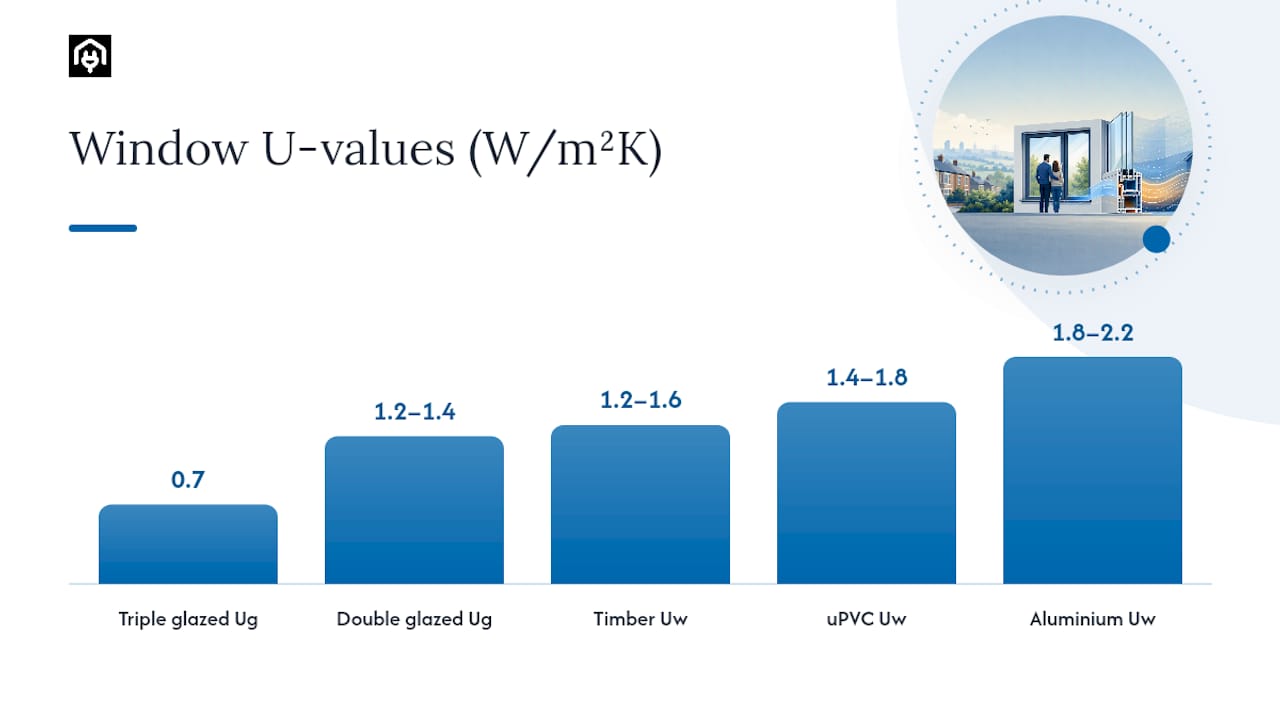
U-values measure how much heat passes through a material, expressed in W/m²K, and lower always means better insulation. Ug refers to the centre-pane glass value; Uw is the whole-window figure once the frame is factored in, and that’s the number that actually matters for a homeowner comparing quotes, since a poor frame can undo good glass.
Typical centre-pane Ug values for standard double glazing sit around 1.2 to 1.4 W/m²K, while triple glazing with low-E coatings and argon fill can reach roughly 0.7 W/m²K. Frame material shifts the whole-window Uw considerably: uPVC frames typically run 1.4 to 1.8, timber 1.2 to 1.6, and aluminium with a thermal break 1.8 to 2.2.
The realistic saving figure: replacing single glazing with A-rated double glazing typically saves £95 to £135 a year for a typical semi-detached home. Upgrading windows that are already double glazed saves far less, often only £25 to £50 a year, because the thermal gap between old and new double glazing is much smaller than the gap between single and double.
Full replacement payback on energy savings alone often runs into decades. Incremental upgrades made while replacing anyway, choosing a better-performing unit rather than the cheapest one, tend to pay back in 8 to 15 years, which is a far more realistic target for most household budgets.
Do double glazed windows really cut condensation and noise?
Condensation forms when warm, moist indoor air meets a cold surface, and single-pane glass is cold enough to trigger it constantly through autumn and winter. Double glazing raises the internal glass temperature closer to room temperature, so moisture has less chance to condense on the pane itself. Warm-edge spacers, the strip separating the two panes at the frame, play a quiet but important role here by reducing the cold bridge at the window’s edge where mould often starts first.
Noise reduction follows a similar logic: the air or gas cavity between panes disrupts sound transmission before it ever reaches the room.
- Standard double glazing typically cuts external noise noticeably compared with single panes, particularly traffic and low-frequency hums.
- Laminated glass or a wider cavity improves acoustic performance further, useful for homes near busy roads or flight paths.
- Trickle vents matter more than most homeowners expect, since sealed, well-insulated windows can trap moisture indoors if ventilation isn’t maintained alongside the glazing upgrade.
Pro Tip: If condensation persists on the inside of new double glazing, check the trickle vents aren’t painted shut or blocked by curtains, most residual moisture problems trace back to restricted airflow, not the glass itself.
Does new glazing improve security and resale value?
Modern double-glazed units almost always come with security features that single glazing simply can’t match. Multi-point locking systems engage at several points along the frame rather than one latch, and toughened or laminated glass resists impact far better than old single panes.
- Multi-point locking as standard on most new uPVC and composite frames.
- Toughened or laminated glass options, sometimes required by insurers for ground-floor windows.
- Reinforced frame profiles that resist forced entry better than ageing timber sashes.
Maintenance varies by frame material. uPVC needs little beyond occasional cleaning and typically lasts 20 to 30 years; timber looks better to many buyers but needs repainting or resealing every few years; aluminium sits between the two on upkeep and often outlasts both if properly finished.
New windows also shape how buyers perceive a property. An improved EPC rating linked to better glazing can support a modest uplift in buyer confidence and, in some cases, sale value, even where the energy saving itself is modest. A well-documented improvement, backed by a pre-listing assessment, often reassures buyers more than the bill saving alone.
What does double glazing actually cost, and is it worth it?
Installed costs vary by frame material, size and specification, but most UK homeowners budget several hundred pounds per window, with a full house replacement running into several thousand pounds depending on property size. The financial case rests on realistic numbers, not marketing promises.
Replacing single glazing with A-rated double glazing saves roughly £95 to £135 per year for a typical semi-detached home. Upgrading existing double glazing saves considerably less, around £25 to £50 a year, because the improvement in performance is smaller.
Payback improves with higher fuel prices, larger glazed areas and better specification, but energy savings alone rarely justify a full replacement on their own. What tips the decision for most households is the combination: warmer rooms, drier window reveals, quieter evenings and stronger buyer confidence when it comes time to sell. Treating the energy bill saving as a bonus, rather than the sole reason to spend, sets more realistic expectations from the outset.
What building regulations apply to replacement windows?
Replacement windows in England and Wales fall under Approved Document L, which sets maximum U-values that new installations must meet. This exists to stop badly specified glazing undoing decades of insulation improvement elsewhere in the property.
When getting quotes, ask installers for:
- The whole-window Uw value, not just the centre-pane Ug figure.
- The frame Uf value and material.
- Spacer type (warm-edge spacers reduce cold bridging).
- BFRC or Window Energy Rating (WER) label evidence, the industry’s standard energy rating for windows.
- Written confirmation the installation meets current Building Regulations.
Listed buildings and conservation areas often can’t fit standard double glazing without planning consent; secondary glazing is the usual alternative, and local planning departments should always be checked first.
How do I choose the right double glazing specification?
Start by deciding what matters most: warmth, quiet, security or kerb appeal, because specification choices shift depending on the priority. A busy main road favours acoustic glass; a north-facing Victorian terrace with damp problems favours condensation control above all else.
- Request Uw and Ug figures on every quote, not just a headline “energy rating.”
- Ask about gas fill (argon is standard), low-E coatings, and warm-edge spacer type.
- Confirm the frame Uf value and material lifespan.
- Get the BFRC/WER label in writing, along with a guarantee period.
- Treat an unusually low quote with suspicion if it comes with no rating evidence or written guarantee.
Energy Saving Trust guidance identifies A-rated double glazing as the best balance of cost and performance for most UK homes; triple glazing suits colder, more exposed properties but adds smaller extra savings in many typical UK cases.
Pro Tip: If a quote doesn’t state a Uw figure, ask for it directly, “double glazed” alone tells you nothing about actual performance.
What double glazing actually is
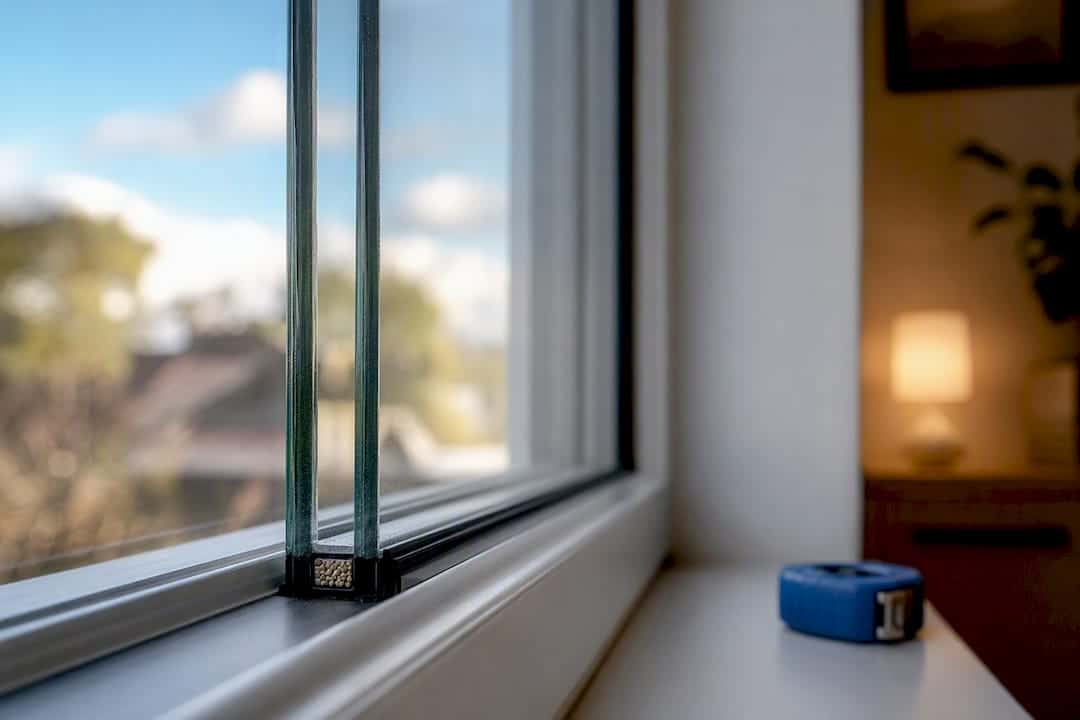
Double glazing means two panes of glass separated by a sealed gap, usually filled with air or an inert gas like argon, held apart by a spacer bar around the edge. That gap is the whole point: it acts as an insulating barrier, slowing the rate at which heat moves from a warm room to the cold outside (or vice versa in summer).
The spacer bar sits at the perimeter, sealing the unit and, in better-quality windows, using a “warm-edge” design made from a less conductive material than the aluminium spacers found in older units. Low-emissivity, or low-E, coatings are usually applied to one internal glass surface, a microscopically thin layer that reflects heat back into the room while still letting daylight through.
Triple glazing simply adds a third pane and a second gap, pushing performance higher again, though frame design and installation quality matter as much as the glass itself. None of this needs specialist knowledge to understand: it’s two sheets of glass with insulating air trapped between them, wrapped in a frame designed to hold that seal for decades. What varies enormously, and what actually drives the benefits homeowners feel, is the quality of the seal, the spacer, the coating and the frame around it all.
What myths about double glazing should homeowners ignore?
Several persistent myths distort how homeowners think about glazing upgrades, and most trace back to marketing rather than evidence.
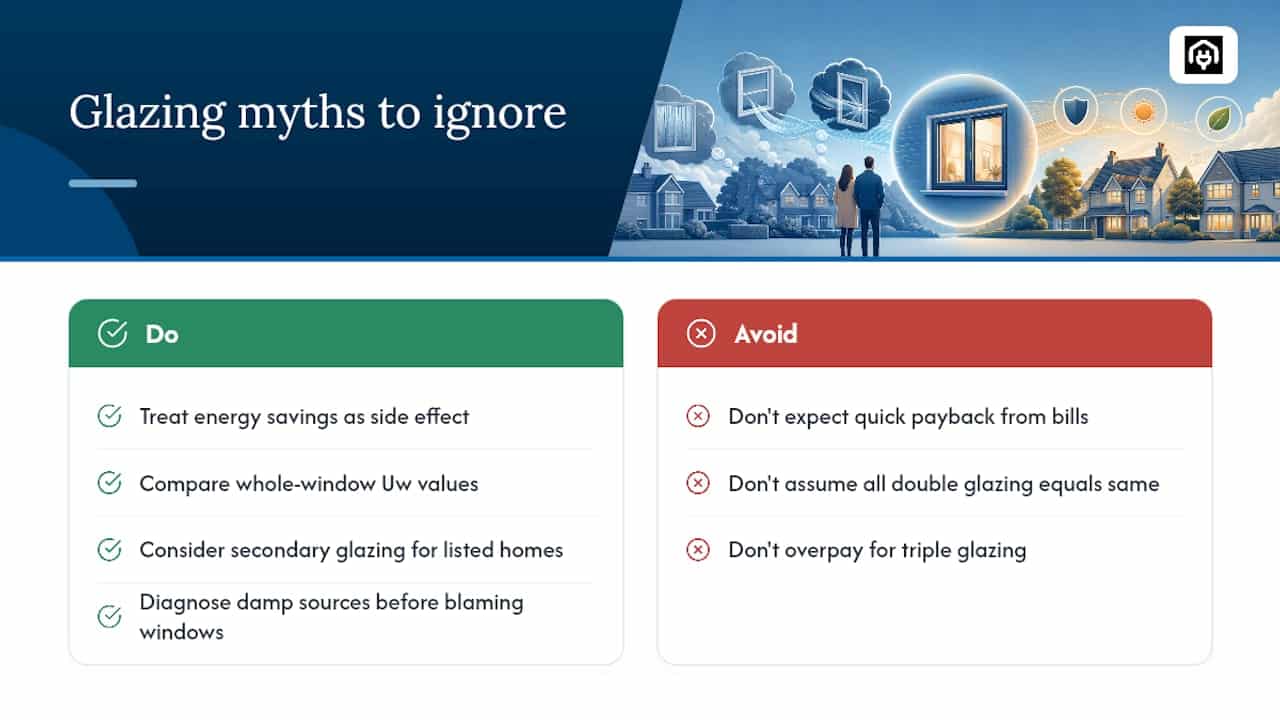
Myth: Double glazing will pay for itself in a few years through bill savings. Full replacement payback on energy savings alone often stretches into decades, particularly when upgrading from windows that are already double glazed rather than single glazing. Treat energy savings as a welcome side effect, not the main financial case.
Myth: All double glazing performs the same. Whole-window Uw values vary enormously by frame material, gas fill and spacer type. Two windows both marketed as “double glazed” can differ substantially in actual performance.
Myth: Triple glazing is always worth the extra cost. It delivers genuinely lower U-values, but the additional saving over A-rated double glazing is modest in many UK climates, and the higher price doesn’t always translate into proportionate extra comfort.
Myth: New windows fix damp problems on their own. Double glazing reduces condensation on the glass itself, but damp elsewhere in a property, walls, floors, poor ventilation, needs its own diagnosis. Glazing is one part of a wider moisture picture, not a universal cure.
Myth: Listed buildings can never get better glazing. Secondary glazing is a recognised alternative that improves thermal and acoustic performance without altering original windows, and it’s often accepted where full replacement isn’t.
Why comfort and compliance matter more than payback promises
Energy bill savings from double glazing are real but modest, especially when upgrading windows that are already double glazed. The stronger case rests on comfort, dryness and security, benefits that don’t show up neatly on a bill but shape daily life in a home far more directly.
The sensible next step is practical: get quotes with rated Uw figures in writing, and where compliance or resale value matters, commission a proper EPC assessment before choosing a specification.
— Danny
How can Homeenergymodel help you plan a glazing upgrade?
Deciding on glazing specification gets much easier once the numbers behind your property are on paper rather than guesswork. Homeenergymodel’s domestic EPC service gives homeowners a rated assessment that shows exactly where heat is escaping and how glazing changes would affect the property’s overall rating, useful whether the goal is compliance, retrofit planning or a future sale. For larger retrofit projects or planning applications, SAP calculations provide the formal figures needed to demonstrate that a chosen glazing specification actually meets Approved Document L targets, rather than relying on a salesperson’s assurance.
If glazing is part of a wider set of improvements rather than a single job, an EPC assessment gives a clearer starting point than tackling windows in isolation. Request a quote through A domestic EPC page to request a rated report and practical guidance on where glazing fits into your property’s compliance picture.
This article is general information, not a substitute for advice from a qualified financial advisor. Consult a qualified financial professional about your own circumstances before acting on anything here.
Sources
- DECC factsheet: glazing and thermal performance
- Window U-values and building regs 2026 | Axiom Eco Homes
- Doubleglazingquote
FAQ
What are the downsides of double glazed windows?
The main downsides are a long payback period on energy savings alone, higher upfront cost than single glazing, and the fact that sealed units eventually fail and need replacing, typically after 20 to 30 years depending on the frame material. Poor installation can also trap moisture indoors if ventilation isn’t addressed alongside the glazing.
How much would it cost to double glaze a four-bedroom house?
Costs vary widely depending on the number of windows, frame material and specification, so there’s no single fixed figure. Homeowners should request itemised quotes from installers and always ask for the whole-window Uw value alongside the price, since two similarly priced quotes can represent very different performance.
Is it worth getting double glazed windows?
For homes still running single glazing, yes: the combination of warmer rooms, less condensation, reduced noise and better security makes a strong case, alongside savings of roughly £95 to £135 a year on a typical semi-detached home. Upgrading windows that are already double glazed is a weaker financial case, since the saving drops to around £25 to £50 a year, though comfort and condensation control still improve.
What is the 25% glazing rule?
This refers to a planning and building control guideline limiting how much glazing area can be added or altered in certain replacement or extension projects without triggering fuller compliance checks, particularly relevant to conservatories and extensions. It varies by local authority and project type, so it’s worth checking directly with the relevant planning department or referring to Approved Document L guidance before assuming a project falls under or outside the threshold.