
TL;DR:
- Turning down your thermostat by 1°C can save a significant amount annually on energy costs. Using thermostatic radiator valves and insulating your home enhances savings by reducing heating in unused rooms.
Turning your thermostat down by 1°C is an effective action you can take, and it typically saves a significant amount each year on its own. Pair that with room-by-room control using thermostatic radiator valves (TRVs) and you stop paying to heat rooms that are empty. According to the Energy Saving Trust, heating and hot water account for over half of a typical home’s energy use, so this is exactly where targeted effort pays off.
Start with these actions today:
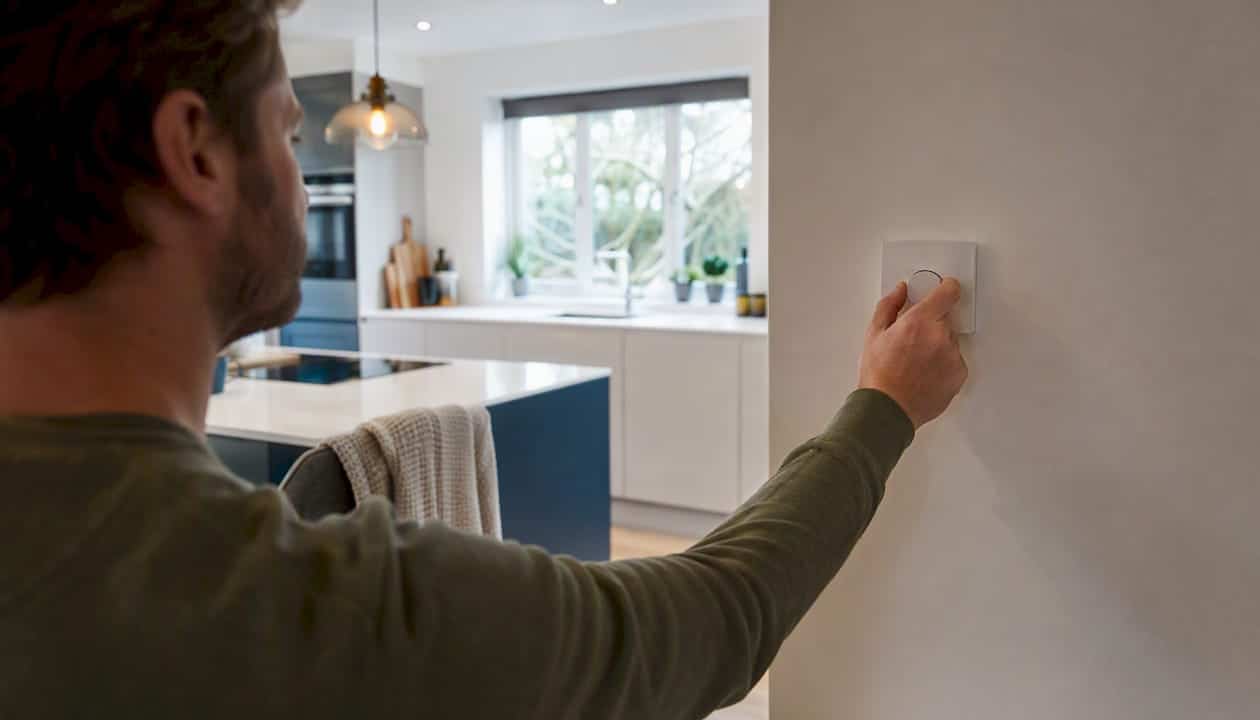
- Turn the thermostat down by 1°C and set it to heat only the rooms in use.
- Take an actual meter reading and submit it to your supplier to stop estimated billing.
- Shorten showers by two minutes and switch the washing machine to 30°C.
- Move furniture away from radiators and bleed any that feel cold at the top.
- Request a smart meter from your supplier if you do not already have one.
- Contact your supplier now if you are struggling to pay — they are required to offer affordable payment plans.
The Energy Saving Trust estimates that combining everyday actions such as avoiding the tumble dryer, taking shorter showers, and switching off standby devices could save up to £313 a year in Great Britain. That figure covers gas and electricity together, but heating behaviour drives the largest share of it.
Table of Contents
- Why is your gas bill so high?
- How to reduce your gas bill with quick, low-cost actions
- Heating controls: thermostats, TRVs, and smart systems
- Fabric-first upgrades that pay back fastest
- Boiler checks and when to call a Gas Safe engineer
- Billing, switching supplier, and getting help if you cannot pay
- Realistic costs, savings, and payback: UK estimates
- How to prioritise actions and choose contractors
- Key takeaways
- Why fabric and controls should come first
- A home energy assessment gives you a property-specific plan
- Authoritative sources for further guidance
Why is your gas bill so high?
Heating and hot water make up over half of a typical UK home’s energy use. That proportion rises sharply in winter and in older, poorly insulated properties where heat escapes almost as fast as the boiler produces it.
The main culprits behind a high bill are:
- Central heating running too long or too warm — the single largest driver in most homes.
- Poor insulation — uninsulated loft spaces, cavity walls, and single-glazed windows all bleed heat.
- An ageing or inefficient boiler — older G-rated boilers convert significantly less fuel to usable heat than modern A-rated condensing models.
- Estimated meter readings — if your supplier has been estimating, your bill may not reflect actual consumption at all, either inflating or deferring costs.
- Inefficient hot water use — long showers, overfilled baths, and an uninsulated hot water cylinder all add up.
Incorrect or estimated meter readings are a common but overlooked cause of bills that seem inexplicably high. Submitting a real reading costs nothing and can correct an overcharge immediately.
Seasonal behaviour matters too. Many households leave heating schedules unchanged year-round, paying to heat the house on mild autumn days when a jumper would suffice. Awareness of that pattern alone tends to shift habits.
How to reduce your gas bill with quick, low-cost actions
These steps require no installation and most cost nothing. Work through them in order.
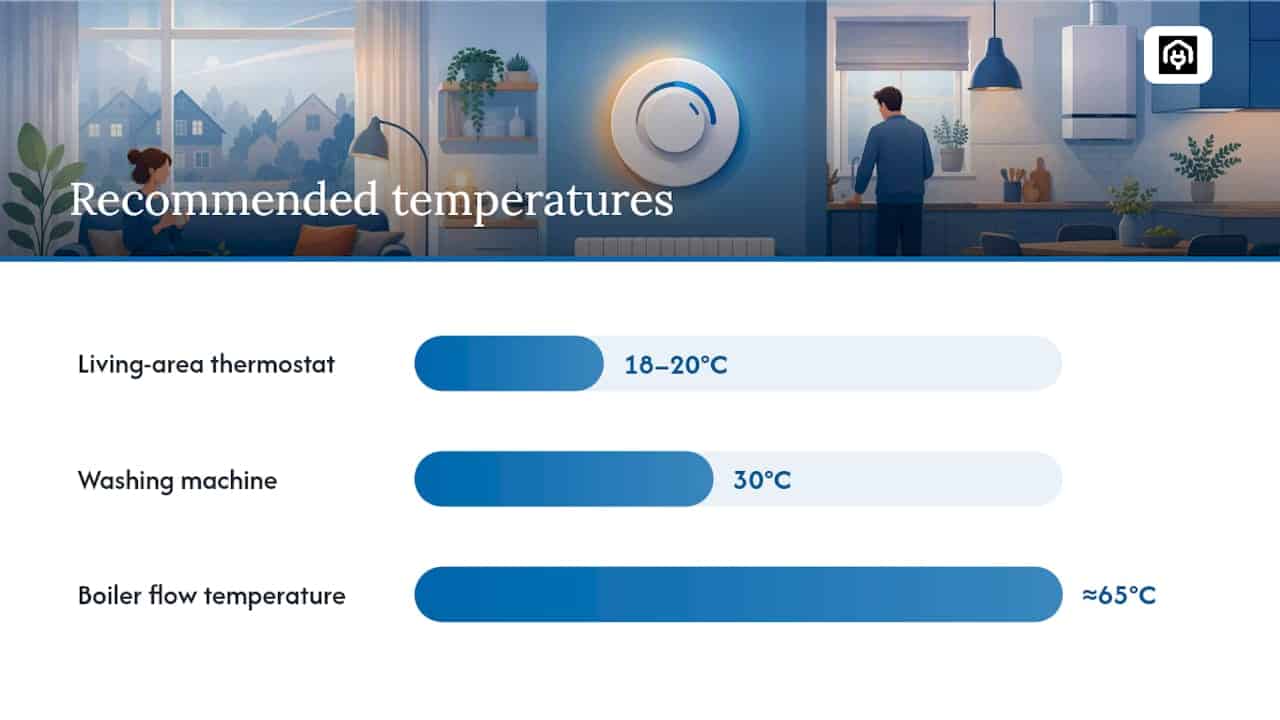
- Turn the thermostat down by 1°C. Set it to 18–20°C for living areas. Each degree reduction can save a notable amount each year.
- Shorten showers to four minutes. Hot water heating is the second-largest gas cost in most homes. A two-minute reduction per shower adds up across a household.
- Wash clothes at 30°C. Modern detergents work effectively at lower temperatures, and the energy difference between 30°C and 40°C is measurable over a year.
- Avoid the tumble dryer when possible. Air-drying clothes indoors or outside removes a significant electricity draw and reduces incidental moisture that the heating then has to counteract.
- Clear radiators. Sofas, curtains, and drying racks placed directly in front of radiators block heat from circulating. Moving them costs nothing.
- Bleed radiators that are cold at the top. Trapped air prevents full heat output, meaning the boiler runs longer to reach the set temperature.
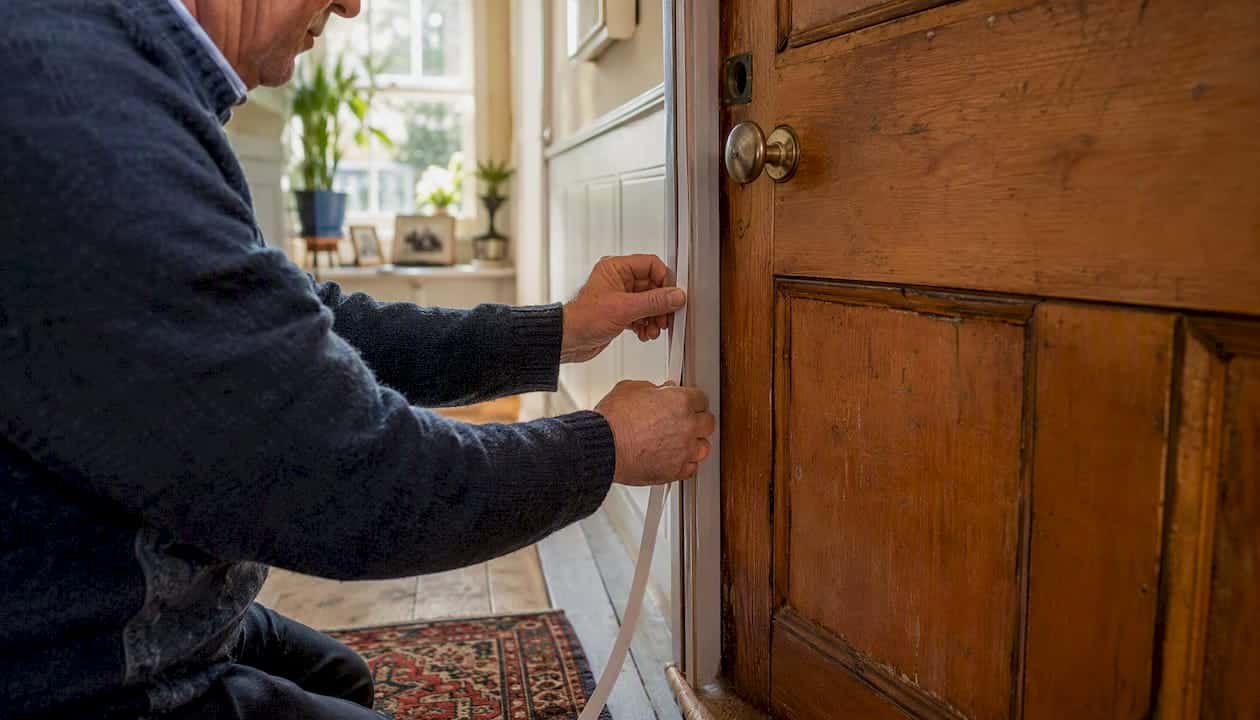
- Use draught excluders on doors and seal gaps around windows. DIY draught proofing has one of the shortest payback periods of any home improvement, often measured in months rather than years.
- Only heat rooms in use. Close doors to unused rooms and turn TRVs down in those spaces.
Pro Tip: Take a meter reading before and after making these changes over a two-week period. The difference gives a real baseline for measuring progress, and it removes the risk of estimated billing distorting your results.
Pro Tip: Do not turn the boiler off entirely to save money. Keeping a lower, consistent flow temperature — around 65°C or lower for many combi boilers — is often more efficient than frequent on/off cycles. Check your manufacturer’s guidance before adjusting.
A smart meter or in-home display lets you see gas consumption in near real time, which makes it straightforward to check whether a specific change has had an effect. Request one from your supplier at no charge.
Heating controls: thermostats, TRVs, and smart systems
A full set of heating controls — a room thermostat, a programmer or timer, and TRVs on individual radiators — works as a system. Each component handles a different layer of control, and missing any one of them means paying to heat spaces or times you do not need.
Installing a full set of heating controls can save around £180 a year in a typical semi-detached home. The Energy Saving Trust also notes that TRVs and thermostats used correctly can save a notable amount per year in Great Britain.
| Control type | What it does | Typical annual saving | Setup complexity |
|---|---|---|---|
| Room thermostat | Cuts heating when target temperature is reached | Included in full-controls figure | Low — set once |
| Programmer/timer | Restricts heating to occupied hours | Included in full-controls figure | Low — set schedule |
| TRVs | Limits heat to individual rooms | Included in full-controls figure | Low — fit and set |
| Smart thermostat (e.g. Hive, Nest) | Remote control, learning schedules, app access | Varies; often similar to full controls | Medium — needs Wi-Fi and setup |
Compatibility matters. Combi boilers, system boilers, and heat pumps each have different control requirements. Check with a qualified installer before purchasing a smart thermostat — some systems require a wired connection that older properties may not have.
The most common mistake with smart heating systems is leaving them on a whole-house schedule rather than configuring zones. Smart systems only save money when set to match actual occupancy patterns; heating an empty study on the same schedule as the living room eliminates the benefit. TRVs in less-used rooms are the practical fix.
Key configuration steps:
- Set the programmer to match actual occupancy, not a default factory schedule.
- Use TRVs to reduce heat in bedrooms and unused rooms during the day.
- If using a learning thermostat, allow the learning period to complete before judging performance.
- Review the schedule each season — spring and autumn settings differ from winter.
Fabric-first upgrades that pay back fastest
Behaviour change and controls reduce what the boiler burns. Insulation reduces how much heat the building loses in the first place. The two work together, but fabric improvements deliver permanent reductions in heating demand regardless of how the occupants behave.
DIY draught proofing and insulating hot water pipes and cylinders have low upfront costs and payback periods measured in months to a couple of years.
| Measure | Typical installed cost | Typical annual saving | Estimated payback |
|---|---|---|---|
| Loft insulation | £300–£500 | £150 | 2–3 years |
| Cavity wall insulation | £500–£1,500 | £150–£300 | 3–5 years |
| Hot water cylinder jacket | £15–£30 | — | Under 1 year |
| DIY draught proofing (doors/windows) | — | — | 1–2 years |
| Solid wall insulation (external) | — | £200–£400 | 20–30 years |
Figures are indicative ranges based on Energy Saving Trust guidance for a typical semi-detached home in Great Britain. Actual savings vary by property type, occupancy, and current energy tariff.
Loft insulation and cavity wall insulation offer the strongest combination of low cost and meaningful annual saving. Solid wall insulation carries a much longer payback but may be the only option for pre-1920 solid-wall properties.
For building fabric improvements that go beyond draught proofing, professional installation is advisable. Cavity wall insulation in particular requires a specialist survey to confirm suitability — incorrectly installed cavity fill can cause damp problems.
Grants and schemes. The Boiler Upgrade Scheme, Warm Homes Local Grant, Great British Insulation Scheme, and Energy Company Obligation are among the current and recent government programmes that subsidise or fund insulation and heating upgrades. Eligibility depends on income, property type, and location. Check GOV.UK’s Help to Heat page and your local authority before commissioning any work.
Boiler checks and when to call a Gas Safe engineer
A well-maintained boiler runs more efficiently and lasts longer. Annual servicing by a Gas Safe–registered engineer is the single most important maintenance step — it keeps the boiler running safely and at peak efficiency, and it is a condition of most manufacturer warranties.
Routine checks to carry out yourself:
- Check boiler pressure. Most combi boilers operate correctly between 1 and 1.5 bar. A pressure gauge below 1 bar usually means the system needs repressurising.
- Bleed radiators. Cold spots at the top of a radiator indicate trapped air. Bleeding takes minutes and restores full heat output.
- Verify flow temperature. Many boilers leave the factory set to 80°C or higher. Reducing the flow temperature to around 65°C for a combi boiler is often more efficient — but check manufacturer guidance first, and consider a temporary increase during very cold spells.
- Check for error codes. Modern boilers display fault codes. Note the code and look it up in the manual before calling an engineer.
When to call a Gas Safe–registered engineer: If you smell gas, suspect a carbon monoxide leak, notice the pilot light repeatedly going out, or find the boiler losing pressure frequently, stop using the appliance and call a Gas Safe engineer immediately. Never attempt to repair gas pipework, the heat exchanger, or the gas valve yourself. Find a qualified engineer at Gas Safe Register.
Pro Tip: A boiler over 15 years old that requires frequent repairs is often more expensive to maintain than to replace. A modern A-rated condensing boiler typically converts over 90% of fuel to heat, compared with 70–80% for older models. Ask a Gas Safe engineer to compare annual running costs before committing to another repair.
Gas Safe–registered engineers can also fit heating controls, TRVs, and system upgrades safely. When commissioning insulation work near gas appliances or flues, confirm that the installer coordinates with a Gas Safe engineer where required.
Billing, switching supplier, and getting help if you cannot pay
Billing accuracy is a straightforward place to start. Many households are paying against estimated readings that bear little relation to actual consumption. Submitting a real meter reading to your supplier corrects this at no cost.
Steps to take now:
- Use a comparison service — (such as those accredited by Ofgem) to check whether a cheaper tariff is available from your current supplier or another provider.
- Request a smart meter. Suppliers offer smart meter installations free of charge. A smart meter sends automatic readings to your supplier, ending estimated billing permanently.
- Contact your supplier early if you are struggling to pay. Ofgem requires suppliers to work with customers on affordable payment plans and many offer hardship funds. Waiting until debt accumulates reduces the options available.
Ofgem’s consumer protections cover areas including billing disputes, disconnection rules, and the right to a prepayment meter review. If a supplier is not meeting its obligations, complaints can be escalated to the Energy Ombudsman.
For households on benefits or low incomes, the Warm Home Discount Scheme offers £150 off electricity bills for eligible customers in winter 2025–2026. The GOV.UK Help with Energy Bills page lists eligibility criteria and how to apply.
Realistic costs, savings, and payback: UK estimates
The table below draws on Energy Saving Trust guidance and government scheme data to give a realistic picture of what common measures cost and return annually.
| Measure | Upfront cost | Annual saving (est.) | Simple payback |
|---|---|---|---|
| Thermostat down 1°C | — | £80–£100 | Immediate |
| Full heating controls (thermostat + programmer + TRVs) | £150–£400 installed | ~£180 | 1–2 years |
| Smart thermostat | £150–£300 installed | Similar to full controls | 1–2 years |
| Loft insulation | £300–£500 | £150 | 2–3 years |
| Cavity wall insulation | £500–£1,500 | £150–£300 | 3–5 years |
| Hot water cylinder jacket | £15–£30 | — | Under 1 year |
| Draught proofing (DIY) | — | — | 1–2 years |
Estimates are indicative for a typical semi-detached home in Great Britain. Savings vary with property size, occupancy, and current tariff.
Worked example 1 — semi-detached, uninsulated loft and cavity walls. A homeowner installs loft insulation (£400) and cavity wall insulation (£1,000) and fits a full set of heating controls (£300). Total outlay: £1,700. Combined annual saving: approximately £480–£630. Simple payback: 2–4 years, after which the savings continue indefinitely.
Worked example 2 — small flat with no TRVs. A tenant or owner fits TRVs and a programmable room thermostat (£200 installed). Annual saving: approximately £180. Payback: 1–2 years. No structural work required.
The largest single driver of savings is the combination of fabric improvements and correctly configured controls. Behaviour change alone — shorter showers, lower thermostat settings — delivers meaningful reductions, but fabric upgrades lock in those savings permanently regardless of future occupant behaviour. For a deeper look at calculating energy savings for a specific property, a formal assessment gives property-specific figures rather than averages.
How to prioritise actions and choose contractors
A clear order of priority prevents wasted spending. Work through the sequence below before committing to any significant outlay.
- Quick wins first — thermostat reduction, meter reading submission, draught proofing, radiator bleeding. Cost: minimal. Payback: immediate to months.
- Controls next — fit a full set of heating controls or upgrade to a smart thermostat if the existing controls are absent or broken. Cost: £150–£400. Payback: 1–2 years.
- Fabric upgrades — loft insulation, cavity wall insulation, hot water cylinder jacket. Prioritise by payback period (cylinder jacket and loft first). Cost: £300–£1,500 per measure.
- Major plant replacement last — boiler replacement or heat pump installation only after fabric and controls are addressed. Replacing a boiler in a leaky, uninsulated house wastes the investment.
Questions to ask any contractor:
- Are you Gas Safe–registered (for gas work) or MCS-certified (for heat pumps and renewables)?
- Can you provide a written quote with a breakdown of labour and materials?
- What warranty do you offer on parts and installation?
- What annual energy saving do you estimate for this property specifically?
- Are there grant schemes I should apply for before you begin?
Red flags to watch for:
- Unsolicited doorstep offers promising free insulation with no eligibility check.
- Vague verbal estimates with no written documentation.
- Pressure to sign on the same day.
- No mention of building regulations or planning permission where relevant.
Before hiring anyone for insulation or heating work, check eligibility for the Boiler Upgrade Scheme, Warm Homes Local Grant, Great British Insulation Scheme, or ECO4. Grant-funded work must use approved installers, so confirming eligibility first avoids paying for work that could have been subsidised.
Key takeaways
Cutting gas costs most effectively means combining immediate behavioural changes with targeted investment in heating controls and building fabric, in that order.
| Point | Details |
|---|---|
| Start with the thermostat | Reducing the thermostat by 1°C saves roughly £80–£100 a year at no cost. |
| Full controls deliver ~£180/year | A thermostat, programmer, and TRVs together save a significant amount annually in a typical semi-detached home. |
| Fabric upgrades lock in savings | Loft and cavity wall insulation reduce heating demand permanently, with payback periods of 2–5 years. |
| Contact your supplier if struggling | Ofgem requires suppliers to offer affordable payment plans and many provide free smart meter installations. |
| Homeenergymodel assessment | A professional home energy assessment from Homeenergymodel gives property-specific savings estimates and EPC guidance. |
Why fabric and controls should come first
The conventional advice to “just turn things off” is not wrong, but it is incomplete. Behaviour change is reversible — a cold week, a new occupant, or a change in routine undoes it. Fabric improvements and correctly configured controls are not reversible in the same way. Once loft insulation is in place, it works continuously, regardless of what the occupants do.
The evidence from the Energy Saving Trust consistently points in the same direction: the best long-term returns come from combining fabric interventions with proper heating controls, not from relying on behaviour change alone. Controls without insulation still heat a leaky building. Insulation without controls still heats it at the wrong times.
There is also an EPC dimension worth considering. Under the Home Energy Model, which is set to replace SAP as the methodology for assessing building energy performance, fabric quality and heating system efficiency are the primary determinants of a property’s rating. Homeowners and landlords who invest in insulation and controls now are not just cutting bills — they are improving their EPC rating and positioning the property ahead of tightening minimum energy efficiency standards. For longer-term decisions about which measures to prioritise, a formal energy assessment gives property-specific modelling rather than national averages.
The practical message is straightforward: start with the free actions, add controls, then address the fabric. Each layer builds on the last.
A home energy assessment gives you a property-specific plan
Generic savings estimates are useful for setting expectations, but they cannot tell you whether your specific property has unfilled cavity walls, a poorly configured boiler, or an EPC rating that will affect its saleability or rental compliance. A professional home energy assessment closes that gap.
Homeenergymodel provides domestic EPC services, home energy assessments, and consultation on energy efficiency upgrades for UK property owners. An assessment produces a prioritised list of recommended measures with estimated costs and savings specific to the property, not national averages. It also generates or updates the EPC, which landlords need for compliance and homeowners need for sale or remortgage.
For a clear picture of where the property stands and which improvements will deliver the strongest return, book a home energy assessment or find a qualified EPC assessor near you through Homeenergymodel.
This article provides general information about reducing gas bills and is not a substitute for professional energy advice. Tariffs, grant eligibility, and scheme availability change regularly — confirm current details with Ofgem, GOV.UK, or a qualified energy assessor.
Authoritative sources for further guidance
- Ofgem — Save money on your energy bill: The regulator’s own guidance on billing rights, tariff comparisons, and consumer protections. The starting point for any billing dispute or supplier complaint.
- Ofgem — Get help with your energy bills — Covers payment plans, hardship funds, and supplier obligations for customers who cannot pay.
- Energy Saving Trust — Quick tips and home improvements — Practical, independently produced guidance on measures, costs, and savings for UK homes. The most widely cited source for payback estimates.
- GOV.UK — Find energy grants for your home (Help to Heat): The definitive list of current government schemes including the Boiler Upgrade Scheme, Warm Homes Local Grant, Great British Insulation Scheme, and ECO4.
- GOV.UK — Find ways to save energy in your home — Enter a property’s postcode to retrieve EPC-based recommendations with estimated costs and savings.
- GOV.UK — Help with energy bills (benefits and low income) — Eligibility checker for the Warm Home Discount Scheme and other income-related support.