

TL;DR:
- UK energy grants in 2026 help homeowners reduce installation costs for low carbon technologies.
- Proper planning ensures access to schemes like the Boiler Upgrade Scheme, Warm Homes Plan, and ECO4.
Renewable energy grants are government-backed funds that reduce the upfront cost of installing low carbon technologies such as heat pumps, solar panels, and insulation. For UK homeowners and property developers, these grants represent a direct route to cutting installation bills and improving Energy Performance Certificate (EPC) ratings. The 2026 landscape includes several active schemes, notably the Boiler Upgrade Scheme, the Warm Homes Plan, and ECO4, each targeting different property types and household circumstances. Understanding which scheme applies to a given property is the first step to accessing meaningful financial support.
What major renewable energy grant schemes are available in the UK?
The UK government runs several distinct grant schemes in 2026, each with its own eligibility rules, technology focus, and funding level. Homeowners and property developers need to understand the full portfolio before applying.

Boiler Upgrade Scheme (BUS)
The Boiler Upgrade Scheme provides grants to households in England and Wales replacing fossil fuel heating with low carbon alternatives. Grant values reach £7,500 for air source and ground source heat pumps, rising to £9,000 for households currently on oil or LPG. That uplift for oil and LPG properties reflects the higher cost of switching away from off-grid fuels. The scheme is administered centrally and paid directly to approved installers, which simplifies the process for homeowners.
Warm Homes Plan
The Warm Homes Plan commits £15 billion in public investment to upgrade 5 million homes by 2030. It covers heat pumps, solar PV, batteries, and insulation, and operates through both grants and low-interest finance. The plan targets fuel-poor households as a priority but also supports broader homeowner groups through locally delivered grants. Delivery routes vary by tenure and location, so eligibility depends on where the property sits and who owns it.
ECO4 and Great British Insulation Scheme (GBIS)
ECO4 is the current energy company obligation scheme, extended to 31 december 2026 to allow suppliers to meet targets and fix non-compliant installations. It focuses on fuel-poor and low-income households, delivering insulation, heat pumps, and heating upgrades at no cost. The Great British Insulation Scheme closed on 31 march 2026. By that point, GBIS had delivered 139,200 measures across 100,900 households, spending £388.1 million in total. Homeowners who missed GBIS must now look to ECO4 or the Warm Homes Plan for insulation support.
Key technologies covered across these schemes include:
- Air source heat pumps and ground source heat pumps (BUS, Warm Homes Plan)
- Solar PV panels and battery storage (Warm Homes Plan)
- Biomass boilers (BUS in eligible rural properties)
- Cavity wall, loft, and solid wall insulation (ECO4, formerly GBIS)
- Heating controls and upgrades (ECO4)
How to determine eligibility and apply for energy grants
Eligibility for green energy funding varies significantly by scheme, property type, and household income. Getting this right before applying saves time and avoids rejected applications.
-
Check your EPC rating. The Warm Homes Local Grant requires privately owned homes in England to hold an EPC rating of D–G and demonstrate the ability to improve to Band C. Properties already at Band C or above may not qualify for certain measures.
-
Confirm your location. Schemes differ across England, Wales, Scotland, and Northern Ireland. ECO4 operates UK-wide, but the Boiler Upgrade Scheme covers England and Wales only. Scotland and Northern Ireland have separate programmes administered by devolved governments.
-
Assess household income and tenure. ECO4 prioritises low-income households and those receiving qualifying benefits. The Warm Homes Plan targets fuel-poor households first, though broader homeowner groups can access support through local authority referrals.
-
Contact an approved installer or local authority. Most schemes do not accept direct applications from homeowners. Installers registered with schemes like BUS submit applications on behalf of the property owner. Local authorities act as referral routes for Warm Homes Local Grant.
-
Apply before scheme deadlines. ECO4 ends 31 december 2026 with no confirmed successor. The GBIS referral service closed ahead of the official scheme end date to manage the application backlog. This illustrates that effective access often closes before the published deadline.
Pro Tip: Get an up-to-date EPC before contacting any installer or local authority. A current EPC identifies which measures qualify and at what rating band, which directly determines eligibility for most schemes.
What technologies and upgrades do these grants cover?
Grant schemes in 2026 cover a wide range of technologies, from heating systems to building fabric improvements. The table below summarises the main options, typical grant support, and the primary scheme delivering each.
| Technology | Typical grant support | Primary scheme |
|---|---|---|
| Air source heat pump | Up to £7,500 | Boiler Upgrade Scheme |
| Ground source heat pump | Up to £7,500 | Boiler Upgrade Scheme |
| Oil/LPG replacement heat pump | Up to £9,000 | Boiler Upgrade Scheme |
| Solar PV and battery storage | Varies by local authority | Warm Homes Plan |
| Biomass boiler | Eligible under BUS | Boiler Upgrade Scheme |
| Loft and cavity wall insulation | Fully funded for eligible households | ECO4 |
| Solid wall insulation | Fully funded for eligible households | ECO4 |
The benefits of solar energy for UK homeowners extend beyond grant support. Solar PV reduces electricity bills year-round and can pair with battery storage to maximise self-consumption. Heat pumps deliver a similar long-term return. Around 90–95% of Boiler Upgrade Scheme recipients report lower energy bills after installation. That figure confirms the financial case for switching, not just the environmental one.
Combining technologies in a single upgrade package produces the strongest results. Insulating a property first reduces the heat demand, which in turn allows a smaller and cheaper heat pump to be specified. Installers experienced with heat pump installations can advise on the correct sequencing.
Pro Tip: Always insulate before installing a heat pump. A poorly insulated property forces the heat pump to work harder, reducing efficiency and increasing running costs. Addressing the building fabric first protects the grant investment.
What are common pitfalls when combining multiple grants?
Stacking multiple grants across a single property is possible, but the rules are strict. Getting this wrong results in disqualification or clawback of funding.
-
The no-duplication rule under ECO4. ECO4 excludes measures that have already received funding from the Boiler Upgrade Scheme or the Warm Homes Local Grant. A heat pump funded through BUS cannot then receive additional ECO4 support for the same installation. Planning the order of applications matters.
-
Scheme delivery timelines differ. Centrally managed schemes like BUS process applications faster than locally delivered grants under the Warm Homes Plan. Property developers managing multiple units should factor in these lead time differences when planning project schedules.
-
GBIS closure created a practical access gap. The GBIS referral service closed early to allow suppliers to process outstanding applications before the 31 march 2026 end date. Homeowners who assumed they had until the official deadline found the route already closed. The same risk applies to ECO4 as december 2026 approaches.
-
Installer knowledge is critical. Bundling insulation, heat pumps, and solar into one project requires an installer who understands which measures can be funded under which scheme simultaneously. Poor coordination leads to ineligible claims and delayed installations.
-
Local authority involvement adds complexity. Warm Homes Local Grant is delivered through local councils, each with its own referral process and waiting lists. Timelines vary considerably between authorities, which affects planning for property developers with tight project schedules.
Practical steps to access and maximise clean energy financing
A structured approach to applying for government renewable incentives reduces the risk of missed deadlines and ineligible claims.
-
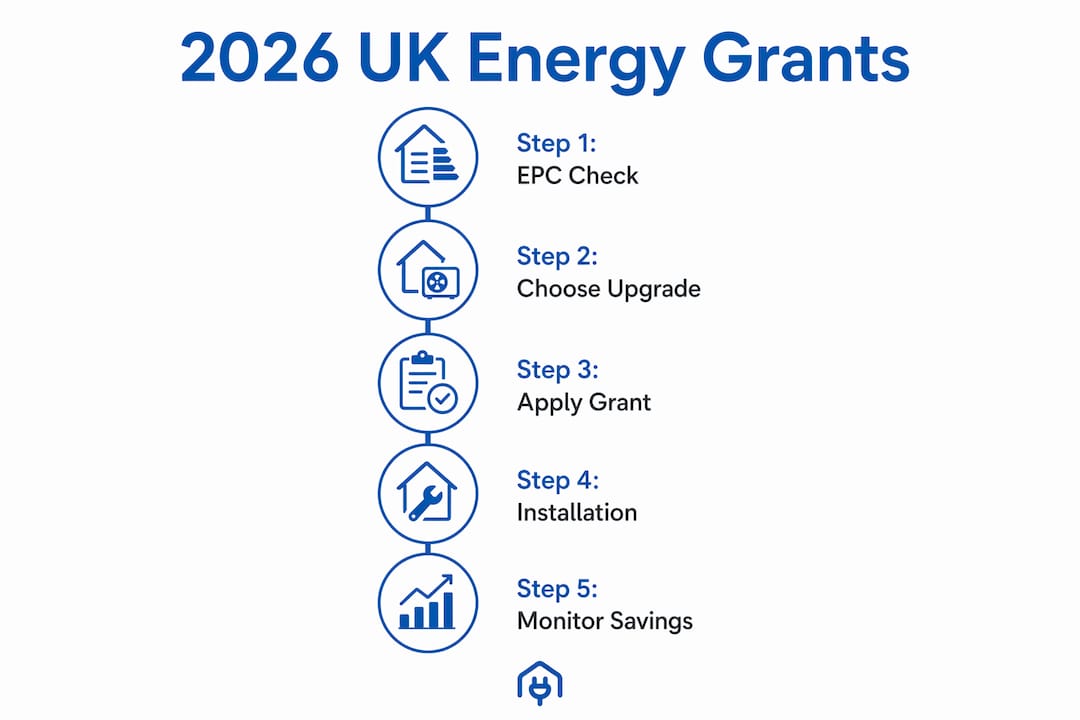
Commission an EPC assessment. An up-to-date EPC identifies the property’s current energy rating and the measures most likely to improve it. This document is required by most schemes and determines which technologies qualify.
-
Review the full scheme portfolio. The government energy grants guide covers the main schemes and their eligibility criteria. Cross-referencing BUS, ECO4, and the Warm Homes Plan against the property’s circumstances identifies the best combination.
-
Engage an approved installer early. Installers registered with BUS or ECO4 manage the application process. Contacting them early secures a place in their schedule and allows time to resolve any eligibility queries before deadlines.
-
Consider finance alongside grants. The Warm Homes Plan includes low-interest loan options for households that do not qualify for full grants. HVAC finance options can bridge the gap between grant support and total installation cost, particularly for larger projects.
-
Track applications and confirm scheme status. Schemes close or change rules with limited notice. Checking the GOV.UK scheme pages regularly and confirming application status with installers prevents last-minute surprises.
Key takeaways
UK homeowners and property developers who plan their grant applications carefully, starting with an EPC and working through approved installers, access the most funding with the fewest complications.
| Point | Details |
|---|---|
| Start with an EPC | An up-to-date EPC determines eligibility for most grant schemes and identifies qualifying measures. |
| Know the no-duplication rule | ECO4 excludes measures already funded by BUS or Warm Homes Local Grant, so plan application order carefully. |
| Act before ECO4 closes | ECO4 ends 31 december 2026 with no confirmed successor; effective access may close earlier than the official date. |
| Combine technologies wisely | Insulating before installing a heat pump reduces heat demand and protects the value of the grant investment. |
| Use approved installers | Most schemes require installer-led applications; choosing an experienced installer avoids ineligible claims. |
My honest view on navigating UK energy grants in 2026
The grant landscape in 2026 is genuinely useful, but it rewards preparation. The Warm Homes Plan’s £15 billion commitment signals that government support for clean energy financing is not going away. That is encouraging. What concerns me is the gap between the headline figures and the practical reality of accessing funds.
The GBIS closure is a good example. The scheme officially ran to 31 march 2026, but the referral service closed weeks earlier. Homeowners who waited lost access. The same pattern is likely with ECO4 as december approaches. The advice I give consistently is to treat the published end date as a soft deadline and aim to have applications submitted at least two months before it.
The no-duplication rule under ECO4 catches property developers particularly hard. Managing a portfolio of upgrades across multiple units requires careful sequencing of which scheme funds which measure at which property. Getting this wrong means losing funding that cannot be recovered. Working with installers who understand the full range of renewable energy options for UK properties is not optional. It is the difference between a well-funded upgrade and an expensive mistake.
The government’s portfolio approach, targeting different schemes at different household groups, is logical in theory. In practice, it means no single application route works for everyone. The homeowners and developers who get the most from these schemes are the ones who treat grant research as a project in its own right, not an afterthought.
— Danny
How Homeenergymodel supports your energy upgrade planning
Homeenergymodel provides practical guidance for UK homeowners and property developers navigating energy efficiency upgrades and grant eligibility. A home energy assessment identifies the measures most likely to improve an EPC rating and confirms which grant schemes apply to a given property. Homeenergymodel also covers the compliance requirements tied to EPCs, the Future Homes Standard, and the Home Energy Model methodology replacing SAP in 2025. For developers managing multiple properties, the site offers structured guidance on improving building energy performance in line with current and upcoming regulations. Starting with a clear energy assessment is the most direct route to maximising available grant support.
FAQ
What is the Boiler Upgrade Scheme grant amount in 2026?
The Boiler Upgrade Scheme offers grants of £7,500 for air source and ground source heat pumps in England and Wales, rising to £9,000 for properties currently heated by oil or LPG.
Can a property receive funding from both ECO4 and the Boiler Upgrade Scheme?
Not for the same measure. ECO4 excludes any installation that has already received funding through the Boiler Upgrade Scheme or Warm Homes Local Grant, so each technology must be funded through one scheme only.
When does ECO4 end?
ECO4 is extended to 31 december 2026, but practical access through installers may close earlier as suppliers manage their application pipelines ahead of the deadline.
What EPC rating is needed for the Warm Homes Local Grant?
Privately owned homes in England must hold an EPC rating of D, E, F, or G and demonstrate the ability to improve to Band C to qualify for the Warm Homes Local Grant.
Is the Great British Insulation Scheme still open?
No. GBIS officially closed on 31 march 2026. Homeowners seeking insulation support should now apply through ECO4 or the Warm Homes Plan, subject to eligibility.