

TL;DR:
- An Energy Performance Certificate (EPC) provides a legally required, standardized energy efficiency rating from A to G for UK properties. It influences property value, rental compliance, and retrofit planning, with assessment data collected during on-site visits by accredited assessors. Upcoming changes with the Home Energy Model will offer more detailed and accurate insights into building performance.
An Energy Performance Certificate (EPC) is a legally mandated document that rates a building’s energy efficiency on a scale from A to G, giving buyers, homeowners, and renters a standardised measure of how much energy a property uses. Understanding the energy performance certificate meaning is not optional for anyone buying, selling, or renting property in the UK. The certificate is produced by an accredited Domestic Energy Assessor (DEA), lodged on the official government EPC register, and remains valid for 10 years. It covers estimated energy costs, CO2 emissions, and a ranked list of improvement recommendations.
What does an energy performance certificate mean for UK properties?
An EPC is the standard industry term for what many people loosely call an energy efficiency certificate or energy rating certificate. The document exists because the UK government requires transparency on energy use for all properties being built, sold, or let. Without a valid EPC, a property cannot legally be marketed for sale or rental in England, Wales, and Scotland.
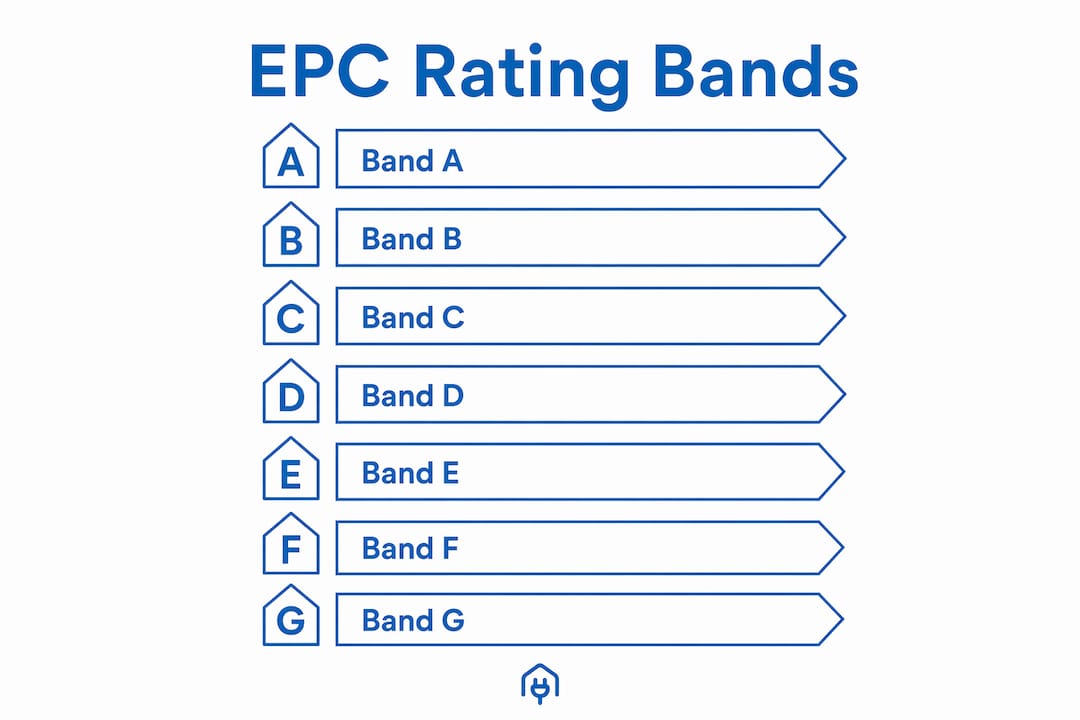
The rating scale runs from A to G. Band A covers SAP scores of 92 and above, representing the most efficient homes. Band G covers scores of 1–20, representing the least efficient. Most UK homes currently sit in bands D or E, which reflects the age and construction of the existing housing stock. The EPC also shows a potential rating, indicating the band a property could reach if all recommended improvements were carried out.
The certificate serves two purposes. First, it informs prospective buyers and tenants about likely running costs before they commit. Second, it gives property owners a prioritised list of upgrades to consider. Both functions make the EPC one of the most practically useful documents in any UK property transaction.
How is an EPC produced and what data does it include?
An EPC assessment must be carried out by an accredited Domestic Energy Assessor. Assessors are registered with approved schemes such as Elmhurst Energy, Stroma, or ECMK, and each assessment requires a physical site visit. Remote or desktop assessments are not valid for producing a legally recognised EPC.
During the visit, the assessor collects data across several categories:
- Building fabric: Wall construction, floor type, roof insulation, window glazing, and draught-proofing
- Heating systems: Boiler type, age, controls, and fuel source
- Hot water provision: Cylinder insulation, immersion heaters, and solar thermal systems
- Lighting: Proportion of fixed low-energy fittings throughout the property
- Renewables: Presence of solar photovoltaic panels or heat pumps
This data feeds into the Reduced Data Standard Assessment Procedure (RdSAP), the current approved methodology for existing dwellings. The assessor then lodges the completed certificate on the government’s national EPC register, which is the only source of a legally valid certificate.
The finished EPC presents the current and potential ratings, estimated annual energy costs, CO2 emissions figures, and a list of recommended improvements ranked by cost-effectiveness. Homeowners can apply for an EPC assessment through accredited assessor directories or directly via the national register.

Pro Tip: Before booking an assessor, gather any documentation you have on insulation upgrades, boiler installations, or window replacements. Providing evidence of improvements can result in a more accurate, and potentially higher, rating.
What do EPC rating bands mean for property value and energy costs?
EPC ratings directly influence buyer decisions, rental demand, and property valuations. The table below sets out the rating bands, their SAP score ranges, and their typical implications.
| Band | SAP Score | Typical Annual Energy Cost | Impact on Property |
|---|---|---|---|
| A | 92–100+ | Very low | Premium buyer appeal, highest rental demand |
| B | 81–91 | Low | Strong market position, above average demand |
| C | 69–80 | Moderate | Meets minimum rental standards, broad appeal |
| D | 55–68 | Average | Most common UK band, neutral market impact |
| E | 39–54 | Above average | Minimum legal rental threshold (current rules) |
| F | 21–38 | High | Cannot be legally let without exemption |
| G | 1–20 | Very high | Cannot be legally let without exemption |
The gap between the current and potential rating is where the real opportunity lies. A property currently rated E with a potential rating of C has a clear, costed pathway to improvement. EPC ratings estimate energy use based on standard occupancy profiles, not the actual habits of the current occupant. This means actual bills can differ significantly from the figures shown on the certificate.
One common misconception is that a high EPC rating guarantees low energy bills. The certificate is a comparative efficiency metric for the market, not a precise cost forecast. A household with high occupancy or unusual usage patterns may spend more than the EPC suggests, even in a Band B property.
For buyers, the EPC rating is a reliable proxy for the quality of the building fabric and heating system. Properties in bands A and B typically have modern insulation, double or triple glazing, and efficient heating. Properties in bands F and G often require significant capital investment to bring them up to standard.
What EPC changes are coming from 2026 onward?
The current RdSAP methodology has a known limitation. It relies on conservative default assumptions for building elements that are not directly visible during an assessment, such as wall insulation within a cavity. This can produce ratings that underestimate a property’s actual performance.
The Home Energy Model (HEM) is the government’s replacement for RdSAP in England and Wales. It introduces four headline metrics that will appear on future EPCs:
- Fabric performance: The thermal quality of walls, floors, roof, and windows
- Heating system rating: The efficiency and carbon intensity of the heat source
- Smart readiness: The property’s capacity to respond to smart grid signals and time-of-use tariffs
- Energy cost: Estimated running costs under standardised conditions
The Home Energy Model aims to provide a more granular and modular assessment, allowing assessors to input more precise data and reducing the reliance on conservative defaults that can misrepresent a property’s true efficiency.
These changes will affect how future EPC assessments are conducted and how results are reported. For homeowners and buyers, the shift means EPC data will become more detailed and more reliable. A property with good fabric but an older boiler will show clearly in the new format, rather than receiving a single blended score that obscures the distinction.
The HEM also aligns EPC methodology with the Future Homes Standard, which governs new build performance. Homeenergymodel provides detailed guidance on how these changes affect both existing properties and new developments.
How should homeowners use an EPC to plan energy improvements?
An EPC is most useful when treated as a retrofit planning document rather than a compliance formality. The improvement recommendations on the certificate are ranked by cost-effectiveness, meaning the measures at the top of the list offer the best return relative to their installation cost.
A practical approach to using EPC recommendations:
- Review the potential rating gap. If the current rating is D and the potential is B, the certificate shows exactly which measures close that gap. Focus on the highest-impact items first.
- Prioritise fabric improvements. Loft insulation, cavity wall insulation, and floor insulation typically appear near the top of EPC recommendation lists because they deliver consistent savings regardless of heating fuel type.
- Consider heating system upgrades second. Replacing an ageing gas boiler with a heat pump or a high-efficiency condensing boiler can move a property up one or two bands, particularly when combined with fabric improvements.
- Address lighting last. Switching to LED lighting is low cost and quick, but it has a smaller impact on the overall rating than fabric or heating changes.
- Commission a new EPC after major works. A post-improvement assessment confirms the rating change and provides an updated certificate for marketing or compliance purposes.
Commissioning an EPC prior to major renovations helps homeowners plan improvements and maximise the potential rating before spending on works. This sequencing avoids the common mistake of upgrading heating before addressing fabric, which reduces the efficiency gains from the new system.
EPCs identify improvement areas but do not replace comprehensive energy audits. Complex issues such as moisture ingress, thermal bridging, or inadequate ventilation require a fuller diagnostic assessment. For deep retrofit projects, an EPC is the starting point, not the complete picture.
Pro Tip: If the potential rating on your EPC is only one band above the current rating, the property may already be close to its practical efficiency ceiling with standard measures. In that case, a full home energy audit from a qualified retrofit assessor will identify the more advanced interventions needed.
Key takeaways
An EPC is a legally required efficiency rating that directly shapes property value, rental compliance, and retrofit planning across the UK.
| Point | Details |
|---|---|
| Legal requirement | EPCs are mandatory for all UK properties being built, sold, or rented, and remain valid for 10 years. |
| Rating scale | Bands run from A (most efficient, SAP 92+) to G (least efficient, SAP 1–20), with most UK homes in band D or E. |
| Potential rating | The potential rating is aspirational, showing the band achievable if all recommended measures are implemented. |
| HEM replaces RdSAP | From 2026, the Home Energy Model introduces four headline metrics for more accurate and detailed EPC reporting. |
| Planning tool | Homeowners gain most value by using EPC recommendations as a staged retrofit plan before listing or renovating. |
Epcs as transparency tools: what experience teaches
Having worked closely with UK property energy data for years, my view is that EPCs are consistently misread in two directions. Some owners dismiss them as a bureaucratic tick-box. Others treat the potential rating as a promise. Neither interpretation serves them well.
The potential EPC rating is aspirational, not guaranteed. It assumes every recommended measure is installed correctly and that the building responds as the model predicts. In practice, older properties with non-standard construction often see smaller gains than the certificate suggests. That is not a flaw in the system. It is a reflection of the complexity of existing housing stock.
What I find more useful is focusing on the gap between the current rating and the potential rating as a negotiating and planning signal. A large gap on a property you are buying means significant capital expenditure ahead. A small gap means the property is already near its practical efficiency ceiling. Both are valuable pieces of information that most buyers overlook entirely.
The upcoming HEM changes are genuinely significant. Separating fabric performance from heating system efficiency in the headline metrics will make it far easier to identify where a property’s weakest point actually lies. That clarity will benefit buyers, landlords, and retrofit contractors alike. The single blended SAP score has always obscured too much detail to be truly useful for planning purposes.
— Danny
Explore EPC guidance and energy modelling with Homeenergymodel
Homeenergymodel provides detailed, up-to-date resources for property owners, landlords, and buyers navigating the UK’s evolving energy performance requirements. From understanding how the Home Energy Model impacts UK properties to interpreting your current EPC rating, the site covers the full range of compliance and improvement topics. For those looking to understand the broader context of energy performance standards, the energy performance explained guide sets out rating interpretation and property implications in clear terms. Whether preparing for a sale, planning a retrofit, or staying ahead of 2026 regulatory changes, Homeenergymodel offers the practical guidance needed to make informed decisions.
FAQ
What is the legal requirement for an EPC in the UK?
An EPC is mandatory for all UK buildings when they are built, sold, or rented. The certificate must be made available to prospective buyers or tenants at the point of marketing.
How long does an EPC last?
An EPC is valid for 10 years from the date of issue. A new certificate is only required if the property undergoes significant changes to its fabric or heating systems before that period expires.
Who can produce a valid EPC?
Only accredited Domestic Energy Assessors registered with approved schemes such as Elmhurst Energy, Stroma, or ECMK can produce a legally valid EPC. The certificate must be lodged on the official government register.
Does a better EPC rating guarantee lower energy bills?
No. EPC ratings are based on standard occupancy assumptions and function as a comparative efficiency metric, not a precise forecast of individual bills. Actual costs depend on occupant behaviour, household size, and energy tariffs.
What is the home energy model and when does it replace RdSAP?
The Home Energy Model (HEM) is the government’s new assessment methodology for England and Wales, introducing four headline metrics covering fabric, heating, smart readiness, and energy cost. It is set to replace RdSAP from 2026 as part of the Future Homes Standard reforms.
Recommended
- Understanding EPCs: Your Guide to Energy Performance Certificates in London – Home Energy Model
- Energy Performance Explained: UK Property Standards
- The Essential London Guide to Energy Performance Certificates: Save Money and the Environment – Home Energy Model
- Energy efficiency rating explained for UK property owners