

TL;DR:
- A smart home energy list includes connected devices like thermostats, monitors, and solar systems to optimize energy use and reduce costs. Effective savings depend on proper measurement, occupant training, and tailored configurations to maximize device performance. The UK smart meter rollout enhances these benefits by enabling detailed load shifting and tariff optimization.
A smart home energy list is a curated set of connected devices designed to monitor, automate, and reduce household energy consumption in a measurable, cost-effective way. For UK homeowners and property managers, building the right list has never been more pressing. The Future Homes Standard, accelerating smart meter rollouts, and the rise of time-of-use (ToU) tariffs are reshaping how properties consume and pay for energy. Devices such as the tado° Wireless Smart Thermostat X, the Emporia Vue 3 energy monitor, and Kasa smart plugs now form the backbone of any credible home energy management strategy in 2026.
1. Smart thermostats: the anchor of any energy device list
Smart thermostats are the single highest-impact device on any home energy checklist. ENERGY STAR certified thermostats deliver an average 8% reduction in heating and cooling costs, with real-world results ranging from 3% to 15% depending on property type and occupancy patterns. That figure compounds significantly across a managed portfolio.
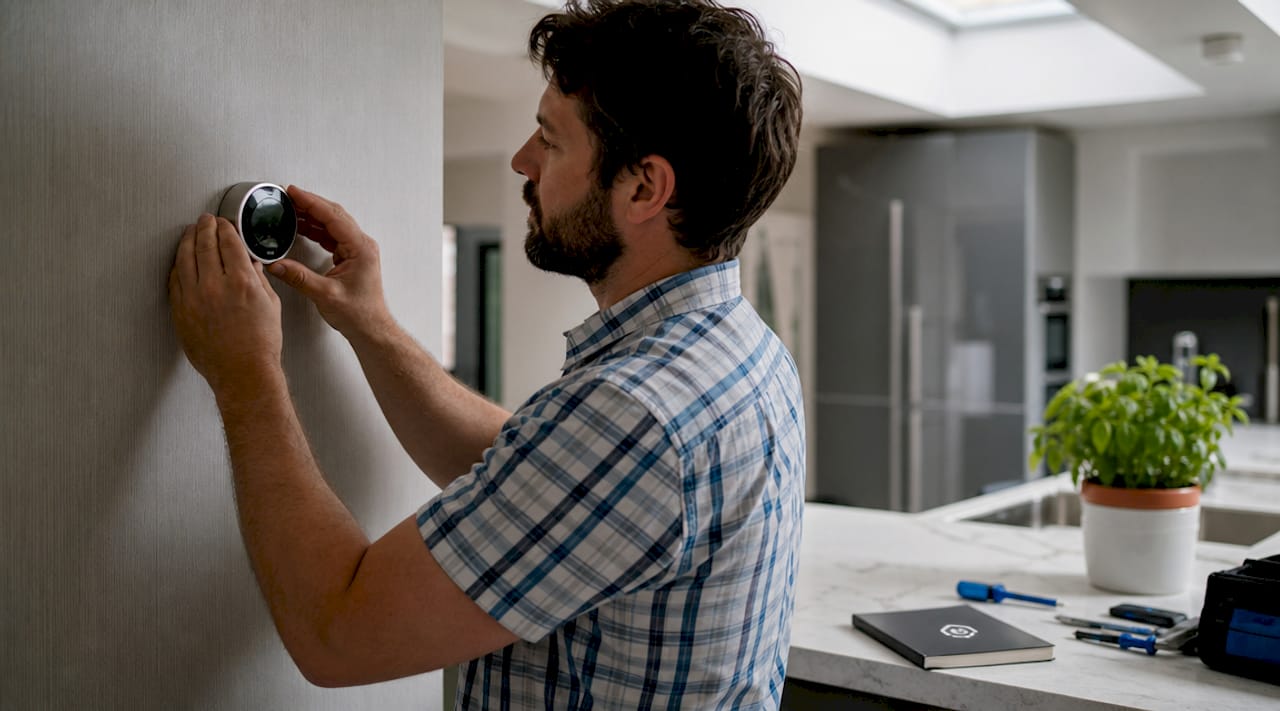
The tado° Wireless Smart Thermostat X and the Ecobee SmartThermostat Premium are the leading choices for UK properties in 2026. Both support the Matter protocol for cross-platform compatibility, integrate room sensors, and learn occupancy patterns automatically. Trials of these devices have recorded heating cost reductions of between 20% and 26%, well above the ENERGY STAR baseline.
For property managers overseeing multiple units, the tado° system scales cleanly across buildings with centralised app control. Individual homeowners benefit most from the Ecobee’s room sensor capability, which prevents heating unoccupied rooms. Both devices pay back their installation cost within one to two heating seasons under typical UK conditions.
Pro Tip: Lower heating setpoints by just a few degrees for 8 hours overnight. Annual heating costs can fall by around 10% from this single adjustment alone.
2. Whole-home energy monitors
A whole-home energy monitor provides the visibility that makes every other device on this list more effective. Without baseline data, scheduling and automation decisions are guesswork. The Emporia Vue 3 is the most practical option for UK users, clipping onto the consumer unit in 15 to 30 minutes and delivering real-time appliance-level tracking via a Wi-Fi connected app.
The Sense energy monitor offers a more advanced machine-learning approach, identifying individual appliances by their electrical signatures without manual labelling. Both devices surface the standby loads, overnight draws, and peak-hour spikes that inflate bills without homeowners realising. For property managers, installing an energy monitor before any other device is the correct sequence. It establishes the baseline that justifies every subsequent investment.
Monitoring data also supports UK property compliance reporting and EPC improvement planning, making it doubly valuable for landlords with regulatory obligations.
3. Smart plugs and power strips
Smart plugs address standby power, which is also called vampire power, a consistent source of avoidable waste in UK homes. Devices left on standby collectively account for a meaningful share of annual electricity bills. Kasa KP125M smart plugs support the Matter protocol, offer energy monitoring per socket, and work with Amazon Alexa, Google Home, and Apple HomeKit without requiring a separate hub.
The practical approach is to audit the home first using the whole-home monitor, identify the highest standby loads, and then deploy smart plugs to those circuits. Common targets include televisions, games consoles, desktop computers, and phone charger banks. A power strip with individual socket control, such as the TP-Link Kasa EP40M, handles entertainment centres in a single installation.
For property managers, smart plugs are low-cost, low-complexity additions that tenants can operate without training. They also provide per-device energy data that supports EPC improvement evidence.
4. Solar PV with battery storage
Solar photovoltaic panels combined with a battery storage system represent the most significant structural upgrade on any smart energy solutions list. The battery captures surplus generation during daylight hours and discharges it during peak-price evening periods, maximising self-consumption and reducing grid dependency. Systems from providers such as GivEnergy and SolarEdge integrate directly with smart home platforms and ToU tariff schedules.
The financial case strengthens considerably when paired with a ToU tariff such as Octopus Energy’s Agile or Flux tariff, where overnight import rates can be a fraction of peak rates. A battery system can be programmed to charge from the grid at cheap-rate periods and discharge during expensive ones, even without solar panels. This load-shifting behaviour is precisely what the UK’s smart meter infrastructure is being built to enable.
Property managers considering solar and battery installations should model the energy performance impact before committing. A home energy simulation can quantify the EPC rating improvement and projected bill savings for each property type.
5. Smart EV chargers with ToU scheduling
Electric vehicle chargers are now a standard item on any energy efficient smart home checklist for properties with off-street parking. An unmanaged EV charger drawing 7kW during peak evening hours is one of the largest single loads in a modern home. Smart chargers from Ohme, Zappi, and Indra resolve this by scheduling charging to off-peak windows automatically, using either smart meter data or direct tariff integration.
The Ohme Home Pro connects directly to smart meter data and adjusts charging in real time based on grid carbon intensity and tariff pricing. The Zappi charger prioritises surplus solar generation before drawing from the grid. Both devices reduce the effective cost per mile of EV ownership substantially when paired with a ToU tariff.
For property managers, OZEV-approved smart chargers are a requirement for the Workplace Charging Scheme grant, and the same approval criteria apply to residential installations claiming government support.
6. Smart lighting systems
Smart lighting is often underestimated on home automation energy checklists, but it delivers consistent savings with minimal disruption. Philips Hue, LIFX, and Nanoleaf all offer LED smart bulbs that consume up to 80% less energy than incandescent equivalents and can be scheduled, dimmed, or triggered by occupancy sensors. The occupancy sensor integration is the critical differentiator. A bulb that turns off automatically when a room is empty eliminates the behavioural failure point entirely.
For larger properties and managed buildings, smart lighting systems with presence detection remove the dependency on occupant discipline. Lutron Caséta is a strong choice for property managers because it works with existing switches and does not require bulb replacement in every fitting.
7. Smart water heating controls
Hot water heating is the second largest energy cost in most UK homes after space heating. Smart controls for immersion heaters and heat pumps, such as those offered by Mixergy and Sunamp, allow precise scheduling and temperature management. Reducing hot water temperature from 60°C to 49°C can lower energy costs by between 4% and 22%, depending on usage patterns and system type.
Mixergy’s smart cylinder measures water temperature in layers, heating only the volume needed rather than the full tank. This approach reduces energy use without compromising hot water availability. For properties with solar PV, smart immersion controllers such as the iBoost+ divert surplus generation to the hot water cylinder before exporting to the grid.
8. Smart meters and the UK half-hourly settlement rollout
Smart meters are the infrastructure layer that makes the rest of this list significantly more effective. Over 8.4 million electricity meters in Britain have now moved to half-hourly settlement, with a target of 80% of all 33 million meters by October 2026 and full transition by May 2027. This half-hourly data granularity is the foundation for ToU tariff optimisation.
“Half-hourly smart meter data is the foundation for effective tariff optimisation. Without this granularity, dynamic pricing benefits are limited.” — Elexon, 2026
Without 30-minute interval data, smart home devices cannot time-shift loads to cheap-rate windows with any precision. With it, a smart thermostat, EV charger, and battery system can all coordinate around the cheapest hours of the day automatically. Understanding time-of-use tariffs is therefore a prerequisite for getting full value from any smart energy device.
| Smart meter feature | Benefit for smart home devices |
|---|---|
| Half-hourly consumption data | Enables precise load shifting to off-peak tariff windows |
| Real-time usage alerts | Supports energy monitor apps and anomaly detection |
| Remote meter reading | Eliminates estimated bills and improves EPC accuracy |
| ToU tariff eligibility | Unlocks cheaper overnight rates for EV and battery charging |
From February 2026, UK consumers are also entitled to £40 automatic compensation if smart meter installation appointments are delayed beyond six weeks, reducing a common barrier to adoption.
9. How to build a smart home energy management plan
Building an effective plan follows a clear sequence. Skipping steps, particularly the measurement phase, is the most common reason smart home investments underperform.
- Install a whole-home energy monitor first. Run it for two to four weeks before making any changes. This establishes a genuine baseline and identifies the highest-impact targets.
- Deploy a smart thermostat and configure occupancy-based scheduling. Avoid generic factory schedules. Tailoring schedules to actual occupancy patterns rather than fixed defaults is what separates effective installations from disappointing ones.
- Audit standby loads using monitor data, then add smart plugs to the top five offenders. Prioritise devices drawing more than 5W on standby.
- Upgrade to a smart meter if not already installed, then switch to a ToU tariff. This single step can unlock savings across every other device on the list.
- Add solar PV, battery storage, or a smart EV charger once the baseline is optimised. These are high-capital items that deliver the best return when the rest of the system is already running efficiently.
- Train occupants. Occupant overrides of smart thermostat controls significantly reduce savings. A brief walkthrough of how the system works, and why overriding it costs money, is not optional.
- For property managers: standardise configurations across units. Applying uniform schedules to properties with different occupancy patterns is a documented cause of underperformance. Each unit needs its own baseline assessment before automation is applied.
Pro Tip: Homes with correctly programmed thermostats already in place see smaller incremental gains from smart upgrades. Commissioning and occupant training deliver more value than the hardware specification in these cases.
Key takeaways
A smart home energy list delivers maximum savings when measurement, scheduling, and occupant behaviour are addressed together, not hardware alone.
| Point | Details |
|---|---|
| Start with measurement | Install an energy monitor first to establish baseline data before automating anything. |
| Smart thermostats anchor the list | Devices like tado° and Ecobee deliver 20% to 26% heating savings when correctly configured. |
| Smart meters unlock ToU savings | Half-hourly data enables load shifting that multiplies the value of every other device. |
| Behaviour determines outcomes | Occupant overrides and poor scheduling reduce savings more than hardware limitations do. |
| Property managers need tailored plans | Uniform schedules across multiple units consistently underperform against property-specific configurations. |
Why the device list is only half the answer
The smart home energy space has a hardware fixation problem. Manufacturers publish impressive savings figures, and those figures are real, but they assume optimal configuration and disciplined occupant behaviour. In practice, the gap between advertised and actual savings is almost always a commissioning and training failure, not a technology failure.
Having worked across UK residential and managed property contexts, the pattern is consistent. A landlord installs tado° thermostats across a portfolio, applies the same schedule to every flat, and then wonders why the bills barely moved. The issue is not the thermostat. It is that a ground-floor flat with south-facing glazing and two occupants working from home has a completely different thermal profile from a top-floor flat with one occupant who leaves at 7am. The device is the same. The configuration cannot be.
The smart meter rollout changes this calculus significantly. Once half-hourly data is available at scale, the feedback loop between consumption, cost, and behaviour becomes visible in a way it never was before. That visibility is what drives genuine behavioural change, more reliably than any app notification or energy-saving tip. Homeenergymodel covers the 2026 smart homes guide in detail for those wanting to go deeper on the regulatory and technical context.
The practical advice: start small, measure everything, and treat occupant training as a non-negotiable part of every installation. The devices on this list are proven. The results depend on how they are deployed.
— Danny
Plan your smart home energy upgrades with Homeenergymodel
Deploying smart devices is one part of improving a property’s energy performance. Understanding how those upgrades affect EPC ratings, compliance obligations, and long-term running costs requires a more structured approach. Homeenergymodel provides detailed guidance on home energy models for landlords, covering the modelling techniques that quantify the impact of smart device installations on energy performance certificates and Future Homes Standard compliance. Whether managing a single property or a large portfolio, energy modelling provides the evidence base that smart device choices alone cannot supply. Visit Homeenergymodel for tailored guidance on energy simulation, EPC improvement planning, and compliance forecasting.
FAQ
What devices should be on a basic smart home energy list?
A minimal effective setup begins with a whole-home energy monitor and a smart thermostat, then expands to smart plugs, solar battery controls, and EV charging management as budget allows. This sequence prioritises measurement before automation.
How much can a smart thermostat save on UK energy bills?
Smart thermostats deliver average savings of around 8% on heating and cooling costs, with well-configured devices such as tado° and Ecobee achieving 20% to 26% in trials. Actual savings depend on occupancy patterns and how consistently the schedule is followed.
Do I need a smart meter to benefit from smart home energy devices?
Most smart devices function without a smart meter, but half-hourly settlement data is what enables time-of-use tariff optimisation. Without it, load-shifting features on EV chargers and battery systems cannot operate at full effectiveness.
Are smart home energy upgrades relevant for landlords and property managers?
Smart energy devices directly affect EPC ratings, running costs, and tenant satisfaction, all of which matter to landlords under current and forthcoming UK regulations. Property managers overseeing multiple units benefit most from standardised monitoring and property-specific scheduling configurations.
What is the UK smart meter rollout target for 2026?
Over 8.4 million electricity meters have already moved to half-hourly settlement, with a target of 80% of all 33 million UK meters completing the transition by October 2026 and full rollout by May 2027.