

More than one million British rental properties face new energy compliance demands as Home Energy Model regulations continue to evolve. For landlords and investors, understanding how energy tariffs impact costs and legal obligations is vital for safeguarding income and future-proofing portfolios. This guide explains the main tariff options, explores compliance with national standards, and outlines practical steps to improve energy performance and reduce risks in the British property market.
Table of Contents
- What Are Energy Tariffs And Why They Matter
- Main Types Of Energy Tariffs For Let Properties
- How Energy Tariffs Affect Energy Costs
- Energy Tariffs And Legal Compliance For Landlords
- Choosing The Right Tariff Under HEM Rules
Key Takeaways
| Point | Details |
|---|---|
| Understanding Tariffs is Crucial | Landlords must comprehend energy tariff structures and their components to manage costs effectively. |
| Variety of Tariff Options Available | Different energy tariffs such as fixed-rate and green energy plans can cater to diverse property needs. |
| Legal Compliance Matters | Ensuring properties meet Energy Performance Certificate ratings is essential to avoid penalties. |
| Regular Reviews Recommended | Landlords should review energy tariffs every 12-18 months to ensure competitive pricing and compliance. |
What Are Energy Tariffs And Why They Matter
Energy tariffs are structured pricing schemes that determine how much UK landlords and tenants pay for electricity and gas consumption. These tariffs represent the fundamental mechanism through which energy suppliers charge consumers for their power usage, with pricing typically composed of two primary components: a fixed standing charge and a variable rate based on actual energy consumption.
Understanding the composition of energy tariffs is crucial for landlords managing rental properties. The UK Energy Research Centre highlights that tariff structures involve multiple cost factors, including wholesale energy prices, network distribution expenses, supplier operational costs, and government policy schemes. These components collectively determine the final price tenants will pay, making it essential for property owners to comprehend the underlying mechanics.
Currently, the UK energy market offers several tariff types, including standard variable rates, fixed-rate contracts, and green energy plans. Each comes with distinct pricing structures and potential benefits. The energy price cap, regulated by Ofgem, plays a critical role in protecting consumers by limiting the maximum amount suppliers can charge on standard variable tariffs. This mechanism ensures that energy pricing remains transparent and prevents excessive charging, providing a safety net for both landlords and tenants.
Pro tip: Always compare energy tariffs across multiple suppliers and consider fixed-rate contracts to provide more predictable costs for your rental properties.
Main Types Of Energy Tariffs For Let Properties
Landlords managing rental properties encounter several distinct energy tariff types, each with unique pricing structures and potential implications for property management. The Cambridge Judge Business School’s Energy Policy Research Group provides comprehensive insights into these tariff categories, helping property investors make informed decisions about energy supply strategies.
The primary energy tariff types for let properties include standard variable rates, fixed-rate contracts, time-of-use tariffs, and green energy plans. Standard variable rates fluctuate with market conditions, offering flexibility but potentially unpredictable costs. Fixed-rate contracts provide stability by locking in energy prices for a specific period, which can be particularly beneficial for landlords seeking consistent budgeting. Time-of-use tariffs introduce variable pricing based on peak and off-peak energy consumption, potentially offering cost savings for properties with flexible energy usage patterns.

Green energy tariffs represent an emerging category particularly relevant for landlords focusing on sustainability. These tariffs often involve renewable energy sources and can potentially increase a property’s attractiveness to environmentally conscious tenants. Some tariffs, particularly those associated with Feed-in Tariff schemes, may even provide opportunities for additional income through renewable energy installations, though current schemes are now closed to new applicants.
Pro tip: Consider discussing energy tariff options directly with tenants to establish clear expectations about energy costs and potentially split the benefits of more efficient tariff arrangements.
Here is a comparison of the main energy tariff types landlords may encounter:
| Tariff Type | Cost Stability | Incentive for Efficiency | Suitable For |
|---|---|---|---|
| Standard Variable | Changes with market | Low | Flexible budgeting |
| Fixed-Rate Contract | High, fixed period | Moderate | Predictable expenses |
| Time-of-Use | Varies by usage | High for flexible users | Smart meter properties |
| Green Energy Plan | Can vary | High for renewables | Sustainability focused |
How Energy Tariffs Affect Energy Costs
Energy tariffs play a critical role in determining the overall cost of energy for landlords and tenants, with significant implications for property management and operational expenses. The Office for National Statistics highlights how wholesale energy price fluctuations directly impact energy costs, creating a complex landscape of pricing dynamics that property owners must navigate carefully.
The primary mechanism through which tariffs influence energy costs involves two fundamental components: the standing charge and the unit rate. Standing charges represent a fixed daily fee for maintaining energy infrastructure, while unit rates fluctuate based on actual energy consumption. Variable tariffs are particularly susceptible to market changes, meaning landlords could experience significant cost variations depending on wholesale energy prices, network charges, and broader economic conditions. Fixed-rate tariffs offer some protection against these fluctuations by locking in prices for a specified period, providing more predictable budgeting for rental property energy expenses.
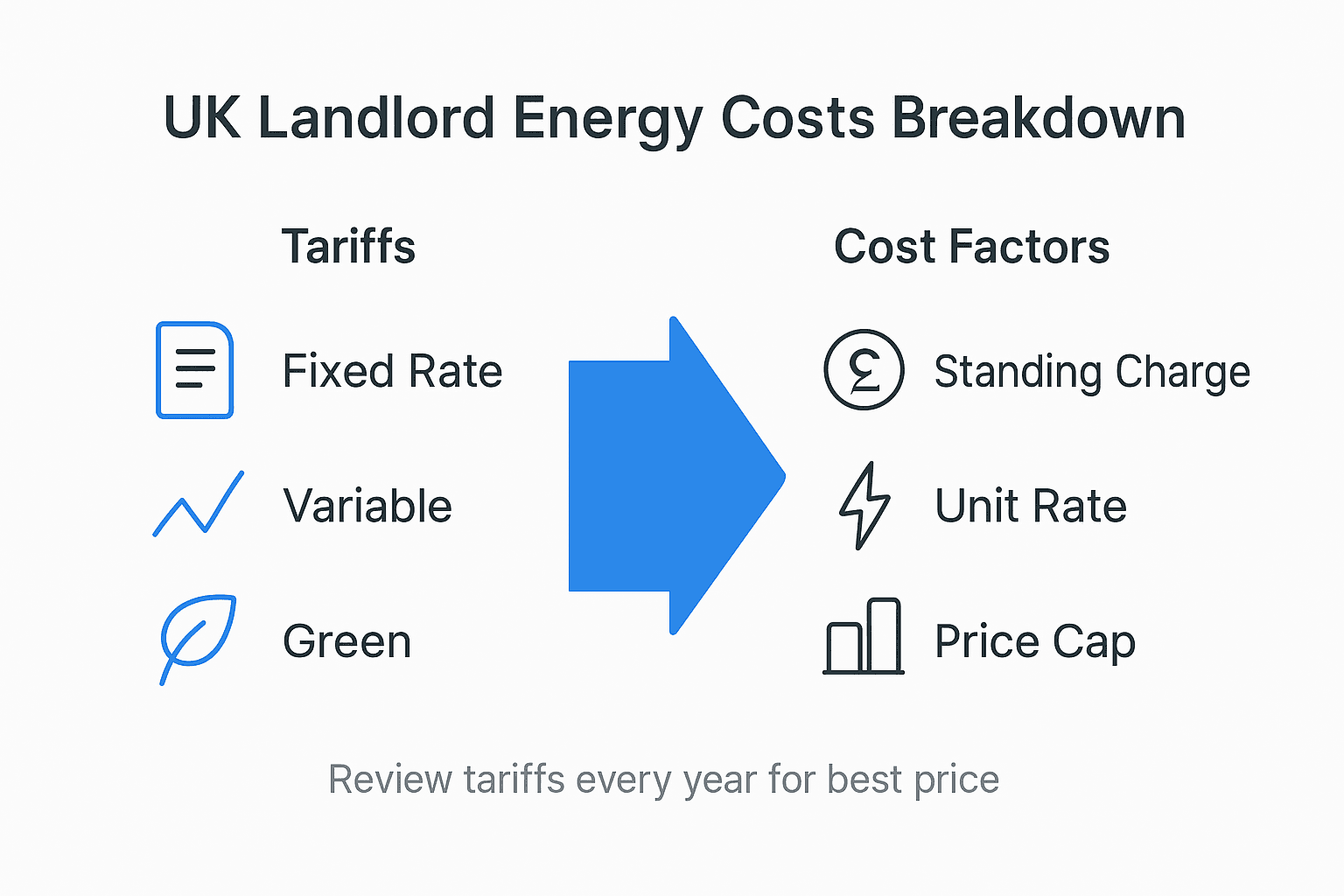
Regulatory mechanisms like the energy price cap also play a crucial role in managing energy costs. These caps limit the maximum amount energy suppliers can charge on standard variable tariffs, offering a degree of protection for consumers. For landlords, understanding these regulatory frameworks becomes essential in managing potential energy expenditure risks. Different tariff structures can result in substantial differences in annual energy costs, potentially impacting the overall financial performance of rental properties.
Pro tip: Regularly review and compare energy tariffs every 12-18 months to ensure you are not overpaying and consider negotiating bulk energy rates for multiple properties.
Energy Tariffs And Legal Compliance For Landlords
The English Private Landlord Survey reveals the critical importance of understanding legal compliance surrounding energy tariffs and property management, highlighting the complex landscape of regulatory requirements for rental properties. Landlords must navigate a sophisticated framework of legal obligations that extend far beyond simple energy provision.
Key legal compliance requirements centre around Energy Performance Certificates (EPCs), which are mandatory for all rental properties. These certificates provide crucial information about a property’s energy efficiency and potential tariff implications. Landlords must ensure their properties meet minimum energy efficiency standards, currently set at an EPC rating of E or above. Failure to comply can result in significant penalties, including potential fines of up to £5,000 and restrictions on serving notice to tenants.
The Minimum Energy Efficiency Standards (MEES) regulations represent a critical legal framework that directly impacts how landlords manage energy tariffs. These regulations prohibit landlords from leasing properties with poor energy performance, effectively mandating investments in energy efficiency upgrades. This approach not only protects tenants but also encourages long-term improvements in property energy management. Landlords must proactively assess their properties’ energy performance, considering potential tariff structures that might offer more efficient and cost-effective energy solutions.
Pro tip: Conduct an annual review of your rental properties’ energy performance and tariff arrangements to stay ahead of regulatory changes and potential compliance issues.
Below is a summary of key legal obligations for landlords regarding energy tariffs:
| Requirement | Main Purpose | Penalty for Non-Compliance |
|---|---|---|
| EPC Rating E or Above | Ensure minimum efficiency | Up to £5,000 fine |
| Annual Energy Performance Review | Maintain regulatory compliance | Limit on serving eviction notice |
| MEES Regulations Adherence | Encourage energy upgrades | Prohibition of letting |
Choosing The Right Tariff Under HEM Rules
Ofgem’s documentation on structured tariff approaches provides crucial insights into selecting appropriate energy tariffs under the emerging Home Energy Model (HEM) regulations. Landlords must now navigate a more complex landscape of energy performance and pricing, where tariff selection is intrinsically linked to property energy efficiency standards.
The Home Energy Model introduces a more sophisticated approach to energy tariff selection, prioritising properties with higher energy performance ratings. Key considerations include energy efficiency ratings, carbon emissions, and total energy consumption. Landlords should focus on tariffs that not only provide competitive pricing but also align with the HEM’s emphasis on sustainable energy use. This means selecting tariffs that incentivise energy-efficient property management and potentially offer lower rates for properties meeting stringent performance criteria.
Under HEM rules, landlords must carefully evaluate tariff structures that support long-term energy efficiency goals. This involves considering time-of-use tariffs, green energy plans, and smart meter compatible rates. The new framework encourages dynamic pricing models that reward properties with lower energy consumption and better overall performance. Critical factors include the property’s insulation quality, heating systems, and potential for renewable energy integration. Landlords should prioritise tariffs that offer flexibility and potential cost savings while supporting the broader objectives of reducing carbon emissions and improving energy efficiency.
Pro tip: Consult with an energy efficiency specialist to analyse your specific property’s characteristics and identify the most suitable tariff structure under the emerging Home Energy Model regulations.
Navigate Energy Tariffs with Confidence and Stay Ahead of UK Regulations
Landlords face the ongoing challenge of understanding complex energy tariffs and managing costs while ensuring compliance with evolving UK regulations like the Home Energy Model and MEES standards. With fluctuating market rates, energy price caps, and new tariff types such as time-of-use and green energy plans, it can be overwhelming to select the right energy tariff that balances cost stability and sustainability for your rental properties.
At homeenergymodel.co.uk, we provide clear, up-to-date guidance tailored specifically for UK landlords. Discover how the upcoming Home Energy Model will impact EPC assessments and property energy performance, helping you make informed decisions about tariff options that reduce costs and improve efficiency. Take control of your energy strategy today by exploring practical advice and regulatory insights at Home Energy Model and learn how to optimise your rental portfolio before new rules take effect.
Don’t risk unexpected energy expenses or compliance penalties. Visit homeenergymodel.co.uk now for expert support that turns complexity into opportunity.
Frequently Asked Questions
What are energy tariffs and how do they work?
Energy tariffs are pricing structures that determine how much consumers pay for electricity and gas, consisting of a fixed standing charge and a variable rate based on actual consumption.
What types of energy tariffs are available for rental properties?
The main types of energy tariffs for rental properties include standard variable rates, fixed-rate contracts, time-of-use tariffs, and green energy plans, each with unique benefits and pricing structures.
How do energy tariffs affect costs for landlords and tenants?
Energy tariffs influence overall energy costs primarily through standing charges and unit rates, with fixed-rate tariffs providing price stability while variable tariffs may lead to fluctuating costs based on market conditions.
What legal compliance requirements must landlords consider regarding energy tariffs?
Landlords must ensure their properties have an Energy Performance Certificate (EPC) rating of E or above and adhere to Minimum Energy Efficiency Standards (MEES) to avoid penalties and comply with energy regulations.
Recommended
- Energy Bills Decoded – What They Reveal About Efficiency
- Energy Conservation – Why It Matters for UK Property
- Energy Bills vs Energy Use – Why It Matters in the UK
- Everything London Landlords Need to Know About Commercial EPC Certificates – Home Energy Model
- Verklaring Energiebesparing: Waarom Dit Uw Woning Raakt – Holland Electric Duurzaam