
Most british landlords underestimate how closely heating zones shape energy compliance and running costs. With new Home Energy Model regulations coming soon, understanding these zones is now essential for anyone managing UK properties. Precise zoning can deliver improved comfort, lower bills, and even a stronger EPC rating. This simple guide uncovers key zone types, common mistakes, and practical strategies to help property investors navigate the complex world of building energy performance.
Table of Contents
- Heating Zones Defined For UK Buildings
- Types Of Heating Zones And Their Distinctions
- How Heating Zones Work In UK Homes
- Legal Standards For Zoning And Compliance
- Impact Of Zoning On EPC Ratings And Costs
- Common Heating Zone Mistakes To Avoid
Key Takeaways
| Point | Details |
|---|---|
| Understanding Heating Zones | Heating zones are crucial for efficient energy management, influenced by regional climates and building characteristics. |
| Types of Heating Zones | UK properties typically utilise wet central heating, underfloor heating, and electric heating zones, each with distinct applications. |
| Thermal Management Benefits | Advanced heating systems enhance comfort and energy efficiency by allowing customised temperature control across different areas of a property. |
| Compliance with Regulations | Adhering to legal standards, such as Building Regulations Part L 2022, ensures effective thermal control and supports national emissions reduction targets. |
Heating zones defined for UK buildings
Heating zones represent strategic geographical and infrastructural divisions that determine how thermal energy is distributed and managed across UK properties. These zones are complex systems influenced by regional climate variations, building characteristics, and energy infrastructure design. Understanding their composition is crucial for property owners seeking efficient energy management.
The United Kingdom utilises sophisticated climate data sets through the Passive House Planning Package to define precise heating zones. These zones consider multiple factors including regional temperature differences, urban heat island effects, and localised meteorological conditions. Metropolitan areas like London, for instance, demonstrate unique thermal profiles compared to rural regions, necessitating nuanced heating zone strategies.
District heating systems provide an excellent practical example of heating zone implementation. These systems distribute thermal energy from a central energy centre through insulated pipe networks, serving multiple buildings or apartment complexes. The design considers critical parameters such as heat loss mitigation, energy source efficiency, and appropriate pipe infrastructure to ensure optimal thermal distribution across defined geographical zones.
Pro tip: Consult local meteorological data and consider your specific property’s microclimate when developing heating zone strategies to maximise energy efficiency and reduce overall heating costs.
Types of heating zones and their distinctions
Heating zones in UK properties represent sophisticated thermal management systems with distinct operational characteristics and design strategies. These zones are not merely geographical divisions but complex infrastructural approaches that determine how thermal energy is distributed, controlled, and optimised across residential and commercial buildings.
The primary heating zone classifications in the United Kingdom include wet central heating systems, underfloor heating zones, and electric heating zones. Wet central heating systems, which utilise boilers and radiators, remain the most traditional approach, providing consistent heat distribution through water-filled pipe networks. These systems typically involve a central boiler generating heated water that circulates through radiators in different rooms, allowing for precise temperature control and zonal management.
Underfloor heating zones represent a more modern approach to thermal distribution, offering even heat dispersion and enhanced energy efficiency. These systems embed heating elements beneath flooring materials, creating a uniform warmth that radiates upwards. Electric underfloor heating provides flexibility for smaller spaces, while water-based systems can be integrated with renewable energy sources like ground source heat pumps, offering a more sustainable heating solution for environmentally conscious property owners.
The table below distinguishes between the main heating zone types found in UK properties:
| Type of Heating Zone | Key Characteristics | Typical Applications |
|---|---|---|
| Wet central heating | Boiler and radiators, water pipes | Traditional homes, flats |
| Underfloor heating (water) | Even heat, links to heat pumps | Modern builds, eco-homes |
| Underfloor heating (electric) | Quick installation, for small areas | Bathrooms, retrofits |
| Electric heating zones | Direct electric elements, fast control | Studios, small spaces |
Pro tip: Consider your property’s specific architectural layout and insulation quality when selecting a heating zone system, as this can significantly impact overall energy efficiency and long-term operational costs.
How heating zones work in UK homes
Heating zones represent a sophisticated approach to thermal management in modern UK residential properties, allowing homeowners unprecedented control over their indoor climate. These intelligent systems divide a property into distinct areas that can be independently heated, cooled, and regulated, providing customised comfort and enhanced energy efficiency.
Modern heating systems, particularly advanced heat pump technologies, enable precise temperature control across different rooms and floors. This zonal approach means that living spaces can be heated according to specific usage patterns, occupancy levels, and individual comfort preferences. For instance, bedrooms might be maintained at a lower temperature during daytime hours, while living areas receive more consistent warmth.

The core mechanism of heating zones involves sophisticated thermostatic controls and smart sensors that monitor and adjust thermal output in real-time. These systems can distinguish between occupied and unoccupied spaces, automatically reducing energy consumption in areas not currently in use. Wireless temperature sensors, programmable thermostats, and smart home integration allow property owners to create nuanced heating strategies that respond dynamically to changing environmental conditions and personal schedules.
Pro tip: Invest in a programmable or smart thermostat system that allows granular zone-based temperature control to maximise energy efficiency and reduce unnecessary heating expenditure.
Legal standards for zoning and compliance
Legal frameworks governing heating zones represent a critical mechanism for ensuring energy efficiency and sustainable property management across the United Kingdom. These regulatory standards establish comprehensive requirements for thermal control systems, directly addressing national objectives for reducing carbon emissions and improving residential energy performance.
Building Regulations Part L 2022 introduces stringent guidance on heating controls and zoning compliance for properties in England and Wales. These regulations mandate sophisticated heating zone implementations that go beyond traditional temperature management, requiring smart control systems capable of optimising energy consumption. The standards specifically demand that heating installations provide independent zone-level control, ensuring each area of a property can be managed with precision to minimise unnecessary energy expenditure.
Compliance with these legal standards involves multiple technical requirements, including the installation of thermostatic controls that can monitor and adjust temperature across different property zones. Property owners and developers must demonstrate that their heating systems can dynamically respond to occupancy patterns, environmental conditions, and individual room requirements. This approach not only supports national net zero targets but also provides homeowners with greater control over their energy consumption and associated costs.
Pro tip: Consult a certified heating engineer who understands current Building Regulations to ensure your property’s heating zone system meets all legal compliance requirements and maximises energy efficiency.
Impact of zoning on EPC ratings and costs
Heating zones play a critical role in determining Energy Performance Certificate (EPC) ratings, directly influencing property energy efficiency assessments and potential long-term financial implications for UK property owners. These sophisticated thermal management systems represent more than just technological innovations; they are fundamental mechanisms for reducing energy consumption and improving overall building performance.
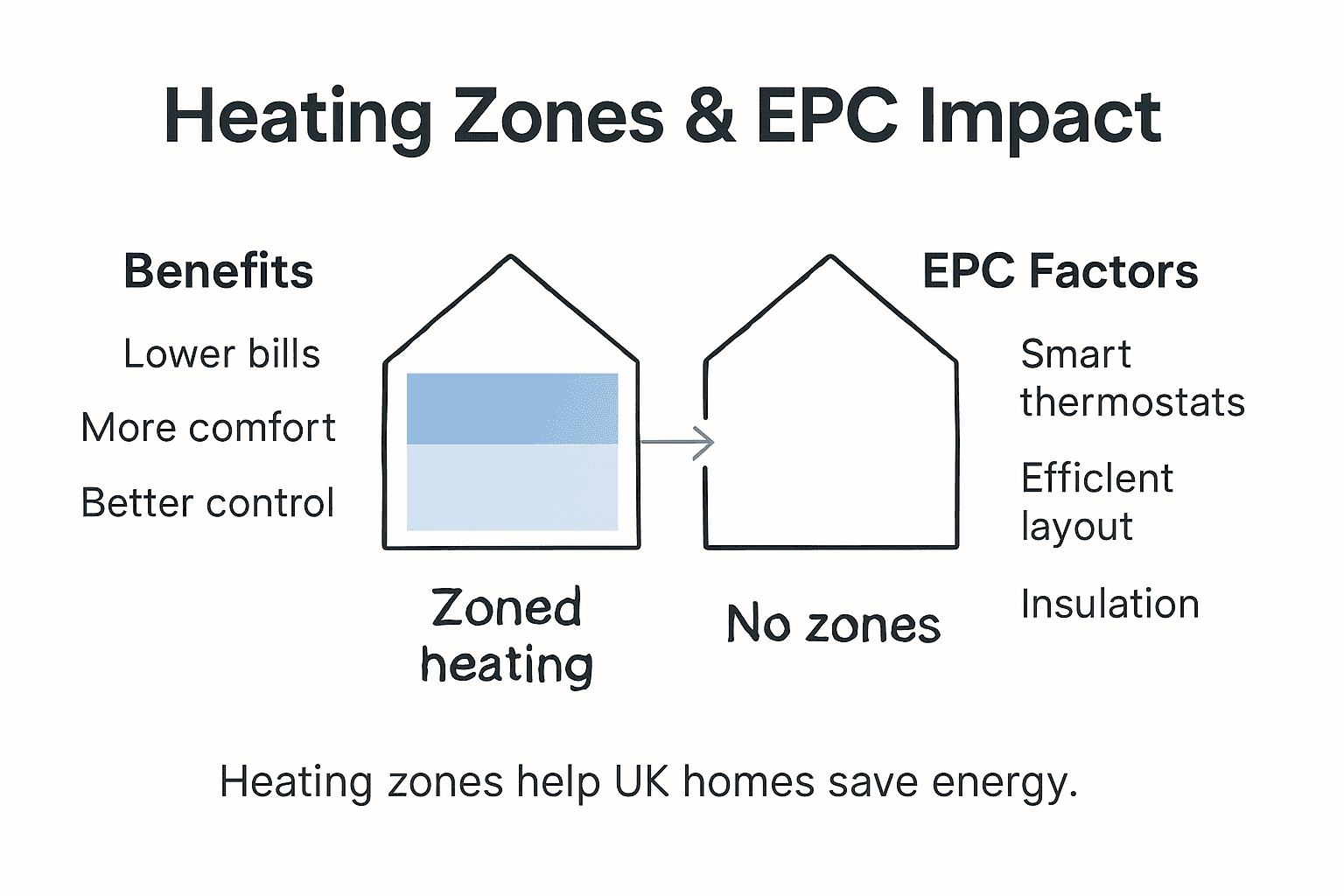
The implementation of intelligent heating zones can significantly impact a property’s EPC rating, potentially increasing its value and marketability. Advanced zoning systems demonstrate superior energy management capabilities, allowing for precise temperature control across different areas of a property. This granular approach to thermal regulation enables property owners to minimise energy wastage, reduce heating costs, and demonstrate a commitment to sustainable living practices that are increasingly valued in the contemporary UK property market.
EPC assessors carefully evaluate heating zone configurations when determining energy efficiency ratings, considering factors such as zone control sophistication, thermal distribution efficiency, and overall system responsiveness. Properties with well-designed heating zones typically achieve higher ratings, which can translate into tangible financial benefits. These benefits include potential increases in property value, lower energy bills, and enhanced attractiveness to environmentally conscious buyers or tenants who prioritise energy-efficient living spaces.
This summary compares the benefits of effective heating zone design in relation to EPC ratings and costs:
| Benefit | Impact on EPC Rating | Effect on Costs |
|---|---|---|
| Granular zone control | Higher efficiency score | Reduced energy bills |
| Smart thermostatic management | Improved responsiveness | Lower heating waste |
| Matching zones to occupancy | Optimised performance | Financial savings |
| Use of renewable integration | Enhanced sustainability | Long-term reductions |
Pro tip: Invest in a comprehensive heating zone system with smart controls and individual room thermostats to maximise your property’s EPC rating and reduce long-term energy expenditure.
Common heating zone mistakes to avoid
Heating zone design requires precision and careful planning to ensure optimal thermal comfort and energy efficiency in UK properties. Property owners frequently encounter numerous pitfalls that can compromise the effectiveness of their heating systems, leading to unnecessary energy consumption and reduced comfort levels.
One of the most critical errors is incorrectly defining zone boundaries, which results in uneven heating across different property areas. Inadequate zone configuration can create temperature disparities where some rooms remain persistently cold while others become uncomfortably warm. This inconsistent thermal management not only impacts residential comfort but also increases energy expenditure as heating systems work inefficiently to compensate for poor zonal design.
Another significant mistake involves neglecting independent thermostatic controls for individual zones. Modern heating systems require sophisticated control mechanisms that allow precise temperature management in different rooms or areas. Homeowners should avoid using outdated, single-control systems that treat the entire property as one uniform thermal environment. Proper zoning demands granular control, enabling different temperatures in living spaces, bedrooms, and utility areas based on specific usage patterns and individual comfort preferences.
Pro tip: Invest in a professional heating system assessment to identify and rectify potential zoning weaknesses, ensuring optimal thermal performance and energy efficiency across your entire property.
Master Your Property’s Heating Zones with Confidence
Understanding and implementing effective heating zones is essential to maximise energy efficiency and comply with evolving UK regulations like Building Regulations Part L 2022. Many property owners face challenges such as uneven heat distribution and suboptimal thermostatic controls that lead to higher costs and lower Energy Performance Certificate (EPC) ratings. You can overcome these obstacles by aligning your heating strategies with cutting-edge methodologies and government standards.
At homeenergymodel.co.uk, you will find comprehensive guidance on how the upcoming Home Energy Model (HEM) will transform energy performance assessment by replacing SAP in 2025. Our resources offer practical advice on optimising heating zones to enhance your property’s EPC rating, reduce energy waste, and meet the Future Homes Standard. Explore expert insights into smart thermostatic management, zoning compliance, and energy-saving techniques designed specifically for UK properties.
Take control of your property’s energy future today. Visit homeenergymodel.co.uk to learn more about heating zones, understand the impact on EPC ratings, and access tools that will help you stay ahead with sustainable and compliant energy solutions.
Frequently Asked Questions
What are heating zones and why are they important for UK properties?
Heating zones are designated areas within a property that can be independently controlled for heating or cooling. They are important because they allow for customised comfort and enhanced energy efficiency, reducing overall heating costs by ensuring that only occupied spaces are heated.
How do heating zones work in a home?
Heating zones work by dividing a property into distinct areas that can be independently controlled. Modern heating systems use smart thermostats and sensors to monitor temperature and adjust heating based on occupancy and specific room requirements.
What are the different types of heating zones available?
The main types of heating zones in UK properties include wet central heating systems, underfloor heating (both water-based and electric), and electric heating zones. Each type has its unique characteristics and applications suitable for different building types.
How can heating zones impact my property’s Energy Performance Certificate (EPC) rating?
Effective heating zones can improve your property’s EPC rating by demonstrating superior energy management and reducing energy waste. Higher EPC ratings can lead to increased property value and lower energy bills, making your home more attractive to environmentally conscious buyers.