

Most British property owners underestimate the financial advantages of modern district heating systems. As energy efficiency legislation tightens across the United Kingdom, landlords and investors face growing pressure to meet new Home Energy Model standards. District heating offers a scalable way to reduce energy consumption, improve carbon credentials, and streamline heating costs. This guide separates myth from fact and equips British landlords with actionable insights to navigate emerging regulations and make informed decisions about energy solutions.
Table of Contents
- What Is District Heating And Common Myths
- Key Types Of District Heating Systems
- How District Heating Networks Operate
- Legal Requirements And Consumer Protections
- Cost, Risks And Benefits For Landlords
- District Heating Compared With Alternatives
Key Takeaways
| Point | Details |
|---|---|
| District Heating Efficiency | District heating systems offer superior energy efficiency and lower carbon emissions compared to traditional individual heating systems. |
| Consumer Protections | Legal frameworks and the Energy Ombudsman ensure consumer interests are protected in heat network operations. |
| Financial Considerations for Landlords | Integrating district heating can reduce maintenance costs, but landlords must assess initial connection expenses and potential pricing variability. |
| Comparative Technology Assessment | Evaluating district heating against alternatives requires consideration of property specifics, infrastructure, and sustainability goals. |
What Is District Heating And Common Myths
District heating represents an innovative energy distribution system that provides centralised heat for residential and commercial properties across urban areas in the United Kingdom. Modern heat networks operate by distributing thermal energy through insulated underground pipework, connecting multiple buildings to a single, efficient heating source. Unlike traditional individual boiler systems, these networks can draw heat from diverse sources including combined heat and power plants, renewable biomass facilities, and industrial waste heat recovery systems.
The core principle behind district heating involves creating a centralized thermal energy distribution infrastructure that eliminates the need for individual property heating systems. These networks typically use large-scale heat generation facilities that can achieve significantly higher efficiency levels compared to standalone domestic boilers. By aggregating heat production, these systems can leverage economies of scale, reducing overall energy consumption and minimising carbon emissions for entire communities.
Common myths surrounding district heating often stem from outdated perceptions of older, inefficient systems. Many property owners mistakenly believe that centralised heating networks are less responsive, more expensive, and less environmentally friendly than individual heating solutions. However, contemporary district heating technologies have revolutionised thermal energy distribution, offering precise temperature control, improved energy efficiency, and substantial carbon reduction potential. Modern systems incorporate smart metering, advanced insulation techniques, and renewable energy integration, effectively addressing historical performance limitations.
Pro tip: When evaluating district heating for your property, request detailed performance data and compare the projected energy efficiency against your current heating system to understand potential cost savings and environmental benefits.
Key Types Of District Heating Systems
District heating systems have evolved significantly over time, offering diverse technological approaches to centralized thermal energy distribution. First-generation district heating networks originated with inefficient coal-fired steam systems distributed through concrete ducts, but modern configurations have dramatically transformed energy infrastructure. Contemporary systems now encompass multiple sophisticated technologies designed to meet varying urban and residential heating requirements.
The primary district heating system types include heat-only boiler networks, combined heat and power (CHP) plants, geothermal heating networks, and renewable energy integrated systems. Heat-only boiler configurations utilise large centralised boilers to generate thermal energy for multiple connected buildings, while CHP plants simultaneously produce electricity and heat, maximising energy efficiency. Geothermal systems leverage underground heat sources, extracting thermal energy directly from the earth’s natural temperature gradients, which provides a consistent and sustainable heating solution.
UK technical standards for heat networks outline critical design parameters for these systems, emphasising precise temperature management, pipework configuration, and safety protocols. Renewable energy integration has become increasingly prominent, with solar thermal, biomass, and heat pump technologies offering low-carbon alternatives to traditional fossil fuel-based heating methods. These advanced systems can significantly reduce carbon emissions while providing reliable, efficient thermal energy distribution across residential and commercial properties.
Here is a summary of modern district heating system types and their distinctive features:
| System Type | Energy Source | Main Advantage | Common Application |
|---|---|---|---|
| Heat-only boiler network | Centralised boilers (gas or biomass) | Simplified maintenance | Urban multi-building sites |
| Combined heat and power (CHP) | Simultaneous electricity & heat generation | Maximised energy efficiency | Commercial estates |
| Geothermal network | Underground heat | Consistent, renewable supply | New sustainable developments |
| Renewables integrated | Solar, biomass, heat pumps | Lowest carbon emissions | Eco-focused communities |
Pro tip: When exploring district heating options, request comprehensive performance data and assess the specific renewable energy mix used by the network to understand its true environmental and economic benefits.
How District Heating Networks Operate
District heating networks represent a sophisticated infrastructure for thermal energy distribution, transforming how urban properties receive heating services. Modern heat distribution systems function through a centralised approach, generating thermal energy at a primary plant and transmitting it via carefully engineered insulated pipework to connected buildings. This innovative approach eliminates the need for individual property boiler systems, enabling more efficient and environmentally responsible heat management.
The operational mechanism involves several critical components working in precise synchronisation. Heat generation occurs at a central facility, which might utilise diverse energy sources such as combined heat and power plants, biomass facilities, or waste heat recovery systems. Sophisticated heat exchangers transfer thermal energy between the network’s primary distribution network and individual building heating systems, carefully managing temperature, pressure, and flow rates to ensure optimal performance. These advanced networks are demand-driven, meaning heat output dynamically adjusts to match the precise thermal requirements of connected properties.
Technical standards for heat network operations outline comprehensive protocols for maintaining system reliability and efficiency. The network infrastructure includes multiple layers of control mechanisms to manage thermal losses, maintain water quality, and regulate network pressures. Advanced metering and control systems enable real-time monitoring, allowing operators to optimise energy distribution, track consumption patterns, and implement rapid adjustments to maintain consistent heating performance across diverse urban environments.
Pro tip: When evaluating a district heating network’s performance, request detailed operational data including thermal efficiency ratings, carbon emission reductions, and historical reliability metrics to make an informed assessment.
Legal Requirements And Consumer Protections
District heating networks are subject to comprehensive legal frameworks designed to protect consumer interests and ensure reliable thermal energy provision. The CP1 Heat Networks Code of Practice establishes rigorous minimum standards governing network design, construction, operation, and maintenance across the United Kingdom. These regulations create a structured approach to quality assurance, mandating compliance verification, comprehensive risk management, and stringent environmental impact controls to safeguard both consumer and systemic interests.
Consumer protection mechanisms have been significantly strengthened in recent years, with regulatory bodies implementing more robust oversight of heat network operations. The legal landscape now requires heat network providers to maintain transparent pricing structures, provide clear performance metrics, and offer reliable service standards. Property owners and residents connected to these networks are entitled to precise information about their thermal energy supply, including detailed breakdowns of consumption, pricing mechanisms, and the environmental credentials of their heating infrastructure.
The Energy Ombudsman’s jurisdiction represents a critical advancement in consumer protection for district heating networks. From April 2025, consumers will have formal legal recourse to address disputes involving heat supply, pricing, or service quality. The Ombudsman offers an impartial resolution service, capable of recommending remedies including financial compensation and mandating corrective actions by heat network providers. This framework ensures that consumers have substantial protection comparable to other utility service sectors, addressing historical gaps in heat network regulation and accountability.
Pro tip: Carefully review the service agreement with your district heating network provider, documenting all performance guarantees, pricing structures, and dispute resolution mechanisms to protect your legal interests.
Cost, Risks And Benefits For Landlords
District heating networks present a complex landscape of financial considerations for property investors and landlords. The Sustainable Heating Transition analysis highlights the nuanced economic implications of adopting these centralised thermal energy systems. While potential benefits include substantial cost savings, carbon emission reductions, and improved energy efficiency, landlords must carefully navigate the associated financial and operational risks inherent in network infrastructure investments.
The primary financial advantages of district heating include reduced maintenance responsibilities and potential long-term energy cost stabilisation. By eliminating individual property boiler systems, landlords can minimise equipment replacement expenses and simplify property management. However, these benefits are counterbalanced by considerations such as initial connection costs, potential network pricing variability, and the requirement for comprehensive contractual understanding of service agreements.

UK landlord heating obligations emphasise the critical need for comprehensive risk assessment when considering district heating network integration. Landlords must evaluate factors including network reliability, potential energy pricing structures, tenant impact, and alignment with broader property investment strategies. The decision requires a holistic approach, considering not just immediate financial implications but also long-term property value enhancement, environmental credentials, and compliance with emerging energy efficiency standards.
Pro tip: Conduct a detailed financial modelling exercise comparing individual heating systems with district heating network connection, factoring in upfront costs, projected maintenance expenses, and potential energy price scenarios.
District Heating Compared With Alternatives
Thermal energy solutions represent a diverse landscape of technological approaches for property heating in the United Kingdom. The UK Government’s consultation on clean heating technologies highlights the complex considerations involved in selecting appropriate heating infrastructure. District heating networks offer unique advantages, particularly in urban environments with high population densities, but they are not universally applicable across all property types and geographical contexts.
Compared to alternative heating technologies, district heating demonstrates distinctive performance characteristics. Heat pumps provide localised, energy-efficient solutions with lower infrastructure requirements, while biomass boilers offer renewable energy potential through organic fuel sources. Individual gas boilers remain prevalent but face increasing regulatory pressure due to carbon emission concerns. Each technology presents specific advantages: district heating excels in thermal efficiency and shared infrastructure costs, heat pumps offer precise temperature control, and biomass systems provide renewable energy credentials.
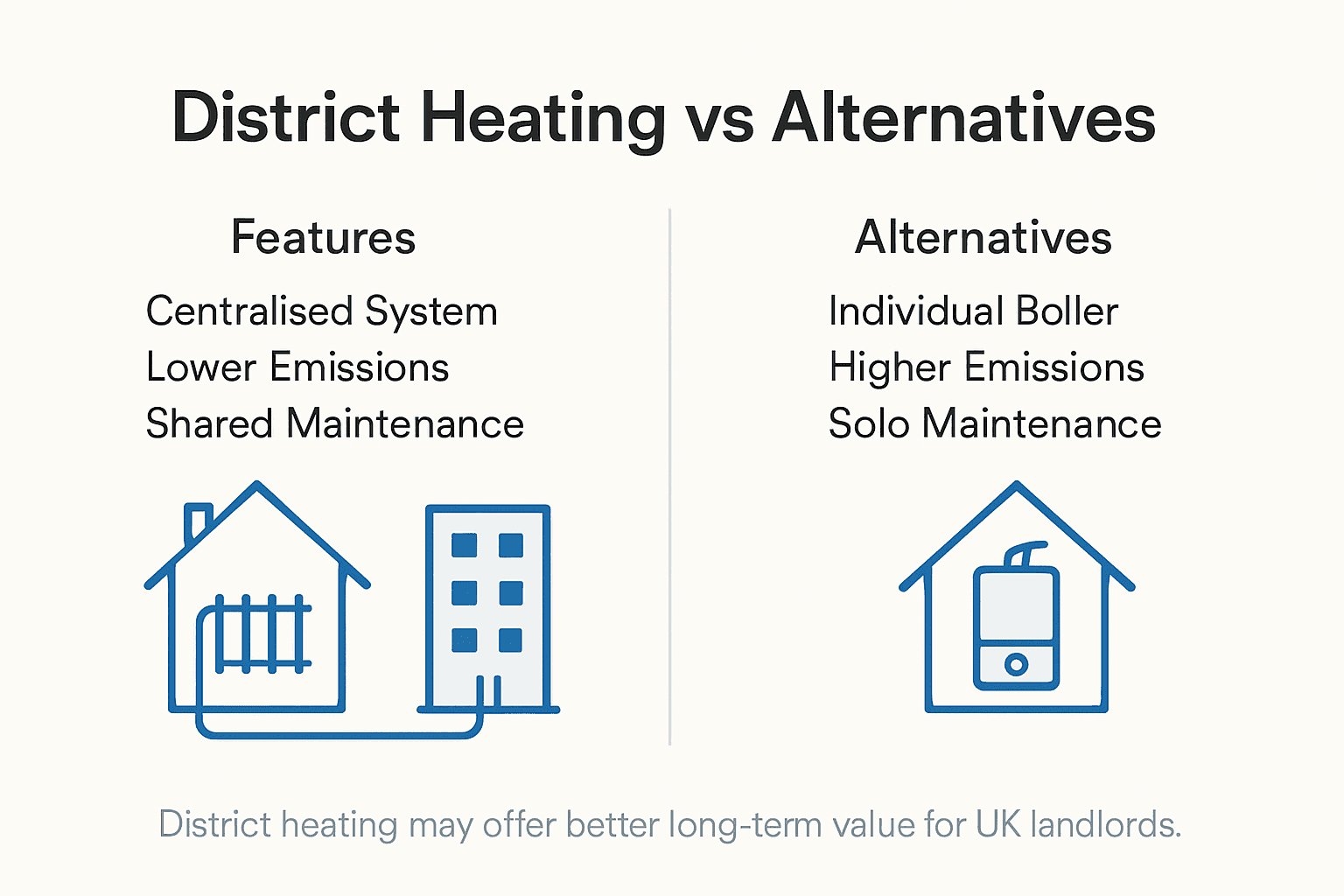
The selection between district heating and alternative technologies depends on multiple factors including property location, building density, existing infrastructure, and long-term sustainability goals. Urban developments with concentrated building clusters benefit significantly from district heating’s economies of scale, whereas rural or dispersed properties might find heat pumps or individual renewable systems more practical. Emerging technologies such as hydrogen heating also present potential alternatives, suggesting that the thermal energy landscape continues to evolve rapidly with technological innovation and environmental considerations.
The following table compares district heating with alternative heating technologies used in the United Kingdom:
| Technology | Efficiency Level | Upfront Cost | Typical Environmental Impact |
|---|---|---|---|
| District heating | High (centralised) | Moderate-High (network connection) | Low (if renewables integrated) |
| Heat pump | Moderate-High (local) | Moderate | Very low (if green energy sourced) |
| Biomass boiler | Moderate | Low-Moderate | Carbon neutral (with sustainable feedstock) |
| Individual gas boiler | Moderate | Low | High carbon emissions |
Pro tip: Conduct a comprehensive site-specific assessment evaluating thermal efficiency, installation costs, and long-term maintenance expenses before selecting your heating infrastructure.
Unlock the Full Potential of District Heating with Expert Energy Insights
Understanding district heating is crucial for UK property owners and landlords aiming to reduce costs and meet future energy standards. This article highlights challenges such as assessing thermal efficiency, navigating legal protections, and comparing sustainable heating options. If you want to confidently evaluate your building’s energy performance under the upcoming Home Energy Model and maximise property value through smarter heating solutions, you need reliable guidance.
At Home Energy Model, we offer essential information on how new government policies impact EPCs and energy assessments for residential and commercial properties. Discover how to use clear energy and water efficiency metrics to make informed decisions about integrating district heating or alternative systems. Start transforming your property management approach today by visiting Home Energy Model and explore our insights on Energy Performance Certificates. Don’t wait until 2025 when SAP is replaced—gain the expertise to lower costs, reduce carbon emissions, and protect your investment now.
Frequently Asked Questions
What is district heating?
District heating is a centralised energy distribution system that supplies thermal energy to multiple buildings through insulated underground pipes. It connects residential and commercial properties to efficient heat sources, reducing the need for individual heating systems.
How does district heating improve energy efficiency?
District heating systems typically use large-scale heat generation plants that operate at higher efficiency levels than individual boilers. By aggregating heat production, these systems can optimally manage energy consumption and lower carbon emissions for entire communities.
What are the main types of district heating systems?
The main types of district heating systems include heat-only boiler networks, combined heat and power (CHP) plants, geothermal heating networks, and systems that integrate renewable energy sources such as solar or biomass.
How can landlords benefit from district heating?
Landlords can benefit from district heating through reduced maintenance costs, potential long-term energy price stability, and improved energy efficiency. However, they must also consider connection costs and network pricing variability when evaluating overall financial implications.