
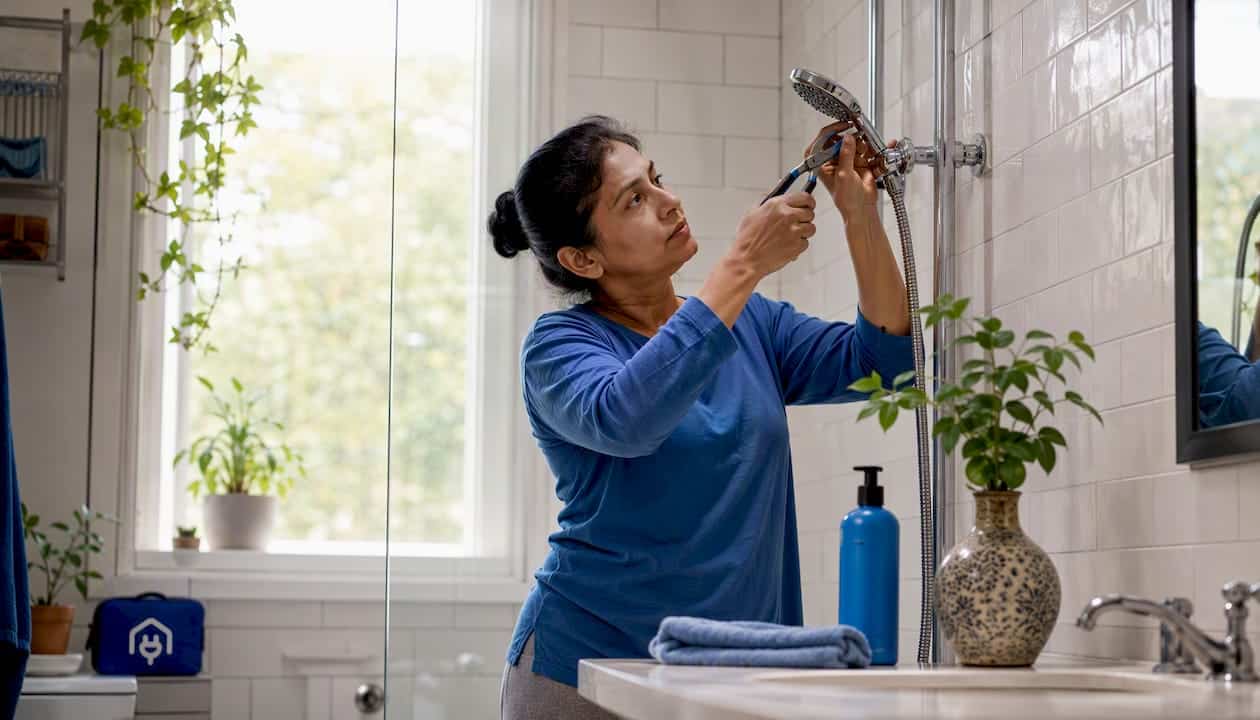
The five highest-impact ways to save water at home are shorter showers, turning taps off and fixing leaks, running full appliance loads on eco settings, collecting rainwater and reusing greywater, and fitting small water-saving devices. Together, these actions can save thousands of litres per year per household, reduce energy bills, and lower the pressure on regional water supplies across the UK.
Here is what each action delivers in rough savings:
- Shorter showers and an efficient showerhead: switching from a standard head (10–15 litres/min) to an efficient model (around 6 litres/min) can save around £65 per year on combined water and heating bills
- Turning taps off and fixing leaks: a running tap wastes approximately 9 litres per minute; a leaking toilet can lose up to 400 litres per day
- Full loads and eco settings: dishwashers and washing machines on eco programmes use less water per cycle than frequent small loads or hand-rinsing under a running tap
- Rainwater collection and greywater reuse: a standard water butt can supply most of a garden’s summer watering needs from mains water
- Small devices and habit tweaks: a four-minute shower timer alone could save around 17,000 litres per year; tap aerators can save a significant volume of water annually
Ofwat and Waterwise both provide free guidance, and most UK water companies offer free or discounted devices on request.
Table of Contents
- 1. Shorter showers and efficient showerheads save the most water
- 2. Turn taps off and fix leaks without delay
- 3. Run full appliance loads and use eco settings
- 4. Collect rainwater and reuse greywater for the garden
- 5. Fit simple water-saving devices and build small daily habits
- How water savings reduce energy bills and where to get help in the UK
- Key takeaways
- Saving water is a year-round habit, not a drought response
- A professional assessment can identify savings you might miss
- Authoritative UK sources and further reading
1. Shorter showers and efficient showerheads save the most water
Showers account for a significant share of daily household water use, so this is where most homes see the biggest gains. A standard showerhead flows at 10–15 litres per minute; an efficient model runs at around 6 litres per minute. For a household taking two eight-minute showers daily at a standard rate of 12 litres/min, that is 192 litres per day. The same two showers with an efficient head at 6 litres/min come to 96 litres — a saving of 96 litres every day, or roughly 672 litres per week.
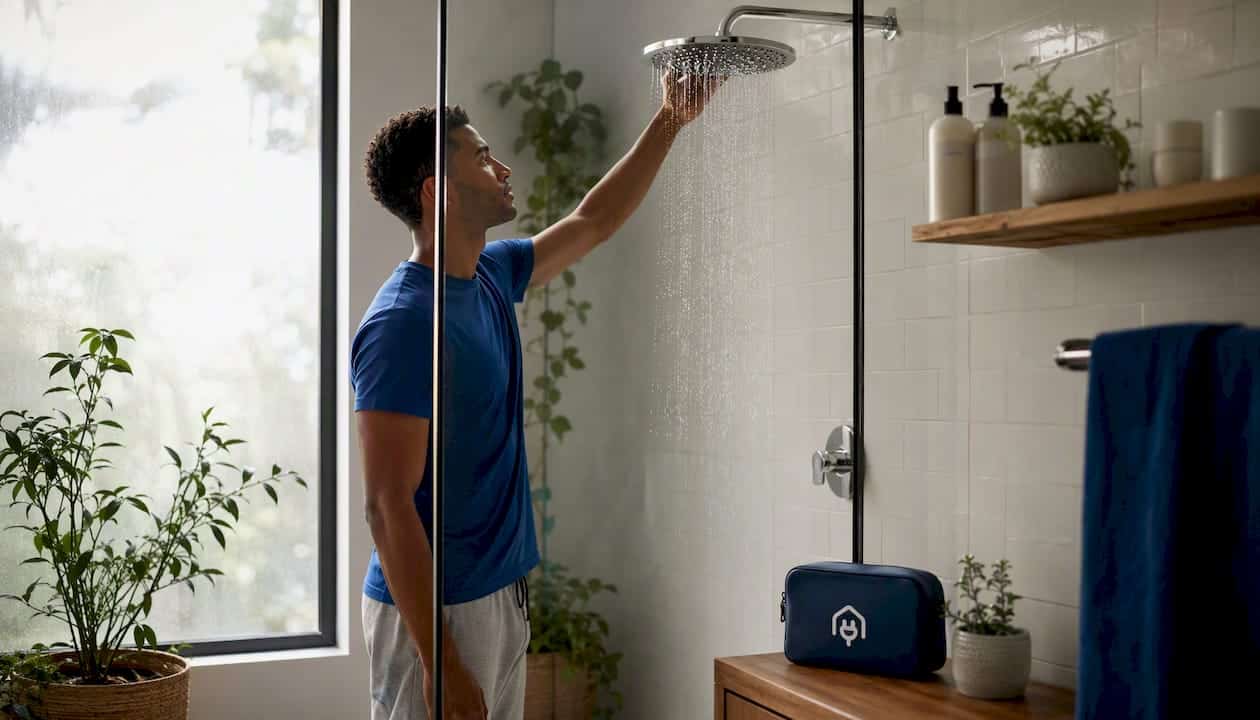
Replacing a showerhead typically costs £15–£50 for a quality aerated or low-flow model. The Energy Saving Trust estimates an average saving of around £65 per year on combined water and heating bills, giving a payback period of well under a year in most cases. Many water companies supply efficient showerheads free or at a discount — worth checking before purchasing.
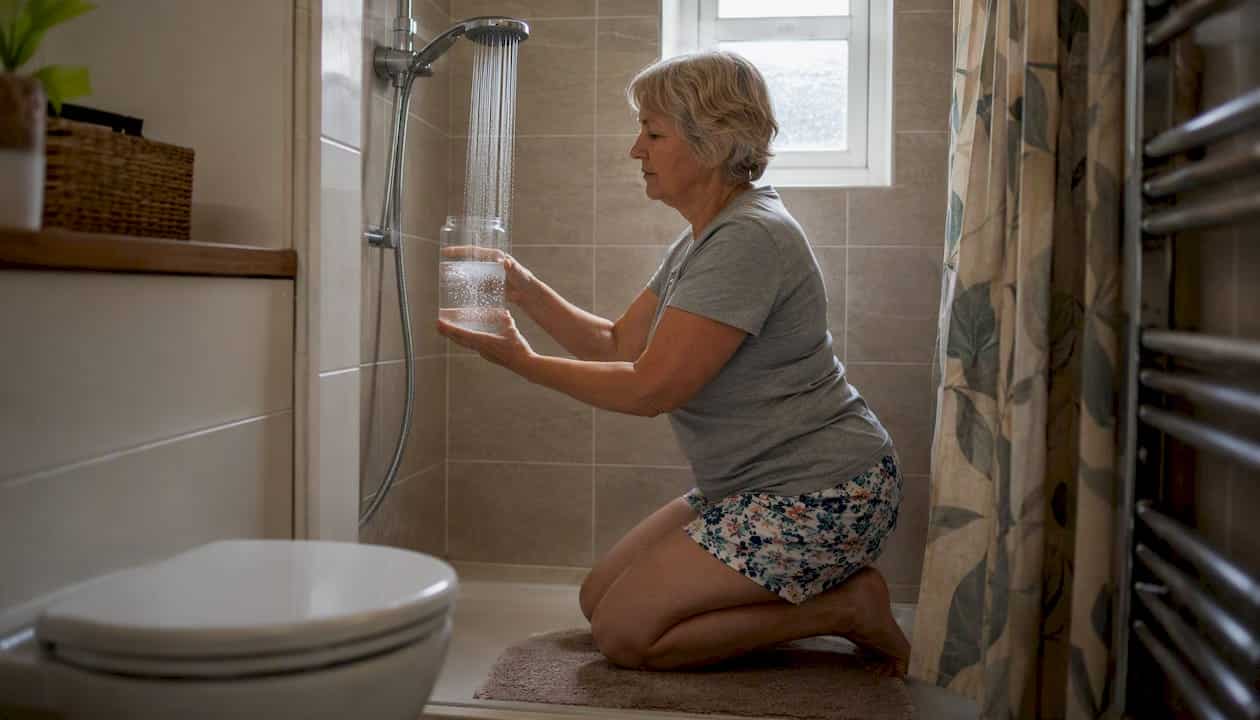
Pro Tip: Measure your current flow rate by holding a one-litre container under the shower for six seconds. If it fills completely, your head is flowing at 10 litres/min or more and an upgrade will pay back quickly.
Cutting shower time matters just as much as the hardware. Trimming from eight minutes to four minutes halves water use regardless of the showerhead fitted.
2. Turn taps off and fix leaks without delay
Turning off taps and repairing leaks is the lowest-cost, highest-return action available. A running tap wastes approximately 9 litres per minute — leaving it on while brushing teeth for two minutes twice a day adds up to 36 litres wasted daily, or over 13,000 litres per year. A dripping tap or a faulty toilet cistern compounds the problem silently.
A running toilet can waste up to 400 litres per day. That is more than the average person’s total daily water use. The fix is often a simple washer or valve replacement costing a few pounds.
How to find leaks at home:
- Check all visible tap washers and replace any that drip.
- Inspect the base of the toilet and around pipe joints for damp patches.
- Place a sheet of dry toilet paper against the back of the toilet bowl overnight. If it is damp in the morning, the cistern is leaking.
- Turn off all water-using appliances and note the meter reading. Check again after two hours. Any movement indicates a hidden leak.
- Contact your water company — many offer free leak detection visits and will repair a leaking supply pipe at no charge.
Pro Tip: Take a meter reading before bed and again first thing in the morning before using any water. If the reading has changed, there is a leak somewhere in the property. Most water companies will investigate for free.
3. Run full appliance loads and use eco settings
Modern dishwashers and washing machines are far more water-efficient than their predecessors, but only when used correctly. Running a half-empty machine wastes both water and energy. A dishwasher on an eco programme with a full load uses considerably less water than washing the same dishes under a running tap.
Practical habits that reduce water use with appliances:
- Wait until the dishwasher or washing machine is completely full before running a cycle
- Select the eco or low-temperature programme — these use less water and lower heating energy
- Skip pre-rinsing dishes before loading; modern detergents clean effectively without it and pre-rinsing adds unnecessary litres
- Scrape plates into the bin rather than rinsing under the tap
- Choose a cold wash for lightly soiled laundry where the fabric allows
The cost of changing these habits is zero. For households with older machines, a modern A-rated washing machine uses significantly less water per cycle than models from ten or more years ago. Replacement costs vary widely, but the long-term savings on water and energy bills contribute to the payback calculation.
Hot water heating accounts for approximately 18% of a typical home’s total heat demand. Every reduction in hot water use — whether from shorter showers, fewer half-loads, or lower wash temperatures — feeds directly into lower energy bills alongside water savings.
4. Collect rainwater and reuse greywater for the garden
Garden watering can account for a large proportion of summer household water use. Collecting rainwater and reusing safe greywater cuts mains demand significantly during dry months.
| Option | Typical capacity | Approximate cost | Best use |
|---|---|---|---|
| Small water butt | — | £15–£50 | Watering pots, beds, and borders |
| Large water butt | — | — | Larger gardens, vegetable patches |
| Underground tank | up to 5,000 litres | — | High-volume garden or greywater storage |
A water butt connects to a downpipe from the roof and fills passively during rainfall. Installation takes under an hour and requires no specialist skills. Using a trigger nozzle on a garden hose can halve water use compared to a free-flowing hose, and watering in the early morning or evening reduces evaporation loss.
Safe greywater reuse — what to know:
- Lightly used bath and shower water can be used on ornamental plants and lawns
- Do not use greywater containing bleach, strong detergents, or disinfectants on any plants
- Avoid using greywater on edible crops, particularly salad leaves or root vegetables eaten raw
- Do not store greywater for more than 24 hours, as bacteria multiply rapidly
- Mulching beds reduces evaporation and cuts the frequency of watering needed
A household that replaces mains garden watering with collected rainwater through the summer months can save hundreds of litres per week during dry periods.
5. Fit simple water-saving devices and build small daily habits
Low-cost devices are among the easiest first steps in any home water conservation plan. Many deliver savings from day one with no change to daily routines.
Devices and habits worth adopting:
- Tap aerators: fit to kitchen and bathroom taps to mix air into the flow, reducing litres used without reducing perceived pressure; can save up to 5,000 litres per year per tap
- Four-minute shower timer: a simple reminder that could save around 17,000 litres per year for a household of four
- Kettle discipline: — fill the kettle only with the amount of water needed — boiling a full kettle for one cup wastes both water and electricity
Most of these devices cost between £1 and £15. Many UK water companies supply tap aerators, cistern displacement devices, and shower timers free of charge. Check your supplier’s website or call their customer service line to request a free water-saving pack. The guide to water-saving devices for UK properties on Homeenergymodel covers specific fittings and their typical savings in more detail.
How water savings reduce energy bills and where to get help in the UK
Reducing hot water use does more than lower the water bill. Because hot water accounts for approximately 18% of a typical home’s total heat demand, cutting consumption through shorter showers, efficient appliances, and lower-flow fittings produces a measurable reduction in heating costs. For metered households, the water bill falls too. These are combined savings that many homeowners overlook when calculating the return on water-saving measures.
Waterwise projects that regional supply deficits are likely if consumption patterns do not change, making household conservation a matter of long-term resilience, not just personal finance.
How to request support from your water company:
- Visit your water company’s website and search for “water efficiency” or “free water-saving devices.”
- Request a free water-saving pack — most suppliers offer aerators, cistern devices, and shower timers at no cost.
- Ask about a home water audit if you suspect high consumption or hidden leaks.
- Report a leaking supply pipe; many companies repair these free of charge under their leakage policy.
- If your supplier does not respond adequately, Ofwat sets the standards water companies must meet for customer support and water efficiency information.
The Energy Saving Trust publishes detailed guidance on water and energy savings for UK homes. Waterwise provides further resources and campaign information. For energy-saving tips linked to your EPC rating, Homeenergymodel covers the connection between water efficiency and overall home energy performance.
Key takeaways
Fixing leaks, shortening showers, and running full appliance loads on eco settings deliver the fastest payback of all home water conservation measures available to UK households.
| Point | Details |
|---|---|
| Fix leaks first | A running toilet wastes up to 400 litres per day; repair costs are usually low and water companies often help for free. |
| Showers over baths, efficient heads | Switching to a 6 litres/min showerhead saves around £65 per year on water and heating combined. |
| Full loads and eco programmes | Running dishwashers and washing machines fully loaded on eco settings cuts both water and energy use at zero extra cost. |
| Collect rainwater | A water butt costing £15–£50 can supply most garden watering needs through summer without using mains water. |
| Homeenergymodel assessments | A professional home energy and water assessment from Homeenergymodel identifies larger savings and links measures to grants and supplier offers. |
Saving water is a year-round habit, not a drought response
The conventional framing of water conservation as something to worry about only during hosepipe bans misses the point entirely. The financial case for reducing water use is strongest in normal conditions, when metered households pay for every litre and heating bills reflect every hot shower. Waiting for a drought to act means missing months of savings.
The wider picture matters too. Regional water supplies across the UK face projected deficits if household consumption does not fall. Every home that cuts usage contributes to a more resilient local supply, reducing the likelihood of restrictions that affect everyone. That is a community benefit, not just a personal one.
The practical starting point is simple: pick one tip from this article and try it this week. Fix the dripping tap, request a free device pack from your water company, or set a four-minute shower timer. Small changes compound quickly.
A professional assessment can identify savings you might miss
Self-help tips cover the obvious wins, but a professional home energy assessment goes further. Homeenergymodel provides assessments that examine water use alongside heating, insulation, and appliance efficiency — producing a prioritised list of measures with estimated savings and payback periods specific to the property.
An assessment typically covers water use patterns, device recommendations, links to available grants, and connections to supplier free-device programmes. For landlords and homeowners planning upgrades, this removes the guesswork from deciding which measures to fund first. The Home Energy Model methodology underpins these assessments, aligning with the UK government’s approach to property energy performance.
To find out what a tailored assessment covers and how to book, visit Homeenergymodel’s home energy assessment page.
Authoritative UK sources and further reading
- Energy Saving Trust — saving water at home
- Energy Saving Trust — water-saving products
- Waterwise — how to save water
- Waterwise — drought and water protection guidance
- Ofwat — help with conserving water
- Homeenergymodel — water-saving tips for UK homes
- Homeenergymodel — home energy assessment