

The U factor is the rate of heat flow through a window, measured in W/m²K: the lower the number, the better the window holds heat inside the home. It appears on manufacturer specification sheets and product labels, usually as a whole window value rather than a glass only figure. A window rated at 1.4 W/m²K insulates considerably better than one rated at 2.8 W/m²K.
TL;DR:
- Always verify the whole window U value and compare it using the same reference size and frame-to-glass ratio to ensure accurate product comparisons.
- Confirm gas fill, coating types, and spacer materials, as these factors can significantly shift the U factor rating documented by manufacturers.
- Ensure proper installation, as poor sealing and frame gaps can undermine the thermal performance indicated by the rated U value.
- A U factor below 1.6 W/m²K generally indicates good insulation, especially with triple or high-performance double glazing, but always check the declared whole window value.
- Keep official documentation, including full specification sheets and installation certificates, to validate U values for compliance and EPC assessments.
Table of Contents
- How U factor is measured and the standards behind it
- Typical U factor values across common window types
- Why U factor matters and what it does not tell you
- Choosing windows using the U factor number
- UK compliance notes for declared U values
- What homeowners get wrong about window ratings
- Getting the documentation right with Home Energy Model
- Sources
- FAQ
How U factor is measured and the standards behind it
The U factor describes how much heat passes through one square metre of a window for every degree of temperature difference between inside and outside. A lower figure means less heat escapes, which is why the metric sits at the centre of most window buying decisions.
Two different numbers often get confused. The centre pane glass U value measures only the middle section of the glazing, while the whole window U factor accounts for the frame, spacer bar and edge effects too. BS EN 673 explains glass central pane U value calculation, while frame performance is calculated separately under BS EN ISO 10077-2. Manufacturers sometimes quote the more flattering centre pane figure, so the two values rarely match.
- Centre pane U value: measures glass performance only, ignoring the frame.
- Whole window U factor: includes frame, spacer and glazing, giving a realistic comparison.
- Reference size: standard test sizes can differ between products, which shifts the quoted figure.
NFRC testing in the United States follows a similar principle to the European standards, using standardised sizes so that products can be compared fairly. Frame to glass ratio matters too: a window with a chunky frame and small glass area often performs worse than its centre pane number suggests, because frames typically conduct more heat than modern glazing units.
Typical U factor values across common window types
Benchmark figures help homeowners judge whether a quoted U factor is strong or weak. According to Bath and North East Somerset Council, typical glazing U values run as follows:
- Single glazing: around 5 to 5.6 W/m²K, the weakest common option.
- Air filled double glazing: around 2.8 W/m²K.
- Argon filled double glazing: around 2.6 W/m²K.
- Low emissivity double glazing with air: around 1.8 W/m²K.
- Low emissivity double glazing with argon: around 1.5 W/m²K.
- Triple glazing: around 0.7 to 1.6 W/m²K, depending on specification.
A single glazed sash window at roughly 5.6 W/m²K loses close to four times as much heat as a low emissivity argon filled double-glazed unit at around 1.5 W/m²K**, based on the council’s published ranges. The same source notes that gap widths of roughly 12 to 16 millimetres tend to give the best results in double and triple units, since a cavity that is too narrow or too wide loses efficiency. Coatings, gas fill, spacer type and frame material all shift the final number, which is why two double glazed windows can carry noticeably different ratings.
Why U factor matters and what it does not tell you
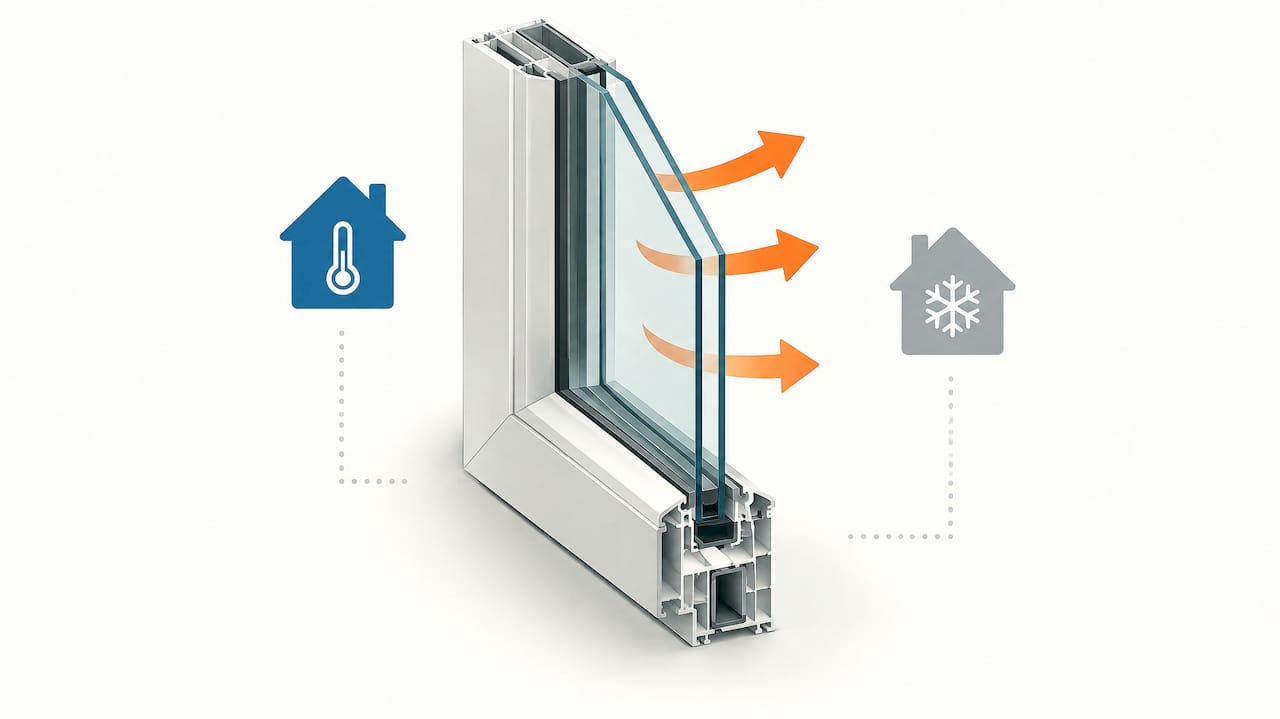
A lower U factor reduces the conductive heat loss through a window, which generally means lower heating demand and a more comfortable room in winter. But the Energy Saving Trust is clear that a low U factor alone does not guarantee lower bills: draughts, wall insulation and the rest of the building fabric all play a part.
The U factor also says nothing about solar heat gain coefficient, which governs how much solar warmth passes through the glass, or visible transmittance, which affects natural light. A window can have an excellent U factor and still perform poorly on glare control or summer overheating, so the three figures need to be read together rather than in isolation.
- Air leakage: poor sealing can undo the benefit of a low U factor.
- Installation quality: a well rated window fitted badly rarely performs to spec.
- Frame junctions: gaps around the frame create cold bridges that the U factor figure does not capture.
Pro Tip: Always ask for the whole window declared U value alongside evidence of correct installation, since a strong number on paper means little if the fitting lets heat escape around the edges.
Choosing windows using the U factor number
Homeowners planning a replacement or new build should treat the U factor as one input among several, not a single deciding figure. A short set of questions to suppliers avoids the most common procurement mistakes.
- Ask for the declared whole window U value, not just the centre pane figure, and confirm which standard was used to calculate it.
- Compare products using the same reference size and frame to glass ratio, since mismatched test sizes make comparisons misleading.
- Ask about low emissivity coatings, gas fill, cavity width and spacer type, all of which shift the final rating.
- Request evidence of air permeability performance and any installation warranty offered by the fitter.
- Keep the declared values on file as documentation for EPC assessors or building control, since project-specific figures carry more weight than headline marketing numbers.
Our guide to energy efficient window types sets out how these specifications compare across common UK retrofit choices, and our piece on the benefits of double glazed windows covers the likely impact on EPC ratings.
UK compliance notes for declared U values
The Home Energy Model, which is set to replace SAP as the government’s assessment methodology, is due to align with the Future Homes Standard. BSI’s commentary flags a practical issue: standard benchmark window sizes used in testing may not match the windows actually installed in a property, so project specific declared values matter more than a single headline figure quoted in marketing material.
For building control or an EPC assessment, it helps to retain the manufacturer’s full specification sheet, the calculation standard referenced, and any installation certificate. Our guide on assessing home energy loss explains how this evidence feeds into a wider fabric assessment.
- Keep the declared whole window U value on file, not just a sales brochure figure.
- Note the calculation standard used, since BS EN 673 and BS EN ISO 10077-2 measure different things.
- Retain installation certificates alongside the product specification.
What homeowners get wrong about window ratings
Most confusion comes from comparing a glass only figure to a whole window number and assuming they mean the same thing. Skipping installation evidence is the second common mistake: a well specified window fitted poorly can perform far below its rated U factor. A short checklist avoids both problems: get the whole window declared U value, keep the full specification sheet, ask for an installation warranty, and consider ventilation alongside insulation so the property does not trap excess moisture. For a broader look at retrofit checks worth making alongside window upgrades, this thermal retrofit checklist covers related fabric measures.
— Danny
Getting the documentation right with Home Energy Model
Chasing down a manufacturer’s declared U value is only half the job: proving it stacks up against current building regulations and EPC requirements takes proper calculation and paperwork. Home Energy Model handles that side of the process directly.
- Domestic EPC assessments that record window and fabric performance for compliance purposes.
- SAP calculations that use project specific declared values rather than generic assumptions.
- Commercial EPC assessments for landlords and developers managing larger portfolios.
If you need a declared U value properly documented for a property in England or Wales, request a quote for an EPC or SAP calculation and get the paperwork sorted before your next building control check.
Sources
- Double and triple glazing | Bath and North East Somerset Council
- Energy efficient windows and doors – Energy Saving Trust
- BS EN 673: Determination of thermal transmittance (BSI Knowledge)
- Future Homes Standard and Approved Document L (BSI commentary)
FAQ
Is 0.27 a good U factor for windows?
A U factor well below the typical triple glazing range of 0.7 to 1.6 W/m²K reported by Bath and North East Somerset Council would represent an exceptionally strong result if verified against a whole window declared value. Always check whether the figure quoted is the centre pane glass value or the whole window figure, since the two are often confused.
What counts as a good U factor for windows?
A good U factor depends on window type, but low emissivity double glazing with argon typically achieves around 1.5 W/m²K, while triple glazing can reach 0.7 to 1.6 W/m²K. The lower the number, the less heat escapes, but it should always be read as a whole window figure rather than a centre pane glass value alone.
Is a U factor of 0.28 good for windows?
A U factor lower than the typical triple glazing range of 0.7 to 1.6 W/m²K noted by Bath and North East Somerset Council would be worth confirming as a genuine whole window declared value and not a centre pane measurement. A strong number on a spec sheet still depends on correct installation to perform as rated.
Is it better to have a higher or lower U factor?
A lower U factor is always better for insulation, since it means less heat escapes through the window. That said, the Energy Saving Trust notes that a low U factor alone does not guarantee lower bills, because draughts, installation quality and the rest of the building fabric also affect overall heat loss.