

TL;DR:
- A net zero home balances annual energy consumption with on-site renewable generation, achieving a zero energy deficit.
- It relies on efficient design, insulation, airtightness, and solar PV, remaining connected to the grid for seasonal balancing.
A net zero home is defined as a dwelling that produces as much energy as it consumes across an entire year, achieving a net energy balance of zero through efficient design and on-site renewable generation. The term is also referred to in the industry as a net zero energy (NZE) home or zero energy building. Understanding what a net zero home means in practice, and how it differs from simply having solar panels fitted, is increasingly relevant for UK homeowners and property investors as regulations tighten and energy costs remain high. This guide explains the core concept, the features that define net zero housing, how performance is measured, and the practical steps to get there.
What is a net zero home and how does it work?
A net zero home balances all energy consumed across heating, lighting, appliances, and hot water against energy generated on-site, typically through solar photovoltaic (PV) panels, over a twelve-month period. The balance is calculated annually rather than in real time, which is a critical distinction. On a sunny summer day, the home may export surplus electricity to the grid. On a cold winter evening, it draws energy back. The grid acts as a virtual battery across seasons, smoothing out the natural variation in both generation and demand.

This annual accounting approach is what separates a net zero energy home from an off-grid property. The home remains connected to the national grid throughout the year. What changes is the net position: over twelve months, the total energy exported equals or exceeds the total energy imported. Achieving that balance requires both a highly efficient building fabric and a well-sized renewable energy system working together.
What are the core features of a net zero home?
Net zero housing is built on an “efficiency first” principle. Reducing the energy demand of the building before adding renewable generation is the most cost-effective route to a net zero balance. The key features that define net zero home design include:
- High-performance insulation across walls, roof, and floor, reducing heat loss to a fraction of what a standard UK home loses
- Airtightness combined with mechanical ventilation and heat recovery (MVHR), which controls air quality without wasting the warmth already inside
- Triple-glazed windows and thermally broken frames that eliminate cold spots and reduce solar heat gain in summer
- Efficient heating systems, most commonly an air source or ground source heat pump, which deliver three to four units of heat for every unit of electricity consumed
- Solar PV panels sized to the home’s annual demand, often paired with battery storage to shift generation to evening peak use
- Smart energy management systems that monitor consumption in real time and optimise when the home draws from or exports to the grid
High-performance insulation and heat pumps combined with solar PV and smart controls are the defining technology stack for net zero housing today. These components compound each other’s value: a well-insulated home needs a smaller heat pump, which in turn requires fewer solar panels to offset its electricity use.
Pro Tip: Site orientation matters more than most homeowners realise. A south-facing roof and glazing plan can increase passive solar gain by a meaningful margin, reducing the heating load before a single panel is installed. For new builds, this is a design decision made at planning stage. For retrofits, it informs where to prioritise insulation upgrades.
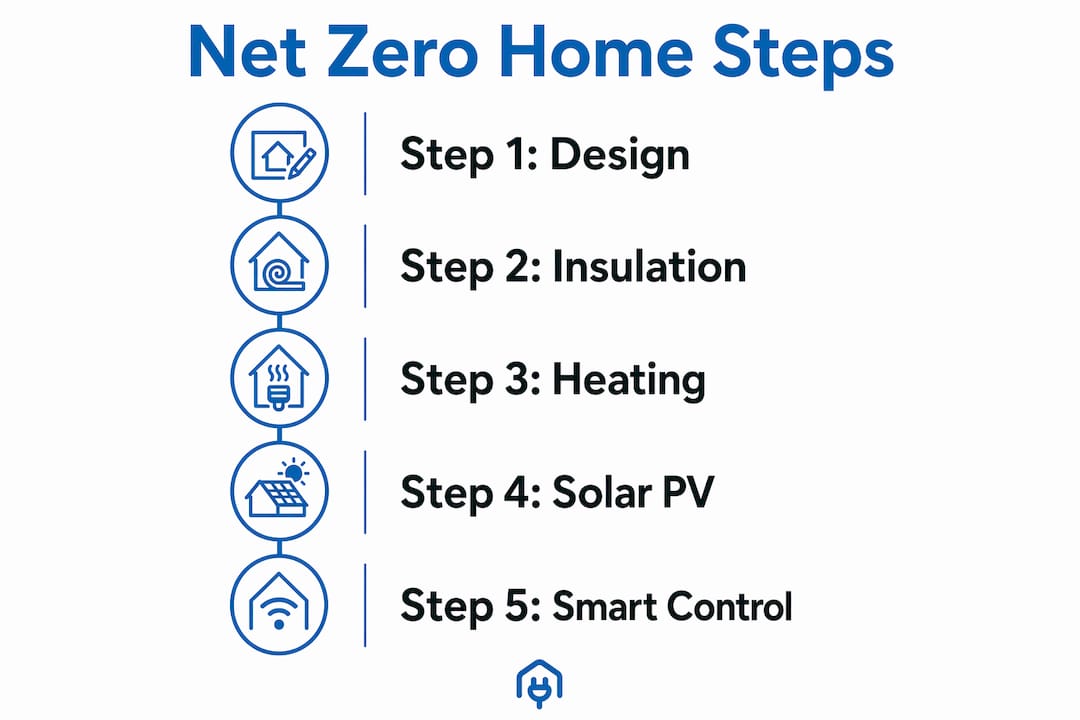
The efficiency-first design approach is not just good practice. It is the difference between a cost-effective net zero home and one that requires an oversized, expensive renewable energy system to compensate for a leaky building envelope.
How is net zero status measured and certified?
Several recognised frameworks exist to measure and certify net zero performance. Understanding which applies in a given context helps homeowners and investors set realistic targets.
| Framework | What it measures | Net zero threshold |
|---|---|---|
| HERS Index | Home Energy Rating System score for US-built homes | Score near zero indicates minimal grid energy requirement |
| Energy Star | US certification for homes 10–20% more efficient than building code | Stepping stone toward net zero, not full net zero |
| LEED | Leadership in Energy and Environmental Design; whole-building sustainability | Platinum tier approaches net zero performance |
| EPC / SAP | UK Energy Performance Certificate using Standard Assessment Procedure | Band A (92+) is the closest UK proxy for net zero |
Net zero status is commonly measured by the HERS Index in North America, where a score near zero confirms minimal net energy requirement from the grid. Energy Star certified homes are 10–20% more efficient than code, making them a practical stepping stone rather than a full net zero solution.
In the UK, EPC ratings and SAP calculations are the primary tools used to evaluate a home’s energy performance. An EPC Band A rating, which requires a SAP score of 92 or above, is the closest current UK proxy for net zero performance. The upcoming Home Energy Model (HEM), set to replace SAP under the Future Homes Standard, will provide a more granular and accurate assessment of net zero compliance for new builds from 2025 onwards.
It is also worth distinguishing between three related terms. A net zero home achieves the annual energy balance described above. A net zero ready home has the building fabric and infrastructure in place to reach net zero once renewable generation is added. A zero carbon home goes further, accounting for embodied carbon in construction materials as well as operational energy. Each represents a different level of ambition and cost.
Common misconceptions about net zero homes
Several misunderstandings persist around what net zero housing actually means. Addressing them directly helps homeowners and investors make better decisions.
-
“Net zero means off-grid.” Net zero homes remain connected to the grid and rely on it to balance seasonal variation. Off-grid homes must store or generate all their own energy at all times, which requires far larger and more expensive systems.
-
“Solar panels alone make a home net zero.” Solar PV is one component of a net zero system. Without adequate insulation, airtightness, and efficient heating, the energy demand of the home will exceed what any reasonably sized solar array can offset annually.
-
“Net zero and energy efficient are the same thing.” An energy-efficient home reduces consumption. A net zero home eliminates the net consumption entirely through the combination of efficiency and generation. The distinction matters for both certification and energy bills.
-
“Net zero is only for new builds.” Retrofit pathways exist for existing UK properties. They require a sequenced approach, starting with the building envelope and working through to heating systems and renewables, but the outcome is achievable for many standard house types.
-
“The upfront cost is prohibitive.” Net zero homes can carry initial cost premiums of £80,000 to £120,000 in some pilot projects, but overall ownership costs are lower due to energy savings. Technology costs, particularly for solar PV and heat pumps, have fallen substantially and continue to do so.
Pro Tip: The biggest financial mistake in net zero projects is installing solar panels before upgrading the building envelope. Oversizing a renewable system to compensate for a poorly insulated home costs significantly more than insulating first and then sizing the system to the reduced demand.
What are the benefits and challenges of net zero homes?
Net zero homes offer a clear set of advantages for owners and investors, alongside challenges that require realistic planning.
Key benefits include:
- Near-zero or zero net energy bills, with the annual balance meaning grid energy costs are minimal or eliminated entirely
- Reduced carbon footprint, directly contributing to the UK’s legally binding net zero targets for 2050
- Higher property values, as EPC ratings become more prominent in mortgage lending and rental compliance requirements
- Greater comfort, because high-performance insulation and airtightness eliminate draughts, cold spots, and temperature fluctuations
- Resilience against energy price volatility, since on-site generation insulates owners from wholesale electricity price swings
“Net zero energy buildings are rapidly becoming the standard, driven by legislation and state-level policies focused on sustainability and carbon reduction goals.” — GSA Federal High-Performance Buildings
The challenges are real but manageable. Upfront capital costs remain the primary barrier for most homeowners. Maintenance of heat pumps, MVHR systems, and battery storage requires specialist knowledge. And the technology lifecycle for solar panels and batteries means replacement costs need to be factored into long-term financial planning.
UK policy is moving firmly in the direction of net zero housing. The Future Homes Standard, the planned replacement of SAP with the Home Energy Model, and tightening EPC requirements for rental properties all point toward net zero becoming mainstream faster than many in the property sector currently expect. For investors, early adoption carries a positioning advantage as compliance requirements tighten.
How to achieve net zero: a practical pathway for homeowners
Moving toward net zero is a sequenced process. Attempting to shortcut the order typically increases cost and reduces performance.
-
Commission a home energy assessment. Understand the current energy performance baseline before committing to any upgrades. An assessment identifies the highest-impact interventions for the specific property type, age, and construction.
-
Upgrade the building envelope first. Address loft insulation, cavity or solid wall insulation, floor insulation, and draught-proofing before touching heating systems or renewables. This reduces the energy demand the rest of the system needs to meet.
-
Replace the heating system with a heat pump. Once the envelope is performing well, an air source or ground source heat pump becomes highly efficient. A well-insulated home requires lower flow temperatures, which is exactly where heat pumps operate most effectively.
-
Install solar PV sized to the reduced demand. With the building fabric optimised and an efficient heating system in place, a correctly sized solar array can realistically offset annual consumption. Add battery storage to shift daytime generation into evening use.
-
Integrate a smart energy management system. Tools such as home energy monitors and smart tariff switching allow the home to respond to grid pricing and maximise self-consumption of generated electricity.
-
Engage a qualified assessor for certification. Whether pursuing an EPC Band A, a Passivhaus certificate, or preparing for compliance under the Future Homes Standard, professional verification confirms the home has achieved its net zero target and documents it for mortgage, sale, or rental purposes.
The design process must integrate net zero from the outset for new builds, focusing on site orientation and thermal envelope rather than technology add-ons applied after the fact. For retrofits, the same principle applies in sequence: fabric first, then systems, then generation.
Key takeaways
Net zero homes achieve their energy balance through efficient building fabric combined with on-site renewable generation, not through renewables alone.
| Point | Details |
|---|---|
| Annual energy balance | A net zero home produces as much energy as it consumes across a full year, not in real time. |
| Efficiency first | Upgrading insulation and airtightness before installing solar PV reduces system size and total cost. |
| Grid connection retained | Net zero homes remain connected to the national grid, using it to balance seasonal generation and demand. |
| UK certification tools | EPC Band A and the upcoming Home Energy Model are the primary UK benchmarks for net zero performance. |
| Cost versus savings | Upfront premiums are real but offset by near-zero energy bills and rising property values over time. |
Net zero homes in the UK: a perspective worth considering
The conversation around net zero housing in the UK has shifted noticeably in the past two years. What was once the territory of self-build enthusiasts and Passivhaus specialists is now appearing in mainstream mortgage products, planning policy, and landlord compliance discussions. That shift is not accidental. It reflects a convergence of falling technology costs, tightening regulation, and growing buyer awareness.
What I find most encouraging is the growing acceptance of the efficiency-first mindset. For years, the instinct in the UK retrofit market was to reach for solar panels as the visible, tangible sign of doing something. The evidence now clearly shows that insulating and air-sealing a home first produces better outcomes at lower total cost. That message is getting through, and it is changing how both homeowners and developers approach net zero projects.
The property investment angle is also maturing. EPC ratings are already influencing mortgage rates and rental compliance thresholds. As the Home Energy Model replaces SAP and the Future Homes Standard takes effect, the gap in value between high-performing and low-performing properties will widen. Investors who understand net zero home ownership costs and act early will be better positioned than those waiting for the regulatory minimum to force their hand.
The honest advice is straightforward: start with an energy assessment, follow the sequence, and engage qualified professionals at each stage. Net zero is not a single product to buy. It is a performance outcome to plan for.
— Danny
How Homeenergymodel can support your net zero journey
Planning a net zero upgrade without understanding the current performance of a property is a costly starting point. Homeenergymodel provides resources and professional guidance specifically designed for UK homeowners, landlords, and property investors navigating energy efficiency improvements and compliance requirements.
A home energy assessment is the logical first step, establishing the baseline from which all upgrade decisions should follow. Homeenergymodel also offers a detailed energy performance guide covering the steps required to move a property toward net zero compliance under current and forthcoming UK standards. For those ready to act, the home energy savings workflow sets out a practical, sequenced plan for implementing improvements that deliver measurable results.
FAQ
What is the simplest definition of a net zero home?
A net zero home produces as much energy as it consumes over a full year, achieving a net energy balance of zero through a combination of efficient building design and on-site renewable generation such as solar PV.
Is a net zero home the same as an off-grid home?
No. A net zero home remains connected to the national grid, exporting surplus electricity and importing energy when needed. Off-grid homes must generate and store all their own energy independently, which requires significantly larger and more expensive systems.
What EPC rating does a net zero home need in the UK?
An EPC Band A rating, requiring a SAP score of 92 or above, is the closest current UK proxy for net zero performance. The Home Energy Model, replacing SAP under the Future Homes Standard, will provide more precise net zero assessment from 2025 onwards.
How much does it cost to build or retrofit a net zero home?
Net zero homes can carry upfront cost premiums of £80,000 to £120,000 in some cases, though costs vary significantly by property type and existing condition. Long-term ownership costs are lower due to near-zero energy bills and rising property values associated with high EPC ratings.
What is the difference between net zero and zero carbon?
A net zero home balances operational energy consumption with on-site generation over a year. A zero carbon home goes further, accounting for the embodied carbon in construction materials as well as operational energy, representing a higher standard of environmental performance.