
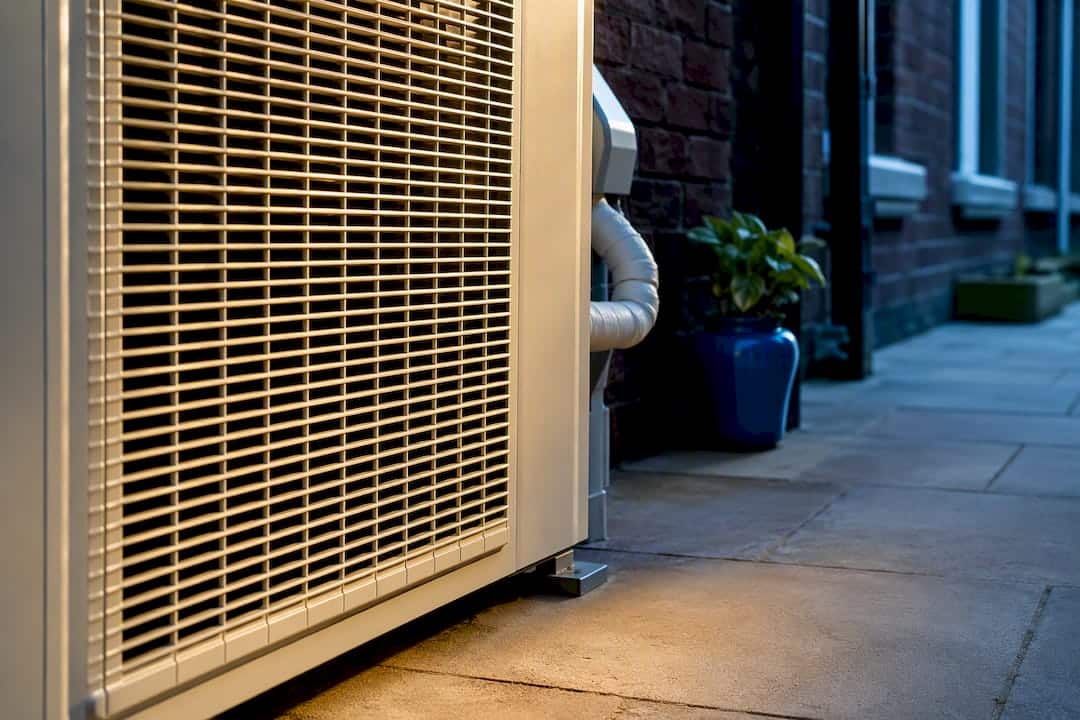
A heat pump AC unit is a reversible refrigeration system that both cools and heats by moving heat between indoors and outdoors, rather than burning fuel to create it. Many modern split air conditioners are already reverse-cycle heat pumps in disguise, capable of warming a room in January and cooling it in July. This guide covers the main types, how the technology works, and how to judge whether one suits your property.
TL;DR:
- A higher SCOP value indicates better efficiency in extracting heat from cold outdoor air, especially important in colder regions.
- Retrofit air-to-air systems are more suitable and less disruptive for older properties or flats without existing wet heating infrastructure.
- Grant schemes mainly support whole-house air-to-water installations, making room-only heat pumps less likely to qualify for funding.
- Performance of heat pumps decreases in very cold weather, so check rated SCOP at your region’s typical winter temperature for accurate expectations.
- Proper sizing, installer certification, and understanding local climate conditions are essential to ensure a heat pump system delivers the expected energy savings.
Table of Contents
- What is a heat pump AC unit? The mechanics explained simply
- The main types of heat pump AC units and where they fit
- Heat pump AC unit vs a conventional air conditioner: what’s the real difference?
- Benefits and downsides for homeowners
- Is a heat pump AC unit right for your home?
- Where Home Energy Model fits into your heat pump decision
- Why the “AC or heat pump” debate misses the real question
- Sources
What is a heat pump AC unit? The mechanics explained simply
A heat pump AC unit works by cycling refrigerant through four components: a compressor, a condenser, an expansion valve, and an evaporator. The refrigerant absorbs heat at one point in the loop and releases it at another, which is exactly how a fridge keeps food cold, except a heat pump can send that heat in either direction.
The part that makes this dual-purpose trick possible is the reversing valve. It flips the direction of refrigerant flow, so the coil that was releasing heat outdoors in summer starts absorbing it instead, pulling warmth from the outside air (even at low temperatures) and pumping it indoors during winter. The air-to-air literature review from gov.uk sets out this compressor and reversing-valve process in detail, and it is the same underlying principle whether the outdoor box on your wall is labelled “air conditioner” or “heat pump”.
Efficiency is measured through two figures worth knowing:
- SEER (Seasonal Energy Efficiency Ratio) rates cooling performance over a typical season.
- SCOP (Seasonal Coefficient of Performance) rates heating performance, showing how much heat is delivered per unit of electricity used.
Pro Tip: A higher SCOP means the unit is squeezing more heat out of each kilowatt of electricity, so always ask an installer for the SCOP at your local outdoor design temperature, not just a generic manufacturer figure.
The main types of heat pump AC units and where they fit
Heat pump systems split into two broad families, and knowing which one you are looking at changes everything about cost, disruption, and what the system can actually do for your home.
Air-to-air systems heat and cool the air directly using an indoor unit and an outdoor unit. This category includes:
- Single split (mini-split): one indoor unit paired with one outdoor unit, ideal for a single room or flat.
- Multi-split: several indoor units connected to one outdoor unit, giving room-by-room control.
- VRF (Variable Refrigerant Flow): a commercial-grade version of multi-split, suited to larger or multi-zone properties.
- Ducted systems: hidden ductwork distributes air through ceiling or floor vents for a whole-house feel without visible indoor units.
Outdoor unit outputs for single-phase domestic systems typically run between 3.3 kW and 12 kW, depending on how many rooms and indoor units are attached.
Air-to-water (hydronic) systems work differently. They heat water for radiators, underfloor heating, and a hot water cylinder, effectively replacing a boiler for the whole house. Air-to-air units, by contrast, do not supply domestic hot water unless paired with separate equipment, which is the single biggest functional gap between the two families.
Heat pump AC unit vs a conventional air conditioner: what’s the real difference?
A cooling-only air conditioner and a reverse-cycle split system share almost identical hardware, but only one of them can heat your home. The difference comes down to that reversing valve: a standard AC unit’s refrigeration cycle only runs one way, so it can chill a room but has no mechanism to push heat back indoors when temperatures drop.
Reversible split systems are, technically speaking, air-to-air heat pumps, and a lot of consumer confusion stems from marketing language rather than any real technical distinction. Here’s how the two categories diverge in practice:
- Function: cooling-only AC handles summer comfort; reverse-cycle AC handles both seasons; air-to-water systems handle whole-house heating plus hot water.
- Scope: air-to-air units condition individual rooms; air-to-water systems condition the entire property through existing or upgraded wet heating.
- Certification: installers typically need F-Gas certification to handle refrigerants, while whole-house air-to-water installations often also require MCS certification for compliance and grant purposes.
- Grant eligibility: schemes aimed at whole-house decarbonisation, including the Boiler Upgrade Scheme, generally target air-to-water replacements rather than room-level comfort-cooling units.
Benefits and downsides for homeowners
A heat pump AC unit brings genuine year-round value, but it isn’t a universal upgrade. The trade-offs are worth weighing honestly before you commit.
- Efficiency gains. Because the unit moves heat rather than generating it from fuel, running costs can undercut electric resistance heating and, in many cases, gas heating too, as the NRDC’s explainer on heat pump air conditioners sets out.
- Year-round comfort from one system. Heating and cooling from the same equipment means no separate boiler and window units cluttering the property.
- Dehumidification and filtration. Most units strip moisture from the air as a byproduct of cooling, and many include basic filtration.
- Zonal control. Multi-split and VRF setups let you heat or cool only the rooms in use, cutting waste.
- Reduced cold-weather output. Performance can dip in very cold conditions, so SCOP figures matter more in colder regions than headline kW ratings.
- Summer electricity demand. Running cooling through the same unit that handles winter heating can push up summer bills, particularly with poor insulation; learn more about how electric cars and home energy interact to manage operational costs.
- Aesthetics and noise. Outdoor condenser units need wall or ground space and produce audible operating noise, which matters on tight urban plots.
- Upfront cost. Installation is a real capital outlay compared with a like-for-like AC swap.
Checking installer credentials, F-Gas certification as a minimum, and asking for realistic SCOP/SEER figures rather than best-case marketing numbers, protects you from underperforming installs.
Is a heat pump AC unit right for your home?
Start with five practical questions before calling an installer. What heating system do you currently rely on? Is your home on a wet (radiator) system or does it lack one entirely? How good is the existing insulation? Is there outdoor space for a condenser unit? And do you want the same system to also deliver domestic hot water?
Costs vary sharply by scope. Energy Saving Trust gives illustrative UK figures of around £1,900 for a single room and roughly £3,700 for a three-bedroom semi-detached home fitted with an air-to-air system. Whole-house air-to-water installations, which involve radiators, cylinders, and often larger outdoor units, sit at a materially higher price point, though exact figures depend heavily on property size and existing pipework.
Grant eligibility differs by scope too: broader efficiency and warmth schemes referenced by gov.uk tend to favour whole-house heating replacements over room-level comfort units, so check eligibility against the specific system type you’re considering, not the category as a whole.
Before signing anything, ask your installer:
- How did you size this system, and what heat loss calculation did you use?
- What SCOP applies at my region’s typical winter design temperature?
- What is the outdoor unit’s noise output in decibels at one metre?
- What warranty covers the compressor versus the indoor units?
- Are you F-Gas certified, and for air-to-water work, are you MCS certified?
Pro Tip: Retrofit air-to-air installations tend to cause far less disruption than air-to-water conversions, because there’s no need to rip out radiators or fit a hot water cylinder. This is one reason air-to-air systems suit flats and older retrofit properties that lack a wet heating system already. For a fuller look at matching capacity to your property, see a guide on sizing a heat pump for a UK home.
Where Home Energy Model fits into your heat pump decision
Installing a heat pump AC unit changes how a property performs on paper as well as in practice, and that matters for anyone tracking Energy Performance Certificates or preparing for the Future Homes Standard. The incoming Home Energy Model methodology assesses heating and cooling equipment with regard to EPC compliance and standards, which is relevant whether you’re a landlord, developer, or owner-occupier documenting an upgrade.
If you’re weighing sizing, appraisal, or how a heat pump installation will register on an assessment, Guidance on efficient heating for landlords and related resources are a sensible starting point before you commission any survey or quote.
Why the “AC or heat pump” debate misses the real question
Homeowners spend too much time asking whether a unit is “really” a heat pump or “just” air conditioning, when the more useful question is what job the property actually needs done. A flat with no wet heating system and a tight budget is usually better served by a reversible split unit than by chasing whole-house hydronic ambitions it doesn’t need yet.
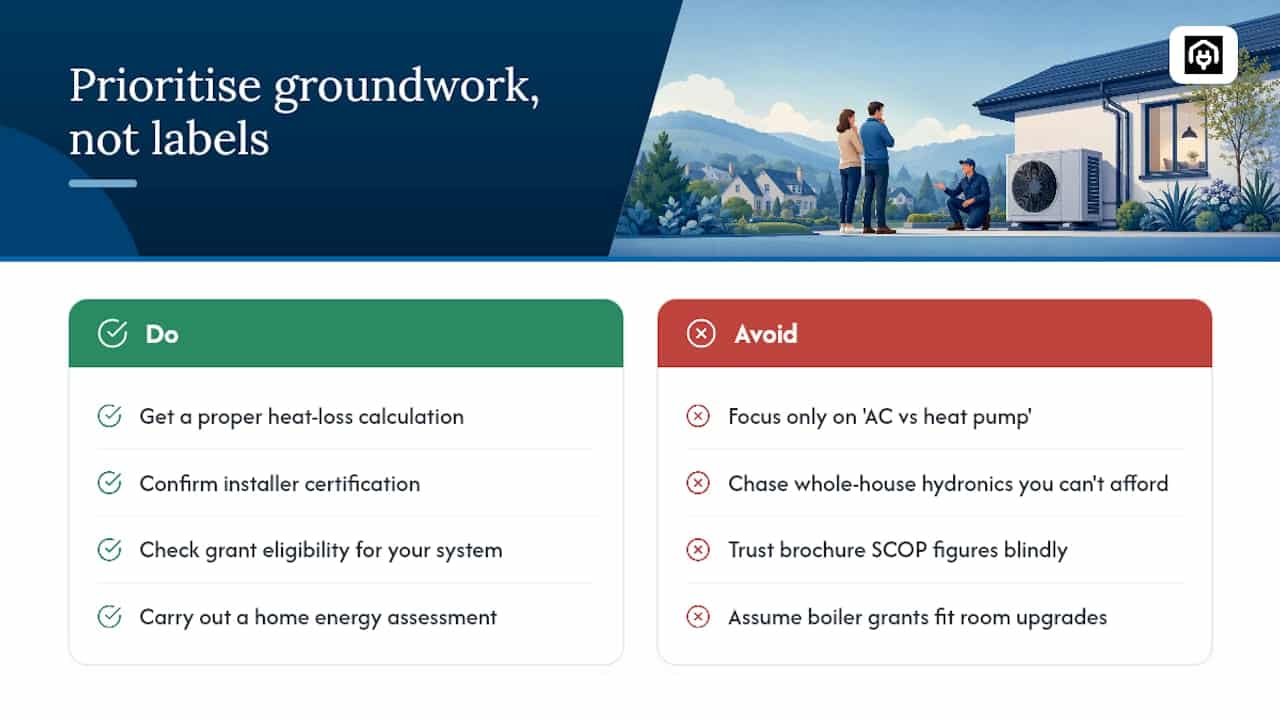
The conventional advice oversells efficiency headlines and undersells installation reality. SCOP figures quoted in brochures rarely reflect a cold, exposed site with average loft insulation, and grant schemes built around boiler replacement don’t map neatly onto room-level cooling upgrades. That gap between marketing promise and property reality causes more buyer’s remorse than any technical flaw in the equipment itself.
Prioritise the boring groundwork first: get a proper heat loss calculation, confirm installer certification, and check grant eligibility against your specific system type before falling for a headline efficiency number. For anyone weighing how an installation will affect compliance or EPC standing, working through a proper home energy assessment beats guessing every time.
— Danny
Sources
- Air-to-air literature review (EIRO / gov.uk asset)
- Air-to-air heat pumps (Energy Saving Trust)
- What are heat pump air conditioners? (NRDC)
- Gov