

TL;DR:
- Conducting a home energy audit improves efficiency by identifying heat loss, appliance waste, and potential savings. Proper preparation, systematic inspection, and analyzing utility data are essential, with prioritization based on cost and impact. Ongoing retesting and professional certification ensure effective upgrades, supporting future compliance and energy performance improvements.
A home energy audit is a systematic evaluation of a property’s energy consumption, identifying where heat is lost, where appliances waste power, and where targeted improvements will deliver the greatest savings. In the UK, this process is formally known as a home energy assessment, though the terms are used interchangeably by homeowners and property managers alike. Conducting a step by step home energy audit gives you a clear picture of your property’s performance before committing to any upgrades. With the Future Homes Standard and tightening EPC requirements reshaping compliance expectations in 2026, understanding your home’s energy profile is no longer optional. This guide covers every stage, from preparation through to prioritising improvements.
What do you need before starting a home energy audit?
Preparation determines the quality of your audit findings. Gathering utility bills, noting existing comfort issues such as condensation or draughty rooms, and clearing access to key areas like the loft and boiler cupboard are the three non-negotiable starting points. Without at least 12 months of gas and electricity bills, you cannot identify seasonal consumption patterns or spot anomalies that point to specific faults.
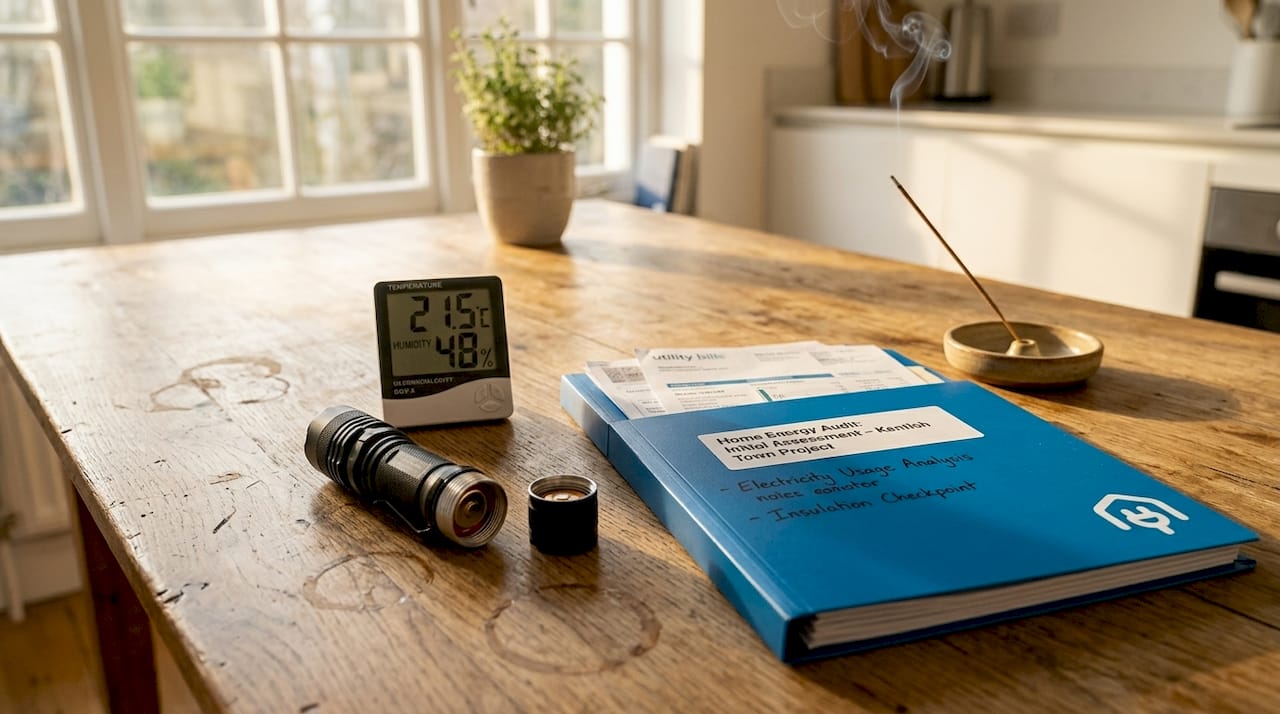
Beyond paperwork, the right tools make the difference between a superficial walkthrough and a genuinely useful inspection. Basic DIY tools include a torch, a candle or incense stick for detecting air movement near seals and skirting boards, and a notepad for logging findings room by room. More advanced options, such as a thermal leak detector or a blower door, cost between approximately £20 and £600 and reveal problems invisible to the naked eye.
| Tool | Purpose | Approximate cost | Effectiveness |
|---|---|---|---|
| Incense stick or candle | Detects air leaks around windows, doors, and skirting | Under £2 | Good for visible gaps |
| Thermal leak detector | Identifies cold spots and insulation gaps | £20 to £80 | High for surface temperature |
| Infrared camera | Full thermal imaging of walls and roof | £300 to £600 | Very high, needs verification |
| Blower door (professional) | Quantifies total air leakage rate | Hired via assessor | Definitive for airtightness |
| Smart energy monitor | Tracks real-time electricity consumption | £25 to £60 | High for usage patterns |
Timing matters as much as tooling. The most effective time to carry out a DIY audit is on a cold or windy day with at least a 20°F (roughly 11°C) temperature difference between inside and outside. That thermal contrast makes air leaks and insulation gaps far easier to detect. Set aside two to four hours and plan to start outside before moving inward through the loft and into each room.
Pro Tip: Before you begin, write down every comfort complaint you have noticed over the past year. Cold spots, condensation on windows, rooms that never warm up properly. These observations are as valuable as any instrument reading.
How to conduct the physical inspection step by step
The physical inspection is the core of the complete energy audit process. Work methodically from the outside in, covering the building envelope first, then moving to the loft, windows, doors, heating system, and finally appliances. Skipping sections or working randomly produces gaps that undermine the entire exercise.
Follow this sequence for a thorough inspection:
-
Building exterior. Walk the perimeter and look for cracks in render or brickwork, gaps around pipes and cables entering the building, and damaged pointing. Any penetration in the external wall is a potential air leakage path.
-
Loft and roof space. Measure insulation depth. UK building regulations recommend a minimum of 270mm of mineral wool between and over joists. Check for gaps around loft hatches, which are a common and easily fixed source of heat loss.
-
Windows and doors. Hold a lit incense stick near frames, hinges, and letterboxes on a windy day. Movement in the smoke indicates a draught. Check glazing for condensation between panes, which signals failed sealed units.
-
Walls and floors. Solid walls lose heat at roughly twice the rate of cavity walls. Tap walls to identify hollow sections that may indicate missing or settled cavity fill. Check suspended timber floors for gaps between boards and at skirting level.
-
Heating system and boiler. Note the boiler’s age, model, and last service date. A boiler over 15 years old is likely operating below 80% efficiency. Check radiators for cold spots at the top, which indicate trapped air, and at the bottom, which suggest sludge build-up.
-
Hot water cylinder and pipework. An uninsulated hot water cylinder loses significant heat continuously. Check that the cylinder jacket is at least 80mm thick and that exposed pipework in unheated spaces is lagged.
-
Lighting and appliances. A systematic checklist covering lighting, HVAC, and appliances confirms that no significant energy consumer is overlooked. Note any halogen or incandescent bulbs still in use, as these consume three to five times more energy than LED equivalents.
-
Ventilation. Check that extractor fans in kitchens and bathrooms are functional and that trickle vents on windows are open. Blocking ventilation to reduce draughts creates condensation and mould problems that cost more to fix than the heat saved.
Pro Tip: Photograph every problem you find as you go. A dated photo record is useful when comparing before and after conditions, and it supports any claims you make to an assessor or insurer.
How do you analyse energy usage and evaluate audit findings?
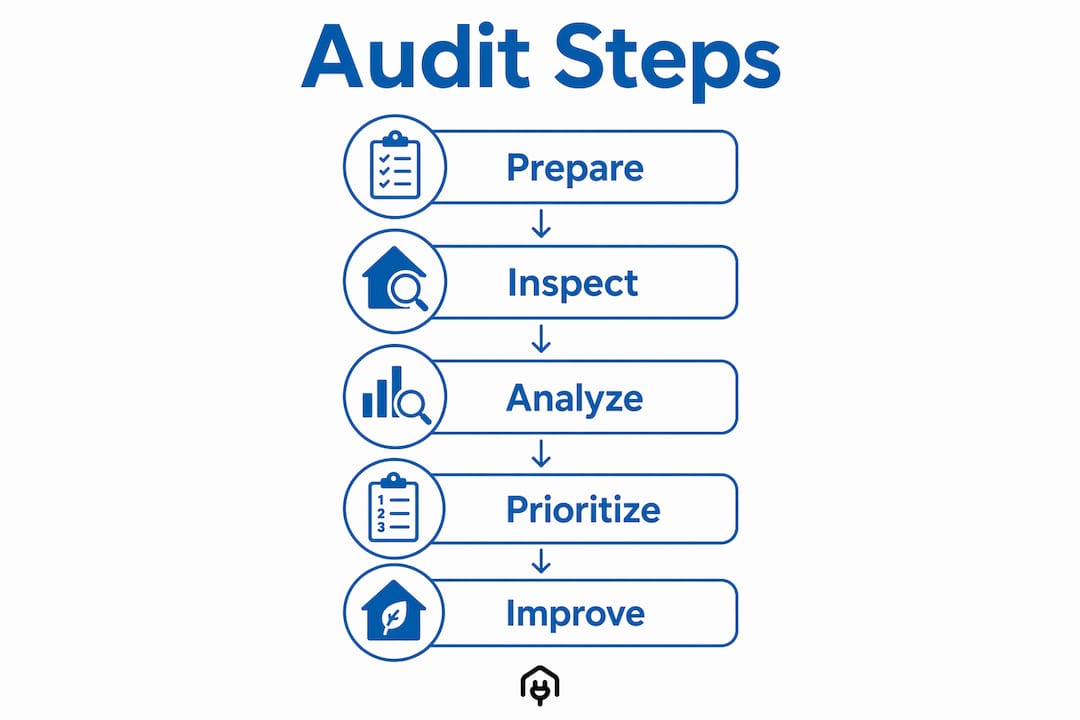
Physical inspection reveals where problems exist. Utility bill analysis reveals how much those problems cost. A thorough energy audit combines both, considering home size, occupancy patterns, thermostat settings, and seasonal variation to identify the main drivers of consumption. Reviewing bills month by month over a full year shows whether consumption spikes align with cold weather, which points to heating inefficiency, or remain high year-round, which suggests appliance or hot water issues.
Smart meters and clip-on energy monitors such as those from OWL or Efergy provide real-time consumption data that utility bills cannot. Plug-in energy monitors, available for under £15, measure the standby and active draw of individual appliances. This level of granularity is particularly useful for identifying older fridges, freezers, or tumble dryers that consume far more than their modern equivalents.
Interpreting diagnostic test results requires care. Thermal imaging highlights potential problem areas but must be verified with airtightness tests like a blower door to quantify actual leakage. A cold patch on an infrared image could indicate missing insulation, an air leak, or simply a cold water pipe behind the plasterboard. Professional assessors cross-reference thermal images with blower door results before drawing conclusions.
The table below summarises the most common findings from home energy assessments and their typical remedies:
| Problem area | Common cause | Recommended fix |
|---|---|---|
| High heating bills | Poor loft insulation or draughty envelope | Top up loft insulation, draught-proof doors and windows |
| Cold spots on walls | Missing or settled cavity fill | Cavity wall insulation survey and top-up |
| Condensation on windows | Failed double glazing seals | Replace sealed units or full window upgrade |
| Boiler short-cycling | Oversized boiler or sludge in system | Power flush and boiler controls upgrade |
| High baseload electricity | Old appliances or standby consumption | Replace with A-rated appliances, use smart plugs |
Prioritising findings by both potential savings and comfort impact produces a more useful action list than ranking by cost alone. A draughty front door costs very little to fix and delivers immediate comfort improvement. Cavity wall insulation costs more but delivers proportionally larger savings over time.
How to plan improvements after completing your audit
The ANSI/BPI-1100-T-2023 standard requires professional audit reports to include prioritised improvement recommendations with cost-benefit analysis. Even for a DIY audit, applying the same discipline produces a far more useful outcome than a simple list of faults. Rank every identified issue by estimated annual saving, upfront cost, and disruption level.
Quick wins deserve attention first. Draught-proofing, loft insulation top-ups, and switching remaining halogen bulbs to LEDs typically cost under £300 combined and can reduce heating bills noticeably within the first winter. These fixes also improve comfort immediately, which matters as much as the financial return for most households.
Larger investments such as a heat pump, external wall insulation, or triple glazing require careful financial planning. In the UK, the Boiler Upgrade Scheme and the Great British Insulation Scheme offer grants that reduce upfront costs significantly. Aligning planned improvements with available incentives is not optional if the goal is cost-effective compliance with upcoming EPC minimum standards. For US-based homeowners, IRS tax credits allow claims of up to $150 for a qualified home energy audit completed by a certified assessor, with documentation submitted via Form 5695.
Pro Tip: After completing each improvement, retest the affected area using the same method you used to identify the problem. A retest loop confirms the fix worked and prevents you from spending money on further measures that are no longer necessary.
Scheduling improvements in phases over two to three years spreads the financial burden and allows you to measure the impact of each stage before committing to the next. Keep a simple log of meter readings before and after each intervention. This data also supports any future EPC assessment or property valuation.
Key takeaways
A step by step home energy audit delivers the most value when preparation, physical inspection, data analysis, and prioritised improvement planning are treated as a connected process rather than separate tasks.
| Point | Details |
|---|---|
| Prepare thoroughly | Collect 12 months of utility bills and list all comfort complaints before starting. |
| Inspect systematically | Work from exterior to interior, covering envelope, loft, windows, heating, and appliances. |
| Combine inspection with data | Cross-reference physical findings with utility bill trends and smart meter readings. |
| Prioritise by savings and comfort | Address quick wins first, then plan larger investments around available grants and incentives. |
| Retest after every fix | Verify each improvement with the same diagnostic method used to identify the original problem. |
Why most homeowners underestimate the audit process
Having reviewed dozens of home energy assessments over the years, the single most common mistake is treating the audit as a one-off tick-box exercise rather than the start of an ongoing improvement cycle. Homeowners complete the inspection, fix the most obvious draught, and consider the job done. The underlying data, the utility bill trends, the room-by-room temperature logs, gets filed away and never revisited.
The second pitfall is over-relying on thermal imaging without airtightness verification. An infrared camera is a powerful screening tool, but it produces false positives regularly. I have seen properties where homeowners spent money on cavity wall insulation based solely on a thermal image, only to discover the cold patches were caused by cold water pipework rather than missing fill. A blower door test, or at minimum a careful incense stick check on a cold day, should always accompany thermal findings before any money is committed.
Certification matters more than most DIY guides acknowledge. Certified home energy auditors must provide reports with specific compliance information, including EINs and attestations, to support tax credit claims. A self-conducted audit is genuinely useful for identifying problems and planning improvements, but it will not satisfy an EPC assessor, a mortgage lender, or a tax authority. Knowing when to bring in a qualified professional is itself a form of building science literacy.
The properties that achieve the best outcomes are those where the homeowner or property manager treats the audit as a baseline measurement, returns to it annually, and tracks progress against it. That discipline, more than any single upgrade, is what drives consistent improvement in energy performance.
— Danny
How Homeenergymodel can support your energy assessment
Homeenergymodel provides UK homeowners and property managers with practical guidance on energy performance certificates and the regulatory changes reshaping property compliance in 2026. The site covers the Home Energy Model, the government’s replacement for SAP, and explains what it means for EPC ratings, landlord obligations, and property investment decisions. For those ready to move from audit findings to formal assessment, the home energy assessment service connects property owners with qualified assessors and outlines the steps needed to improve a property’s energy performance rating in line with current and upcoming standards.
FAQ
What is a home energy audit?
A home energy audit, formally called a home energy assessment, is a systematic inspection of a property’s building envelope, heating systems, appliances, and energy usage patterns to identify inefficiencies and improvement opportunities. It can be conducted as a DIY exercise or by a certified professional using tools such as blower doors and infrared cameras.
How long does a home energy audit take?
A DIY home energy audit takes two to four hours for a typical residential property, while a professional home energy assessment covering blower door testing and thermal imaging typically takes three to five hours depending on property size and complexity.
What tools do I need for a DIY energy audit?
The minimum toolkit includes a torch, utility bills covering the past 12 months, and a candle or incense stick for detecting air leaks. Optional additions such as a thermal leak detector or a clip-on smart energy monitor improve accuracy significantly without requiring professional equipment.
When is the best time to carry out a home energy audit?
The best time is on a cold, windy day with at least an 11°C temperature difference between inside and outside. That thermal contrast makes air leaks and insulation deficiencies far easier to detect during both visual inspection and any thermal imaging.
Do I need a certified auditor to claim energy efficiency tax credits?
Yes. Claiming tax credits for a home energy audit requires a written report prepared by a certified auditor under a qualified programme, with documentation submitted via the relevant tax form. A DIY audit does not qualify for these credits regardless of its thoroughness.