

More than half of British rental properties risk failing future energy regulations due to inefficient water usage and outdated systems. For UK landlords and property investors, tackling water consumption is not just about cutting costs but staying compliant with tightening standards and increasing tenant expectations. This practical guide reveals proven strategies to assess, upgrade, and monitor water-saving solutions that help you protect profitability and keep your British investments ahead of the curve.
Table of Contents
- Step 1: Assess Water Usage And Identify Saving Needs
- Step 2: Select Water Saving Devices Suited To Your Property
- Step 3: Install Chosen Devices With Proper Fitting
- Step 4: Optimise System Settings For Maximum Efficiency
- Step 5: Monitor Water Usage And Verify Improved Performance
Quick Summary
| Key Point | Explanation |
|---|---|
| 1. Assess water usage patterns | Collect data from utility bills to understand daily water consumption for better conservation efforts. |
| 2. Choose appropriate water-saving devices | Select fixtures like low-flow showerheads and dual-flush toilets based on property characteristics to maximize efficiency. |
| 3. Ensure proper installation of devices | Follow installation standards and manufacturer guidelines to optimize performance and prevent leaks in water-saving devices. |
| 4. Optimize settings for efficiency | Adjust flow rates and use smart technologies to monitor and control water usage effectively over time. |
| 5. Regularly monitor and review consumption | Track water usage with smart metres and analyse data to identify further savings and adjust conservation strategies. |
Step 1: Assess water usage and identify saving needs
Identifying your property’s water consumption patterns is the crucial first step in developing an effective water conservation strategy. Understanding precisely how and where water gets used will help you target specific reduction opportunities and implement meaningful savings.
To begin your assessment, start by collecting detailed water consumption data from your utility bills. Water efficiency calculations can reveal surprising insights into your household’s usage patterns. Calculate your average daily consumption by reviewing bills from the past 12 months and dividing the total water volume by the number of days. The Environment Agency reports that the average UK resident uses approximately 136.5 litres per day, providing a benchmark for comparison.
Next, conduct a comprehensive room-by-room audit of water-consuming fixtures and appliances. Track usage in key areas like bathrooms, kitchens, and outdoor spaces. Look for potential leaks, inefficient fixtures, and unnecessary water consumption. Consider installing water metres or smart monitoring devices to gain real-time insights into your water usage patterns.
Top tip: Keep a detailed log of water consumption and track your progress towards reducing usage to maintain motivation and identify successful strategies.
Step 2: Select water saving devices suited to your property
Selecting the right water saving devices requires a strategic approach tailored to your specific property characteristics. The goal is to identify and install fixtures that will maximise water efficiency while meeting your household’s practical needs.
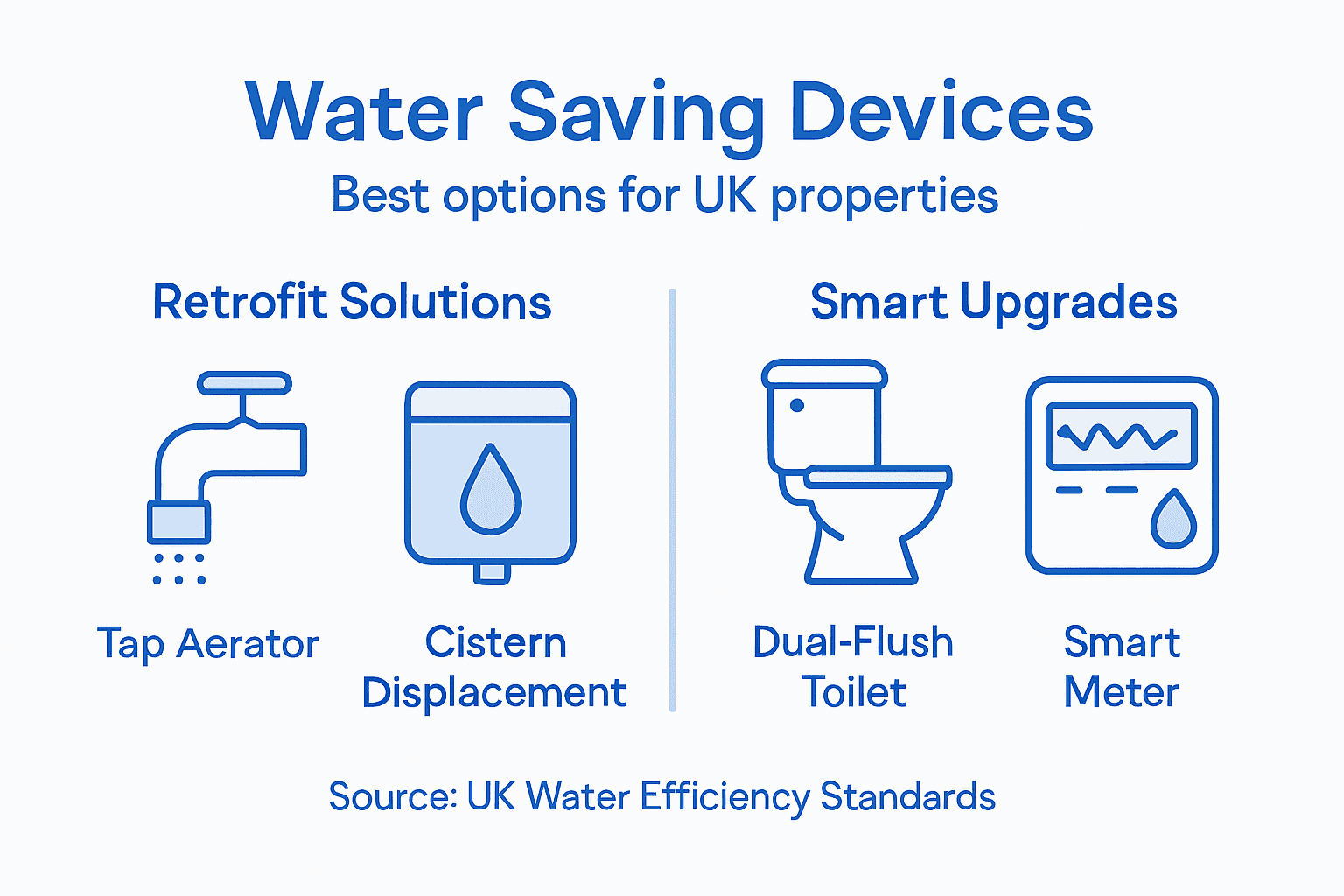
Start by examining water efficiency standards outlined in Approved Document G of the UK Building Regulations. These guidelines specify recommended water saving fittings for domestic properties. Focus on key areas like bathrooms and kitchens where significant water reductions can be achieved. Essential devices include low-flow showerheads, dual-flush toilets, water-efficient taps with aerators, and smart water metres that provide real-time consumption tracking.
Consider your property’s unique characteristics when selecting devices. Older homes might benefit from retrofit solutions like flow restrictors and tap aerators, while newer properties could integrate more advanced systems such as greywater recycling or rainwater harvesting. Prioritise devices that are compatible with your existing plumbing infrastructure and offer the most significant water conservation potential.
Top tip: Compare water saving devices across multiple brands and look for certified water efficiency ratings to ensure maximum performance and long term savings.
Here is a comparison of common water saving devices and their key benefits:
| Device Type | Main Function | Typical Water Saving | Best Suited For |
|---|---|---|---|
| Low-flow showerhead | Reduces water during showers | 20-30% less per use | Bathrooms in all properties |
| Dual-flush toilet | Offers two flush volume options | Up to 60% less per use | Homes with older toilets |
| Tap aerator | Mixes air with water to reduce flow | 30-50% less per tap | Kitchens and bathrooms |
| Smart water metre | Monitors real-time usage | Identifies savings via data | All modern properties |
| Rainwater harvesting | Captures rain for reuse outdoors | Cuts mains water use outdoors | Homes with gardens |
Step 3: Install chosen devices with proper fitting
Successfully installing water saving devices requires careful preparation and precision to ensure optimal performance and compliance with UK building regulations. The installation process can significantly impact the effectiveness of your water conservation efforts.
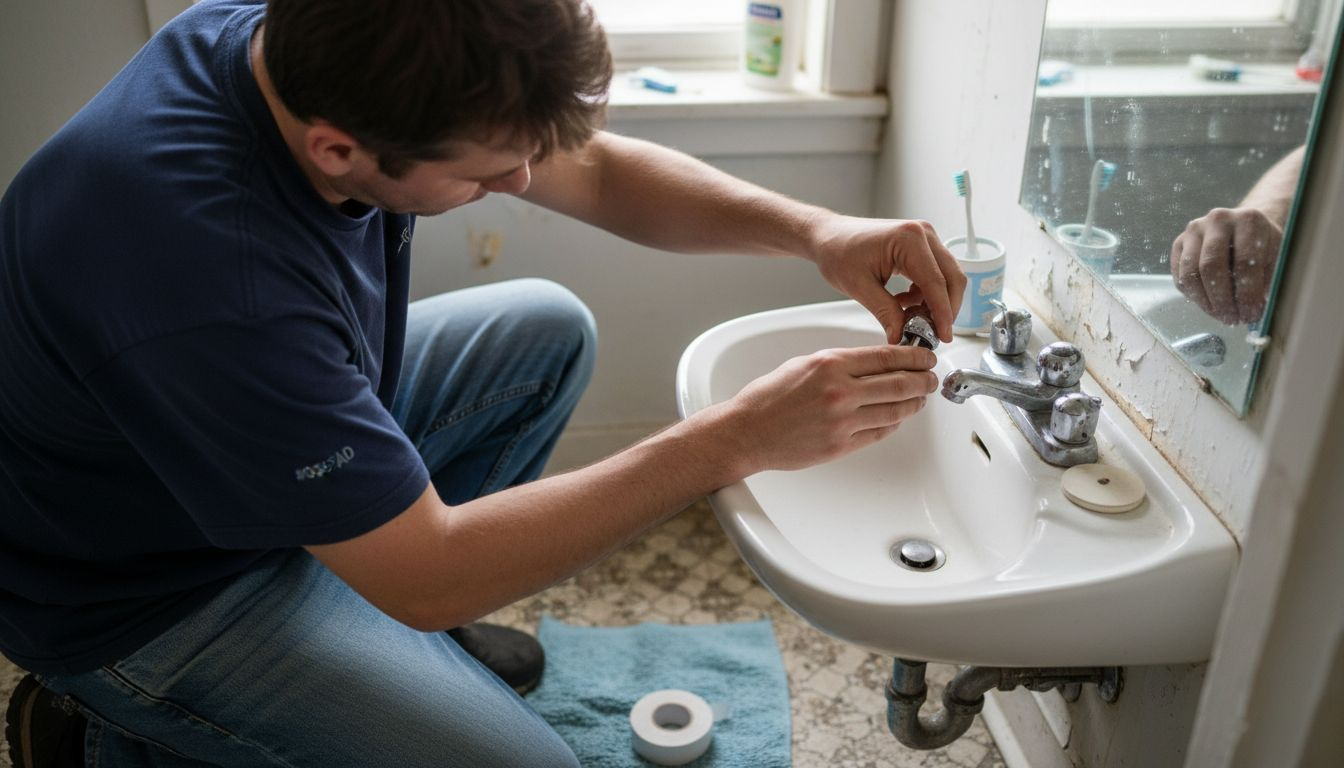
Water efficiency installation standards emphasise the importance of correct fitting techniques. Before beginning installation, gather all necessary tools including adjustable spanners, PTFE tape, pipe cutters, and appropriate sealants. For most water saving devices such as low flow showerheads and tap aerators, you will need basic plumbing skills. If you are uncertain about any aspect of the installation, consider consulting a professional plumber to ensure proper fitting and prevent potential water damage.
Each device will have specific installation requirements. Carefully read manufacturer instructions and check compatibility with your existing plumbing infrastructure. When installing devices like dual flush toilets or water efficient taps, pay close attention to sealing mechanisms and ensure watertight connections. Test each device thoroughly after installation to confirm proper functionality and check for any potential leaks.
Top tip: Take photographs of your installation process and keep all manufacturer documentation for future reference and potential warranty claims.
Step 4: Optimise system settings for maximum efficiency
Optimising your newly installed water saving devices requires strategic configuration to maximise water conservation and ensure long term performance. This step transforms your devices from mere installations to intelligent water management systems.
Water efficiency strategies recommend calibrating flow restrictors and leveraging smart technology to monitor consumption. Start by adjusting flow rates on showerheads and taps to reduce unnecessary water usage without compromising functionality. Smart water metres provide real-time tracking, allowing you to identify peak consumption periods and potential leakage points. Programme irrigation systems with precise schedules that account for seasonal variations and local weather conditions to prevent overwatering.
Consider investing in smart home technologies that integrate water monitoring capabilities. These systems can provide detailed insights into your water consumption patterns, send alerts for unusual usage, and help you make data-driven decisions about water conservation. Some advanced systems even allow remote adjustments and can automatically optimize water flow based on historical usage data.
Top tip: Review your water consumption data monthly and adjust device settings progressively to achieve incremental improvements in water efficiency.
Step 5: Monitor water usage and verify improved performance
Verifying the success of your water saving devices requires systematic tracking and analysis of your household water consumption. This crucial step transforms your conservation efforts from theoretical to tangible, allowing you to quantify actual savings and identify further improvement opportunities.
Smart water monitoring strategies emphasise the importance of regular consumption tracking. Install a smart water metre to obtain precise real-time data on your water usage. Compare your current consumption against baseline measurements taken before device installation. Pay attention to detailed metrics such as daily and monthly usage, peak consumption times, and potential unexpected spikes that might indicate leaks or inefficiencies.
Utilise digital tracking tools and smartphone applications that can help visualise your water consumption patterns. These platforms often provide comprehensive analytics, allowing you to set personal water saving targets and track progress over time. Consider creating a spreadsheet to manually log water metre readings if digital options are unavailable, ensuring you maintain a consistent record of your water efficiency journey.
Top tip: Schedule quarterly reviews of your water consumption data to maintain momentum and continuously refine your water saving strategies.
The following table summarises key steps for verifying improved water efficiency:
| Step | Purpose | Benefit |
|---|---|---|
| Log metre readings | Track baseline and ongoing usage | Measure actual water savings |
| Analyse consumption data | Identify trends and anomalies | Spot leaks and inefficiencies |
| Set water saving targets | Motivate ongoing conservation | Encourage household engagement |
| Review data quarterly | Ensure strategies remain effective | Adjust measures for improvement |
Achieve Lasting Water Savings and Prepare for Future Energy Standards
Saving water efficiently is a key challenge for UK property owners who want to reduce bills and protect the environment. This article highlights important steps like selecting the right water saving devices, optimising their settings, and monitoring performance to maximise savings. You might feel overwhelmed by technical details such as dual-flush toilets, flow restrictors and smart metres but understanding these concepts is essential for a well-rounded water conservation strategy.
At homeenergymodel.co.uk, we go beyond just water savings by offering comprehensive insights into how the upcoming Home Energy Model (HEM) will transform energy efficiency assessments across the UK. Combining water and energy efficiency improvements ensures your property meets the increasing demands of sustainability and compliance. Learn more about how integrating water-saving solutions supports broader energy performance goals and future-proofs your home or building by visiting our main page.
Ready to take control of your utility costs and align with new government standards? Discover practical guidance and easy-to-understand resources on water efficiency calculations and EPC requirements that can empower your next steps. Explore detailed advice now at homeenergymodel.co.uk and start making your property more efficient today.
Frequently Asked Questions
How can I assess my current water usage before installing water saving devices?
To assess your current water usage, collect your utility bills for the past year and calculate your average daily consumption. Divide the total water volume used by the number of days, then compare it to the average usage benchmark of approximately 136.5 litres per day to identify areas for potential savings.
What types of water saving devices should I consider for my home?
Consider installing low-flow showerheads, dual-flush toilets, tap aerators, and smart water metres. These devices can each help reduce water consumption significantly, with some saving up to 60% on water used per flush or tap.
How do I properly install water saving devices to ensure they function correctly?
To install water saving devices effectively, gather the necessary tools such as adjustable spanners, PTFE tape, and pipe cutters. Carefully follow the installation instructions provided by the manufacturer of each device and ensure all connections are watertight to prevent leaks.
How can I optimise the settings on my new water saving devices?
To optimise your water saving devices, adjust the flow rates on showerheads and taps to reduce unnecessary usage without sacrificing performance. Use smart technology, if available, to monitor consumption patterns and programme irrigation systems according to local weather conditions to maximise efficiency.
What should I do to monitor the effectiveness of my water saving devices?
To monitor the effectiveness of your water saving devices, regularly log your water metre readings and track your consumption monthly. Analyse this data to identify trends and set water saving targets, helping you to measure your progress and make adjustments as needed.
How often should I review my water consumption data?
You should review your water consumption data at least quarterly to ensure your water saving strategies remain effective. This regular assessment allows you to recognise any spikes in usage, potentially indicating leaks or inefficiencies, and helps in adjusting your conservation methods.
Recommended
- 7 Practical Water-Saving Tips for UK Homes
- Making Every Drop Count: Water Efficiency Tips for London Homes – Home Energy Model
- Unlocking Sustainable Living: Boosting Water Efficiency in London Homes – Home Energy Model
- Water Calculation Essentials for London Homes: Save Money and Conserve Resources – Home Energy Model