

TL;DR:
- EPC ratings measure a property’s energy efficiency using a scale from A to G, based on estimated fuel costs and CO2 emissions.
- Legal obligations require landlords to obtain, display, and renew EPCs every ten years; properties rated F or G cannot be let without exemptions.
- Improving an EPC involves cost-effective measures like insulation and boiler upgrades, which require a new assessment for official recognition.
An Energy Performance Certificate (EPC) rating is a standardised measure of a property’s energy efficiency, graded on a scale from A (most efficient) to G (least efficient). EPC ratings in England and Wales use estimated fuel costs and CO2 emissions based on building characteristics, not actual household usage. For UK landlords and property owners, understanding EPC ratings is not optional. EPCs are a legal requirement when selling, letting, or constructing a property in England and Wales, and non-compliance carries financial penalties.
How are EPC ratings calculated?

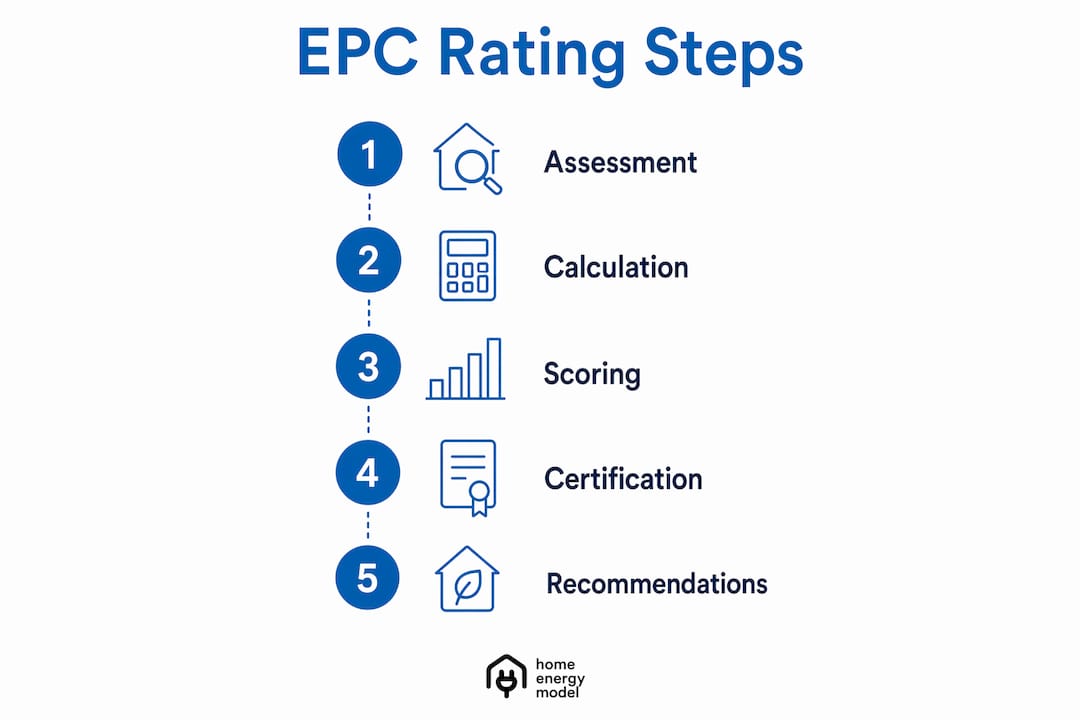
The EPC assessment process uses two distinct methodologies depending on whether the property is new or existing. New dwellings use SAP (Standard Assessment Procedure), which calculates energy performance from plans and specifications before construction is complete. Existing properties use RdSAP (Reduced Standard Assessment Procedure), which relies on a physical survey of the building.
During an RdSAP assessment, an accredited energy assessor visits the property and records specific physical characteristics. The assessor then inputs this data into approved calculation software to produce the certificate. The result reflects a standardised set of assumptions about occupancy and usage patterns, not the actual behaviour of the people living there.
The physical factors that influence an EPC rating include:
- Wall, floor, and roof insulation levels
- Window glazing type (single, double, or triple)
- Heating system type and age (gas boiler, heat pump, electric storage heaters)
- Hot water system and controls
- Lighting efficiency (LED versus older fittings)
- Renewable energy installations such as solar panels
Each factor contributes to the overall score. A property with a modern condensing boiler, double glazing, and loft insulation will score significantly higher than a Victorian terrace with single glazing and no cavity wall insulation.
Pro Tip: Request a copy of the assessor’s data input sheet after the survey. Errors in recorded data, such as an incorrect wall construction type, can suppress a rating unfairly. Correcting these before the certificate is lodged costs nothing.
Because RdSAP10 uses standardised assumptions for existing dwellings, the EPC is a benchmark tool rather than a precise predictor of energy bills. Actual costs will vary depending on how occupants use the property.
What does the EPC rating scale mean in practice?
The EPC contains two separate ratings that most property owners overlook. The Energy Efficiency Rating (EER) and Environmental Impact Rating (EIR) both use the A to G scale, but they measure different things. The EER reflects estimated fuel costs, while the EIR measures CO2 emissions. A property heated by electricity may score well on EIR if the grid is clean, but poorly on EER if electricity tariffs are high.
The table below summarises what each band typically represents for a standard UK home:
| Band | Energy Efficiency | Typical Characteristics | Compliance Status |
|---|---|---|---|
| A | 92–100 | New build, heat pump, high insulation | Fully compliant |
| B | 81–91 | Modern build, good insulation, efficient boiler | Fully compliant |
| C | 69–80 | Double glazing, cavity wall insulation, gas boiler | Fully compliant |
| D | 55–68 | Average existing stock, some improvements | Fully compliant |
| E | 39–54 | Older property, limited insulation | Minimum for lettings |
| F | 21–38 | Poor insulation, ageing heating system | Cannot be let |
| G | 1–20 | Uninsulated, inefficient heating | Cannot be let |
The distribution of ratings across UK housing stock reveals a clear split between new and existing properties. 67% of new dwellings in England in early 2026 received an A or B rating. That figure contrasts sharply with existing stock, where 88% of existing dwellings rated C or D. Most landlords operating in the private rented sector are therefore managing properties in the C to E range.
The Minimum Energy Efficiency Standards (MEES) set the legal floor for lettings. Properties rated F or G cannot usually be let in England and Wales without a registered exemption. Landlords with F or G rated stock face a direct legal barrier to renting, not just a financial one.
What are the legal obligations for landlords and property owners?
EPC compliance is a legal duty, not a recommendation. The obligations differ slightly depending on whether a property is being sold, let, or newly built, but the core rules are consistent.
-
Obtain a valid EPC before marketing. EPCs are legally required when a property is constructed, sold, or let. The certificate must be available to prospective buyers or tenants at the point of marketing, not after an offer is made.
-
Check the expiry date. EPCs are valid for 10 years. A certificate issued in 2015 expired in 2025. Landlords who have not renewed an expired EPC before re-letting a property are in breach of the regulations.
-
Meet the MEES minimum of E. Rental properties in England and Wales must hold at least an E rating under the Minimum Energy Efficiency Standards. Landlords renting F or G rated properties without a valid exemption face civil penalties.
-
Register an exemption if applicable. Certain properties qualify for exemptions, including listed buildings where improvement works would alter their character, or where a landlord can demonstrate that no cost-effective improvements exist. Exemptions must be registered on the PRS Exemptions Register and are not automatic. Homeenergymodel provides a detailed breakdown of the EPC exemption register and the conditions that apply.
-
Provide the EPC to tenants. Landlords must give tenants a copy of the EPC at the start of a tenancy. Failure to do so can prevent a landlord from serving a valid Section 21 notice in England.
The EPC rating also affects property marketability. Buyers and tenants increasingly factor energy costs into their decisions, and a lower rating can reduce the pool of interested parties or suppress the achievable rent.
How can property owners improve their EPC rating?
Every EPC includes a recommendations section showing a potential rating alongside the current one. The potential rating shows what the property could achieve if the suggested improvements were carried out. This gap between current and potential is where landlords should focus their attention.
EPC improvement recommendations are designed to highlight cost-effective measures that reduce energy use and lower bills. Common measures and their typical impact include:
- Loft insulation (270mm mineral wool): one of the highest-impact, lowest-cost improvements for pre-1990s properties
- Cavity wall insulation: significant rating uplift for properties with unfilled cavity walls
- Replacing an old gas boiler with a modern condensing boiler or heat pump: major improvement to both EER and EIR scores
- Upgrading to double or triple glazing: moderate impact, but particularly effective in older properties with single glazing
- Installing solar photovoltaic panels: improves both ratings and can shift a property from D to C or C to B
The order in which improvements are made matters. Fabric-first measures, such as insulation and glazing, reduce heat loss before heating system upgrades are considered. Installing a heat pump in a poorly insulated property will not deliver the rating improvement the assessor’s recommendations suggest.
Pro Tip: After completing improvements, commission a new EPC assessment rather than relying on the old certificate. The updated EPC is the only document that officially reflects the upgraded performance and satisfies compliance requirements.
Improving EPC ratings also supports broader financial goals. A higher rating can increase property value, reduce void periods, and position a portfolio ahead of anticipated regulatory tightening. The Government has signalled that MEES requirements for the private rented sector may increase beyond E in future years, making early investment in energy efficiency a sound long-term decision. Landlords can find practical guidance on sustainable home improvements that align with EPC recommendations.
Key takeaways
EPC ratings are a legal compliance tool and a practical benchmark for energy efficiency, with the A to G scale covering both estimated fuel costs and CO2 emissions.
| Point | Details |
|---|---|
| Two ratings on every EPC | The EER measures fuel costs and the EIR measures CO2 emissions; both use the A to G scale. |
| MEES sets the legal minimum | Rental properties in England and Wales must hold at least an E rating or a registered exemption. |
| EPCs expire after 10 years | Landlords must renew before re-letting if the certificate has expired. |
| New builds rate far higher | 67% of new dwellings achieved A or B in early 2026, compared to most existing stock at C or D. |
| Improvements need a new EPC | Completing upgrades without commissioning a new assessment does not satisfy compliance requirements. |
Why landlords should treat EPCs as a planning tool, not a paperwork exercise
I have worked with enough landlords to know that the EPC is often treated as a box to tick before a tenancy starts. That approach is understandable, but it misses the real value of the certificate.
The EPC is a snapshot of a property’s physical characteristics, not a bill forecast. Actual energy costs will differ from the estimates because occupant behaviour varies enormously. A tenant who leaves windows open in winter will spend more than the EPC suggests, regardless of the rating. Landlords who understand this distinction avoid the frustration of tenants querying why their bills do not match the certificate.
What the EPC does well is identify where a property loses energy. The recommendations section is often more useful than the letter grade itself. A property rated D with a clear pathway to C through cavity wall insulation and a boiler upgrade is a better investment proposition than a C-rated property with no obvious improvement route.
The regulatory direction of travel is clear. MEES requirements are likely to tighten, and landlords who have already invested in fabric improvements will be better positioned than those who have not. Treating the EPC as a planning document now reduces the cost and disruption of reactive compliance later.
For landlords managing older stock, the EPC rating meaning guide on Homeenergymodel provides a detailed breakdown of how calculation methodology affects the scores older properties typically receive.
— Danny
How Homeenergymodel supports landlords with EPC compliance
Homeenergymodel provides landlords and property owners with clear, practical resources on EPC ratings, energy assessment methodology, and the upcoming Home Energy Model (HEM), which is set to replace SAP as the standard calculation method. Whether a landlord needs to understand the current rating on an existing property or plan improvements ahead of tightening MEES requirements, the site covers the full picture. The energy performance certificate meaning guide explains how ratings translate into real-world compliance obligations. For landlords ready to take the next step, the home energy assessment guide sets out the practical process for improving property performance and meeting current and future standards.
FAQ
What does an EPC rating of E mean for a landlord?
An E rating is the minimum legal standard for rental properties in England and Wales under the Minimum Energy Efficiency Standards. Landlords can let a property rated E, but any property rated F or G cannot be let without a registered exemption.
How long is an EPC valid for?
An EPC is valid for 10 years from the date of issue. A new assessment is required before selling or letting once the certificate has expired.
Does an EPC measure actual energy bills?
No. An EPC uses standardised assumptions about occupancy and usage, not actual household consumption. Real bills will differ depending on how occupants use the property.
What is the difference between SAP and RdSAP?
SAP is used for new dwellings and calculates energy performance from plans and specifications. RdSAP is used for existing properties and is based on a physical survey carried out by an accredited assessor.
Do improvements automatically update an EPC rating?
No. Completing energy efficiency improvements does not update the existing certificate. A new EPC assessment must be commissioned to officially reflect the upgraded performance and satisfy compliance requirements.