

TL;DR:
- An EPC rating of E indicates below-average energy efficiency, currently meeting legal rental standards but falling short of future regulations. Improving from E to C through cost-effective measures like insulation and boiler upgrades can significantly boost property value, reduce energy costs, and ensure compliance by 2030. Delaying upgrades increases long-term costs and market disadvantages, making early action a financially sound strategy.
An EPC rating of E is defined as a below-average energy efficiency score on the UK’s A-to-G Energy Performance Certificate scale, placing a property in the second-lowest compliant band for lettings. The Energy Performance Certificate (EPC) measures a building’s energy use, carbon emissions, and running costs, assigning a score from 1 to 100 that maps to a letter band. A rating of E falls between scores of 39 and 54, meaning the property meets the current legal minimum for renting but sits well below the mid-range D band. For property owners, landlords, and homebuyers, understanding what an EPC rating means in practical terms is no longer optional. Regulatory deadlines, mortgage conditions, and buyer expectations are all tightening around energy performance in 2026.
How is an EPC rating E calculated?
An EPC rating is calculated using the Standard Assessment Procedure (SAP), which evaluates a property’s energy use across heating, hot water, lighting, insulation, glazing, and ventilation. A qualified domestic energy assessor visits the property, records its physical characteristics, and feeds the data into SAP software to produce a score. The resulting band reflects how much energy the building consumes per square metre and how much CO₂ it emits annually.
Poor insulation, inefficient heating, and single glazing are the most common causes of an E rating. Properties built before the 1980s frequently fall into this band because they predate modern building regulations that mandated cavity wall insulation and double glazing as standard. An older gas boiler with no thermostatic controls, combined with uninsulated loft space, can alone push a property into the E band even if other features are adequate.
The table below summarises the full EPC band scale, typical property characteristics, and approximate annual energy cost implications.
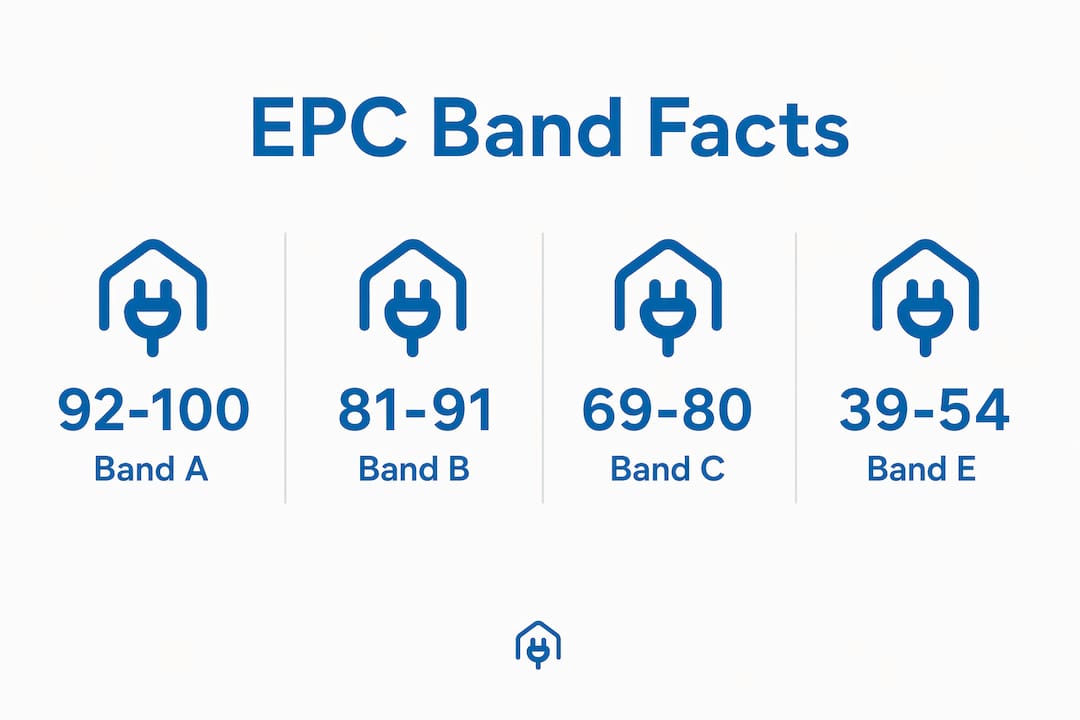
| EPC band | SAP score | Typical characteristics | Approximate annual energy cost |
|---|---|---|---|
| A | 92–100 | New build, high insulation, renewables | Under £500 |
| B | 81–91 | Well-insulated, efficient boiler | £500–£800 |
| C | 69–80 | Double glazing, cavity wall insulation | £800–£1,200 |
| D | 55–68 | Average UK home, some improvements | £1,200–£1,800 |
| E | 39–54 | Older fabric, inefficient heating | £1,800–£2,500 |
| F | 21–38 | Poor insulation, ageing systems | £2,500–£3,500 |
| G | 1–20 | Uninsulated, very high energy use | Over £3,500 |
Pro Tip: Request a copy of the EPC advisory report alongside the certificate itself. This document lists specific recommended improvements ranked by cost-effectiveness, giving a clear starting point for any upgrade plan.
What are the practical implications of an EPC rating E?
An EPC E rating carries three distinct consequences: higher running costs, current legal compliance for rentals, and a looming compliance gap as regulations tighten. On running costs alone, an E-rated property typically costs between £1,800 and £2,500 per year to heat and power, compared to roughly £800 to £1,200 for a C-rated equivalent. That gap directly affects tenant affordability and, in turn, rental demand.

On the legal side, the Minimum Energy Efficiency Standards (MEES) currently require all privately rented properties in England and Wales to hold at least an E rating. So an E-rated property is technically compliant today. However, the government’s proposed 2030 deadline would require all rental properties to reach band C, and about 33.8% of privately rented homes currently fail to meet that standard. That figure represents a significant proportion of the private rental sector facing mandatory upgrades within a short timeframe.
The financial penalties for non-compliance are not trivial. Under MEES regulations, fines can reach £30,000 for landlords who let properties below the required standard without a registered exemption. Selling a property without a valid EPC carries a separate £200 penalty, though the reputational and transactional risks of a poor rating often outweigh the fine itself.
Key practical implications of holding an EPC E rating include:
- Higher energy bills for occupants, reducing tenant satisfaction and increasing void periods
- Current compliance with MEES but non-compliance with the proposed 2030 C standard
- Reduced buyer and tenant pool as energy costs become a primary search filter
- Potential mortgage restrictions, as some lenders limit terms for properties rated F or G, with scrutiny increasing for E-rated stock
- Reduced resale value relative to C-rated or above properties in the same area
What are the most cost-effective upgrades to improve an EPC E rating?
Improving from an EPC E rating to a C or above is achievable for most properties through a structured sequence of fabric-first improvements followed by heating system upgrades. The EPC advisory report attached to every certificate lists recommended measures in order of cost-effectiveness, making it the most reliable starting point for any refurbishment plan.
Typical upgrade costs and their approximate EPC score uplift are as follows:
- Loft insulation (£300 to £600): Adds 5 to 15 SAP points. One of the highest-return measures available, particularly in properties with accessible loft space.
- Cavity wall insulation (£500 to £1,500): Adds 5 to 15 SAP points. Applicable to most post-1920s properties with unfilled cavity walls.
- Condensing boiler replacement (£2,000 to £4,000): Adds 10 to 20 SAP points. Replacing a pre-2005 boiler with an A-rated condensing model delivers one of the largest single-measure uplifts.
- Double or triple glazing (£3,000 to £8,000 depending on property size): Adds 3 to 8 SAP points. Most effective when combined with other fabric improvements.
- Solar PV installation (£6,000 to £9,000): Adds 10 to 30 SAP points. Particularly effective for pushing a property from D to B or above, but requires good roof orientation.
The sequencing matters as much as the measures themselves. Air source heat pumps require prior fabric efficiency improvements to realise their full EPC benefit. Installing a heat pump in a poorly insulated property will not achieve the expected SAP uplift and may increase running costs rather than reduce them.
Pro Tip: Before commissioning any upgrade work, obtain an updated EPC assessment quote to confirm the current score and identify which specific measures will push the property above the target band. This avoids spending on improvements that deliver insufficient uplift.
For a detailed breakdown of EPC certificate costs and how to budget for assessments alongside refurbishment, Homeenergymodel provides a dedicated guide for property owners and investors.
How does an EPC E rating affect landlords specifically?
Landlords face a more pressing compliance position than owner-occupiers because the MEES regulations apply directly to tenancy agreements. A property rated E is currently lettable, but the proposed 2030 deadline to reach band C creates a defined financial and operational challenge. Upgrade costs can reach £15,000 per property, and for landlords with multiple units in older stock, the cumulative investment is substantial.
The awareness gap compounds the problem. 62% of landlords are unaware that the EPC C deadline represents a legal and financial liability, not merely an administrative target. Many treat the EPC as a box-ticking exercise rather than a material factor in their portfolio’s long-term viability. That misunderstanding is becoming increasingly costly as lenders, insurers, and local authorities all increase their scrutiny of energy performance data.
Practical steps for landlords managing E-rated properties include:
- Obtain a current EPC for every property in the portfolio, noting the advisory report recommendations
- Register any legitimate exemptions on the PRS Exemptions Register before the compliance deadline
- Prioritise fabric improvements first, as these deliver the most durable SAP uplifts at the lowest cost per point
- Budget for phased upgrades across multiple properties rather than attempting all improvements simultaneously
- Engage a qualified domestic energy assessor to model the expected score uplift before committing to major expenditure
Pro Tip: An EPC is valid for 10 years, but a reassessment after completing upgrades is worth commissioning immediately. A new certificate reflecting the improved rating can be used in marketing, mortgage applications, and compliance records without waiting for the original to expire.
Where does an EPC E rating stand in the 2026 property market?
Energy efficiency is now a material valuation factor, not a secondary consideration. Properties rated A or B sell for 5 to 14% more than equivalent D-rated homes, and improving from E to C can add between £8,000 and £20,000 to a property’s market value. Surveyors now include EPC analysis in standard building surveys, and mortgage lenders are increasingly factoring the rating into their affordability and risk assessments.
The market dynamics in 2026 reflect a structural shift in buyer and tenant behaviour. Energy bills remain a primary concern for households, and a property’s EPC rating is now a standard filter on Rightmove and Zoopla searches. An E-rated property competes at a disadvantage against C or D-rated stock at the same price point, particularly in urban markets where buyers have more choice.
Key market risks associated with an E rating in 2026 include:
- Longer time on market and greater price negotiation pressure from buyers aware of upgrade costs
- Lender scrutiny increasing for E-rated buy-to-let properties, with some products restricted to C and above
- Insurance providers beginning to factor energy performance into premium calculations for older stock
- Reduced rental yield potential as tenants prioritise lower-bill properties in competitive rental markets
- Resale risk if the property remains at E when the 2030 deadline approaches and buyer confidence in the band falls further
Improving from E to C not only reduces bills but also increases tenant demand and rental yields in a measurable way. The financial case for upgrading is now stronger than the case for deferring.
Key takeaways
An EPC rating of E meets today’s legal minimum for rentals but places properties at growing financial, regulatory, and market risk as the 2030 band C deadline approaches.
| Point | Details |
|---|---|
| Current compliance vs. future risk | EPC E is lettable now, but the 2030 deadline requires band C for all rental properties. |
| Upgrade costs and uplift | Loft insulation, cavity wall insulation, and boiler replacement offer the best cost-per-SAP-point return. |
| Financial penalties | Non-compliance with MEES can result in fines up to £30,000 for landlords. |
| Market value impact | Improving from E to C can add £8,000 to £20,000 to a property’s market value. |
| Landlord awareness gap | 62% of landlords do not recognise the EPC C deadline as a legal and financial liability. |
Why deferring an EPC E upgrade is a decision that costs more each year
From working closely with the data and regulatory trajectory around EPC compliance, the pattern that stands out most is not the scale of the upgrades required. It is how consistently property owners underestimate the compounding cost of delay. Every year spent at band E is a year of higher energy bills for occupants, a year of reduced marketability, and a year closer to the 2030 deadline when contractor demand and upgrade costs will peak.
The common misunderstanding is that an E rating means the property is fine for now. Technically, that is correct under current MEES rules. But the mortgage market, the lettings market, and the resale market are already pricing in the 2030 standard. Buyers and tenants in 2026 are making decisions based on where energy costs are heading, not where regulations currently sit.
The most practical advice is to treat the EPC advisory report as a refurbishment roadmap rather than a compliance document. It ranks improvements by cost-effectiveness and identifies the specific measures that will move the needle on the SAP score. Starting with loft insulation and heating controls, then progressing to cavity wall insulation and boiler replacement, typically delivers a move from E to C for between £3,000 and £8,000 in older terraced or semi-detached stock. That investment pays back through lower bills, higher rents, and a stronger resale position. Waiting until 2029 to act will cost more in every dimension.
— Danny
How Homeenergymodel can help with EPC E properties
Homeenergymodel provides property owners and landlords with clear, practical resources for understanding and improving EPC ratings across UK residential stock. Whether the priority is interpreting an existing certificate, planning a cost-effective upgrade sequence, or understanding how the upcoming Home Energy Model (HEM) will replace SAP in future assessments, the site offers targeted guidance for every stage of the process. For a full overview of EPC ratings and assessments, including what each band means for compliance and property value, the Homeenergymodel EPC rating page is the recommended starting point. Landlords managing E-rated portfolios can also explore the London EPC guide for market-specific advice on compliance and upgrade planning.
FAQ
What does an EPC rating E mean for a property?
An EPC rating E means the property scores between 39 and 54 on the SAP scale, indicating below-average energy efficiency. It meets the current legal minimum for private rentals in England and Wales but will fall short of the proposed 2030 band C requirement.
Can a landlord legally rent a property with an EPC rating E?
Yes, an E rating currently satisfies the Minimum Energy Efficiency Standards (MEES) for private rentals. However, the proposed 2030 deadline requires all rental properties to reach band C, making upgrades a near-term necessity for most E-rated landlords.
How much does it cost to improve from EPC E to C?
Typical upgrade costs range from £3,000 to £15,000 depending on the property’s current condition and the measures required. Loft insulation, cavity wall insulation, and a condensing boiler replacement together often deliver sufficient SAP uplift to reach band C in older terraced properties.
Does an EPC E rating affect a property’s sale price?
Properties rated A or B sell for 5 to 14% more than D-rated equivalents, and improving from E to C can add between £8,000 and £20,000 to market value. Surveyors and lenders now treat energy performance as a material valuation factor in standard assessments.
How long is an EPC valid for?
An EPC certificate is valid for 10 years from the date of issue, with costs typically between £65 and £120. A new assessment can be commissioned at any time, which is advisable after completing energy efficiency upgrades to reflect the improved rating.