

Most British landlords are now facing stricter energy standards as the Home Energy Model begins to replace the familiar EPC system. Compliance is no longer just about legal duties—it directly impacts property value, tenant interest, and even your yearly operating costs. With expert insight from energy advisors, landlords can turn these regulatory shifts into opportunities for savings and long-term sustainability. Discover how these specialists help guide British property owners through new requirements and smarter energy improvements.
Table of Contents
- Defining The Role Of An Energy Advisor
- Types Of Energy Advisors And Key Distinctions
- Essential Skills And Qualifications Required
- Energy Advisors’ Responsibilities In Residential Property
- Home Energy Model, Legal Duties, And Epc Implications
- Risks, Costs, And Common Mistakes For Landlords
Key Takeaways
| Point | Details |
|---|---|
| Role of Energy Advisors | Energy Advisors are vital for UK landlords, assisting in navigating energy efficiency regulations and property management enhancements. |
| Specialisations | Different types of Energy Advisors, such as Domestic, Commercial, Retrofit Specialists, and Financial Advisors, cater to unique needs and expertise in energy efficiency. |
| Skills Required | Successful Energy Advisors must have technical knowledge of energy legislation, strong communication skills, and the ability to provide strategic financial recommendations. |
| Financial Risks | Landlords should proactively assess properties to avoid high upgrade costs and ensure compliance with evolving regulations, reducing potential fines and enhancing property marketability. |
Defining the Role of an Energy Advisor
An Energy Advisor plays a critical role in supporting UK landlords and property owners navigate the complex landscape of energy efficiency and sustainability. These professionals provide specialised guidance on reducing energy consumption, improving property performance, and ensuring compliance with evolving national energy standards. They serve as essential intermediaries between regulatory requirements and practical property management strategies.
The core responsibilities of an Energy Advisor encompass conducting comprehensive energy efficiency assessments for residential properties. This involves performing detailed property surveys, identifying potential energy-saving opportunities, and recommending targeted upgrades such as insulation improvements, heating system optimisations, and renewable energy integrations. Their technical expertise allows them to provide landlords with precise recommendations tailored to specific property characteristics and regulatory frameworks.
Energy Advisors work closely with multiple stakeholders, including homeowners, landlords, government agencies, and voluntary sector organisations. Their role extends beyond simple assessments, involving direct community engagement and supporting national initiatives to reduce fuel poverty and improve overall energy efficiency. Particularly for vulnerable households, these professionals offer critical guidance on reducing energy costs and creating more sustainable living environments.
Expert Recommendation: Before engaging an Energy Advisor, request a detailed portfolio demonstrating their experience with UK-specific energy efficiency standards and their track record of successful property assessments.
Types of Energy Advisors and Key Distinctions
Energy Advisors in the UK landscape are not a monolithic group, but rather specialised professionals with distinct focuses and expertise. Regulatory compliance experts represent one critical category, specifically dedicated to helping landlords navigate the complex Minimum Energy Efficiency Standards (MEES) and ensure their properties meet current legislative requirements.
The spectrum of energy advisor specialisations includes Domestic Energy Advisors, who concentrate exclusively on residential properties, Commercial Energy Advisors targeting business premises, and Retrofit Specialists focused on upgrading existing buildings to meet modern energy performance standards. Each category brings unique skills: domestic advisors analyse household energy consumption patterns, commercial advisors evaluate organisational energy strategies, and retrofit specialists design technical interventions to improve building efficiency.
Financial energy advisors represent another essential specialisation, helping landlords understand and access funding mechanisms for energy upgrades. These professionals bridge technical recommendations with financial feasibility, guiding property owners through grant applications, identifying cost-effective improvements, and demonstrating long-term economic benefits of energy efficiency investments. Their expertise is particularly valuable in translating complex energy performance recommendations into actionable and financially viable strategies.
Pro Tip: When selecting an Energy Advisor, always verify their specific area of expertise and request evidence of recent certifications in energy performance standards to ensure you receive authoritative guidance.
Here’s a concise overview of the key types of Energy Advisors and their primary focus areas:
| Advisor Type | Main Focus | Typical Client | Unique Expertise |
|---|---|---|---|
| Domestic Energy Advisor | Household energy savings | Homeowners, landlords | Analyses consumption patterns |
| Commercial Energy Advisor | Business premises efficiency | Property managers, companies | Optimises organisational strategies |
| Retrofit Specialist | Upgrading existing buildings | Owners of older properties | Designs targeted interventions |
| Financial Energy Advisor | Funding for improvements | Landlords, owners | Navigates grants and cost analysis |
Essential Skills and Qualifications Required
Successful Energy Advisors must possess a comprehensive blend of technical knowledge and interpersonal skills. Technical expertise in energy efficiency principles forms the foundational requirement, encompassing an in-depth understanding of domestic energy legislation, retrofit standards like PAS2035 and PAS2030, and current regulatory frameworks governing property energy performance.

The qualifications landscape for Energy Advisors typically involves a combination of formal education and specialised certifications. Academic Backgrounds often include degrees in environmental sciences, building engineering, or sustainable energy management, complemented by professional certifications specific to energy performance assessment. Key technical competencies include advanced understanding of energy-saving technologies, thermal performance analysis, renewable energy systems, and the ability to conduct detailed property energy assessments with precision and technical accuracy.
Interpersonal capabilities are equally critical in this profession. Energy Advisors must demonstrate exceptional communication skills, enabling them to translate complex technical recommendations into accessible language for landlords, homeowners, and stakeholders. Their role demands the ability to engage diverse audiences, provide tailored guidance, and develop strategic recommendations that balance technical feasibility with financial considerations. Proficiency in stakeholder management, report writing, and project coordination distinguishes top-tier Energy Advisors in the competitive UK property efficiency market.
Pro Tip: Consider pursuing additional certifications in PAS2035 retrofit coordination and energy assessment to enhance your professional credibility and marketability in the evolving energy efficiency sector.
Energy Advisors’ Responsibilities in Residential Property
Energy Advisors play a pivotal role in supporting UK landlords to enhance their residential property’s energy performance and regulatory compliance. Conducting comprehensive energy performance assessments represents their primary responsibility, involving detailed property evaluations that identify potential energy efficiency improvements and potential cost-saving interventions.
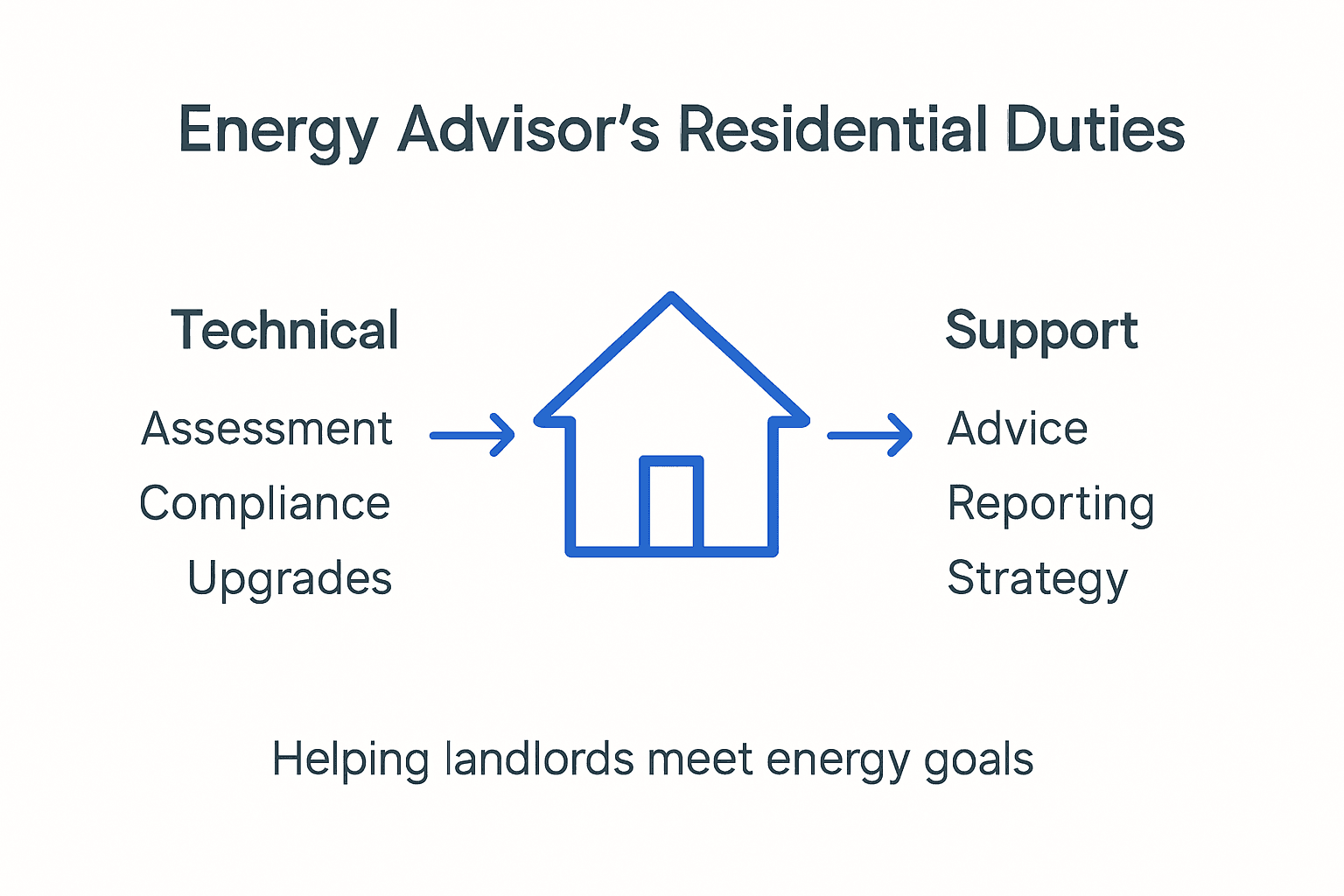
Their key responsibilities encompass several critical areas of residential property management. Regulatory Compliance is paramount, with Energy Advisors guiding landlords through complex Minimum Energy Efficiency Standards (MEES), ensuring properties meet or exceed Energy Performance Certificate (EPC) requirements. This involves recommending targeted upgrades such as insulation improvements, heating system optimisations, and renewable energy integrations that not only satisfy legal standards but also reduce overall energy consumption and operational costs.
Beyond technical assessments, Energy Advisors serve as strategic partners for landlords, bridging technical knowledge with practical implementation. They provide nuanced guidance on funding mechanisms, help identify cost-effective energy-saving measures, and support landlords in managing tenant well-being by reducing potential fuel poverty risks. Their holistic approach considers not just immediate compliance, but long-term property value enhancement, tenant satisfaction, and environmental sustainability.
Pro Tip: Request a comprehensive energy performance report from your Energy Advisor that includes both immediate compliance recommendations and a strategic roadmap for future property efficiency upgrades.
Home Energy Model, Legal Duties, and EPC Implications
The Home Energy Model (HEM) represents a significant transformation in how UK landlords approach energy efficiency and regulatory compliance. Replacing the existing Energy Performance Certificate (EPC) system, the HEM introduces more comprehensive and precise methodologies for assessing residential property energy performance, with substantial implications for landlords’ legal responsibilities.
Legal duties under the Minimum Energy Efficiency Standards (MEES) are becoming increasingly stringent, with current regulations mandating that rental properties achieve a minimum EPC rating of band E. Future Regulatory Landscape suggests an ambitious trajectory towards band C by 2030, compelling landlords to proactively invest in energy efficiency upgrades. The HEM will provide more granular data on energy consumption, carbon emissions, and potential improvement pathways, enabling more strategic and targeted property enhancements.
The implications of the Home Energy Model extend beyond mere compliance, fundamentally reshaping investment strategies and property management approaches. Landlords will need to develop more nuanced understanding of their properties’ energy performance, recognising that future rental market competitiveness will be increasingly tied to energy efficiency ratings. This shift demands a proactive approach to retrofitting, with potential financial benefits including increased property value, reduced operational costs, and enhanced tenant attractiveness.
Pro Tip: Engage an Energy Advisor early to conduct a comprehensive property assessment and develop a strategic upgrade roadmap aligned with emerging HEM requirements.
Risks, Costs, and Common Mistakes for Landlords
Landlords face substantial financial and regulatory challenges when navigating energy efficiency requirements, with potential upgrade costs reaching up to £15,000 per property to achieve the proposed EPC C rating by 2030. These significant investments demand strategic planning and thorough understanding of evolving energy efficiency standards to mitigate potential financial risks.
Key Risk Areas for landlords include critical compliance pitfalls that can substantially impact property management and rental income. Common mistakes encompass inadequate long-term planning, underestimating upgrade complexities, and failing to comprehend the full scope of Minimum Energy Efficiency Standards (MEES). Landlords who neglect timely property assessments and proactive upgrades risk substantial penalties, including potential fines, reduced tenant attractiveness, and limitations on their ability to continue letting properties with poor energy performance.
The financial implications extend beyond immediate upgrade costs, potentially affecting property valuation, rental market competitiveness, and long-term investment returns. Landlords must develop a holistic approach to energy efficiency, considering not just compliance but also potential benefits such as reduced operational costs, improved tenant satisfaction, and enhanced property marketability. Strategic investments in energy upgrades can transform perceived regulatory burdens into opportunities for property value enhancement and sustainable management.
Summary of common financial risks and opportunities facing UK landlords regarding energy efficiency upgrades:
| Risk/Opportunity | Impact on Landlord | Strategic Response |
|---|---|---|
| High upgrade costs | Major capital outlay | Phased investment planning |
| Failing MEES compliance | Fines, rental restrictions | Timely property assessment |
| Improved EPC rating | Increased property value | Proactive retrofitting |
| Accessing funding/grants | Reduces personal expenditure | Advisor-guided applications |
Pro Tip: Conduct a comprehensive energy assessment now and develop a phased upgrade strategy to spread costs and minimise financial strain while ensuring compliance with emerging energy efficiency regulations.
Navigate Energy Advisor Challenges with Confidence
Understanding the complex role of an Energy Advisor and the evolving requirements for UK landlords can feel overwhelming. The article highlights key pain points such as meeting the new Home Energy Model standards, complying with Minimum Energy Efficiency Standards, and managing costly upgrades while maintaining tenant satisfaction. Landlords need clear, practical guidance to make informed decisions that protect investments and ensure legal compliance.
That is where Home Energy Model steps in as an essential resource. Designed to explain the upcoming shift from EPCs to the Home Energy Model, this platform delivers deep insights into energy performance calculations and legal duties. It empowers landlords and property professionals with the knowledge to plan effective upgrade strategies, avoid costly mistakes, and stay ahead of regulatory changes. Don’t wait until deadlines loom—explore expert advice on energy assessments and see how the HEM will impact your property at Home Energy Model. Take control of your property’s future today and ensure alignment with the nation’s latest energy efficiency initiatives.
Frequently Asked Questions
What is the primary role of an Energy Advisor for landlords?
Energy Advisors assist landlords in enhancing their properties’ energy efficiency by conducting comprehensive energy performance assessments, ensuring compliance with energy regulations, and recommending upgrades to reduce energy consumption.
How do Energy Advisors help with regulatory compliance?
Energy Advisors guide landlords through the Minimum Energy Efficiency Standards (MEES), ensuring their properties meet legal requirements for Energy Performance Certificates (EPC) and advising on necessary upgrades to achieve compliance.
What types of upgrades can Energy Advisors recommend?
They can recommend various upgrades, including insulation improvements, heating system optimisations, and the integration of renewable energy systems, tailored to the specific characteristics of the property.
Why is it important to engage an Energy Advisor early?
Engaging an Energy Advisor early allows landlords to conduct thorough property assessments and develop strategic upgrade plans, ensuring timely compliance with evolving regulations and maximising potential cost savings.