
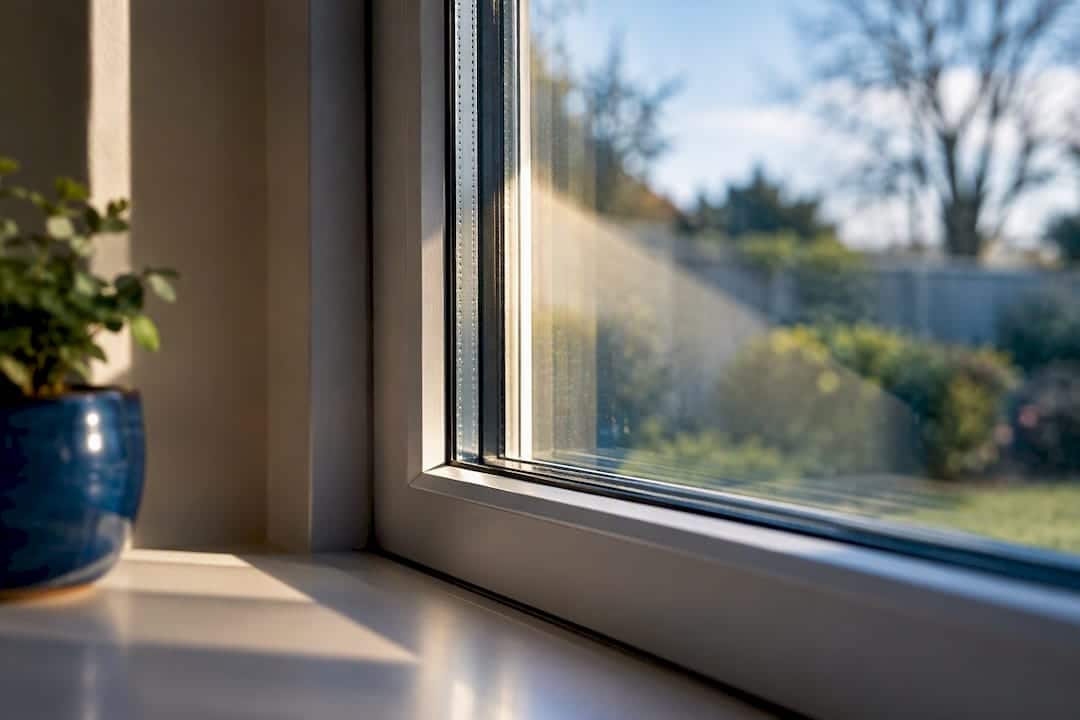
The window U factor is the rate at which a whole window loses heat, measured in W/m²·K. The lower the number, the better the window performs, and the figure that matters most is the whole-window Uw value, not the centre-pane glass figure alone. Homeowners comparing quotes should ask suppliers for Uw before making a decision.
TL;DR:
- The whole-window Uw value, which includes frames and edges, is the key metric for comparing window thermal performance, not just the glass’s Ug value.
- U-values are obtained through either physical hot-box testing or calculations based on material properties, and the chosen method affects the reliability of the figure.
- Typical U-values for glazing types range from 5.6 for single glazing to 1.6 for triple glazing, with lower targets suitable for retrofits and new buildings under the Future Homes Standard.
- A low U-value alone does not account for solar heat gain, making it essential to consider the g-value and installation quality for full assessment of window performance.
- Verify that Uw figures include all components, ask for test certificates, and ensure proper installation to maximize the real-world energy savings of window upgrades.
Table of Contents
- What the U-factor measures and the terms worth knowing
- How U-values are measured and which standards apply
- Typical U-values and sensible targets by glazing type
- Why U-factor alone does not tell the whole story
- Choosing or upgrading windows: a practical checklist
- How U-values shape EPCs and energy assessments
- Where most homeowners get it wrong
- How Home Energy Model can help with your next assessment
- Standards and guidance worth reading directly
- Sources
- FAQ
What the U-factor measures and the terms worth knowing
U-value, or thermal transmittance, describes how much heat passes through a building element for each square metre of area and each degree of temperature difference between inside and outside. It answers a simple question: how good is this window at keeping heat in.
Two figures appear on most window specifications. Ug refers to the centre-pane glass performance only, while Uw covers the whole window, including frame, spacer bars and edges. Uw is always higher than Ug because frames and junctions create thermal bridging, so the whole-window figure is the one to rely on when comparing products, according to Glass for Europe’s guidance on high-performance glazing.
R-value, the insulation measure more familiar from wall and loft ratings, is simply the inverse of U-value (R = 1/U). A window with a Uw of 1.4 W/m²·K has an R-value of roughly 0.71 m²·K/W, though windows are rarely quoted this way in the UK.
- Ug: centre-pane glass performance only.
- Uw: whole-window performance, the figure to compare.
- R-value: the inverse of U, used more for walls and insulation than windows.
How U-values are measured and which standards apply
Window U-values come from one of two routes: physical testing in a hot-box, or calculation from known material properties. The hot-box method follows BS EN ISO 12567-1, which places a full window between two chambers at different temperatures and measures the heat flow directly. Calculated values typically follow BS EN ISO 10077-1, which combines frame, glass and spacer data mathematically.
Approved Document L requires whole-element U-values to be assessed for windows, and points to BRE BR 443 for the conventions used in that assessment, including which components must be included and which standard sizes apply when a window has not yet been measured.
- Ask whether a quoted Uw is measured (hot-box) or calculated, and against which standard.
- Check that the figure includes frame, spacer and any trickle vents or add-ons, not glass alone.
- Request the test certificate or calculation reference for verification.
Lab figures assume ideal conditions. On-site performance depends heavily on installation, a point worth raising with any installer before signing off a quote.
Typical U-values and sensible targets by glazing type
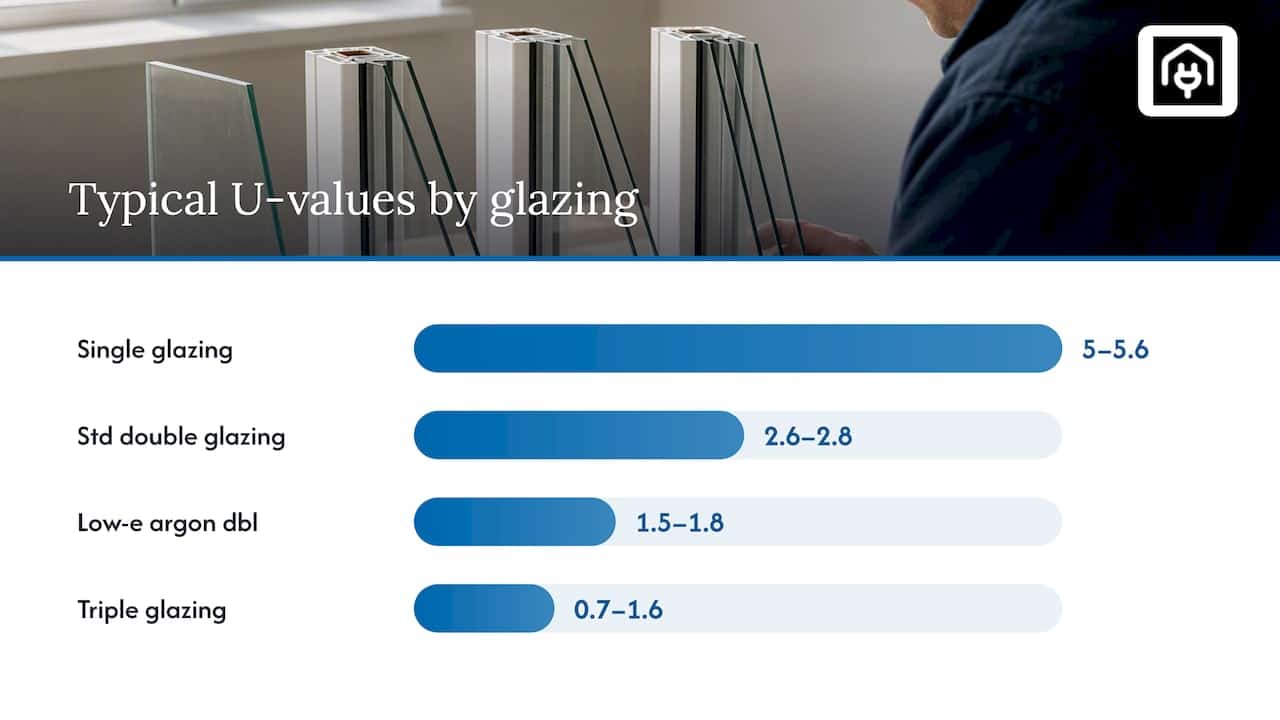
Glazing performance has improved sharply over recent decades, and the ranges below give a quick benchmark when reviewing a quote.
| Glazing type | Typical U-value (W/m²·K) |
|---|---|
| Single glazing | 5 to 5.6 |
| Standard double glazing | 2.6 to 2.8 |
| Low-e, argon-filled double glazing | 1.5 to 1.8 |
| Triple glazing | 0.7 to 1.6 |
These figures come from Bath and North East Somerset’s glazing guidance. For retrofit projects, a Uw in the low end of the double-glazed range or better is a reasonable target, while new builds under the Future Homes Standard typically aim lower still. Triple glazing spans a wide range partly because frame quality varies as much as the glass itself, so a low Ug does not guarantee a correspondingly low Uw.
Orientation matters too. A very low U-value on a south-facing window can reduce useful winter solar gain, so the best target depends on the elevation and the building’s exposure, not on the glazing type alone.
Why U-factor alone does not tell the whole story
A low U-value stops heat escaping, but it says nothing about how much free heat the window lets in from the sun. That is the role of the g-value, which measures solar heat gain through the glass. A higher g-value helps in winter but can push south or west-facing rooms towards overheating in summer.
Glass for Europe recommends an energy-balance approach, combining U-value and g-value rather than judging a window on U alone, because chasing the lowest possible U-value in isolation can lead to glazing choices that perform poorly across the whole year.
Airtightness and installation quality matter just as much. A well-specified window fitted poorly will leak heat around the frame regardless of its rated Uw, and can also increase condensation risk if ventilation is not addressed alongside the glazing upgrade.
- U-value measures heat loss; g-value measures solar heat gain.
- The two should be weighed together, not treated as separate decisions.
- Installation quality and sealing affect real-world performance as much as the rated figures.
Pro Tip: On south or west-facing rooms with low-U glazing, pair the upgrade with shading or trickle ventilation to manage summer heat gain rather than relying on the window alone.
Choosing or upgrading windows: a practical checklist
Working through a short list of questions at quote stage avoids comparing figures that are not equivalent.
- Ask for both Uw and Ug, along with the standard or test method used to produce them.
- Ask for the g-value alongside the U-value, particularly for south or west-facing windows.
- Check the frame material, the installation warranty offered, and whether ventilation or condensation provisions are included.
- Prioritise low-cost measures first: draught-proofing can close many of the gaps that undermine an otherwise good window.
- In conservation areas, consider secondary glazing before full replacement, since it can improve U-values without altering the original frames.
- Move to full replacement where the cost is justified by the expected improvement, using practical retrofit examples to sequence the work sensibly.
How U-values shape EPCs and energy assessments
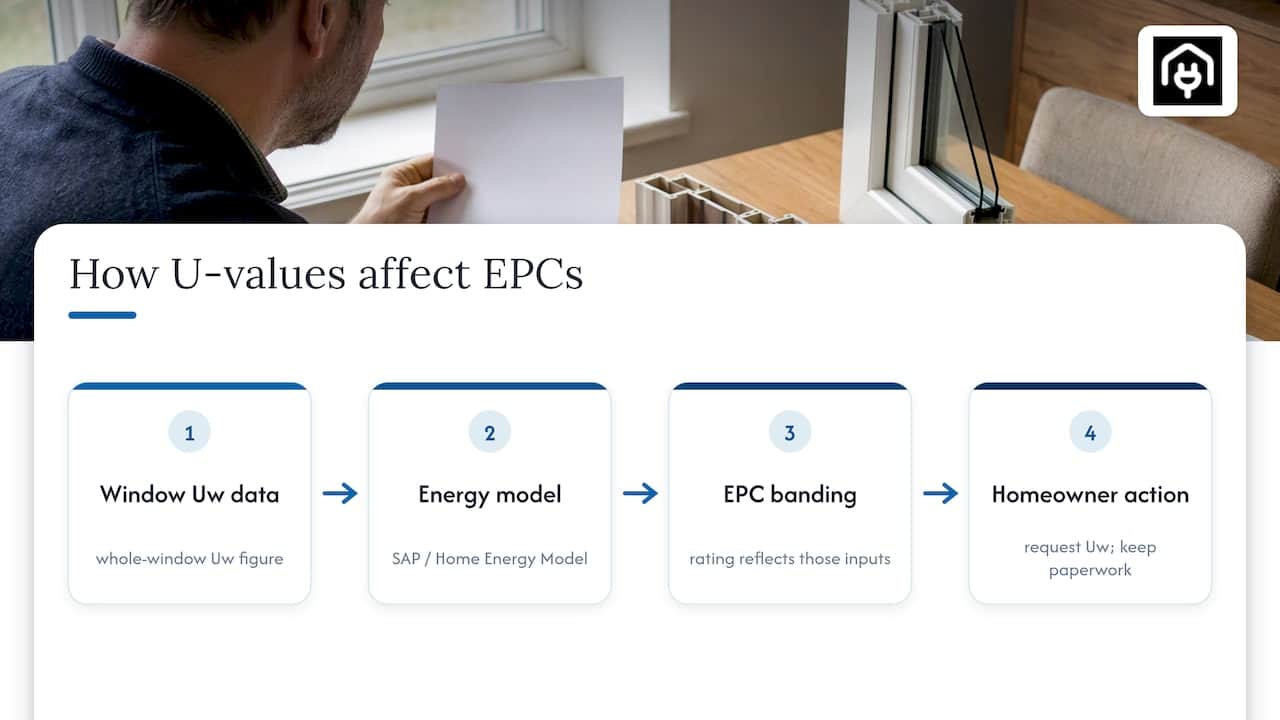
Whole-window Uw values feed directly into SAP and the incoming Home Energy Model calculations that produce a property’s Energy Performance Certificate rating. Get the window configuration wrong, whether that means the wrong Uw, the wrong glazed area or a missed upgrade, and the resulting EPC banding will not reflect the property’s actual performance.
Assessors need accurate, whole-window figures rather than headline glass specifications to model a building correctly. For anyone planning window upgrades ahead of a sale, remortgage or rental listing, requesting Uw figures from installers and keeping the paperwork ready for an assessor saves time and avoids disputes over the recorded rating later.
Where most homeowners get it wrong
The most common mistake is quoting the Ug figure and assuming it represents the whole window, when the frame and spacers can add a noticeable margin to the real Uw. A close second is treating installation as an afterthought: a well-rated window fitted with poor sealing loses much of its advantage.
The priority is straightforward. Check the Uw, not just the glass, and have the installation assessed by someone qualified before assuming the job is done. Use the checklist above before selecting a supplier.
— Danny
How Home Energy Model can help with your next assessment
Once windows are upgraded, the improvement only shows up on paper through a proper assessment. Home Energy Model offers the services that turn a glazing upgrade into a recorded, usable result rather than an assumption.
- A Domestic EPC captures the impact of new windows on a home’s official energy rating.
- A Commercial EPC does the same for non-domestic buildings.
- SAP calculations support new-build compliance where window specifications need to be modelled accurately from the outset.
- Retrofit advice through these assessments helps prioritise which upgrades deliver the clearest return before committing to a full glazing replacement.
DIY checks are useful for a first impression, but a professional assessment is the only way to confirm how a window upgrade actually affects a property’s rating. Request a domestic EPC quote to get that figure confirmed.
Standards and guidance worth reading directly
- Approved Document L, Volume 1: Dwellings sets the regulatory limits and required assessment methods.
- BS EN ISO 12567-1 and 10077-1 describe the test and calculation methods behind Uw figures.
- Energy Saving Trust and Glass for Europe explain practical interpretation and the energy-balance approach.
Sources
- Approved Document L, Volume 1: Dwellings (UK Government)
- Glass for Europe — EPBD guidance on energy calculation of transparent building elements
- Energy Saving Trust — Windows and doors guidance
- Bath and North East Somerset — double and triple glazing guidance
FAQ
What is a good U-factor on a window?
A good Uw for a retrofit is generally at the lower end of the standard double-glazed range or better, with low-e argon-filled double glazing typically achieving 1.5 to 1.8 W/m²·K, according to glazing guidance from Bath and North East Somerset. Triple glazing can go lower still, though frame quality affects the final figure as much as the glass does.
Is 0.32 a good U-factor for windows?
A Uw figure that low would be exceptionally low for a domestic window, well below the typical ranges seen in UK glazing guidance even for high-performance triple glazing. It is worth confirming the unit and measurement method before comparing it to UK Uw figures.
Is a U-factor of 0.28 good?
A Uw figure that low sits far below the typical UK window ranges for triple glazing, which run from about 0.7 to 1.6 W/m²·K. It is worth checking whether the figure quoted is genuinely a whole-window Uw in these units before treating it as a benchmark.
Is 1.2 a good U-value for windows?
A Uw of 1.2 W/m²·K falls within the better end of typical triple glazing ranges and below low-e double glazing. It is a strong result for most UK retrofits, but the right target depends on window orientation and g-value since very low U-values can reduce useful winter solar gain.